CTIA - DoCoMo In The �Lifestyle Infrastructure� Business at MobHappy
location based services
NTT DoCoMo CEO Masao Nakamura’s keynote address at CTIA didn’t hold anything too groundbreaking, apart from a segment on how the company views itself. While it’s partly some flowery corporate-speak, it also does give a little insight into how the mobile market is changing, particularly in maturing markets. He characterized DoCoMo as starting out in the telecommunications infrastructure business, selling mobile voice service. Then, in 1999, with the advent of i-mode, it became an IT infrastructure business.
Now, Nakamura says the company is in the lifestyle infrastructure business — not selling connectivity, but developing services that allow mobile technology to pervade every aspect of its users’ lives. The focus isn’t so much on coming up with new mobile-specific applications and services, but rather ones that simplify and build on everyday life and experiences. It’s an interesting way to think about mobility, particularly coming from a carrier.
One other note from the talk — DoCoMo says Japanese mobile penetration is at 71.1%. That’s a lot lower than many European nations, and not that far ahead of the US. If DoCoMo’s thinking about how to operate in a saturated market that’s at less than 75% penetration, what are the implication for carriers in markets with higher penetration that are still focusing on grabbing new customers?
Technorati Tags: mobile, ctia, docomo
--------------------------------------------------------------------------------
3 Responses to “CTIA - DoCoMo In The “Lifestyle Infrastructure” Business”
Feed for this Entry Trackback Address
1 Dean
Apr 6th, 2006 at 8:07 pm
Did Nakamura-san mention any details so to how DoCoMo or any others, could guarantee that disparate devices, desktop pc’s and mac’s and tv’s/ other appliances could sync/ handshake effectively with their “digital lifestyle services”?
I see this as a key challenge for DoCoMo or any carrier for that matter.
2 Jan Michael Hess
Apr 9th, 2006 at 7:32 pm
“Digital Lifestyle” is becoming a key concept in many strategies of MNOs (Mobile Network Operators) or FNOs (Fixed Network Operators). Some of them, such as the new challenger in Japan called Softbank are working on becoming what I call a UNO (Ubiquitous Network Operator).
DoCoMo, similar to SK Telecom in South Korea, is the market leader with over 50% market share. In such a situation the MNO is financially well equipped to kick-off new digital lifestyle enabling technologies such as FeliCa in Japan. FeliCa is Sony’s NFC (Near Field Communication) technology that DoCoMo already embedded into more than 10 million mobile phones. DoCoMo’s FeliCa strategy, recently adopted by KDDI and Vodafone, is a really good example on what it means to push new digital lifestyle infrastructure into the market.
In contrast, small MNOs being number 3 or 4 in a specific market usually cannot think that big and invest into new infrastructure technology such as FeliCa or, alternatively, into the content business. The smaller MNOs should realise more quickly that they are a bitpipe that should optimise the cost per bit transmission of their networks. Only then do they have a chance of keeping up during the industry’s migration to 3G and beyond.
3 Carlo Longino
Apr 10th, 2006 at 7:02 pm
Dean — in a word, no But one big push currently for DoCoMo is its FeliCA contactless IC platform, which bridges some disparate systems and could support some of these applications.
skip to main |
skip to sidebar

A Sextant --- solid brass navigation technology ... from 200 years ago !
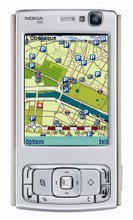
The 2007 << Dream Machine >>
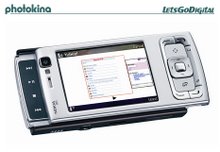
no doubts .. the ultimate smart phone in 2007
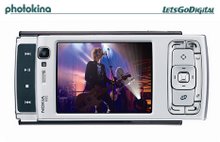
where it's at in 2007


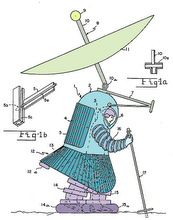
... but it didn't catch on

... if you don't know where you've been - BUT - how did you GET here ?!?!
Our focus is on Location Based Services ( LBS ) which answer "Where am I? Where is it? How do I get there?" ... & Location Aware Devices (LADs) such as 3G smartphones, mobiles, cellfones, PDAs and personal wireless platforms. LADs will soon be everywhere [i.e. ubiquitous = DoCoMo]. This blog will stay on top of all things that will help us .... keep on track ... and show us where it's at


GPS SATNAV LBS "Personal Navigation Device"
A Sextant --- solid brass navigation technology ... from 200 years ago !
NOKIA N95
The 2007 << Dream Machine >>
OUR LOCAL TIME ( +10 hrs on Zulu)
Hobart |
NOKIA 95
no doubts .. the ultimate smart phone in 2007
SUBSCRIBE TO THE RSS FEED HERE


YOU'RE SEARCHING FOR WHAT
NOKIA N95
where it's at in 2007
The UBIKWITUS SWICKI
where do you come from ?
Blog Archive
-
▼
2006
(2445)
-
▼
April
(264)
- Location Based Services: "Location-based services ...
- Location Based Serviceslocation based servicesLoca...
- Location Based Serviceslocation based servicesLoca...
- N100location based services
- Communities Dominate Brands: What happens when maj...
- Feet up! : mobile/Too-Many-Models.html location ba...
- The Frustrations of Java at MobHappylocation based...
- InformationWeek | search engine optimization | Deb...
- Debate Breaks Out Over 'Tag Spam' | April 28, 2006...
- Google Condemned For Click-Fraud Settlement | Apr...
- No title
- Open Source GISlocation based servicesThis effort ...
- Global-i from Infomagnet - 3D globe full of world ...
- The Pondering Primate: Physical World Connection I...
- Xybernaut Sells Patents Targeting Ads To Mobile De...
- Google Offers Free 3D Modeling Software April 2...
- gps tracklog: Garmin GPSMAP 76CSx reviewlocation b...
- TomTom steers through another successful quarter -...
- Marketers Map Out Their GPS Ad PlansNEW YORK -- Ma...
- The View from Here - Articles: "The Mystery of Yah...
- The Mystery of Yahoo Maps Imagerylocation based se...
- MGeocoder: A Geocoding Google Maps API Extention:l...
- MGeocoder: A Geocoding Google Maps API Extention:l...
- MGeocoder: A Geocoding Google Maps API Extentionlo...
- Microvision (MVIS) Blog: Location-based Mixed Real...
- Navigating the Roadblocks to Consumer LBS Success ...
- Navigating the Roadblocks to Consumer LBS Success ...
- Nokia's latest mobile dazzle:location based servic...
- i-mode Business Strategy: What will change to make...
- dailywireless.org - Annapolis Free WiFi:location b...
- MobileCrunch � Baidu Chairman Li says �The Next Bi...
- MobileCrunch � Mobile Search Continues to Heat Up;...
- 'Huge opportunities' in mobile search, says Micros...
- Inrix and Curious Software Collborate | GPS Lodge....
- Pioneer Avic S1 Announced | GPS Lodge.comlocation ...
- GeoWeb 2006 - Everything is Connectedlocation base...
- "Neogeography" Blends Blogs With Online Mapslocati...
- Developers Like Google's Location-Based Tools Ap...
- Google Maps Mania: How Google Maps is used in News...
- Mapbender Gallery - MapbenderWikilocation based se...
- SRC Open Sources the Industry’s First Data and Cou...
- Google Maps Mania: Big News: Google Maps street ma...
- Main Page - MapbenderWikilocation based servicesMa...
- Smartspace - Smartspace - Wayfinder Interview: Jed...
- Social Networking SMS is Coming To TownopocketLook...
- LG LX350 Available On Sprint - Gizmodolocation bas...
- Nokia unveils latest mobile NseriesLOCATION BASED ...
- Marketers Map Out Their GPS Ad Planslocation based...
- The Daily ACK: Microsoft die, die, die!location ba...
- Report Examines Mobile Ad Prospectslocation based...
- US LBS market forecast to grow by 89 percent by en...
- A List Apart: Articles: A More Accessible Map:loca...
- Yellowpages to launch new mapping systemlocation b...
- Net Neutrality Debate Heats Up April 21, 2006loc...
- On Coordinate SystemsIf you feel like ending a con...
- Brian Flood : Google Earth Visualization Case Stud...
- Geocognosys Homelocation based servicesGeocognosys...
- A List Apart: Articles: A More Accessible Map:loca...
- Mobile phones gain on PCs for Internetlocation bas...
- gps tracklog: TomTom GO 910 review:location based ...
- gps tracklog: GPS for your car: Factory-installed ...
- null
- Dr. Vino's wine blog: New York City wine bars, a m...
- Official Google Blog: Back on the maplocation base...
- BT LAUNCHES LOCATION BASED SERVICES SOLUTION BT ...
- Google looks locally (Michael Sainsbury, APRIL 21,...
- Where2Talk Offers Mobile Phone Users Instant Commu...
- Mobile browsing becoming mainstream CNET News.com...
- MobileDataforce® and DeLorme Announce Integration ...
- TCS - Company Overviewlocation based servicesTeleC...
- Cellphone GPS services find their way into marketl...
- Lessons to be Learnt as 3G Reaches 40% Penetration...
- Navman Announces the Jupiter 30 Ultra High Sensiti...
- Earthcomber Equips Mobile Navigation for Smartphon...
- gps tracklog: TomTom GO 300 reviewlocation based s...
- Latest News, Traffic from your Zip Code- MIBAZAAR....
- Martin's Musings: Where in the World is Eva Longor...
- � Google Base begins to roll out the verticals We...
- NPR : Personal Maps Emerge as Visual Mix Tapesloca...
- � The intangible aspects of mashups matter most E...
- Google Maps API2 + Your Local Search Marketing Che...
- Travel Maps Growth As Local Search Heats Uplocatio...
- Making Money From Online Maps - Forbes.comlocation...
- TechCrunch � Comparing the Mapping Serviceslocatio...
- Online growth maps a future Media The Australian...
- Awareness of location based services is growing
- ThereArePlaces.com, the Leading Website for Intern...
- Mapdex: search geographic datalocation based services
- Home - User-friendly Desktop Internet GISlocation ...
- Opera Mini 2.0 coming later this month! - Opera Mo...
- Nokia examining AJAX | The Registerlocation based ...
- Satnav systems guide cars to a watery endlocation...
- N80 Nokia 3G Mobilelocation based services3G N80 :...
- MapQuest Launches New Mobile Offering location bas...
- LOC-AID technologies provides LOC-AID BSA to Tier ...
- EU presses for broadband's way forwardlocation bas...
- NAVTEQ Releases Voice Data for Netherlands locatio...
- iST iPointer System Selected As LBS Challenge Semi...
- Natural Area Coding System - NACS - Extended to Mo...
- Awareness of location based services is growingLoc...
-
▼
April
(264)
EARLY SATNAV ...
... but it didn't catch on
you don't know where you going...
... if you don't know where you've been - BUT - how did you GET here ?!?!

No comments:
Post a Comment