Wednesday interview: Michael Kornhauser of ALK on why satnav is going mobile
location based services
Could the next killer app for mobile phones be satellite navigation? ALK certainly hopes so. The company has been selling its CoPilot Live application for PDAs and smartphones for some time now, but in the latter case it's always been dependent on a separate GPS receiver, which connects to your phone using Bluetooth.
However, developments like GPS-enabled phones and HSDPA networks point to a bright future for mobile satnav, and other location-based services. ALK has certainly come a long way since the 1970s, when it was working with the US government computing routes from Earth to Mars.
"From the start, we've been providing consulting, services or applications that help people get from A to B," says managing director Michael Kornhauser. "Now it's happening on mobiles."
"In the mid-1990s, we took it a step further by attacing a GPS receiver to a laptop computer," says Kornhauser. "At the time, the laptop was the only entity available that had the computing power and memory to do satellite navigation. But we always had a view to ultimately reduce that in size for mobile phones."
From the early days of its CoPilot product, ALK was working closely with Microsoft on the latter's handheld platforms, initially WinCE and then Pocket PC. ALK was to launch the first mobile edition of CoPilot for the Cassiopeia PDA. From there, the company has developed its CoPilot Live product for smartphones, and according to Kornhauser is looking to extend that to more mass-market phones. He also says that CoPilot Live has been built with mobile in mind.
"A lot of navigation systems are either on-board, where all the data is stored on the system, or off-board, where you effectively dial up to a server," he says. "CoPilot Live is something we call hybrid-compliant, so it takes advantage of the tremendous computing power on these smartphones and the diving cost of smart memory, to do all the computing and map storage on-board, but goes off-board for value-added services and other elements of navigation."
How does this work? Well, in most cities, street-level map data doesn't change that much, but information like traffic conditions, weather, speed camera placement is more dynamic, so more suited to being pulled down over-the-air. So how else does a product like CoPilot change between platforms? Is it essentially the same application on mobile as it is on a laptop?
"A lot of the guts are the same, and the product has similar functionality and overall look and feel," says Kornhauser. "But the UI is tweaked fairly significantly for each device. On a tablet, you have up to a 15-inch screen, so you can have a lot more information on there. But then on a Pocket PC, and even more so on a smartphone, it's imoprtant that the information is simple to understand, concise, to the point and can be understood at a glance."
So who uses this stuff, and who picks the mobile over the tablet version and vice versa? According to Kornhauser, the laptop and tablet PC versions of CoPilot Live don't sell that well in Europe, but are popular in the US with people who own camper-vans, as well as professional truckers – who may even go for the fully-fledged FleetCenter version (left). Meanwhile, smaller businesses tend to go for the PDA version, while the smartphone edition appeals more to regular punters.
"We're seeing more and more devices with these capabilities," he says. "It's not just enterprise users who have smartphones any more. Devices like the Nokia N73 and Sony Ericsson W950 are great examples. They're powerful smartphones, yet they also have great cameraphones and video or music capabilities too."
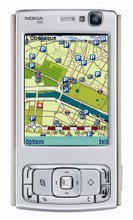
Two big trends that could make mobile satnav more common in the next year are GPS in phones, and HSDPA networks. Nokia's announcement of the N95 yesterday is sure to be the first of many GPS-enabled handsets, which removes the need to have a Bluetooth-connected GPS receiver to use applications like CoPilot Live.
"It's an absolute killer for us," says Kornhauser. "Take a look at the satnav market to date. In Europe, the big push for PDA navigation came when it was first put into a bundle in 2004. Then when that petered off a little bit, the GPS receiver got put into the device itself, and there was another big uptake. It's about having less things to buy, less things to power, and it's cheaper, which naturally gets it out to more people. And we see the same happening in the smartphone market."Meanwhile, handsets like the N95 are also likely to work on faster HSDPA networks. Kornhauser says it's feasible for someone living in, say, Munich to have the surrounding 50 miles of data stored on their device, but when they travel somewhere else, they'll be served the additional local data directly over the air. "You can do those kind of advancements if you can get five to six megabytes of data down to the handset in a reasonable time," he says.
we also... the trucking market or any large vehicle market going for our laptop or tablet. then for a pocket pc, we see a lot of general consumer appeal, and then also enterprise deployment on pocket pcs. companies using them for signatur capture will integratre their signature capture softwate and workforce mobility software. when next job comes in, accept a job, automatically laynch the navigation. so two markets for that, and prosumers buygin connected pocket pcs, eitgher on their own or throgh mobile phone contracts\nand then for smartophone products, especially since out launch or symbian uiq and series 60, seeing a tremendous ammount of consmer appeal, they\'re in high end of consumer market, they\'re smartphones, not low cost devices. a lot of high end consumer demand for thos eproducts as nokia and sony ericssoin\nit is very exciting, we see more and more deices having the capabilities. a lot of the walkman phones have storage card slots in them, so that gets us one step further. more and more processor capabilities in there, 3G, hsdpa, all this bodes v wel for what we\'re trying to do [- provide simple but highly useful satellite navifgation to these mobile phoens, devices you have in your pocket. N73 is a freat example, symbian series 60 3rd edition, latest and greatest, yet has one of the bets cameraphones / video capabilkities on the market. that conceregance right there\nalso sony eric w950, walkman symbiabn uiq phone, again, the kind of convergence of that mass marke walkman feturwswe see bopth those things coming along fairly strong in next year and years forward. we\'ll be first the smartphones will have GPS inbuilt across board, then make its way down to more mass market phones. that of course is an sbsolute killer for us. take a ltook at satmav market to date. in euroep big push for pda naviufgation when first put into a bundle - 2004 - medion in germany created one of the first pda / gps naivifgation bnundles. then when that petered off alittle bit, then gps receiver got put into the device, another big uptake. ad then forget about the pda, we\'re juts making a big bnavufation deviuce. less things to buy, less things to power, costs get rolled in on OEM, so cheaper, which naturally gets it out to more people. becomes more versatile, use it when you\'re rocking around, not just in the car, when you\'re in a taxi! it\'s almost endless.\n",1]
);
//-->
building the gps inn.othert thing, hsdpa, the networks and capabilities on the devices. while again we expet to continue to use the functionality of on-board, in reality, copilot live doesn\'t care if map data is onboard. can add scenario where 50 miles of data around germany on my device, when i lfly into munich, i have to go somewher 100km away, i serve that additional data, v fast, ubiqitous across the board, no problems with connection. those kind of advancements, not only for the services on top of copilot, but data itself, do map datra ypdated over the air, if you can get 5-6mb of info down in a reasonable time.\nwe expect ... i think everybody acros the oard is seeing large consumer demand, large opp in european omarket for consumer navigation. those elements figureing out if they can be a piece o the puzzle. from ops perspective, but a little bit oif uncertainty, how they can make it successful for their biz, can they compete with high srtreet, able to sell a piece of IT equipment a lot better than an op can. theur angle is to buikld in these services, all you can eat data plans, special offers on monthly tariff - have traffic as additional £5 a month, or build it into your updates you get from the operatoir. building propositions aroudn the data element of copilot, and ability to serve info rthrouth their networjkj on copilot.\nbig advancesi think a lot of it will come around making the navigation system... taking it from something you\'re just using when lost or on holidayu, to something you are really usinfg very day and in various differet aspects of your life. not just when lost, but using it while you are really in every aspect of your life. evven when you\'re not lost, you can still be using the navigation system, or speed camera info which is v important. or when you\'r e not in the vehidle, you can stoll get walking directions through it, oer as a life monitor which gets you where you wanna go, info on the move that has a location tag on it. we see a lot of location based content, or route based content as we would call it. lbs space, where you are, and finding stuff around. but from ALK, not about whwreyou are, but whre you\'re going. we know where you\'re going, how you\'re gonna get you, and we can serve various bits of info alon gthat way.So where do the mobile operators fit in, if at all? Will they launch their own navigation services, or partner with people like ALK, or just keep out of the market altogether? Kornhauser seems to think the second option is most likely, with operators charging customers a set fee per month for, say, traffic information which can be overlaid onto a phone's mapping software. It does seem that there's scope for more of what he calls "value-added services" with this kind of satnav technology.
"We're taking it from something you just use when you're lost or on holiday, to something you use every day in various different aspects of your life," he says. "So you might be using the speed camera information, or getting walking directions when you're not in your car, or getting other location-based content, or route-based content as we would call it. From ALK's perspective, it's not about finding stuff around where you are, but around where you're going. We know where you're going, how we're going to get you there, so we can serve various bits of relevant information along that way."
Friday, September 29, 2006
Thursday, September 28, 2006
Tele Atlas Adds Human Element To Updating Map Data
location based services
One way Tele Atlas is expanding the way it updates geographic mapping data is by asking people to provide feedback online. By Laurie Sullivan TechWeb Sep 28, 2006 08:18 PM
Anyone who has hit a dead end or got lost on their way to a meeting after carefully printing driving directions from an online site may appreciate the difficulties in keeping track of changes to the world's roadways, toll ways and freeways.
Tele Atlas, a company that gathers raw data for use in navigation systems, and mobile and online maps, used by Google, MapQuest, Nokia and others, has expanded the way it updates geographic mapping data by asking people to provide feedback online.
When the site officially launches in October, it will allow users of Internet, personal navigation and wireless devices to report changes to roads. "We are trying to help customers report changes to the database because sometimes they're familiar changes we haven't encountered," said Kamron Barron, systems and training manager for Tele Atlas North America at Tele Atlas Inc.
The site will augment a fleet of 10 bright-orange vans equipped with cameras, servers, and computers running three software applications. Drivers cover every inch of U.S. highway digitally videoing roadways.
Analysts believe mapping data will increase in importance as more electronics rely on the information to support more emerging applications that integrate real time-and-location stamps, for example. "Mapping data is an enabling technology," said Marina Amoroso, senior analyst for U.S. wireless/mobile at Yankee Group. "There are many ways for location-based services to sit behind regular apps we use daily.
In the future, consumers could see location-based services embedded behind, cellular phone camera, instant message, and push-to-talk features on phones, Amoroso said.
At Tele Atlas, cameras capture digital images of speed limit and stop signs, number of lanes per highway, and other landmarks a driver sees on roadways. The collected video is analyzed and turned into raw data for use by government agencies, as well as public and private companies.
On the roof of each van sits a global positioning system (GPS) and four cameras. Two stereo cameras provide forward and intersecting pictures of the road to let Tele Atlas create three-dimensional digital video footage. Two fixed cameras collect data on road signs.
An inertial measurement unit and odometer sit on the van's breaking system, which records the distance traveled, accurate within 0.5 and 1 inch. The system maps every angle the vehicle turns.
services (LBS) will account for 315 million, up from 12 million this year, estimates ABI Research
Earlier this week, Nokia said Tele Atlas will provide the digital map data and dynamic location content for the Nokia N95, a new multimedia device equipped with GPS functions launched. The handset maker calls the Nokia N95 a "multimedia computer" that offers consumers multiple ways to connect to information, entertainment and people. As part of the Nokia Nseries multimedia personal computers, the Nokia N95 features built-in global positioning system (GPS), WLAN, a 5 mega-pixel camera, HSDPA and dual mode menu.
The Nokia N95's navigation features will offer free, basic mapping and routing functions to initiate local searches for more than 100 countries, more than 15 million points of interest to help consumers easily find local attractions, and optional upgrades to full navigation features to let users quickly find routing information wherever they need to go.
Tele Atlas's 2,300 employees in 30 countries map out roads in 51 countries.
location based services
One way Tele Atlas is expanding the way it updates geographic mapping data is by asking people to provide feedback online. By Laurie Sullivan TechWeb Sep 28, 2006 08:18 PM
Anyone who has hit a dead end or got lost on their way to a meeting after carefully printing driving directions from an online site may appreciate the difficulties in keeping track of changes to the world's roadways, toll ways and freeways.
Tele Atlas, a company that gathers raw data for use in navigation systems, and mobile and online maps, used by Google, MapQuest, Nokia and others, has expanded the way it updates geographic mapping data by asking people to provide feedback online.
When the site officially launches in October, it will allow users of Internet, personal navigation and wireless devices to report changes to roads. "We are trying to help customers report changes to the database because sometimes they're familiar changes we haven't encountered," said Kamron Barron, systems and training manager for Tele Atlas North America at Tele Atlas Inc.
The site will augment a fleet of 10 bright-orange vans equipped with cameras, servers, and computers running three software applications. Drivers cover every inch of U.S. highway digitally videoing roadways.
Analysts believe mapping data will increase in importance as more electronics rely on the information to support more emerging applications that integrate real time-and-location stamps, for example. "Mapping data is an enabling technology," said Marina Amoroso, senior analyst for U.S. wireless/mobile at Yankee Group. "There are many ways for location-based services to sit behind regular apps we use daily.
In the future, consumers could see location-based services embedded behind, cellular phone camera, instant message, and push-to-talk features on phones, Amoroso said.
At Tele Atlas, cameras capture digital images of speed limit and stop signs, number of lanes per highway, and other landmarks a driver sees on roadways. The collected video is analyzed and turned into raw data for use by government agencies, as well as public and private companies.
On the roof of each van sits a global positioning system (GPS) and four cameras. Two stereo cameras provide forward and intersecting pictures of the road to let Tele Atlas create three-dimensional digital video footage. Two fixed cameras collect data on road signs.
An inertial measurement unit and odometer sit on the van's breaking system, which records the distance traveled, accurate within 0.5 and 1 inch. The system maps every angle the vehicle turns.
services (LBS) will account for 315 million, up from 12 million this year, estimates ABI Research
Earlier this week, Nokia said Tele Atlas will provide the digital map data and dynamic location content for the Nokia N95, a new multimedia device equipped with GPS functions launched. The handset maker calls the Nokia N95 a "multimedia computer" that offers consumers multiple ways to connect to information, entertainment and people. As part of the Nokia Nseries multimedia personal computers, the Nokia N95 features built-in global positioning system (GPS), WLAN, a 5 mega-pixel camera, HSDPA and dual mode menu.
The Nokia N95's navigation features will offer free, basic mapping and routing functions to initiate local searches for more than 100 countries, more than 15 million points of interest to help consumers easily find local attractions, and optional upgrades to full navigation features to let users quickly find routing information wherever they need to go.
Tele Atlas's 2,300 employees in 30 countries map out roads in 51 countries.
Solar flares to disrupt GPS for several hours in 2011 or 2012
location based services
Ok GPS fans, we're prepping you early for what could be a moment of pretty severe inconvenience in the not so distant future. Brace yourself, because in roughly five to six years, your beloved handheld devices won't work for several hours due to solar flare activity (sound familiar?). According to new Cornell University research, solar flares negatively affect GPS devices, based on observations of stellar phenomena in September of last year. In 2011 or 2012, when the sun reaches its next solar maximum, scientists expect it to cause a 90 percent GPS signal drop for several hours. While most of us will walk around, oblivious to these space fireworks, Alessandro Cerruti (pictured on the left), a Cornell graduate student who studies solar flare effects, envisions this horrific day as a "nightmare situation," given that all planes will likely have GPS signaling by that time. However, given these harbingers of doom, Dr. Paul Kinter (pictured on the right), Cerruti's advisor, has a brilliant solution: "I think the best remedy is to be aware of the problem and operate GPS systems with the knowledge that they may fail during a solar flare." See, it's just that easy, people.
location based services
Ok GPS fans, we're prepping you early for what could be a moment of pretty severe inconvenience in the not so distant future. Brace yourself, because in roughly five to six years, your beloved handheld devices won't work for several hours due to solar flare activity (sound familiar?). According to new Cornell University research, solar flares negatively affect GPS devices, based on observations of stellar phenomena in September of last year. In 2011 or 2012, when the sun reaches its next solar maximum, scientists expect it to cause a 90 percent GPS signal drop for several hours. While most of us will walk around, oblivious to these space fireworks, Alessandro Cerruti (pictured on the left), a Cornell graduate student who studies solar flare effects, envisions this horrific day as a "nightmare situation," given that all planes will likely have GPS signaling by that time. However, given these harbingers of doom, Dr. Paul Kinter (pictured on the right), Cerruti's advisor, has a brilliant solution: "I think the best remedy is to be aware of the problem and operate GPS systems with the knowledge that they may fail during a solar flare." See, it's just that easy, people.
Google Local Search Has Been Integrated with Universal Address
location based services
October 1, 2006, Toronto, Canada, NAC Geographic Products Inc. announced the release of the NAC Enhanced Google Local Search - an integration of the Natural Area Coding System with Google Local Search through the Google AJAX Search API.
The NAC Enhanced Google Local Search allows users to use a Natural Area Code (NAC) in addition to using a street address to specify an area or location anywhere in the world. A NAC can represent any area or location in the world. A two-character NAC represents an area about 1000km X 700km (like a province), a four-character NAC represents an area about 33km X 23km (like a city), a six-character NAC roughly represents every square kilometer area, an eight-character NAC represents an area about 35m X 25m (like a building), and a ten-character NAC approximately represents every square meter on the earth surface. Since an eight-character or a ten-character NAC has reached the resolution of a traditional address, it is also called a Universal Address, for example, NAC: 8KDC PGFC (the Universal Address of Washington Monument). "The integration of NAC with Google Local Search produces a real worldwide local search engine that can work anywhere in the world," said Dr. Xinhang Shen, president of NAC Geographic Products Inc., "that has overcome the limitations of traditional address based specification of locations, such as inputting traditional addresses of foreign characters or specifying locations without traditional addresses." Using a Universal Address instead of a street address to specify a location on a local search can also reduce 80% of key input and eliminate the needs of address databases that frequently produce outdated matches, no matches, duplicated matches, wrong matches, etc. The NAC Enhanced Google Local Search also presents its searching results with the corresponding Universal Address attached to each found item. Therefore it can be used as a Universal Address lookup service for location sensitive businesses, with which business owners can find their Universal Addresses and then put them on their business cards and advertisements to promote their businesses. Here is another web page for people to look up the Universal Address of any street address in 24 countries. Universal Addresses can be directly measured with GPS receivers and have been widely implemented in many wireless location based services (such as mlbs.net), GPS navigating systems (such as Locamagic), etc. If you use key words: "Universal Address" and "Resort" to search Google, you will see thousands of resorts that have included their Universal Addresses as part of their addresses. Universal Addresses can be used as universal identifiers for bus stops, gates, parking meters, street lights, trees, sewage exits, fire hydrants and any other fixed objects. Using Universal Addresses as global postal codes can make all sorting machines able to sort mail from world level to final mail boxes automatically. The wide use of Universal Address enhanced GPS watches or cellphones can greatly accelerate the globalization and make accurate locations as useful as accurate time for all human activities and events. About NAC Geographic Products Inc. Incorporated in 1995 in Toronto, Canada, NAC Geographic Products Inc. is a world's leading company in geographic information technologies. In addition to the Natural Area Coding System, the company has developed many important GIS software products and provides real-time geo-services (geocoding, reverse-geocoding, mapping, driving directions, nearby business searching and traffic information) for web applications and wireless location based services. Web: www.nacgeo.com
location based services
October 1, 2006, Toronto, Canada, NAC Geographic Products Inc. announced the release of the NAC Enhanced Google Local Search - an integration of the Natural Area Coding System with Google Local Search through the Google AJAX Search API.
The NAC Enhanced Google Local Search allows users to use a Natural Area Code (NAC) in addition to using a street address to specify an area or location anywhere in the world. A NAC can represent any area or location in the world. A two-character NAC represents an area about 1000km X 700km (like a province), a four-character NAC represents an area about 33km X 23km (like a city), a six-character NAC roughly represents every square kilometer area, an eight-character NAC represents an area about 35m X 25m (like a building), and a ten-character NAC approximately represents every square meter on the earth surface. Since an eight-character or a ten-character NAC has reached the resolution of a traditional address, it is also called a Universal Address, for example, NAC: 8KDC PGFC (the Universal Address of Washington Monument). "The integration of NAC with Google Local Search produces a real worldwide local search engine that can work anywhere in the world," said Dr. Xinhang Shen, president of NAC Geographic Products Inc., "that has overcome the limitations of traditional address based specification of locations, such as inputting traditional addresses of foreign characters or specifying locations without traditional addresses." Using a Universal Address instead of a street address to specify a location on a local search can also reduce 80% of key input and eliminate the needs of address databases that frequently produce outdated matches, no matches, duplicated matches, wrong matches, etc. The NAC Enhanced Google Local Search also presents its searching results with the corresponding Universal Address attached to each found item. Therefore it can be used as a Universal Address lookup service for location sensitive businesses, with which business owners can find their Universal Addresses and then put them on their business cards and advertisements to promote their businesses. Here is another web page for people to look up the Universal Address of any street address in 24 countries. Universal Addresses can be directly measured with GPS receivers and have been widely implemented in many wireless location based services (such as mlbs.net), GPS navigating systems (such as Locamagic), etc. If you use key words: "Universal Address" and "Resort" to search Google, you will see thousands of resorts that have included their Universal Addresses as part of their addresses. Universal Addresses can be used as universal identifiers for bus stops, gates, parking meters, street lights, trees, sewage exits, fire hydrants and any other fixed objects. Using Universal Addresses as global postal codes can make all sorting machines able to sort mail from world level to final mail boxes automatically. The wide use of Universal Address enhanced GPS watches or cellphones can greatly accelerate the globalization and make accurate locations as useful as accurate time for all human activities and events. About NAC Geographic Products Inc. Incorporated in 1995 in Toronto, Canada, NAC Geographic Products Inc. is a world's leading company in geographic information technologies. In addition to the Natural Area Coding System, the company has developed many important GIS software products and provides real-time geo-services (geocoding, reverse-geocoding, mapping, driving directions, nearby business searching and traffic information) for web applications and wireless location based services. Web: www.nacgeo.com
Google Local Search Has Been Integrated with Universal Address
location based services
October 1, 2006, Toronto, Canada, NAC Geographic Products Inc. announced the release of the NAC Enhanced Google Local Search - an integration of the Natural Area Coding System with Google Local Search through the Google AJAX Search API.
The NAC Enhanced Google Local Search allows users to use a Natural Area Code (NAC) in addition to using a street address to specify an area or location anywhere in the world. A NAC can represent any area or location in the world. A two-character NAC represents an area about 1000km X 700km (like a province), a four-character NAC represents an area about 33km X 23km (like a city), a six-character NAC roughly represents every square kilometer area, an eight-character NAC represents an area about 35m X 25m (like a building), and a ten-character NAC approximately represents every square meter on the earth surface. Since an eight-character or a ten-character NAC has reached the resolution of a traditional address, it is also called a Universal Address, for example, NAC: 8KDC PGFC (the Universal Address of Washington Monument). "The integration of NAC with Google Local Search produces a real worldwide local search engine that can work anywhere in the world," said Dr. Xinhang Shen, president of NAC Geographic Products Inc., "that has overcome the limitations of traditional address based specification of locations, such as inputting traditional addresses of foreign characters or specifying locations without traditional addresses." Using a Universal Address instead of a street address to specify a location on a local search can also reduce 80% of key input and eliminate the needs of address databases that frequently produce outdated matches, no matches, duplicated matches, wrong matches, etc. The NAC Enhanced Google Local Search also presents its searching results with the corresponding Universal Address attached to each found item. Therefore it can be used as a Universal Address lookup service for location sensitive businesses, with which business owners can find their Universal Addresses and then put them on their business cards and advertisements to promote their businesses. Here is another web page for people to look up the Universal Address of any street address in 24 countries. Universal Addresses can be directly measured with GPS receivers and have been widely implemented in many wireless location based services (such as mlbs.net), GPS navigating systems (such as Locamagic), etc. If you use key words: "Universal Address" and "Resort" to search Google, you will see thousands of resorts that have included their Universal Addresses as part of their addresses. Universal Addresses can be used as universal identifiers for bus stops, gates, parking meters, street lights, trees, sewage exits, fire hydrants and any other fixed objects. Using Universal Addresses as global postal codes can make all sorting machines able to sort mail from world level to final mail boxes automatically. The wide use of Universal Address enhanced GPS watches or cellphones can greatly accelerate the globalization and make accurate locations as useful as accurate time for all human activities and events. About NAC Geographic Products Inc. Incorporated in 1995 in Toronto, Canada, NAC Geographic Products Inc. is a world's leading company in geographic information technologies. In addition to the Natural Area Coding System, the company has developed many important GIS software products and provides real-time geo-services (geocoding, reverse-geocoding, mapping, driving directions, nearby business searching and traffic information) for web applications and wireless location based services. Web: www.nacgeo.com
location based services
October 1, 2006, Toronto, Canada, NAC Geographic Products Inc. announced the release of the NAC Enhanced Google Local Search - an integration of the Natural Area Coding System with Google Local Search through the Google AJAX Search API.
The NAC Enhanced Google Local Search allows users to use a Natural Area Code (NAC) in addition to using a street address to specify an area or location anywhere in the world. A NAC can represent any area or location in the world. A two-character NAC represents an area about 1000km X 700km (like a province), a four-character NAC represents an area about 33km X 23km (like a city), a six-character NAC roughly represents every square kilometer area, an eight-character NAC represents an area about 35m X 25m (like a building), and a ten-character NAC approximately represents every square meter on the earth surface. Since an eight-character or a ten-character NAC has reached the resolution of a traditional address, it is also called a Universal Address, for example, NAC: 8KDC PGFC (the Universal Address of Washington Monument). "The integration of NAC with Google Local Search produces a real worldwide local search engine that can work anywhere in the world," said Dr. Xinhang Shen, president of NAC Geographic Products Inc., "that has overcome the limitations of traditional address based specification of locations, such as inputting traditional addresses of foreign characters or specifying locations without traditional addresses." Using a Universal Address instead of a street address to specify a location on a local search can also reduce 80% of key input and eliminate the needs of address databases that frequently produce outdated matches, no matches, duplicated matches, wrong matches, etc. The NAC Enhanced Google Local Search also presents its searching results with the corresponding Universal Address attached to each found item. Therefore it can be used as a Universal Address lookup service for location sensitive businesses, with which business owners can find their Universal Addresses and then put them on their business cards and advertisements to promote their businesses. Here is another web page for people to look up the Universal Address of any street address in 24 countries. Universal Addresses can be directly measured with GPS receivers and have been widely implemented in many wireless location based services (such as mlbs.net), GPS navigating systems (such as Locamagic), etc. If you use key words: "Universal Address" and "Resort" to search Google, you will see thousands of resorts that have included their Universal Addresses as part of their addresses. Universal Addresses can be used as universal identifiers for bus stops, gates, parking meters, street lights, trees, sewage exits, fire hydrants and any other fixed objects. Using Universal Addresses as global postal codes can make all sorting machines able to sort mail from world level to final mail boxes automatically. The wide use of Universal Address enhanced GPS watches or cellphones can greatly accelerate the globalization and make accurate locations as useful as accurate time for all human activities and events. About NAC Geographic Products Inc. Incorporated in 1995 in Toronto, Canada, NAC Geographic Products Inc. is a world's leading company in geographic information technologies. In addition to the Natural Area Coding System, the company has developed many important GIS software products and provides real-time geo-services (geocoding, reverse-geocoding, mapping, driving directions, nearby business searching and traffic information) for web applications and wireless location based services. Web: www.nacgeo.com
There's a whole world out there for Google Earth
location based services
TOKYO (Reuters) - Google Inc.'s (GOOG.O: Quote, Profile, Research) Michael Jones likes to take pictures with a super high-resolution camera like those used on spy planes during the Cold War.
His fascination is not to monitor military camps but to shoot photos so detailed he can spot, from miles away, a cozy Japanese noodle shop to have lunch in.
Jones' obsession is mirrored in his work. He is the Chief Technology Officer of Google Earth, a product used by 100 million people that combines satellite images, maps and local data to display geographical information of the world.
"Seeing your home is usually the first thing people do," Jones told Reuters in an interview in Tokyo. "As we add more local data, like hotels, there's a second wave of interest from those who want to use this in useful ways, like plan trips."
Google, the world's biggest Web search engine, has launched Google Earth in different languages including Japanese, French, Italian, German and Spanish. Jones is a great fan of Japan.
"It's not just translating," said Bruno Bowden, a Google Earth engineer who spent the past year preparing the Japanese-language product which was launched this week.
"It takes great effort to license all the local data and figure out how people might want to view it," Bowden explained.
Jones said Google is gathering country data to offer more localized editions. He also said the amount of data updated to the Google Earth database is rising. Continued...
location based services
TOKYO (Reuters) - Google Inc.'s (GOOG.O: Quote, Profile, Research) Michael Jones likes to take pictures with a super high-resolution camera like those used on spy planes during the Cold War.
His fascination is not to monitor military camps but to shoot photos so detailed he can spot, from miles away, a cozy Japanese noodle shop to have lunch in.
Jones' obsession is mirrored in his work. He is the Chief Technology Officer of Google Earth, a product used by 100 million people that combines satellite images, maps and local data to display geographical information of the world.
"Seeing your home is usually the first thing people do," Jones told Reuters in an interview in Tokyo. "As we add more local data, like hotels, there's a second wave of interest from those who want to use this in useful ways, like plan trips."
Google, the world's biggest Web search engine, has launched Google Earth in different languages including Japanese, French, Italian, German and Spanish. Jones is a great fan of Japan.
"It's not just translating," said Bruno Bowden, a Google Earth engineer who spent the past year preparing the Japanese-language product which was launched this week.
"It takes great effort to license all the local data and figure out how people might want to view it," Bowden explained.
Jones said Google is gathering country data to offer more localized editions. He also said the amount of data updated to the Google Earth database is rising. Continued...
Industry Insiders Unhappy with Operators Cut of Mobile Transactions
location based services
Valista has released the results of research, carried out at this year's Mobile Content World Conference in London which quizzed over a hundred show attendees, and revealed that when it comes to mobile content, network operators are taking too large a share of the revenue.
Mobile Content World is a show attended by content owners, handset vendors, mobile operators and technology providers. Valista asked delegates for their views on the future of the mobile content market in the next three to five years.
Over half of respondents correctly answered that mobile operators currently take 40-50% of mobile content transactions, however, less than 6% believe this will be the case in three years time. In fact almost two-thirds, 65%, of those questioned believe that in three years' time, mobile operators should cut their share by at least half - to less than 20%, with 18% of respondents believing that they should take only 5%.
What is clear is that in order to safeguard revenues, the industry needs to drive the uptake of mobile content through creative and flexible pricing, content bundling and promotions and cleverly targeted content. More than 28% of delegates surveyed believe that targeting content by demographic groups and communities will be the most likely way to increase content purchasing, closely followed by flexible pricing (27%) and improved mobile search (20%).
According to Arlene Adams, Vice President at Valista "Currently, operators take the greatest share of mobile content revenue, but the distribution of power could shift - particularly when the major media moguls secure their foothold in the marketplace. Consolidation and the entrance of major consumer brands will shape the future value chain, and operators need to balance recouping revenues with the desire to maximise their share in the long run. In this regard, operators need to look at more innovative merchandizing and marketing tools to encourage their consumers to buy more. In addition, a payments model which lowers or eliminates revenue leakage and allows end-to-end traceability for transactions and the parties involved, will allow operators to look at lowering their fees while encouraging growth in the content market."
Good news for the industry came in the finding that mobile TV and Video downloads will be the most popular forms of content over the next few years, an opinion that mirrors recent analyst predictions. Broadcasting rich content will see a move from lower value payments (micro-payments) to higher value transactions (macro-payments). In this regard, operators need to protect their brand and look at personalized and compelling content to grow Average Revenue Per User (ARPU) and drive off competition from more traditional payment schemes. Less positive for operators was the finding that only 15% of content purchased will be part of an ongoing subscription model.
What may make uncomfortable reading is the fact that, according to attendees, mobile operators will not see content purchases making up for falling revenues. More than half of those who contributed (58%) believe that in three years' time, less than 25% of total operator revenue will come from mobile content and 15% believe that it might drop as low as 10%. This figure is interesting given that mobile content already accounts for 20% of an operator's revenue, and evidently figures working in the industry are unaware that this is the case. iGillott Research predicts that mobile content will account for 40% of operators' revenue by 2009.
Despite the variations in the predictions above, those questioned in the Valista poll were in agreement on the future of mobile payments, with more than 65% believing that the current system of paying for mobile content via Premium SMS will, in the next few years, give way to more flexible and robust payment methods such as paying via the monthly bill (direct-to-bill charging).
location based services
Valista has released the results of research, carried out at this year's Mobile Content World Conference in London which quizzed over a hundred show attendees, and revealed that when it comes to mobile content, network operators are taking too large a share of the revenue.
Mobile Content World is a show attended by content owners, handset vendors, mobile operators and technology providers. Valista asked delegates for their views on the future of the mobile content market in the next three to five years.
Over half of respondents correctly answered that mobile operators currently take 40-50% of mobile content transactions, however, less than 6% believe this will be the case in three years time. In fact almost two-thirds, 65%, of those questioned believe that in three years' time, mobile operators should cut their share by at least half - to less than 20%, with 18% of respondents believing that they should take only 5%.
What is clear is that in order to safeguard revenues, the industry needs to drive the uptake of mobile content through creative and flexible pricing, content bundling and promotions and cleverly targeted content. More than 28% of delegates surveyed believe that targeting content by demographic groups and communities will be the most likely way to increase content purchasing, closely followed by flexible pricing (27%) and improved mobile search (20%).
According to Arlene Adams, Vice President at Valista "Currently, operators take the greatest share of mobile content revenue, but the distribution of power could shift - particularly when the major media moguls secure their foothold in the marketplace. Consolidation and the entrance of major consumer brands will shape the future value chain, and operators need to balance recouping revenues with the desire to maximise their share in the long run. In this regard, operators need to look at more innovative merchandizing and marketing tools to encourage their consumers to buy more. In addition, a payments model which lowers or eliminates revenue leakage and allows end-to-end traceability for transactions and the parties involved, will allow operators to look at lowering their fees while encouraging growth in the content market."
Good news for the industry came in the finding that mobile TV and Video downloads will be the most popular forms of content over the next few years, an opinion that mirrors recent analyst predictions. Broadcasting rich content will see a move from lower value payments (micro-payments) to higher value transactions (macro-payments). In this regard, operators need to protect their brand and look at personalized and compelling content to grow Average Revenue Per User (ARPU) and drive off competition from more traditional payment schemes. Less positive for operators was the finding that only 15% of content purchased will be part of an ongoing subscription model.
What may make uncomfortable reading is the fact that, according to attendees, mobile operators will not see content purchases making up for falling revenues. More than half of those who contributed (58%) believe that in three years' time, less than 25% of total operator revenue will come from mobile content and 15% believe that it might drop as low as 10%. This figure is interesting given that mobile content already accounts for 20% of an operator's revenue, and evidently figures working in the industry are unaware that this is the case. iGillott Research predicts that mobile content will account for 40% of operators' revenue by 2009.
Despite the variations in the predictions above, those questioned in the Valista poll were in agreement on the future of mobile payments, with more than 65% believing that the current system of paying for mobile content via Premium SMS will, in the next few years, give way to more flexible and robust payment methods such as paying via the monthly bill (direct-to-bill charging).
OSI Geospatial Awarded U.S. Department of Defense Contract Valued at US$3.8 Million
location based services
VANCOUVER, BRITISH COLUMBIA-- Sept. 27, 2006 - OSI Geospatial Inc. (TSX:OSI)(OTCBB:OSIIF) announced today that its U.S. systems operations has been awarded a three year contract totaling approximately US$3.8 million by the U.S. Defense Threat Reduction Agency (DTRA). Under the contract terms, OSI will develop a Global Positioning System (GPS) Denied Navigation and Mapping System for the DTRA."OSI is a world leader in the development and production of Navigation and Mapping systems for international military and commercial applications. This contract will enable OSI to evolve our leading edge technology into the Hand-Held/Wearable Personal Navigation Systems market," said Ken Kirkpatrick, President and CEO of OSI Geospatial. "We are very pleased to be working with the Defense Threat Reduction Agency, a new customer for us. Along with expanding our customer base, this contract provides for further diversification of our products, supporting two of the strategic goals we established for this year."About OSI GeospatialOSI Geospatial Inc. delivers advanced systems and software to address the growing need for enhanced situational awareness in command, control, communications, and intelligence applications. By providing essential tactical and geospatial information, the company's systems and software help decision-makers know the precise location of mission operations across all military forces while integrating information with allies. OSI Geospatial systems are in use by military, government, and commercial customers around the world. The company is publicly traded on the Toronto Stock Exchange (OSI) and the Over the Counter Bulletin Board (OSIIF). For additional information please visit www.osigeospatial.com.
location based services
VANCOUVER, BRITISH COLUMBIA-- Sept. 27, 2006 - OSI Geospatial Inc. (TSX:OSI)(OTCBB:OSIIF) announced today that its U.S. systems operations has been awarded a three year contract totaling approximately US$3.8 million by the U.S. Defense Threat Reduction Agency (DTRA). Under the contract terms, OSI will develop a Global Positioning System (GPS) Denied Navigation and Mapping System for the DTRA."OSI is a world leader in the development and production of Navigation and Mapping systems for international military and commercial applications. This contract will enable OSI to evolve our leading edge technology into the Hand-Held/Wearable Personal Navigation Systems market," said Ken Kirkpatrick, President and CEO of OSI Geospatial. "We are very pleased to be working with the Defense Threat Reduction Agency, a new customer for us. Along with expanding our customer base, this contract provides for further diversification of our products, supporting two of the strategic goals we established for this year."About OSI GeospatialOSI Geospatial Inc. delivers advanced systems and software to address the growing need for enhanced situational awareness in command, control, communications, and intelligence applications. By providing essential tactical and geospatial information, the company's systems and software help decision-makers know the precise location of mission operations across all military forces while integrating information with allies. OSI Geospatial systems are in use by military, government, and commercial customers around the world. The company is publicly traded on the Toronto Stock Exchange (OSI) and the Over the Counter Bulletin Board (OSIIF). For additional information please visit www.osigeospatial.com.
Sandbridge Readies Commercial Release of Third-Generation Mobile Handset Chip
location based services
WHITE PLAINS, N.Y., Sept. 27 -- Sandbridge Technologies is sampling its SB3011 chip that implements a complete third-generation (3G) mobile handset capable of operating virtually any radio protocol required for a common (universal) multi-mode, multi-function mobile platform and significantly reducing the time to market and total cost of ownership for OEMs and carriers. The SB3011 not only reduces hardware requirements and integration complexity for devices, but enables profoundly enhanced software OTA and after sales feature upgradeability.Sandbridge's latest breakthrough in the quest for a universally accessible handheld platform is the delivery of power consumption levels on par with those of traditional application-specific integrated ICs (ASICs), thus eliminating the last hurdle for cost-effective deployment."Specifically, the SB3011 has met all the target power consumption specifications required by our customers, allowing WCDMA implementation at 384 kilobits per second below 180 milli-watts," said Guenter Weinberger, President and CEO of Sandbridge.The SB3011 baseband processor's unique architectural innovations deliver completely scalable DSP performance for virtually any radio protocol used in various regions around the world, such as GPRS, EDGE, WCDMA, CDMA2000, EV-DO, Wi-Fi, DVB-H and GPS -- as well as multimedia formats such as MPEG-4 H.264, MP-3, WMA and more. Sandbridge is also developing High-speed Downlink Packet Access (HSDPA) and WiMax solutions as an upgrade to the platform and will evolve its platform to provide manufacturers timely solutions for the evolving standards of the global wireless marketplace.The SB3011 is currently being sampled to select top-tier manufacturing customers who are developing next generation handsets independent from fixed-function ASIC's."A low-cost, low-power common platform based on standard hardware and software has been widely regarded the 'holy grail' of wireless communications technology, because it creates new economies of scale for OEMs and carriers," said Weinberger.Sandbridge's unique technology delivers the lowest cost platform for the rapidly growing 3/3.5G-WiFi-WiMax-Digital video broadcast (DVB) market by enabling 100% flexibility for die size re-use. This flexibility is critical for reconfigurability, enabling rapid implementation of new features and functions. Likewise, it enables extensive over-the-air upgrades and software application downloads, closing the time-to-market gap for applications developed for computers to migrate to wireless platforms. Furthermore, the SB3011 provides third-party applications developers a common platform based around the C programming language, long a standard within the development community. As part of a common platform, this will further expedite development and rapid distribution of new features and functions.The advent of the SB3011 signifies the beginning of a new wireless era marked by common, stable platforms for consumer use and application development. For OEMs and carriers, this can mean significant cost reductions. For consumers, it augurs truly convergent devices with powerful new functions and features without the need to carry multiple devices with services requiring unique protocols that previously could only be implemented with custom hardware.The software-based design of the SB3011 paves the way for ultra-mobile- computers with virtually unlimited communications protocols and multimedia applications.About Sandbridge Technologies (www.sandbridgetech.com):Located in White Plains, NY, Sandbridge Technologies is a fabless semiconductor company that is transforming and revitalizing the global wireless handset market by enabling freedom from fixed functionality baseband solutions-providing to better features-to-cost ratio, and accelerating the development of next generation wireless devices. Founded in 2001 by veterans of IBM, Lucent and Cadence, Sandbridge has developed a radical new multi-thread DSP architecture with the capacity to perform flexible (SDR) baseband processing and advanced multimedia operations without compromising battery consumption. Sandbridge Technologies Inc. is a venture funded company with investments by Bessemer Venture Partners, Atlas Venture and Columbia Capital and other strategic investors.
location based services
WHITE PLAINS, N.Y., Sept. 27 -- Sandbridge Technologies is sampling its SB3011 chip that implements a complete third-generation (3G) mobile handset capable of operating virtually any radio protocol required for a common (universal) multi-mode, multi-function mobile platform and significantly reducing the time to market and total cost of ownership for OEMs and carriers. The SB3011 not only reduces hardware requirements and integration complexity for devices, but enables profoundly enhanced software OTA and after sales feature upgradeability.Sandbridge's latest breakthrough in the quest for a universally accessible handheld platform is the delivery of power consumption levels on par with those of traditional application-specific integrated ICs (ASICs), thus eliminating the last hurdle for cost-effective deployment."Specifically, the SB3011 has met all the target power consumption specifications required by our customers, allowing WCDMA implementation at 384 kilobits per second below 180 milli-watts," said Guenter Weinberger, President and CEO of Sandbridge.The SB3011 baseband processor's unique architectural innovations deliver completely scalable DSP performance for virtually any radio protocol used in various regions around the world, such as GPRS, EDGE, WCDMA, CDMA2000, EV-DO, Wi-Fi, DVB-H and GPS -- as well as multimedia formats such as MPEG-4 H.264, MP-3, WMA and more. Sandbridge is also developing High-speed Downlink Packet Access (HSDPA) and WiMax solutions as an upgrade to the platform and will evolve its platform to provide manufacturers timely solutions for the evolving standards of the global wireless marketplace.The SB3011 is currently being sampled to select top-tier manufacturing customers who are developing next generation handsets independent from fixed-function ASIC's."A low-cost, low-power common platform based on standard hardware and software has been widely regarded the 'holy grail' of wireless communications technology, because it creates new economies of scale for OEMs and carriers," said Weinberger.Sandbridge's unique technology delivers the lowest cost platform for the rapidly growing 3/3.5G-WiFi-WiMax-Digital video broadcast (DVB) market by enabling 100% flexibility for die size re-use. This flexibility is critical for reconfigurability, enabling rapid implementation of new features and functions. Likewise, it enables extensive over-the-air upgrades and software application downloads, closing the time-to-market gap for applications developed for computers to migrate to wireless platforms. Furthermore, the SB3011 provides third-party applications developers a common platform based around the C programming language, long a standard within the development community. As part of a common platform, this will further expedite development and rapid distribution of new features and functions.The advent of the SB3011 signifies the beginning of a new wireless era marked by common, stable platforms for consumer use and application development. For OEMs and carriers, this can mean significant cost reductions. For consumers, it augurs truly convergent devices with powerful new functions and features without the need to carry multiple devices with services requiring unique protocols that previously could only be implemented with custom hardware.The software-based design of the SB3011 paves the way for ultra-mobile- computers with virtually unlimited communications protocols and multimedia applications.About Sandbridge Technologies (www.sandbridgetech.com):Located in White Plains, NY, Sandbridge Technologies is a fabless semiconductor company that is transforming and revitalizing the global wireless handset market by enabling freedom from fixed functionality baseband solutions-providing to better features-to-cost ratio, and accelerating the development of next generation wireless devices. Founded in 2001 by veterans of IBM, Lucent and Cadence, Sandbridge has developed a radical new multi-thread DSP architecture with the capacity to perform flexible (SDR) baseband processing and advanced multimedia operations without compromising battery consumption. Sandbridge Technologies Inc. is a venture funded company with investments by Bessemer Venture Partners, Atlas Venture and Columbia Capital and other strategic investors.
Bones in Motion Brew Application Enables Powerful Fitness Monitoring and Music Integration
location based services
AUSTIN, Texas, Sept. 27 /PRNewswire/ -- Bones in Motion today announced the launch of its BiM Active application developed for QUALCOMM's BREW® solution, which will extend the availability of compelling location-based services (LBS) to more wireless subscribers across the country. The company today also detailed its partnership with Rodale, the publishers of Runner's World and the leading authority on fitness. The BiM Active BREW application allows users to leverage all they love about their mobile phones -- communications, safety, productivity -- with the added feature of a fitness tracker and music capabilities. The vision of one true integrated device is now a reality.
BiM Active enables runners, cyclists and walkers to wirelessly capture and monitor their activity in real-time on GPS-enabled mobile devices. Users with BREW phones that have a music player can also play music while recording their fitness information. When the activity is completed, the exercise information is uploaded to a personal online journal or Web portal on http://www.bimactive.com. There, users can chart their personal progress and share information such as routes with ratings and reviews. For more information about BiM Active, please visit http://bimactive.com.
BiM Active was created by Bones in Motion, leveraging the advanced capabilities of QUALCOMM's gpsOne(TM), QPoint(TM), and BREW solutions. gpsOne assisted-GPS technology is integrated into most QUALCOMM chipsets to enable slimmer handsets with greater power-efficiency. The BREW platform enables BiM Active to run simultaneously with a music player allowing for true integration of a fitness tracker tool and music on a mobile phone.
"Whether you are training for a triathlon or walking to get in shape, BiM Active leverages the BREW solution to create a motivational tool that provides instant audible feedback during the activity and support and information online," said Andrew Graham, CEO of Bones in Motion. "Our vision is to create a truly interactive experience and virtual community that helps people achieve their fitness goals, and QUALCOMM's range of technology offerings provide an easy path to quickly support the popular mobile phones our customers are asking for."
"BREW publishers and developers continue to create compelling content that is truly useful for the mobile consumer's lifestyle and the BiM application is a perfect example of such innovation," said Sachin Deshpande, head of Developer Relations for QUALCOMM Internet Services. "Bones in Motion's new BREW application is a perfect blend of LBS capabilities, fitness monitoring and music player and exemplifies what is possible in mobile content today."
The BREW solution drives the discovery and delivery of data services. BREW subscribers benefit from several offerings, which include: uiOne(TM) for rich, integrated and dynamic user experiences with fast access to high revenue services on wireless devices; deliveryOne(TM) for differentiated and tightly integrated, operator managed support and delivery of advanced wireless data content and services; and marketOne(TM) for a quick-to-market, hosted, scalable content delivery service that includes media titles, flexible management and monetization, content provider settlement and business intelligence services. QUALCOMM offers this comprehensive set of BREW offerings to meet the needs of companies delivering mobile products and services around the world.
About Bones in Motion
Bones in Motion (BiM) provides award winning, subscription-based mobile lifestyle phone applications and services. For the active consumer, BiM is a catalyst for extending the mobile phone to become a motivational companion for fun, fitness, sports, diet, and personal safety. For more information on Bones in Motion, please visit http://www.bonesinmotion.com.
QUALCOMM and BREW are registered trademarks of QUALCOMM Incorporated. gpsOne, QPoint, uiOne, deliveryOne and marketOne are trademarks of QUALCOMM Incorporated. All other trademarks are the property of their respective owners.
Media Contacts:
Lauren Sell
Porter Novelli for Bones in Motion
512-241-2246
lauren.sell@porternovelli.com
location based services
AUSTIN, Texas, Sept. 27 /PRNewswire/ -- Bones in Motion today announced the launch of its BiM Active application developed for QUALCOMM's BREW® solution, which will extend the availability of compelling location-based services (LBS) to more wireless subscribers across the country. The company today also detailed its partnership with Rodale, the publishers of Runner's World and the leading authority on fitness. The BiM Active BREW application allows users to leverage all they love about their mobile phones -- communications, safety, productivity -- with the added feature of a fitness tracker and music capabilities. The vision of one true integrated device is now a reality.
BiM Active enables runners, cyclists and walkers to wirelessly capture and monitor their activity in real-time on GPS-enabled mobile devices. Users with BREW phones that have a music player can also play music while recording their fitness information. When the activity is completed, the exercise information is uploaded to a personal online journal or Web portal on http://www.bimactive.com. There, users can chart their personal progress and share information such as routes with ratings and reviews. For more information about BiM Active, please visit http://bimactive.com.
BiM Active was created by Bones in Motion, leveraging the advanced capabilities of QUALCOMM's gpsOne(TM), QPoint(TM), and BREW solutions. gpsOne assisted-GPS technology is integrated into most QUALCOMM chipsets to enable slimmer handsets with greater power-efficiency. The BREW platform enables BiM Active to run simultaneously with a music player allowing for true integration of a fitness tracker tool and music on a mobile phone.
"Whether you are training for a triathlon or walking to get in shape, BiM Active leverages the BREW solution to create a motivational tool that provides instant audible feedback during the activity and support and information online," said Andrew Graham, CEO of Bones in Motion. "Our vision is to create a truly interactive experience and virtual community that helps people achieve their fitness goals, and QUALCOMM's range of technology offerings provide an easy path to quickly support the popular mobile phones our customers are asking for."
"BREW publishers and developers continue to create compelling content that is truly useful for the mobile consumer's lifestyle and the BiM application is a perfect example of such innovation," said Sachin Deshpande, head of Developer Relations for QUALCOMM Internet Services. "Bones in Motion's new BREW application is a perfect blend of LBS capabilities, fitness monitoring and music player and exemplifies what is possible in mobile content today."
The BREW solution drives the discovery and delivery of data services. BREW subscribers benefit from several offerings, which include: uiOne(TM) for rich, integrated and dynamic user experiences with fast access to high revenue services on wireless devices; deliveryOne(TM) for differentiated and tightly integrated, operator managed support and delivery of advanced wireless data content and services; and marketOne(TM) for a quick-to-market, hosted, scalable content delivery service that includes media titles, flexible management and monetization, content provider settlement and business intelligence services. QUALCOMM offers this comprehensive set of BREW offerings to meet the needs of companies delivering mobile products and services around the world.
About Bones in Motion
Bones in Motion (BiM) provides award winning, subscription-based mobile lifestyle phone applications and services. For the active consumer, BiM is a catalyst for extending the mobile phone to become a motivational companion for fun, fitness, sports, diet, and personal safety. For more information on Bones in Motion, please visit http://www.bonesinmotion.com.
QUALCOMM and BREW are registered trademarks of QUALCOMM Incorporated. gpsOne, QPoint, uiOne, deliveryOne and marketOne are trademarks of QUALCOMM Incorporated. All other trademarks are the property of their respective owners.
Media Contacts:
Lauren Sell
Porter Novelli for Bones in Motion
512-241-2246
lauren.sell@porternovelli.com
GPS-Enabled Location-Based Services (LBS) Subscribers Will Total 315 Million in Five Years
location based services
In 2011, the total population of GPS-enabled location-based services (LBS) subscribers will reach 315 million, up from 12 million in 2006, according to a new study from ABI Research. Put another way, that represents a rise from less than 0.5% of total wireless subscribers today to more than 9% worldwide at the end of the study's 5-year forecast period."Regions of greatest growth will be North America and Western Europe," says senior analyst Ken Hyers. "The Asia-Pacific region will have strong growth as well, but it will vary by market. Leaders South Korea and Japan will continue to be engines of LBS growth, but North America, which has seen strong business use for several years, is expected to see significant consumer uptake in 2007 and beyond."The LBS market took off first in South Korea and Japan, driven by personal navigation and some family- and people-finder services. In the United States, Nextel and Sprint initially drove LBS adoption with a focus on fleet applications. In 2006 Verizon Wireless also entered the market and has three applications available currently, with as many as five more planned for rollout over the coming months. Market growth in Western Europe has been limited by the fact that very few GSM/WCDMA handsets have GPS, but ABI Research expects that beginning in 2007 and increasing in 2008, many more WCDMA 3G phones will contain GPS chipsets, allowing operators to offer LBS. Anticipating this, at least one additional operator will be offering GPS-enabled LBS in Europe starting late in 2006. ABI Research expects that in 2007 at least four major operators in Western Europe will follow suit."GPS services will drive the adoption of UMTS 3G handsets," says Hyers. "3G growth has been limited by customers' low uptake of many 3G services, making it uneconomical for operators to subsidize these handsets heavily. GPS-enabled LBS is expected to lead subscribers to use more 3G data services, and thereby to drive overall 3G handset sales."ABI Research's new study, Location-Based Services, examines the market opportunities for LBS from a handset-based perspective, focusing on location technologies, operator deployment strategies, and GPS-enabled handset evolution. Major forecasts in this report include GPS-enabled LBS subscribers by major world markets and by major application class, and GPS-enabled handset shipments by major world regions. It forms part of two ABI Research Services: Mobile Operators and Mobile Devices.Founded in 1990 and headquartered in New York, ABI Research maintains global operations supporting annual research programs, intelligence services and market reports in broadband and multimedia, RFID and M2M, wireless connectivity, mobile wireless, transportation and emerging technologies. For information visit www.abiresearch.com, or call +1.516.624.2500.
Beth Schechner (pr@abiresearch.com)Phone: 516-624-2542
location based services
In 2011, the total population of GPS-enabled location-based services (LBS) subscribers will reach 315 million, up from 12 million in 2006, according to a new study from ABI Research. Put another way, that represents a rise from less than 0.5% of total wireless subscribers today to more than 9% worldwide at the end of the study's 5-year forecast period."Regions of greatest growth will be North America and Western Europe," says senior analyst Ken Hyers. "The Asia-Pacific region will have strong growth as well, but it will vary by market. Leaders South Korea and Japan will continue to be engines of LBS growth, but North America, which has seen strong business use for several years, is expected to see significant consumer uptake in 2007 and beyond."The LBS market took off first in South Korea and Japan, driven by personal navigation and some family- and people-finder services. In the United States, Nextel and Sprint initially drove LBS adoption with a focus on fleet applications. In 2006 Verizon Wireless also entered the market and has three applications available currently, with as many as five more planned for rollout over the coming months. Market growth in Western Europe has been limited by the fact that very few GSM/WCDMA handsets have GPS, but ABI Research expects that beginning in 2007 and increasing in 2008, many more WCDMA 3G phones will contain GPS chipsets, allowing operators to offer LBS. Anticipating this, at least one additional operator will be offering GPS-enabled LBS in Europe starting late in 2006. ABI Research expects that in 2007 at least four major operators in Western Europe will follow suit."GPS services will drive the adoption of UMTS 3G handsets," says Hyers. "3G growth has been limited by customers' low uptake of many 3G services, making it uneconomical for operators to subsidize these handsets heavily. GPS-enabled LBS is expected to lead subscribers to use more 3G data services, and thereby to drive overall 3G handset sales."ABI Research's new study, Location-Based Services, examines the market opportunities for LBS from a handset-based perspective, focusing on location technologies, operator deployment strategies, and GPS-enabled handset evolution. Major forecasts in this report include GPS-enabled LBS subscribers by major world markets and by major application class, and GPS-enabled handset shipments by major world regions. It forms part of two ABI Research Services: Mobile Operators and Mobile Devices.Founded in 1990 and headquartered in New York, ABI Research maintains global operations supporting annual research programs, intelligence services and market reports in broadband and multimedia, RFID and M2M, wireless connectivity, mobile wireless, transportation and emerging technologies. For information visit www.abiresearch.com, or call +1.516.624.2500.
Beth Schechner (pr@abiresearch.com)Phone: 516-624-2542
Studies point to big LBS uptake
location based services
NEW YORK—Two research firms say the future looks bright for location-based services running on Global Positioning System technology.
ABI Research’s latest study on the subject suggests that subscribers of GPS-enabled LBS services will reach 315 million by 2011, up from 12 million this year. The firm points out that the increase represents a rise from less than 0.5 percent wireless subscribers today to more than 9 percent within 5 years
Ken Hyers, senior analyst at ABI, explained that North America and Western Europe will see the greatest growth, while countries in the Asia-Pacific region will see varying growth rates. “Leaders South Korea and Japan will continue to be engines of LBS growth, but North America, which has seen strong business use for several years, is expected to see significant consumer uptake in 2007 and beyond,” said Hyers.
ABI said the LBS market took off first in South Korea and Japan, driven by personal navigation and some family- and people-finder services. In the United States, Nextel Communications Inc. and Sprint Corp. initially drove LBS adoption with a focus on fleet applications, and this year Verizon Wireless entered the market. Verizon Wireless has three applications available, and as many as five more planned for rollout during the coming months.
However, market growth in Western Europe has been limited by the fact that very few GSM/W-CDMA handsets have GPS, but ABI Research expects that beginning next year and increasing in 2008, many more W-CDMA 3G phones will contain GPS chipsets, allowing operators to offer LBS. Anticipating this, ABI said at least one additional operator will be offering GPS-enabled LBS in Europe starting late this year, and ABI Research expects that in 2007, at least four major operators in the region will follow suit.
What’s more, Hyers predicts that GPS services will drive the adoption of UMTS 3G handsets. “3G growth has been limited by customers’ low uptake of many 3G services, making it uneconomical for operators to subsidize these handsets heavily. GPS-enabled LBS is expected to lead subscribers to use more 3G data services, and thereby to drive overall 3G handset sales,” Hyers said.
A new study from IMS Research suggests there will be a significant increase in the number of GPS-enabled handsets shipped in 2008, coupled with an increase in A-GPS network rollouts worldwide.
IMS Research forecasts differing degrees of growth for each of the major cellular technologies, each one having its own market drivers and inhibitors. The firm said overall growth is reflected by sales of GPS-capable phones, which is forecast to have a CAGR of just under 40 percent during the next four years.
Patrick Connolly, GPS analyst at IMS Research, noted that, in order to reduce costs, the move toward single-chip design will accelerate next year. The firm said it expects that there will be an increased effort to get power consumption and size down to meet the constraints of increasingly over-burdened handsets, and that these solutions initially will target laptops, cameras and portable GPS units rather than cellular handsets.
The overall effect, according to IMS Research, is that GPS solutions are becoming more appealing to handset manufacturers and network operators. Already a number of handset operators are planning to release GPS-enabled handsets targeting the mass market, rather than previous niche-market solutions. This is partly driven by imminent A-GPS announcements from network operators, but also the potential to offer autonomous GPS and server-based location services via application service providers, the firm said. As GPS proliferates in the cellular market, there is huge potential for increased revenues for network operators offering a broad range of GPS-based location services.
However, Connolly warned, “Location services have been around for years, via network-based triangulation, but have been poorly exposed and marketed to end users. If GPS-enabled handsets and location services are to take off beyond mandated regions, there needs to be a dedicated push to make end users aware of the exact services that are available to them, coupled with competitive pricing models.”
Furthermore, IMS Research said that an end-user survey carried out as part of its report clearly indicated that consumers make a direct correlation between cellular GPS and satellite –navigation, and were unaware of the full potential of cellular location services. To distinguish these services from other GPS solutions, “service providers need to offer more than just sat-nav solutions and highlight all the other benefits of having GPS in your phone,” the study said.
location based services
NEW YORK—Two research firms say the future looks bright for location-based services running on Global Positioning System technology.
ABI Research’s latest study on the subject suggests that subscribers of GPS-enabled LBS services will reach 315 million by 2011, up from 12 million this year. The firm points out that the increase represents a rise from less than 0.5 percent wireless subscribers today to more than 9 percent within 5 years
Ken Hyers, senior analyst at ABI, explained that North America and Western Europe will see the greatest growth, while countries in the Asia-Pacific region will see varying growth rates. “Leaders South Korea and Japan will continue to be engines of LBS growth, but North America, which has seen strong business use for several years, is expected to see significant consumer uptake in 2007 and beyond,” said Hyers.
ABI said the LBS market took off first in South Korea and Japan, driven by personal navigation and some family- and people-finder services. In the United States, Nextel Communications Inc. and Sprint Corp. initially drove LBS adoption with a focus on fleet applications, and this year Verizon Wireless entered the market. Verizon Wireless has three applications available, and as many as five more planned for rollout during the coming months.
However, market growth in Western Europe has been limited by the fact that very few GSM/W-CDMA handsets have GPS, but ABI Research expects that beginning next year and increasing in 2008, many more W-CDMA 3G phones will contain GPS chipsets, allowing operators to offer LBS. Anticipating this, ABI said at least one additional operator will be offering GPS-enabled LBS in Europe starting late this year, and ABI Research expects that in 2007, at least four major operators in the region will follow suit.
What’s more, Hyers predicts that GPS services will drive the adoption of UMTS 3G handsets. “3G growth has been limited by customers’ low uptake of many 3G services, making it uneconomical for operators to subsidize these handsets heavily. GPS-enabled LBS is expected to lead subscribers to use more 3G data services, and thereby to drive overall 3G handset sales,” Hyers said.
A new study from IMS Research suggests there will be a significant increase in the number of GPS-enabled handsets shipped in 2008, coupled with an increase in A-GPS network rollouts worldwide.
IMS Research forecasts differing degrees of growth for each of the major cellular technologies, each one having its own market drivers and inhibitors. The firm said overall growth is reflected by sales of GPS-capable phones, which is forecast to have a CAGR of just under 40 percent during the next four years.
Patrick Connolly, GPS analyst at IMS Research, noted that, in order to reduce costs, the move toward single-chip design will accelerate next year. The firm said it expects that there will be an increased effort to get power consumption and size down to meet the constraints of increasingly over-burdened handsets, and that these solutions initially will target laptops, cameras and portable GPS units rather than cellular handsets.
The overall effect, according to IMS Research, is that GPS solutions are becoming more appealing to handset manufacturers and network operators. Already a number of handset operators are planning to release GPS-enabled handsets targeting the mass market, rather than previous niche-market solutions. This is partly driven by imminent A-GPS announcements from network operators, but also the potential to offer autonomous GPS and server-based location services via application service providers, the firm said. As GPS proliferates in the cellular market, there is huge potential for increased revenues for network operators offering a broad range of GPS-based location services.
However, Connolly warned, “Location services have been around for years, via network-based triangulation, but have been poorly exposed and marketed to end users. If GPS-enabled handsets and location services are to take off beyond mandated regions, there needs to be a dedicated push to make end users aware of the exact services that are available to them, coupled with competitive pricing models.”
Furthermore, IMS Research said that an end-user survey carried out as part of its report clearly indicated that consumers make a direct correlation between cellular GPS and satellite –navigation, and were unaware of the full potential of cellular location services. To distinguish these services from other GPS solutions, “service providers need to offer more than just sat-nav solutions and highlight all the other benefits of having GPS in your phone,” the study said.
go2 and Enpocket Form Strategic Mobile Advertising Alliance
location based services
Companies partner to provide advanced campaign mechanics that drive more value for mobile advertisers
Irvine, Calif. – go2 Directory Systems (www.go2.com), a leading provider of local search and movie guide information over mobile devices in the U.S., and Enpocket, the leader in intelligent mobile marketingTM, today announced a strategic alliance for designing and integrating sophisticated campaign mechanics into mobile advertising and marketing programs. go2 and Enpocket will work together to jointly design, develop, operate and market enhanced mobile marketing solutions with a focus around go2’s expertise in location-based services and Enpocket’s deep experience in mobile advertising. “Having delivered close to one billion mobile page views of local directory information since our inception in 1999, go2 has learned that its users want quick and easy access to local information when they’re on the go,” said Lee Hancock, CEO of go2. “go2’s goal is to use the mobile medium to create solutions that are valuable and appreciated by users. Enpocket’s mobile marketing platform is unique in its ability to integrate and scale up our mobile advertising and marketing programs, including mobile internet, messaging and advanced data targeting. A robust mobile marketing solution enables go2 to drive advertising revenues and provide a means for advertisers and wireless consumers to connect.”The strategic alliance will enable go2 to offer its brand advertisers best-of-class integrated mobile marketing campaigns, including:
Click-for-coupon advertising
Click to locate retail outlets
Mobile internet-based micro-payments
Affiliate partner text message programs
Advanced end-to-end campaign reporting and analytics
“Marketing on the mobile web has become very attractive to advertisers because of the ability to target consumers more precisely than ads on television, online or in print,” said Enpocket CEO Mike Baker. “By combining go2’s location-based search and directory offerings with Enpocket’s marketing platform, we’re creating campaigns that work for brands and deliver relevant information to consumers on-the-go.”About go2® go2 owns and operates numerous location, event and category-specific online and mobile websites as integral components of the go2 Mobile Content Network, including go2 Movies®, go2 Dining, go2 Travel and go2UCLA. go2 websites have industry-leading distribution through one-of-a-kind multi-category placements on the wireless Web menus of most major U.S. carriers, providing mobile users with easy access to information on-the-go, including driving directions, horoscopes, magazine articles, movie times, sports trivia, travel information, weather and more. All go2 mobile content sites are fully integrated with any GPS-like automatic location services provided by wireless carriers, and feature one-touch calling and turn-by-turn directions together with detailed information on thousands of U.S. businesses. go2 Advertisers include ABC, American Express, AOL, Delta, ExxonMobil, Holiday Inn, MasterCard, Nokia, SBC, Shell, Sony and Visa. Headquartered in Irvine, Calif., go2 is a privately held company. go2 holds or licenses several U.S. patents for location-based, local search and directory services on mobile devices. For more information, visit www.go2.com. go2®, go2 Movies® and go2 mGuide™ are registered and unregistered trademarks of UDS Directory Corp., dba go2 Directory Systems.About EnpocketEnpocket, the Intelligent Mobile Marketing™ company, enables organizations to foster and maintain valuable relationships with mobile consumers. Enpocket technology powers the mobile marketing efforts of operators and media companies around the world, and Enpocket services help leading brands effectively market in the mobile channel. Customers include:Mobile Carriers: Cingular, Sprint, Alltel, Vodafone, BT, Orange, Airtel, Virgin Media Companies: News Corp, CNBC, A&E, Clear Channel, Chrysalis, Internet Broadcast Systems, Sony Pictures, TNT, Trinity Mirror Brands: McDonalds, Dunkin Donuts, Pepsi, Subway, Motorola, Samsung, Panasonic, BenQ-Siemens, Sprite and GM. Enpocket has offices in Boston, London, Singapore, and Mumbai. To learn more see www.enpocket.com.
location based services
Companies partner to provide advanced campaign mechanics that drive more value for mobile advertisers
Irvine, Calif. – go2 Directory Systems (www.go2.com), a leading provider of local search and movie guide information over mobile devices in the U.S., and Enpocket, the leader in intelligent mobile marketingTM, today announced a strategic alliance for designing and integrating sophisticated campaign mechanics into mobile advertising and marketing programs. go2 and Enpocket will work together to jointly design, develop, operate and market enhanced mobile marketing solutions with a focus around go2’s expertise in location-based services and Enpocket’s deep experience in mobile advertising. “Having delivered close to one billion mobile page views of local directory information since our inception in 1999, go2 has learned that its users want quick and easy access to local information when they’re on the go,” said Lee Hancock, CEO of go2. “go2’s goal is to use the mobile medium to create solutions that are valuable and appreciated by users. Enpocket’s mobile marketing platform is unique in its ability to integrate and scale up our mobile advertising and marketing programs, including mobile internet, messaging and advanced data targeting. A robust mobile marketing solution enables go2 to drive advertising revenues and provide a means for advertisers and wireless consumers to connect.”The strategic alliance will enable go2 to offer its brand advertisers best-of-class integrated mobile marketing campaigns, including:
Click-for-coupon advertising
Click to locate retail outlets
Mobile internet-based micro-payments
Affiliate partner text message programs
Advanced end-to-end campaign reporting and analytics
“Marketing on the mobile web has become very attractive to advertisers because of the ability to target consumers more precisely than ads on television, online or in print,” said Enpocket CEO Mike Baker. “By combining go2’s location-based search and directory offerings with Enpocket’s marketing platform, we’re creating campaigns that work for brands and deliver relevant information to consumers on-the-go.”About go2® go2 owns and operates numerous location, event and category-specific online and mobile websites as integral components of the go2 Mobile Content Network, including go2 Movies®, go2 Dining, go2 Travel and go2UCLA. go2 websites have industry-leading distribution through one-of-a-kind multi-category placements on the wireless Web menus of most major U.S. carriers, providing mobile users with easy access to information on-the-go, including driving directions, horoscopes, magazine articles, movie times, sports trivia, travel information, weather and more. All go2 mobile content sites are fully integrated with any GPS-like automatic location services provided by wireless carriers, and feature one-touch calling and turn-by-turn directions together with detailed information on thousands of U.S. businesses. go2 Advertisers include ABC, American Express, AOL, Delta, ExxonMobil, Holiday Inn, MasterCard, Nokia, SBC, Shell, Sony and Visa. Headquartered in Irvine, Calif., go2 is a privately held company. go2 holds or licenses several U.S. patents for location-based, local search and directory services on mobile devices. For more information, visit www.go2.com. go2®, go2 Movies® and go2 mGuide™ are registered and unregistered trademarks of UDS Directory Corp., dba go2 Directory Systems.About EnpocketEnpocket, the Intelligent Mobile Marketing™ company, enables organizations to foster and maintain valuable relationships with mobile consumers. Enpocket technology powers the mobile marketing efforts of operators and media companies around the world, and Enpocket services help leading brands effectively market in the mobile channel. Customers include:Mobile Carriers: Cingular, Sprint, Alltel, Vodafone, BT, Orange, Airtel, Virgin Media Companies: News Corp, CNBC, A&E, Clear Channel, Chrysalis, Internet Broadcast Systems, Sony Pictures, TNT, Trinity Mirror Brands: McDonalds, Dunkin Donuts, Pepsi, Subway, Motorola, Samsung, Panasonic, BenQ-Siemens, Sprite and GM. Enpocket has offices in Boston, London, Singapore, and Mumbai. To learn more see www.enpocket.com.
Australia Google Maps Mashup Roundup!
location based services
Go Do Australia" Tourism Mashup - Godo (.com.au) is a fantastic Australian travel and tourism site that lets you browse a wide range of activities and make online bookings. This is great for the budget traveler that is planning as he/she goes or for Australian residents looking for weekend or holiday activities. Godo has integrated Google Maps into the browsing and booking experience by plotting the activities on a Google Map. You reach the Google Map after choosing the state from the main page. [via]Colour Sydney Street Photographs (Click on: "click here to dive straight in!") - Andrew Nemeth has taken some awesome photos around the Sydney area and geocoded them to their location on Google Maps. This map (follow the instructions above to find the map) will show you all the photos. Click on the picture in the info window to view them in full size. There are some fantastic shots of Sydney life here. The mapping of the photos allows you to visualize where each picture is taking place. Awesome Sydney Panoramic Views (Click on: "click here to dive straight in!") - Andrew Nemeth has also been busy taking panoramic movies as well. This map shows all VR panoramic views and their mapped location in the Sydney area. Included in this map of VR-views (follow the instructions above to find the map) are panoramics taken on the set of the Superman Returns movie! The Sydney Opera House is the best in my opinion! :)New Google Maps Real Estate Mashups:Realestate (.com.au) [via]MyPackage (.com.au) [via]More Australian Real Estate MashupsSydney Morning Herald reports on nude sunbather found on Google Maps/Earth - I caught a great article from Online Technology Editor Stephen Hutcheon of the Sydney Morning Herald this past week that covers the infamous nude sunbather that has been discovered on Google Maps/Earth (Note: the image is better on Earth than Maps). The ball got rolling with this post from GoogleSightseeing which was then severely digged. Stephen brings proper journalism principals to the human interest story in this fantastic article that brings us even more information about the imagery. He's even created a short clip that is available on YouTube that shows you where the person is located. Watch it here.. EarthWallpapers - More on this in a later post, but Lucas Ng from Domain.com.au tells me a few Sydney guys made this one..RememberTheMilk - Web 2.0 task manager site recently integrated with Google Maps. This site is produced in Australia.Check out my last Australian Google Maps Mashup Roundup!
location based services
Go Do Australia" Tourism Mashup - Godo (.com.au) is a fantastic Australian travel and tourism site that lets you browse a wide range of activities and make online bookings. This is great for the budget traveler that is planning as he/she goes or for Australian residents looking for weekend or holiday activities. Godo has integrated Google Maps into the browsing and booking experience by plotting the activities on a Google Map. You reach the Google Map after choosing the state from the main page. [via]Colour Sydney Street Photographs (Click on: "click here to dive straight in!") - Andrew Nemeth has taken some awesome photos around the Sydney area and geocoded them to their location on Google Maps. This map (follow the instructions above to find the map) will show you all the photos. Click on the picture in the info window to view them in full size. There are some fantastic shots of Sydney life here. The mapping of the photos allows you to visualize where each picture is taking place. Awesome Sydney Panoramic Views (Click on: "click here to dive straight in!") - Andrew Nemeth has also been busy taking panoramic movies as well. This map shows all VR panoramic views and their mapped location in the Sydney area. Included in this map of VR-views (follow the instructions above to find the map) are panoramics taken on the set of the Superman Returns movie! The Sydney Opera House is the best in my opinion! :)New Google Maps Real Estate Mashups:Realestate (.com.au) [via]MyPackage (.com.au) [via]More Australian Real Estate MashupsSydney Morning Herald reports on nude sunbather found on Google Maps/Earth - I caught a great article from Online Technology Editor Stephen Hutcheon of the Sydney Morning Herald this past week that covers the infamous nude sunbather that has been discovered on Google Maps/Earth (Note: the image is better on Earth than Maps). The ball got rolling with this post from GoogleSightseeing which was then severely digged. Stephen brings proper journalism principals to the human interest story in this fantastic article that brings us even more information about the imagery. He's even created a short clip that is available on YouTube that shows you where the person is located. Watch it here.. EarthWallpapers - More on this in a later post, but Lucas Ng from Domain.com.au tells me a few Sydney guys made this one..RememberTheMilk - Web 2.0 task manager site recently integrated with Google Maps. This site is produced in Australia.Check out my last Australian Google Maps Mashup Roundup!
Wednesday, September 27, 2006
GoDo
location based services
GoDo also allows you to browse activities at your leisure, searching by date, price, region and town. And if knowing what's available in relation to your home or accommodation is important, you can pinpoint your exact location using our Google™ maps facility and it will display activities available within a set radius.
location based services
GoDo also allows you to browse activities at your leisure, searching by date, price, region and town. And if knowing what's available in relation to your home or accommodation is important, you can pinpoint your exact location using our Google™ maps facility and it will display activities available within a set radius.
Nokia N95
at last a phone that will put -- location based services -- front and center
Nokia have announced the Nokia N95, featuring an innovative double slide design with multimedia controls and a keypad on opposite end of the phones. Read on for full details, pictures and the full press release.
Summary: The N95 is Nokia's first HSDPA (3.5G) device, but also boasts Wi-Fi, WCDMA, quad-band GSM, Bluetooth (including A2DP), IrDA and USB 2.0 connectivity (via mini USB connector). Other hardware features include a 5 megapixel camera, a built in GPS, TV-Out, 3.5mm audio jack, FM Radio, a MicroSD memory card slot and 150MB of internal memory.
In the hand the most impressive aspect of the device, given its feature set, is its size. At 99mm x 20mm x 53mm (90cc), the N93 packs an impressively amount into a small space. Nokia have managed to add two major technologies to the Nseries line (GPS and HSDPA) while significantly reducing the volume of the device. In length and width dimensions it is larger that the other Nseries slider - the N80, but it is considerably thinner.
HSPDA is the next generationin cellular connectivity. The N95 is a category 6 HSPDA device which means it is up to 10 times faster that WCDMA (3G). Clearly HSDPA support is required at a network level, but many networks have already begun their testing or roll out periods. The faster connection speeds make downloading media (such as podcasts via the in built Podcast application) more palatable and should also improve latency/round trip times. Wi-Fi, WCDMA (3G) connectivity, together with quad band GSM and EDGE are also supported. Bluetooth 2.0, IrDA and USB make up the local connectivity options.
The 5.0 megapixel camera uses Carl Zeiss Optics with autofocus and digital zoom with a dedicated 2 stage capture button on the side of the phone. Video capture at near DVD quality is also supported. On the side of the device there are several buttons dedicated to camera usage. This allows the device to be held in a similar way to a traditional camera with the screen, in landscape mode, used as the view finder and the shutter button on bottom right hand side of the device (top right when phone is held horizontally). On the rear of the device, next to the camera is the slide switch, which is used to open the lens aperture and activate camera mode. Although it is difficult to judge the image quality at this stage the evidence we saw suggest that the N95 will be on of the most capable camera phones available.
A GPS is integrated into the device with anticipated accuracy of around 10m (satellite signal permitting). The devices will ship with an application called Maps which has global overview maps built in. More detailed maps (with coverage over more than 100 different countries available) can be downloaded for free from an online server. The detail available varies from country to country, but in many cases it is available down to street level. A point of interest (POI) database is also included. All the maps are available for free, as is basic route planning, but navigation functionality (with voice and on screen prompts) will be available as a pay-for add on. City Guides will also be available for purchase and other services are likely to be made available in the future. The mapping software and services is likely to based on technology from gate5, a company which Nokia recently announced it was acquiring.
Music playback is also a major focus of the device. The dedicated multimedia keys on the top flip of the device are primarily designed for music playback (although can also be used in other multimedia contexts). Wireless stereo sound output (via the A2DP Bluetooth profile) is also supported, and stereo audio output is also supported by the TV output feature and the on board stereo speakers. The music formats supported include MP3, AAC, AAC+ and WMA. Video playback on the QVGA screen is excellent and supported video formats include 3GP, Real Video and MP4 with support for the latest AVC codec.
The multimedia key now leads to a revamped application and multimedia shorcut view which now supports both a greater number of shortcuts (applications, multimedia files and bookmarks) and more flexible personalisation. As a result it is now a more generic shortcut key mechansim and offers an alternative to the standard application launcher.
The N95 uses S60 3rd Edition Feature Pack 1 (Symbian 9.2) and as such includes version 2.0 of the open source Nokia web browser (supporting WML, XHTML and HTML in one browser), Flash Lite 2.0, FOTA (firmware over the air updates) and more.
The N95 uses the same small power port as other S60 3rd Edition devices, but the in-box charger is considerably smaller than the existing models (up to 60% smaller). The N95 has a 950 mAh battery, it is likely that the N95 will require a daily charge with moderate to heavy use, although 3-6 days may be possible with lighter use (dependent on network strength, type and other factors).
The N95 will be available in Q1 2007 and the approximate unsubsidised price is €550. Initially it will be available in the EMEA market. It will not be officially available in the US although gray imports are very likely.
Click images for high resolution original images.
Official press release:
It's what computers have become - the new Nokia N95 September 26, 2006
Nokia Open Studio 2006, New York, US - Nokia today introduced the Nokia N95, an all-in-one multimedia computer with a pioneering 2-way slide concept, integrated GPS functionality, a 5 megapixel camera and support for high-speed mobile networks, making it easier to watch and record videos, listen to songs, take high-quality photos, browse the internet, or catch up on email while on the move.
"The Nokia N95 brings a range of multimedia ingredients together, such as a fantastic display, outstanding photo and video capability and high-speed connectivity, making it the ultimate multimedia computer," said Anssi Vanjoki, Executive Vice President, Multimedia, Nokia. "This single device - which fits easily in your pocket - can replace stand-alone devices that you no longer need, whether it's your music player, your digital camera, PDA or navigation device. Most importantly, the Nokia N95 is with you and connected when you want to use it."
The innovative 2-way slide concept makes it easy to switch between different modes, going from reading maps to watching a video with a simple slide. A numeric keypad slides out from one end of the device while dedicated media keys slide out from the opposite direction, converting the display into full screen landscape mode. With powerful 3D graphics, the Nokia N95 has a stunning user interface that makes it intuitive to find the features and services you want.
With its integrated GPS at your fingertips, finding your way just got easier. The Maps application includes maps for more than 100 countries, enabling users to explore the world, find specific routes or locate services such as restaurants and hotels and covering more than 15 million points of interest. You can also purchase additional features, such as city guides and voice guided navigation.
With the Carl Zeiss optics on the 5 megapixel camera, you can capture print quality photos and DVD-like quality video clips. Photos and video clips can be enjoyed on a compatible television thanks to the device's TV out feature and support for Universal Plug and Play (UPnP) technology.
Designed for High Speed Downlink Packet Access (HSDPA) networks and with support for WLAN, EDGE and WCDMA networks, the Nokia N95 provides excellent coverage and speeds wherever you may be. In HSDPA networks, browsing the internet, reading email, streaming video and downloading large files can be carried out up to 10 times faster than with 3G.
The Nokia N95 also offers a first class entertainment experience with the combination of a large 2.6" QVGA 16 million color display, impressive 3D graphics, built-in stereo speakers offering a 3D stereo effect, standard 3.5 mm audio jack, support for compatible microSD cards and mini USB for convenient data transfer. Browsing the internet on the Nokia N95 is a pleasure using the Nokia Web Browser with Mini Map, with new features such as a floating toolbar, password manager and auto complete, as well as web feeds with support for Atom and auto update.
The Nokia N95 is based on the world's leading S60 software on Symbian OS, enabling you to personalize your device from a wide choice of compatible applications that can be downloaded to the Nokia N95, including games, navigation, entertainment, productivity and creativity. The Nokia N95 comes out of the box ready to create, connect, consume and interact with some of the internet's most popular services. Use Yahoo! Search to search for and find most anything on the web, scroll though a book with Amazon's MobiPocket Reader or snap a photo and send it directly to your Flickr site.
The Nokia N95 is expected to start shipping in volumes during the first quarter of 2007 at an estimated unsubsidized retail price of 550 euros.
Categories: HardwarePlatforms: S60 3rd Edition
at last a phone that will put -- location based services -- front and center
Nokia have announced the Nokia N95, featuring an innovative double slide design with multimedia controls and a keypad on opposite end of the phones. Read on for full details, pictures and the full press release.
Summary: The N95 is Nokia's first HSDPA (3.5G) device, but also boasts Wi-Fi, WCDMA, quad-band GSM, Bluetooth (including A2DP), IrDA and USB 2.0 connectivity (via mini USB connector). Other hardware features include a 5 megapixel camera, a built in GPS, TV-Out, 3.5mm audio jack, FM Radio, a MicroSD memory card slot and 150MB of internal memory.
In the hand the most impressive aspect of the device, given its feature set, is its size. At 99mm x 20mm x 53mm (90cc), the N93 packs an impressively amount into a small space. Nokia have managed to add two major technologies to the Nseries line (GPS and HSDPA) while significantly reducing the volume of the device. In length and width dimensions it is larger that the other Nseries slider - the N80, but it is considerably thinner.
HSPDA is the next generationin cellular connectivity. The N95 is a category 6 HSPDA device which means it is up to 10 times faster that WCDMA (3G). Clearly HSDPA support is required at a network level, but many networks have already begun their testing or roll out periods. The faster connection speeds make downloading media (such as podcasts via the in built Podcast application) more palatable and should also improve latency/round trip times. Wi-Fi, WCDMA (3G) connectivity, together with quad band GSM and EDGE are also supported. Bluetooth 2.0, IrDA and USB make up the local connectivity options.
The 5.0 megapixel camera uses Carl Zeiss Optics with autofocus and digital zoom with a dedicated 2 stage capture button on the side of the phone. Video capture at near DVD quality is also supported. On the side of the device there are several buttons dedicated to camera usage. This allows the device to be held in a similar way to a traditional camera with the screen, in landscape mode, used as the view finder and the shutter button on bottom right hand side of the device (top right when phone is held horizontally). On the rear of the device, next to the camera is the slide switch, which is used to open the lens aperture and activate camera mode. Although it is difficult to judge the image quality at this stage the evidence we saw suggest that the N95 will be on of the most capable camera phones available.
A GPS is integrated into the device with anticipated accuracy of around 10m (satellite signal permitting). The devices will ship with an application called Maps which has global overview maps built in. More detailed maps (with coverage over more than 100 different countries available) can be downloaded for free from an online server. The detail available varies from country to country, but in many cases it is available down to street level. A point of interest (POI) database is also included. All the maps are available for free, as is basic route planning, but navigation functionality (with voice and on screen prompts) will be available as a pay-for add on. City Guides will also be available for purchase and other services are likely to be made available in the future. The mapping software and services is likely to based on technology from gate5, a company which Nokia recently announced it was acquiring.
Music playback is also a major focus of the device. The dedicated multimedia keys on the top flip of the device are primarily designed for music playback (although can also be used in other multimedia contexts). Wireless stereo sound output (via the A2DP Bluetooth profile) is also supported, and stereo audio output is also supported by the TV output feature and the on board stereo speakers. The music formats supported include MP3, AAC, AAC+ and WMA. Video playback on the QVGA screen is excellent and supported video formats include 3GP, Real Video and MP4 with support for the latest AVC codec.
The multimedia key now leads to a revamped application and multimedia shorcut view which now supports both a greater number of shortcuts (applications, multimedia files and bookmarks) and more flexible personalisation. As a result it is now a more generic shortcut key mechansim and offers an alternative to the standard application launcher.
The N95 uses S60 3rd Edition Feature Pack 1 (Symbian 9.2) and as such includes version 2.0 of the open source Nokia web browser (supporting WML, XHTML and HTML in one browser), Flash Lite 2.0, FOTA (firmware over the air updates) and more.
The N95 uses the same small power port as other S60 3rd Edition devices, but the in-box charger is considerably smaller than the existing models (up to 60% smaller). The N95 has a 950 mAh battery, it is likely that the N95 will require a daily charge with moderate to heavy use, although 3-6 days may be possible with lighter use (dependent on network strength, type and other factors).
The N95 will be available in Q1 2007 and the approximate unsubsidised price is €550. Initially it will be available in the EMEA market. It will not be officially available in the US although gray imports are very likely.
Click images for high resolution original images.
Official press release:
It's what computers have become - the new Nokia N95 September 26, 2006
Nokia Open Studio 2006, New York, US - Nokia today introduced the Nokia N95, an all-in-one multimedia computer with a pioneering 2-way slide concept, integrated GPS functionality, a 5 megapixel camera and support for high-speed mobile networks, making it easier to watch and record videos, listen to songs, take high-quality photos, browse the internet, or catch up on email while on the move.
"The Nokia N95 brings a range of multimedia ingredients together, such as a fantastic display, outstanding photo and video capability and high-speed connectivity, making it the ultimate multimedia computer," said Anssi Vanjoki, Executive Vice President, Multimedia, Nokia. "This single device - which fits easily in your pocket - can replace stand-alone devices that you no longer need, whether it's your music player, your digital camera, PDA or navigation device. Most importantly, the Nokia N95 is with you and connected when you want to use it."
The innovative 2-way slide concept makes it easy to switch between different modes, going from reading maps to watching a video with a simple slide. A numeric keypad slides out from one end of the device while dedicated media keys slide out from the opposite direction, converting the display into full screen landscape mode. With powerful 3D graphics, the Nokia N95 has a stunning user interface that makes it intuitive to find the features and services you want.
With its integrated GPS at your fingertips, finding your way just got easier. The Maps application includes maps for more than 100 countries, enabling users to explore the world, find specific routes or locate services such as restaurants and hotels and covering more than 15 million points of interest. You can also purchase additional features, such as city guides and voice guided navigation.
With the Carl Zeiss optics on the 5 megapixel camera, you can capture print quality photos and DVD-like quality video clips. Photos and video clips can be enjoyed on a compatible television thanks to the device's TV out feature and support for Universal Plug and Play (UPnP) technology.
Designed for High Speed Downlink Packet Access (HSDPA) networks and with support for WLAN, EDGE and WCDMA networks, the Nokia N95 provides excellent coverage and speeds wherever you may be. In HSDPA networks, browsing the internet, reading email, streaming video and downloading large files can be carried out up to 10 times faster than with 3G.
The Nokia N95 also offers a first class entertainment experience with the combination of a large 2.6" QVGA 16 million color display, impressive 3D graphics, built-in stereo speakers offering a 3D stereo effect, standard 3.5 mm audio jack, support for compatible microSD cards and mini USB for convenient data transfer. Browsing the internet on the Nokia N95 is a pleasure using the Nokia Web Browser with Mini Map, with new features such as a floating toolbar, password manager and auto complete, as well as web feeds with support for Atom and auto update.
The Nokia N95 is based on the world's leading S60 software on Symbian OS, enabling you to personalize your device from a wide choice of compatible applications that can be downloaded to the Nokia N95, including games, navigation, entertainment, productivity and creativity. The Nokia N95 comes out of the box ready to create, connect, consume and interact with some of the internet's most popular services. Use Yahoo! Search to search for and find most anything on the web, scroll though a book with Amazon's MobiPocket Reader or snap a photo and send it directly to your Flickr site.
The Nokia N95 is expected to start shipping in volumes during the first quarter of 2007 at an estimated unsubsidized retail price of 550 euros.
Categories: HardwarePlatforms: S60 3rd Edition
knowledgeSmarts
location based services
GeoSpatial Knowledge Base System
knowledgeSmarts is based on Image Matters’ pioneering, award-winning research in geospatial semantics. It is a knowledge management system that provides data storage, knowledge inference, and information retrieval services for intelligent geospatial applications. knowledgeSmarts uses ontology languages to explicitly represent semantic information and uses W3C Semantic Web standards as the interlingua for knowledge sharing. Encoded geospatial knowledge can be exploited at runtime by knowledgeSmarts reasoning services. knowledgeSmarts integrates with leading geospatial data store solutions.
For more information about knowledgeSmarts and other Image Matters products and services email info@imagemattersllc.com.
location based services
GeoSpatial Knowledge Base System
knowledgeSmarts is based on Image Matters’ pioneering, award-winning research in geospatial semantics. It is a knowledge management system that provides data storage, knowledge inference, and information retrieval services for intelligent geospatial applications. knowledgeSmarts uses ontology languages to explicitly represent semantic information and uses W3C Semantic Web standards as the interlingua for knowledge sharing. Encoded geospatial knowledge can be exploited at runtime by knowledgeSmarts reasoning services. knowledgeSmarts integrates with leading geospatial data store solutions.
For more information about knowledgeSmarts and other Image Matters products and services email info@imagemattersllc.com.
dotMobi Registration Open to Public
location based services
By James Alan MillerSeptember 27, 2006
Click to ViewThe promise of dotMobi, introduced back in May, is to deliver better more streamlined Internet content to mobile devices through optimization. Now that a Sunrise Registration period for owners of intellectual property is over, the mobile Top Level Domain Ltd (mTLD) in charge of registration for the new domain name has opened up its doors to the general public.
13,000 trademark companies joined during the Sunrise period. It is said that 25,000 were originally expected.
mTLD anticipates signing up over 200,000 dotMobi sites within its first year. Yesterday began what is being labeled the Land Rush period, a (well) rush of over 75,000 registrants registered .mobi domains. During this time, applicants will pay more than when the Standard General Registration starts on October 11th. In general, a .mobi address should go for about $25 for a two-years.
.mobi is supposed to signify a site has been formatted for cell phones and other mobile devices. To ensure constancy and make its goal of a more mobile Web a reality, dotMobi has established best practices, style sheets, standards and tools. The dotMobi Switch On! Guide for Web Development contains rules and is based on open standard to ensures that sites can be viewed and navigated by any wireless devices.
"In the past, using the Internet on a mobile device presented huge obstacles for the consumer," said Neil Edwards, CEO of dotMobi. "We're creating a link between mobile operators, Internet content providers and the millions of mobile users seeking a consistent, reliable and enjoyable Internet experience."
Pushed by the likes of Microsoft, Nokia, Vodafone and Samsung Electronics, .mobi won approval from the Internet Corporation for Assigned Names and Numbers (ICANN) in July 2005. Nokia first proposed a domain extension for mobile devices back in 2000, but ICANN rejected it because of the lack of technical details in the application. Nokia persevered, however, garnering industry support, before re-submitting it as .mobi in March 2004.
.mobi has met with some criticism, including from the World Wide Web Consortium (W3C) and Sir Tim Berners-Lee, the group's director and Web inventor. They would prefer a system where a single site (.com) is built and optimized pages for mobile devices are sent only when a cell phone, for example, accesses that site. Whereas .mobi works by creating two Internets in their opinion: one for mobile devices (.mobi) and one for desktops (.com).
location based services
By James Alan MillerSeptember 27, 2006
Click to ViewThe promise of dotMobi, introduced back in May, is to deliver better more streamlined Internet content to mobile devices through optimization. Now that a Sunrise Registration period for owners of intellectual property is over, the mobile Top Level Domain Ltd (mTLD) in charge of registration for the new domain name has opened up its doors to the general public.
13,000 trademark companies joined during the Sunrise period. It is said that 25,000 were originally expected.
mTLD anticipates signing up over 200,000 dotMobi sites within its first year. Yesterday began what is being labeled the Land Rush period, a (well) rush of over 75,000 registrants registered .mobi domains. During this time, applicants will pay more than when the Standard General Registration starts on October 11th. In general, a .mobi address should go for about $25 for a two-years.
.mobi is supposed to signify a site has been formatted for cell phones and other mobile devices. To ensure constancy and make its goal of a more mobile Web a reality, dotMobi has established best practices, style sheets, standards and tools. The dotMobi Switch On! Guide for Web Development contains rules and is based on open standard to ensures that sites can be viewed and navigated by any wireless devices.
"In the past, using the Internet on a mobile device presented huge obstacles for the consumer," said Neil Edwards, CEO of dotMobi. "We're creating a link between mobile operators, Internet content providers and the millions of mobile users seeking a consistent, reliable and enjoyable Internet experience."
Pushed by the likes of Microsoft, Nokia, Vodafone and Samsung Electronics, .mobi won approval from the Internet Corporation for Assigned Names and Numbers (ICANN) in July 2005. Nokia first proposed a domain extension for mobile devices back in 2000, but ICANN rejected it because of the lack of technical details in the application. Nokia persevered, however, garnering industry support, before re-submitting it as .mobi in March 2004.
.mobi has met with some criticism, including from the World Wide Web Consortium (W3C) and Sir Tim Berners-Lee, the group's director and Web inventor. They would prefer a system where a single site (.com) is built and optimized pages for mobile devices are sent only when a cell phone, for example, accesses that site. Whereas .mobi works by creating two Internets in their opinion: one for mobile devices (.mobi) and one for desktops (.com).
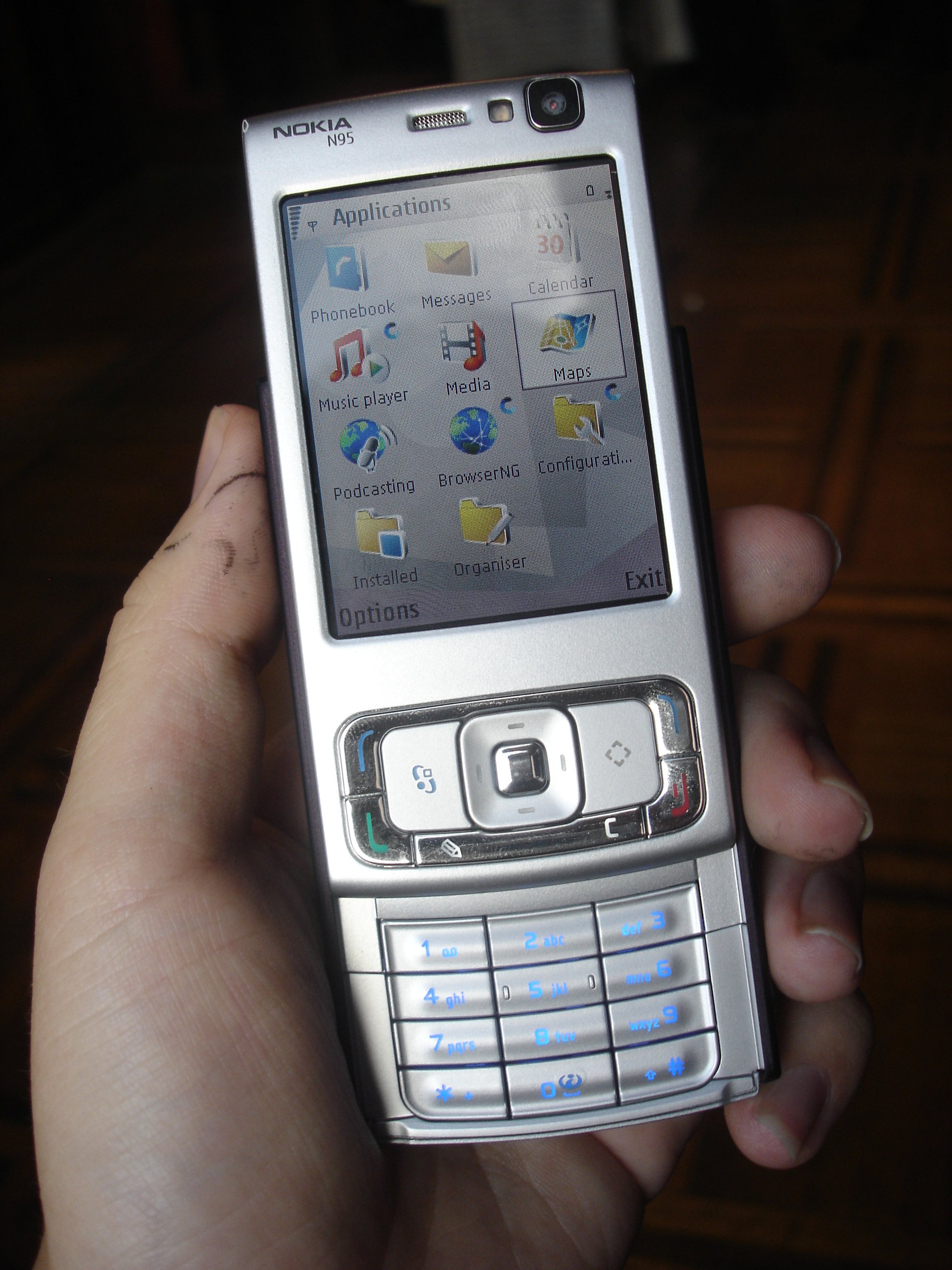
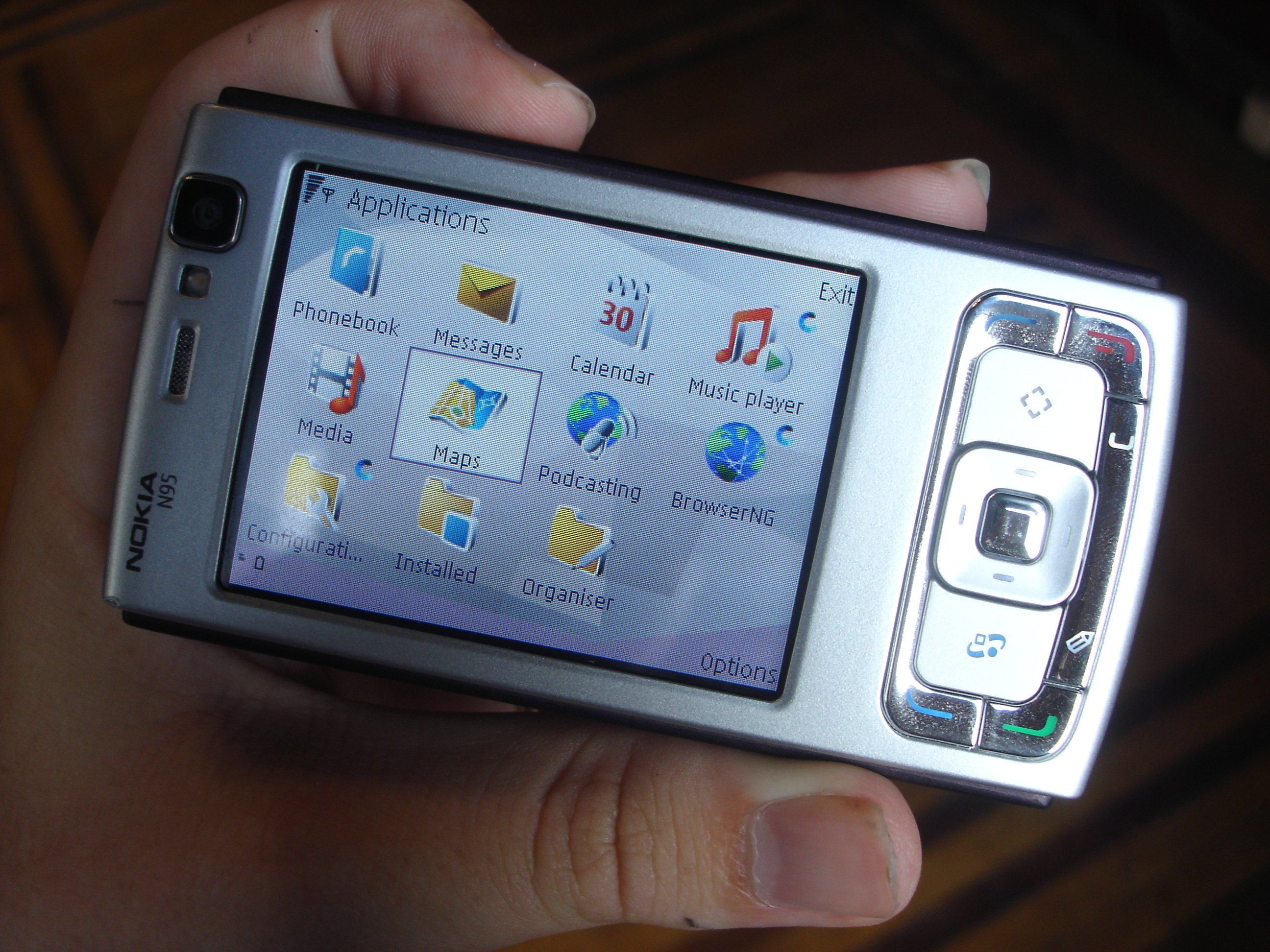
The Jelbert GeoTagger
location based services
STOP PRESS! - due to popular demand, we will shortly be offering a complete package including the GeoTagger, the Garmin and RoboGEO together. Please email for details.
The Jelbert GeoTagger is a compact device, smaller than most flash guns, that uniquely connects to the camera flash shoe and follows the direction of the camera lens. Once fitted, it will record the precise location AND direction of every photograph you take.Share your geo-tagged images on-line in photo communities or manage your photo library more efficiently using mapping. See the demo page for examples.
The Jelbert GeoTagger is more advanced than other geo-tagging devices on the market. Other solutions estimate the location of the photograph from a recorded GPS track and guess at the direction of the photograph using GPS track data. This frequently leads to inaccuracies that can reduce the value of your location meta-data and photograph. It also limits the ability to cross-reference the picture with mapping databases.
Only The Jelbert GeoTagger records specific location information each time a picture is taken. It guarantees accurate position and direction data every time.
When each photograph is taken, the Jelbert GeoTagger receives a signal via the flash shoe that tells it to capture the current location and direction data from the GPS receiver. It stores it on the built-in SD FLASH memory card and records data relating to:
· Latitude and Longitude· Magnetic compass direction· Time and date
At the end of the photo session, the location information is merged with the photographs. This must be done using 3rd party software such as RoboGEO (purchased separately). The data is merged automatically by referencing the date and time stamp on each photograph with the date and time stamp of each record on the SD card.
The Jelbert GeoTagger has been built for all photographers. It works with most camera makes with a flash shoe, including digital and film SLR cameras. If the camera does not have a flash shoe, the manual trigger button can be used instead so compact and pro-sumer cameras can also be supported.Film based SLR cameras are supported providing they have a time and date stamping facility. Cross referencing is then done manually with the printed photos.
The Jelbert GeoTagger has a mount for the popular Garmin Geko 301 GPS receiver which must be fitted in order to operate (purchased separately). This popular GPS unit can provide accuracy to around 1.6M and works best when outside with a clear view of the sky.
Photographers like to be creative and take pictures while holding the camera at all angles. Tilting can stop the GPS receiver and compass from working properly so the Jelbert GeoTagger has a unique innovation called GeoLock ®. When activated, the photographer can take pictures at any angle of tilt and still capture accurate location and direction information.
Click on the picture on the right to see a larger image.
location based services
STOP PRESS! - due to popular demand, we will shortly be offering a complete package including the GeoTagger, the Garmin and RoboGEO together. Please email for details.
The Jelbert GeoTagger is a compact device, smaller than most flash guns, that uniquely connects to the camera flash shoe and follows the direction of the camera lens. Once fitted, it will record the precise location AND direction of every photograph you take.Share your geo-tagged images on-line in photo communities or manage your photo library more efficiently using mapping. See the demo page for examples.
The Jelbert GeoTagger is more advanced than other geo-tagging devices on the market. Other solutions estimate the location of the photograph from a recorded GPS track and guess at the direction of the photograph using GPS track data. This frequently leads to inaccuracies that can reduce the value of your location meta-data and photograph. It also limits the ability to cross-reference the picture with mapping databases.
Only The Jelbert GeoTagger records specific location information each time a picture is taken. It guarantees accurate position and direction data every time.
When each photograph is taken, the Jelbert GeoTagger receives a signal via the flash shoe that tells it to capture the current location and direction data from the GPS receiver. It stores it on the built-in SD FLASH memory card and records data relating to:
· Latitude and Longitude· Magnetic compass direction· Time and date
At the end of the photo session, the location information is merged with the photographs. This must be done using 3rd party software such as RoboGEO (purchased separately). The data is merged automatically by referencing the date and time stamp on each photograph with the date and time stamp of each record on the SD card.
The Jelbert GeoTagger has been built for all photographers. It works with most camera makes with a flash shoe, including digital and film SLR cameras. If the camera does not have a flash shoe, the manual trigger button can be used instead so compact and pro-sumer cameras can also be supported.Film based SLR cameras are supported providing they have a time and date stamping facility. Cross referencing is then done manually with the printed photos.
The Jelbert GeoTagger has a mount for the popular Garmin Geko 301 GPS receiver which must be fitted in order to operate (purchased separately). This popular GPS unit can provide accuracy to around 1.6M and works best when outside with a clear view of the sky.
Photographers like to be creative and take pictures while holding the camera at all angles. Tilting can stop the GPS receiver and compass from working properly so the Jelbert GeoTagger has a unique innovation called GeoLock ®. When activated, the photographer can take pictures at any angle of tilt and still capture accurate location and direction information.
Click on the picture on the right to see a larger image.
Move over, Rand McNally: Google Earth is becoming the standard tool for organizing geographical information.
By Wade Roush
Almost any geospatial data can now be easily imported into Google Earth. This image shows the 3-D model of a building, developed using software from Bentley Systems, and placed within Google Earth. (Courtesy of Bentley Systems)
Thanks largely to Google Earth, released by Google in 2005, finding information linked to geographical locations is becoming far easier. Now, earlier this month, Google unveiled new layers for Google Earth: collections of practical and educational resources related to specific places on the planet.
Icons linking to this mass of information--which is being provided by organizations such as the United Nations, the U.S. National Park Service, National Geographic, and Turn Here, a publisher of city guides--appear atop the Google Earth landscape with the click of a mouse.
Although details such as buildings, national boundaries, and road networks have long been a part of Google Earth, this new "featured content" material represents the website's first official attempt to build what might be described as a geographically indexed world encyclopedia.
In fact, with more than 100 million copies of Google Earth downloaded between June 2005 and March 2006 (and an undisclosed number since then), Google stands to dominate the online mapping industry.
"People don't know how much good geocoded information is out there. Google is trying to correct that," says Frank Taylor, a North Carolina-based entrepreneur who publishes Google Earth Blog, an unofficial guide to the program's features.
On its surface, so to speak, Google Earth is simply a collection of zoomable aerial and satellite photos carpeting a 3-D model of the Earth. But the software's real significance is much broader. Almost any type of information can be uploaded to the Web and then downloaded directly into Google Earth, as long as it is encoded in Google's open file format, KML, where it's visible as a new "layer," or annotation, superimposed on the satellite data. Today, thousands of individuals and companies are using KML to create and share their geotagged documents, turning Google Earth into a giant source for location-specific data.
With the new featured content, Google is calling attention to some of this information--from trail maps, professional nature photography, QuickTime movies, and links to magazine articles, to images from space documenting environmental degradation in various regions of the world over time. For example, the United Nations Environmental Program has provided 35 years of Landsat photos that can be overlaid on Google Earth, illustrating changes in "crisis zones" where human expansion and climate change are causing potentially irreversible damage to the natural environment.
"We wanted to put some of this content right inside the application, one click away," says John Hanke, Google's general manager for Google Earth and Google Maps. (Hanke's virtual-mapping company, Keyhole, was acquired by Google in 2004; KML stands for Keyhole Markup Language.) "Most of it was stuff people were already in the process of publishing in KML, and we just brought it in." Many government and nonprofit organizations are busy preparing and publishing information in KML, which is a simple variation of XML, the Web's main formatting language.
location based services
By Wade Roush
Almost any geospatial data can now be easily imported into Google Earth. This image shows the 3-D model of a building, developed using software from Bentley Systems, and placed within Google Earth. (Courtesy of Bentley Systems)
Thanks largely to Google Earth, released by Google in 2005, finding information linked to geographical locations is becoming far easier. Now, earlier this month, Google unveiled new layers for Google Earth: collections of practical and educational resources related to specific places on the planet.
Icons linking to this mass of information--which is being provided by organizations such as the United Nations, the U.S. National Park Service, National Geographic, and Turn Here, a publisher of city guides--appear atop the Google Earth landscape with the click of a mouse.
Although details such as buildings, national boundaries, and road networks have long been a part of Google Earth, this new "featured content" material represents the website's first official attempt to build what might be described as a geographically indexed world encyclopedia.
In fact, with more than 100 million copies of Google Earth downloaded between June 2005 and March 2006 (and an undisclosed number since then), Google stands to dominate the online mapping industry.
"People don't know how much good geocoded information is out there. Google is trying to correct that," says Frank Taylor, a North Carolina-based entrepreneur who publishes Google Earth Blog, an unofficial guide to the program's features.
On its surface, so to speak, Google Earth is simply a collection of zoomable aerial and satellite photos carpeting a 3-D model of the Earth. But the software's real significance is much broader. Almost any type of information can be uploaded to the Web and then downloaded directly into Google Earth, as long as it is encoded in Google's open file format, KML, where it's visible as a new "layer," or annotation, superimposed on the satellite data. Today, thousands of individuals and companies are using KML to create and share their geotagged documents, turning Google Earth into a giant source for location-specific data.
With the new featured content, Google is calling attention to some of this information--from trail maps, professional nature photography, QuickTime movies, and links to magazine articles, to images from space documenting environmental degradation in various regions of the world over time. For example, the United Nations Environmental Program has provided 35 years of Landsat photos that can be overlaid on Google Earth, illustrating changes in "crisis zones" where human expansion and climate change are causing potentially irreversible damage to the natural environment.
"We wanted to put some of this content right inside the application, one click away," says John Hanke, Google's general manager for Google Earth and Google Maps. (Hanke's virtual-mapping company, Keyhole, was acquired by Google in 2004; KML stands for Keyhole Markup Language.) "Most of it was stuff people were already in the process of publishing in KML, and we just brought it in." Many government and nonprofit organizations are busy preparing and publishing information in KML, which is a simple variation of XML, the Web's main formatting language.
Demystifying geospatial - the basics
location based services
Are you a web developer, data analyst or some other geek who wants to jump on the "location" bandwagon? Here are some of the "geospatial" basics you need to know. Want to learn more? My new book, Web Mapping Illustrated, will get you up to speed in no time.What is geospatial anyway?Geospatial data refers to information about the geographic location of an entity. This often involves the use of a geographic coordinate, like a latitude or longitude value. Spatial data is another commonly used term, as are: geographic data, geographic information system (GIS) data, map data, location data, coordinate data and spatial geometry data.Applications using geospatial data perform a variety of functions. Map production is the most easily understood function of geospatial applications. Mapping programs take geospatial data and render it in a form that is viewable, usually on a computer screen or printed page. Applications can present static maps (a simple image) or dynamic maps that are customised by the person viewing the map through a desktop program or a web page.Many people mistakenly assume that geospatial applications just produce maps, but geospatial data analysis is another primary function of geospatial applications. Some typical types of analysis include computing:
distances between geographic locations
the amount of area (e.g., square metres) within a certain geographic region
what geographic features overlap other features
the amount of overlap between features
the number of locations within a certain distance of another
and so on...These may seem simplistic, but can be applied in all sorts of ways across many disciplines. The results of analysis may be shown on a map, but are often tabulated into a report to support management decisions.The recent phenomena of location-based services promises to introduce all sorts of other features, but many will be based on a combination of maps and analysis. For example, you have a cell phone that tracks your geographic location. If you have the right software, your phone can tell you what kind of restaurants are within walking distance. While this is a novel application of geospatial technology, it is essentially doing geospatial data analysis and listing the results for you.Why is all this so new?Well, it's not. There are many new hardware devices that are enabling mobile geospatial services. Many open source geospatial applications are also available, but the existence of geospatially focused hardware and software is nothing new. Global positioning system (GPS) receivers are becoming commonplace, but have been used in various industries for more than a decade. Likewise, desktop mapping and analysis tools have also been a major commercial market, primarily focused on industries such as natural resource management.What is new, is how the latest hardware and software is being applied and who is applying it. Traditional users of mapping and analysis tools were highly trained GIS Analysts or digital mapping technicians trained to use CAD-like tools. Now, the processing capabilities of home PC's and open source software packages have enabled an army of hobbyists, professionals, web developers, etc. to interact with geospatial data. The learning curve has come down. The costs have come down. The amount of geospatial technology saturation has increased.How is geospatial data stored?In a nutshell, there are two types of geospatial data in widespread use today. This is in additional to traditional tabular data that is also widely used by geospatial applications.1) Raster DataOne type of geospatial data is called raster data or simply "a raster". The most easily recognised form of raster data is digital satellite imagery or air photos. Elevation shading or digital elevation models are also typically represented as raster data. Any type of map feature can be represented as raster data, but there are limitations. A raster is a regular grid made up of cells, or in the case of imagery, pixels. They have a fixed number of rows and columns. Each cell has a numeric value and has a certain geographic size (e.g. 30x30 metres in size). Multiple overlapping rasters are used to represent images using more than one colour value (i.e. one raster for each set of red, green and blue values is combined to create a colour image). Satellite imagery also represents data in multiple "bands". Each band is essentially a separate, spatially overlapping raster where each band holds values of certain wavelengths of light. As you can imagine, a large raster takes up more file space. A raster with smaller cells can provide more detail, but takes up more file space. The trick is finding the right balance between cell size for storage purposes and cell size for analytical or mapping purposes.2) Vector DataVector data is also used in geospatial applications. If you stayed awake during trigonometry and coordinate geometry classes, you will already be familiar with some of the qualities of vector data. In its simplest sense, vectors are a way of describing a location by using a set of coordinates. Each coordinate refers to a geographic location using a system of x and y values. This can be thought of in reference to a Cartesian plane - you know, the diagrams from school that showed an x and y-axis. You might have used them to chart declining retirement savings or increasing compound mortgage interest, but the concepts are essential to geospatial data analysis and mapping. There are various ways of representing these geographic coordinates depending on your purpose. This is a whole area of study for another day - map projections.Vector data takes on three forms, each progressively more complex and building on the former.
Points - A single coordinate (x y) represents the discrete geographic location
Lines - Multiple coordinates (x1 y1, x2 y2, x3 y4, ... xn yn) strung together in a certain order. Like drawing a line from Point (x1 y1) to Point (x2 y2) and so on. These parts between each point are considered line segments. They have a length and the line can be said to have a direction based on the order of the points. Technically, a line is a single pair of coordinates connected together; whereas, a line string is multiple lines connected together.
Polygons - When lines are strung together by more than two points, with the last point being at the same location as the first, we call this a polygon. A triangle, circle, rectangle, etc. are all polygons. The key feature of polygons is that there is a fixed area within them.How can I start using geospatial data now?If you are considering using geospatial data and building applications, this is a great time to get started. The historical foundation of geospatial data management and applications is opening up for others to capitalise on.Many open source geospatial software projects exist. More are being started every year. Among these are both new and mature tools for handling data, making maps and doing geospatial analysis.The work of the Open Geospatial Consortium (OGC) has produced many great interoperability specifications, allowing you to share data using standard formats and programming interfaces. Hundreds of organisations provide access to their data using these specifications, giving you easy access to data, at no cost.Continuing EducationWant to know more? There are a variety of ways you can dig deeper into this subject:
My book, Web Mapping Illustrated, discusses many aspects of geospatial data management and application development. It is due out next month (June 2005).
Mapping Hacks is another O'Reilly book that is focused on geospatial technologies, also due out next month.Consider attending one of these two conferences next month:
Open Source Geospatial '05 - June 16-18th in Minneapolis, Minnesota, U.S.A.
O'Reilly's Where 2.0 Conference - June 29-30th in San Francisco, California, U.S.A.
Tyler Mitchell is the author of Web Mapping Illustrated and has a BA in geography from Lakehead University. His interests include geospatial and tabular data management, and analysis, manipulation, and visualization using open source tools.
location based services
Are you a web developer, data analyst or some other geek who wants to jump on the "location" bandwagon? Here are some of the "geospatial" basics you need to know. Want to learn more? My new book, Web Mapping Illustrated, will get you up to speed in no time.What is geospatial anyway?Geospatial data refers to information about the geographic location of an entity. This often involves the use of a geographic coordinate, like a latitude or longitude value. Spatial data is another commonly used term, as are: geographic data, geographic information system (GIS) data, map data, location data, coordinate data and spatial geometry data.Applications using geospatial data perform a variety of functions. Map production is the most easily understood function of geospatial applications. Mapping programs take geospatial data and render it in a form that is viewable, usually on a computer screen or printed page. Applications can present static maps (a simple image) or dynamic maps that are customised by the person viewing the map through a desktop program or a web page.Many people mistakenly assume that geospatial applications just produce maps, but geospatial data analysis is another primary function of geospatial applications. Some typical types of analysis include computing:
distances between geographic locations
the amount of area (e.g., square metres) within a certain geographic region
what geographic features overlap other features
the amount of overlap between features
the number of locations within a certain distance of another
and so on...These may seem simplistic, but can be applied in all sorts of ways across many disciplines. The results of analysis may be shown on a map, but are often tabulated into a report to support management decisions.The recent phenomena of location-based services promises to introduce all sorts of other features, but many will be based on a combination of maps and analysis. For example, you have a cell phone that tracks your geographic location. If you have the right software, your phone can tell you what kind of restaurants are within walking distance. While this is a novel application of geospatial technology, it is essentially doing geospatial data analysis and listing the results for you.Why is all this so new?Well, it's not. There are many new hardware devices that are enabling mobile geospatial services. Many open source geospatial applications are also available, but the existence of geospatially focused hardware and software is nothing new. Global positioning system (GPS) receivers are becoming commonplace, but have been used in various industries for more than a decade. Likewise, desktop mapping and analysis tools have also been a major commercial market, primarily focused on industries such as natural resource management.What is new, is how the latest hardware and software is being applied and who is applying it. Traditional users of mapping and analysis tools were highly trained GIS Analysts or digital mapping technicians trained to use CAD-like tools. Now, the processing capabilities of home PC's and open source software packages have enabled an army of hobbyists, professionals, web developers, etc. to interact with geospatial data. The learning curve has come down. The costs have come down. The amount of geospatial technology saturation has increased.How is geospatial data stored?In a nutshell, there are two types of geospatial data in widespread use today. This is in additional to traditional tabular data that is also widely used by geospatial applications.1) Raster DataOne type of geospatial data is called raster data or simply "a raster". The most easily recognised form of raster data is digital satellite imagery or air photos. Elevation shading or digital elevation models are also typically represented as raster data. Any type of map feature can be represented as raster data, but there are limitations. A raster is a regular grid made up of cells, or in the case of imagery, pixels. They have a fixed number of rows and columns. Each cell has a numeric value and has a certain geographic size (e.g. 30x30 metres in size). Multiple overlapping rasters are used to represent images using more than one colour value (i.e. one raster for each set of red, green and blue values is combined to create a colour image). Satellite imagery also represents data in multiple "bands". Each band is essentially a separate, spatially overlapping raster where each band holds values of certain wavelengths of light. As you can imagine, a large raster takes up more file space. A raster with smaller cells can provide more detail, but takes up more file space. The trick is finding the right balance between cell size for storage purposes and cell size for analytical or mapping purposes.2) Vector DataVector data is also used in geospatial applications. If you stayed awake during trigonometry and coordinate geometry classes, you will already be familiar with some of the qualities of vector data. In its simplest sense, vectors are a way of describing a location by using a set of coordinates. Each coordinate refers to a geographic location using a system of x and y values. This can be thought of in reference to a Cartesian plane - you know, the diagrams from school that showed an x and y-axis. You might have used them to chart declining retirement savings or increasing compound mortgage interest, but the concepts are essential to geospatial data analysis and mapping. There are various ways of representing these geographic coordinates depending on your purpose. This is a whole area of study for another day - map projections.Vector data takes on three forms, each progressively more complex and building on the former.
Points - A single coordinate (x y) represents the discrete geographic location
Lines - Multiple coordinates (x1 y1, x2 y2, x3 y4, ... xn yn) strung together in a certain order. Like drawing a line from Point (x1 y1) to Point (x2 y2) and so on. These parts between each point are considered line segments. They have a length and the line can be said to have a direction based on the order of the points. Technically, a line is a single pair of coordinates connected together; whereas, a line string is multiple lines connected together.
Polygons - When lines are strung together by more than two points, with the last point being at the same location as the first, we call this a polygon. A triangle, circle, rectangle, etc. are all polygons. The key feature of polygons is that there is a fixed area within them.How can I start using geospatial data now?If you are considering using geospatial data and building applications, this is a great time to get started. The historical foundation of geospatial data management and applications is opening up for others to capitalise on.Many open source geospatial software projects exist. More are being started every year. Among these are both new and mature tools for handling data, making maps and doing geospatial analysis.The work of the Open Geospatial Consortium (OGC) has produced many great interoperability specifications, allowing you to share data using standard formats and programming interfaces. Hundreds of organisations provide access to their data using these specifications, giving you easy access to data, at no cost.Continuing EducationWant to know more? There are a variety of ways you can dig deeper into this subject:
My book, Web Mapping Illustrated, discusses many aspects of geospatial data management and application development. It is due out next month (June 2005).
Mapping Hacks is another O'Reilly book that is focused on geospatial technologies, also due out next month.Consider attending one of these two conferences next month:
Open Source Geospatial '05 - June 16-18th in Minneapolis, Minnesota, U.S.A.
O'Reilly's Where 2.0 Conference - June 29-30th in San Francisco, California, U.S.A.
Tyler Mitchell is the author of Web Mapping Illustrated and has a BA in geography from Lakehead University. His interests include geospatial and tabular data management, and analysis, manipulation, and visualization using open source tools.
TGS 06: Sony Debuts PSP GPS
location based services
For the first time ever, the PSP’s new GPS receiver was out in the public at the Sony booth at Tokyo Game Show. According to Gamespot, there was no touching and no photography allowed of the actual GPS receiver. Gamespot also got some stats on the peripheral:
The receiver is extremely compact at less than two square inches (45mm x 41mm x 17mm), meaning it’s a little bigger than an average person’s thumb. Plus it supposedly only weighs 16 grams, which is about half an ounce (0.56oz).
There wasn’t any new software for the PSP at the booth, but Sony did announce that Metal Gear Solid: Portable Ops and Minna no Golf-jou would both integrate the GPS receiver into their interface. If used correctly, the GPS could add quite a bit of depth to PSP games, which are really depth-deprived at the moment. No word on when the GPS receiver will be released, stay tuned.
location based services
For the first time ever, the PSP’s new GPS receiver was out in the public at the Sony booth at Tokyo Game Show. According to Gamespot, there was no touching and no photography allowed of the actual GPS receiver. Gamespot also got some stats on the peripheral:
The receiver is extremely compact at less than two square inches (45mm x 41mm x 17mm), meaning it’s a little bigger than an average person’s thumb. Plus it supposedly only weighs 16 grams, which is about half an ounce (0.56oz).
There wasn’t any new software for the PSP at the booth, but Sony did announce that Metal Gear Solid: Portable Ops and Minna no Golf-jou would both integrate the GPS receiver into their interface. If used correctly, the GPS could add quite a bit of depth to PSP games, which are really depth-deprived at the moment. No word on when the GPS receiver will be released, stay tuned.
Western DataCom Announces MobileCom XE High Speed Cellular Modem for EV-DO/HSDPA Networks
location based services
MobileCom XE High Speed Cellular Modem for EV-DO/HSDPA NetworksWestern DataCom has designed a high speed digital 3G cellular modem for Evolution-Data Optimized (EV-DO) and High Speed Downlink Packet Access (HSDPA) based cellular networks. The MobileCom XE modem operates at carrier speeds that are currently available. For 1xEV-DO Rev.0 networks, throughput of this cellular modem is typically 1M bps and in HSDPA networks, modem throughputs are typically 500k bps. This cellular modem comes standard with GPS for navigation and location based services. The MobileCom XE has 10/100 based Ethernet and serial interfaces for easy installation and is packaged on a PC/104 board with available standalone or rackmount chassis. This modem will be upgradeable to 2xEV-DO and higher speed HSDPA networks when these higher speed networks are available from the cellular carriers.For more details, please contact Western DataCom by phone at 440-835-1510 or sales@western-data.com www.western-data.com
Source: Western DataCom Co., Inc.
location based services
MobileCom XE High Speed Cellular Modem for EV-DO/HSDPA NetworksWestern DataCom has designed a high speed digital 3G cellular modem for Evolution-Data Optimized (EV-DO) and High Speed Downlink Packet Access (HSDPA) based cellular networks. The MobileCom XE modem operates at carrier speeds that are currently available. For 1xEV-DO Rev.0 networks, throughput of this cellular modem is typically 1M bps and in HSDPA networks, modem throughputs are typically 500k bps. This cellular modem comes standard with GPS for navigation and location based services. The MobileCom XE has 10/100 based Ethernet and serial interfaces for easy installation and is packaged on a PC/104 board with available standalone or rackmount chassis. This modem will be upgradeable to 2xEV-DO and higher speed HSDPA networks when these higher speed networks are available from the cellular carriers.For more details, please contact Western DataCom by phone at 440-835-1510 or sales@western-data.com www.western-data.com
Source: Western DataCom Co., Inc.
Tuesday, September 26, 2006
Mobile Marketing Solutions
location based services
BLIP Systems offers a wide range of solutions for Mobile Marketing and Location Based Services.
BlipZones
BlipZones is the new & exciting Mobile Marketing Communication channel based on Bluetooth technology. The technology enables a targeted interaction with:
The right person, at the right time, in the right place and in the right context
BlipZones technology provides a high bandwidth & reliable marketing channel, with no costs for the end-user. It enables any company to distribute high bandwidth content such as pictures, sound and even video to registered or unregistered users.
Click here to find out more about BlipZones
BlipZones Modules
BlipZones technology consists of Basic module, Competition module and BlipExplorer. BlipZones Basic offers the possibility to send out rich media content to users with any Bluetooth mobile phone. Now the BlipZones software also includes device specific content delivery to mobiles, which provides an increased targeted communication with the user.
Furthermore, BlipZones can also run competitions or lottery campaigns. The competition module now provides the opportunity to run campaigns with a defined number of winners and the number of detection between them. Winner coupons can even uniquely watermarked.
The BlipExplorer is an application that the users accepts to receives. This can be targeted to the interests of the user or specific target groups and includes various opportunities for targeted specific content promoting a brand/organisation/event or product.
Click here to register for our free BlipZones webinar
location based services
BLIP Systems offers a wide range of solutions for Mobile Marketing and Location Based Services.
BlipZones
BlipZones is the new & exciting Mobile Marketing Communication channel based on Bluetooth technology. The technology enables a targeted interaction with:
The right person, at the right time, in the right place and in the right context
BlipZones technology provides a high bandwidth & reliable marketing channel, with no costs for the end-user. It enables any company to distribute high bandwidth content such as pictures, sound and even video to registered or unregistered users.
Click here to find out more about BlipZones
BlipZones Modules
BlipZones technology consists of Basic module, Competition module and BlipExplorer. BlipZones Basic offers the possibility to send out rich media content to users with any Bluetooth mobile phone. Now the BlipZones software also includes device specific content delivery to mobiles, which provides an increased targeted communication with the user.
Furthermore, BlipZones can also run competitions or lottery campaigns. The competition module now provides the opportunity to run campaigns with a defined number of winners and the number of detection between them. Winner coupons can even uniquely watermarked.
The BlipExplorer is an application that the users accepts to receives. This can be targeted to the interests of the user or specific target groups and includes various opportunities for targeted specific content promoting a brand/organisation/event or product.
Click here to register for our free BlipZones webinar
Nokia’s Big Music Day: Launches Smartphones, Song Service
location based services
At an event in New York today, Nokia introduced a couple of new Nseries handsets, updates to three existing models, and a new music recommendation service.
The world's top-selling mobile phone and smartphone vendor emphasized how multimedia is the fastest growing segment in the mobile space. For example, this year alone Nokia has sold over of 10 million of its high-end Nseries devices so far, and aims to sell 80 million music phones period before close of 2006.
All-In-One N95First up on the menu is the new N95, which appears to include everything but the kitchen sink. As with all Nseries models, the device is built on the Symbian OS and S60 interface. It features a unique 2-way slider design that reveals media controls when moved one way and a keypad when moved the other.
When the N95 is in media mode, the 2.6-inch 240 x 320 pixel (QVGA) and 16 million color display is automatically placed into landscape mode. Built-in stereo speakers offer a 3D stereo effect, plus there's a standard 3.5 mm audio jack for headphones, a microSD slot for storage expansion, and mini USB for data transfers. Bluetooth with A2DP allows users to leverage wireless stereo headsets as well.
Users can record and playback VGA video at 30 fps with digital image stabilization. There's also TV out and support for MP3, AAC, M4A, and WMA audio files.
The N95 is also Nokia's first smartphone with a 5 megapixel digital camera for picture for video (the previous generation of Nseries models topped out at 3 megapixels) and integrated GPS for mapping and navigation. Tele Atlas provides the digital map data and dynamic location content handset, which includes free basic mapping and routing functionalities to initiate local searches for more than 100 countries and over 15 million points of interest.
There's also Wi-Fi, 160 MB of memory, and support for high speed HSDPA networks with the GSM/GPRS/EDGE/UTMS N95. As with all recent Nokia smartphones, including the N75 below, there's the new Nokia Web Browser with Mini Map for an improved Internet experience. We'll be publishing a detailed review of this browser in the near future.
The N95 weighs a mere 4.2 ounces (120 grams) and measures 4.0 x 2.0 x 0.7 inches (99 x 53 x 19 millimeters).
Nokia plans to ship the N95 during the first quarter of 2007 for about 550 Euros (about $702). It isn't clear if this model will make it stateside.
Compact N75A new smartphone that will definitely hit the U.S. market is the N75 clamshell, Nokia's smallest Nseries model yet - at 3.7 x 2.0 x 0.8 inches (95 x 52 x 20 millimeters) and 4.4 ounces (124 grams).
While the N75 and older N73, which has gotten a music-orientated makeover, are narrow, Nokia still has a way to go before reaching Motorola RAZR thinness of14 millimeters.
On the outside of the N75 is a small reflective 160 x 128 pixel resolution display and media controls for a music application. Inside, the 3G-enabled quad-band GPRS/EDGE/HTMS/HSDPA phone sports a 2.4-inch 240 x 320 pixel resolution (QVGA) screen that is capable of displaying 16 million different colors.
There's a 2 megapixel camera, micoSD slot, 40 MB of memory, FM radio, and Bluetooth 2.0 with support for wireless headsets. It can handle a variety of audio file formats and record and playback video at 15fps and a 352 x 288 resolution.
Nokia expects the N75 to become available during the fourth quarter of 2006 for an as-of-yet undisclosed price. No word on what American carrier will pick it up, although one in particular comes to mind - Cingular - as the most obvious.
Nokia Muscles Up with MusicThe trio of previously available Nseries models that got music makeovers includes the N91, N73 and N70, one of the original phones in the series. All three Music Edition versions of these smartphones, in what Nokia is calling the Nokia Nseries Music Range, now feature a Black chassis - the first noticeable difference. N73, N91, N70 Music Editions
There is also now additional software for easier synchronization and music management and more storage in all three models. For the N73 that means Nokia now bundles a 2 GB memory card and the N70 a 1 GB card.
Ah, but the N91 was a music phone already - a 4 GB smartphone in fact. What Nokia has done for that model is up its micro drive capacity to 8 GB. N91 Music Edition
Other than the aforementioned changes, the specs of the these devices stay pretty much the same as they've always been (see links below for details).
Nokia said the N70 Music Edition (350 Euros, about $447)and Nokia N73 Music Edition (450 Euros, about $574) should ship next monthly, while the Nokia N91 8GB (550 Euros, about $702) probably won't become available until later in the year. As with N95, there's no word yet on American availability.
Try This Song Today, came word that regulators approved Nokia's $60 million acquisition of music distributor Loudeye, which powers MSN and MTV's music stores, along with more than 60 other audio services. The Finnish phone maker also said it is working with forty leading independent music stores from around the world to launch a new music recommendation site on the Loudeye platform for later this fall- first in Britain and Australia. Called Music Recommenders, each of the 40 stores will offer a personalized selection of new music across 12 genres each month. Users can browse, search and listen to samples of the music, and then (of course) purchase it.
David Bowie will serve as the roll of 'godfather' to the whole enterprise, contributing his own recommendations as well as features and podcasts. "Waking up to a new sound or new band is something that makes my day just that bit more exciting," said Bowie. "Unfortunately, so much music goes unheard, especially things that don't bow to the mainstream. Music Recommenders help navigate the undiscovered music that is out there." He added, “I've actually been to some of the stores featured on Music Recommenders in various parts of the world, and found them to be a wonderful source for new and less traditional music."
Of course, Music Recommenders is only a prelude to Nokia's larger vision, competing with the likes of Apple's iTunes and Microsoft's upcoming Zune stores "We will launch a fully fledged comprehensive music service including devices and music purchase globally sometime in 2007," said Tapio Hedman, Nokia senior vice president for multimedia marketing, to Reuters.
location based services
At an event in New York today, Nokia introduced a couple of new Nseries handsets, updates to three existing models, and a new music recommendation service.
The world's top-selling mobile phone and smartphone vendor emphasized how multimedia is the fastest growing segment in the mobile space. For example, this year alone Nokia has sold over of 10 million of its high-end Nseries devices so far, and aims to sell 80 million music phones period before close of 2006.
All-In-One N95First up on the menu is the new N95, which appears to include everything but the kitchen sink. As with all Nseries models, the device is built on the Symbian OS and S60 interface. It features a unique 2-way slider design that reveals media controls when moved one way and a keypad when moved the other.
When the N95 is in media mode, the 2.6-inch 240 x 320 pixel (QVGA) and 16 million color display is automatically placed into landscape mode. Built-in stereo speakers offer a 3D stereo effect, plus there's a standard 3.5 mm audio jack for headphones, a microSD slot for storage expansion, and mini USB for data transfers. Bluetooth with A2DP allows users to leverage wireless stereo headsets as well.
Users can record and playback VGA video at 30 fps with digital image stabilization. There's also TV out and support for MP3, AAC, M4A, and WMA audio files.
The N95 is also Nokia's first smartphone with a 5 megapixel digital camera for picture for video (the previous generation of Nseries models topped out at 3 megapixels) and integrated GPS for mapping and navigation. Tele Atlas provides the digital map data and dynamic location content handset, which includes free basic mapping and routing functionalities to initiate local searches for more than 100 countries and over 15 million points of interest.
There's also Wi-Fi, 160 MB of memory, and support for high speed HSDPA networks with the GSM/GPRS/EDGE/UTMS N95. As with all recent Nokia smartphones, including the N75 below, there's the new Nokia Web Browser with Mini Map for an improved Internet experience. We'll be publishing a detailed review of this browser in the near future.
The N95 weighs a mere 4.2 ounces (120 grams) and measures 4.0 x 2.0 x 0.7 inches (99 x 53 x 19 millimeters).
Nokia plans to ship the N95 during the first quarter of 2007 for about 550 Euros (about $702). It isn't clear if this model will make it stateside.
Compact N75A new smartphone that will definitely hit the U.S. market is the N75 clamshell, Nokia's smallest Nseries model yet - at 3.7 x 2.0 x 0.8 inches (95 x 52 x 20 millimeters) and 4.4 ounces (124 grams).
While the N75 and older N73, which has gotten a music-orientated makeover, are narrow, Nokia still has a way to go before reaching Motorola RAZR thinness of14 millimeters.
On the outside of the N75 is a small reflective 160 x 128 pixel resolution display and media controls for a music application. Inside, the 3G-enabled quad-band GPRS/EDGE/HTMS/HSDPA phone sports a 2.4-inch 240 x 320 pixel resolution (QVGA) screen that is capable of displaying 16 million different colors.
There's a 2 megapixel camera, micoSD slot, 40 MB of memory, FM radio, and Bluetooth 2.0 with support for wireless headsets. It can handle a variety of audio file formats and record and playback video at 15fps and a 352 x 288 resolution.
Nokia expects the N75 to become available during the fourth quarter of 2006 for an as-of-yet undisclosed price. No word on what American carrier will pick it up, although one in particular comes to mind - Cingular - as the most obvious.
Nokia Muscles Up with MusicThe trio of previously available Nseries models that got music makeovers includes the N91, N73 and N70, one of the original phones in the series. All three Music Edition versions of these smartphones, in what Nokia is calling the Nokia Nseries Music Range, now feature a Black chassis - the first noticeable difference. N73, N91, N70 Music Editions
There is also now additional software for easier synchronization and music management and more storage in all three models. For the N73 that means Nokia now bundles a 2 GB memory card and the N70 a 1 GB card.
Ah, but the N91 was a music phone already - a 4 GB smartphone in fact. What Nokia has done for that model is up its micro drive capacity to 8 GB. N91 Music Edition
Other than the aforementioned changes, the specs of the these devices stay pretty much the same as they've always been (see links below for details).
Nokia said the N70 Music Edition (350 Euros, about $447)and Nokia N73 Music Edition (450 Euros, about $574) should ship next monthly, while the Nokia N91 8GB (550 Euros, about $702) probably won't become available until later in the year. As with N95, there's no word yet on American availability.
Try This Song Today, came word that regulators approved Nokia's $60 million acquisition of music distributor Loudeye, which powers MSN and MTV's music stores, along with more than 60 other audio services. The Finnish phone maker also said it is working with forty leading independent music stores from around the world to launch a new music recommendation site on the Loudeye platform for later this fall- first in Britain and Australia. Called Music Recommenders, each of the 40 stores will offer a personalized selection of new music across 12 genres each month. Users can browse, search and listen to samples of the music, and then (of course) purchase it.
David Bowie will serve as the roll of 'godfather' to the whole enterprise, contributing his own recommendations as well as features and podcasts. "Waking up to a new sound or new band is something that makes my day just that bit more exciting," said Bowie. "Unfortunately, so much music goes unheard, especially things that don't bow to the mainstream. Music Recommenders help navigate the undiscovered music that is out there." He added, “I've actually been to some of the stores featured on Music Recommenders in various parts of the world, and found them to be a wonderful source for new and less traditional music."
Of course, Music Recommenders is only a prelude to Nokia's larger vision, competing with the likes of Apple's iTunes and Microsoft's upcoming Zune stores "We will launch a fully fledged comprehensive music service including devices and music purchase globally sometime in 2007," said Tapio Hedman, Nokia senior vice president for multimedia marketing, to Reuters.
TECHNOLOGY TO HELP IMPROVE BUS SERVICES
location based services
Two trials using state-of-the-art technology will be conducted during the third school term as part of the current review of Tasmanian bus services.
The Minister for Infrastructure, Jim Cox, said today that the review had been told by people across Tasmania that bus services were not meeting the needs of communities.
“If our bus services are to better meet the needs of Tasmanian communities, better information is required on the use of buses,” Mr Cox said.
“During term three we will be undertaking two technology trials. One will involve free-to-the-user school buses and the other fare paying bus services.
“These trials are the first step in delivering modern and up-to-date bus services to regional Tasmania and will test the applicability of modern technology to the age-old problem of delivering better bus services and connecting Tasmanians living in rural and regional areas with their major population centres.”
The free-to-the-user school bus trial will be done in the Smithton area and will involve 11 buses fitted with technology which will be able to collect information on the bus used, route travelled, the time spent at stops, number of passengers carried and the location of boarding and disembarkation for passengers.
“During the trial, students using these bus services will not notice any difference in the service,” Mr Cox said.
“However, the trial is designed to enhance route planning and safety through the use of Global Positioning Systems, which will be able to track the buses on the route, and the collection of accurate passenger numbers at each stop.
The route bus service trial will be done on the Dodges Ferry/Sorell/ Hobart route and the West Tamar Launceston route. This trial will involve 20 buses fitted with technology which will be able to collect information on route travelled, time spent at stops, concession passengers carried, concession category validation and location of boarding and disembarkation for concession passengers.
The trial is designed to enhance route planning and safety through the use of Global Positioning Systems and to test smart card technology in relation to concession passenger journeys.
Students and other concession holders will be issued with a special ‘Go Card’ for the duration of the trial to identify their concession category. During the trial, this card will replace the current identification passengers use to access their concession fare.
It will be available on Manions Coaches in the North and Smith’s Surf to City buses in the South during the trial.
“We want to encourage users to be part of this trial, so every time the Go Card is used, the holder will be entered into a competition to win a return trip to Melbourne or an ipod Photo.
“With better information on passenger numbers, where passengers are getting on and off the bus and how well the bus is meeting its timetable, my Department will be better able to plan the future provision of bus services in areas around Tasmania that are experiencing rapid changes in population,” Mr Cox said.
location based services
Two trials using state-of-the-art technology will be conducted during the third school term as part of the current review of Tasmanian bus services.
The Minister for Infrastructure, Jim Cox, said today that the review had been told by people across Tasmania that bus services were not meeting the needs of communities.
“If our bus services are to better meet the needs of Tasmanian communities, better information is required on the use of buses,” Mr Cox said.
“During term three we will be undertaking two technology trials. One will involve free-to-the-user school buses and the other fare paying bus services.
“These trials are the first step in delivering modern and up-to-date bus services to regional Tasmania and will test the applicability of modern technology to the age-old problem of delivering better bus services and connecting Tasmanians living in rural and regional areas with their major population centres.”
The free-to-the-user school bus trial will be done in the Smithton area and will involve 11 buses fitted with technology which will be able to collect information on the bus used, route travelled, the time spent at stops, number of passengers carried and the location of boarding and disembarkation for passengers.
“During the trial, students using these bus services will not notice any difference in the service,” Mr Cox said.
“However, the trial is designed to enhance route planning and safety through the use of Global Positioning Systems, which will be able to track the buses on the route, and the collection of accurate passenger numbers at each stop.
The route bus service trial will be done on the Dodges Ferry/Sorell/ Hobart route and the West Tamar Launceston route. This trial will involve 20 buses fitted with technology which will be able to collect information on route travelled, time spent at stops, concession passengers carried, concession category validation and location of boarding and disembarkation for concession passengers.
The trial is designed to enhance route planning and safety through the use of Global Positioning Systems and to test smart card technology in relation to concession passenger journeys.
Students and other concession holders will be issued with a special ‘Go Card’ for the duration of the trial to identify their concession category. During the trial, this card will replace the current identification passengers use to access their concession fare.
It will be available on Manions Coaches in the North and Smith’s Surf to City buses in the South during the trial.
“We want to encourage users to be part of this trial, so every time the Go Card is used, the holder will be entered into a competition to win a return trip to Melbourne or an ipod Photo.
“With better information on passenger numbers, where passengers are getting on and off the bus and how well the bus is meeting its timetable, my Department will be better able to plan the future provision of bus services in areas around Tasmania that are experiencing rapid changes in population,” Mr Cox said.
The Mobile Community : Ultra Mobile Devices
location based services
I’ve been spending a lot of time learning about Ultra Mobile Computing. The question that I’m still working to address is “Where is the line that defines when a mobile devices becomes ultra mobile?” The two groups that know the most about Ultra Mobile are the Platform and the Software Teams here at Intel. The Intel platform team is all about the “what”. What it will look like. What you will do with it. What will be the interface. What is the market. And what problem will need to be addressed. Then my peers in the software group come into the scene and address the “how”. How it works. How software is developed for it. How software is optimized to mange battery life, network connecting and user input. This is where things get interesting. The Intel Developer Forum is in San Francisco this week. It is a huge event designed to give the world a glimpse into what Intel has been working to develop. I’m going to be attending specifically to learn more about Ultra Mobile devices, but also to meet the hardware and software developers that will work to make the devices most useful to the market. I’ve been working with the ultra mobile platform team to sync up their plans with the software teams plans so that when developers ask how to develop for the platform we can give them the technical information through the Mobile Developer Community.At IDF I’m hoping to learn and share what it takes to develop for the planned usage models. I’m very excited to see the reality of Ultra Mobile in action. There is going to be a session on Introduction to Ultra Mobile and another for in-car Ultra Mobile Computing. I want to see the example of using the device in the car, in the living room and on the street. I believe that Ultra Mobile devices can fill the gap between cell phones awkwardly connected to the internet and the limitation of using a laptop when you are walking around. I’ve also heard from the developers that they are excited about the potential of location based services. There is a whole new opportunity to build solutions that provide value by knowing exactly where you are. I’m hoping to see how Intel’s Ultra Mobile team addresses these challenges and give the platform the capability to know where it is. Developers are expressing interest for the Ultra Mobile devices. There is a lot of exciting about things happening with Ultra Mobile and Intel has some great things in the pipeline. After IDF I’m sure I’ll have a whole new list of the opportunities and limitation, but why wait? What do you see as the opportunity and limitation for Ultra Mobile devices?
Published Monday, September 25, 2006 4:56 PM by MAD\acterste
location based services
I’ve been spending a lot of time learning about Ultra Mobile Computing. The question that I’m still working to address is “Where is the line that defines when a mobile devices becomes ultra mobile?” The two groups that know the most about Ultra Mobile are the Platform and the Software Teams here at Intel. The Intel platform team is all about the “what”. What it will look like. What you will do with it. What will be the interface. What is the market. And what problem will need to be addressed. Then my peers in the software group come into the scene and address the “how”. How it works. How software is developed for it. How software is optimized to mange battery life, network connecting and user input. This is where things get interesting. The Intel Developer Forum is in San Francisco this week. It is a huge event designed to give the world a glimpse into what Intel has been working to develop. I’m going to be attending specifically to learn more about Ultra Mobile devices, but also to meet the hardware and software developers that will work to make the devices most useful to the market. I’ve been working with the ultra mobile platform team to sync up their plans with the software teams plans so that when developers ask how to develop for the platform we can give them the technical information through the Mobile Developer Community.At IDF I’m hoping to learn and share what it takes to develop for the planned usage models. I’m very excited to see the reality of Ultra Mobile in action. There is going to be a session on Introduction to Ultra Mobile and another for in-car Ultra Mobile Computing. I want to see the example of using the device in the car, in the living room and on the street. I believe that Ultra Mobile devices can fill the gap between cell phones awkwardly connected to the internet and the limitation of using a laptop when you are walking around. I’ve also heard from the developers that they are excited about the potential of location based services. There is a whole new opportunity to build solutions that provide value by knowing exactly where you are. I’m hoping to see how Intel’s Ultra Mobile team addresses these challenges and give the platform the capability to know where it is. Developers are expressing interest for the Ultra Mobile devices. There is a lot of exciting about things happening with Ultra Mobile and Intel has some great things in the pipeline. After IDF I’m sure I’ll have a whole new list of the opportunities and limitation, but why wait? What do you see as the opportunity and limitation for Ultra Mobile devices?
Published Monday, September 25, 2006 4:56 PM by MAD\acterste
AJAX Search API Playground
The Google AJAX Search API has a number of well documented samples and solutions including the Video Search Solution and the Map Search Control Solution. Both of these solutions are great additions to a blog.
This morning, I modified a blogger template to include both of these solutions, as well as a core search solution. Fell free to take what I have done here and apply it to your blog, modifiy to meet your needs, etc. Just follow these instructions:
Sign up for a Google Ajax Search API Key and capture the key. For my blog, I used a url of http://ajaxsearch.blogspot.com
Download my modified template.
Edit the &key= values in the template where the Google Maps API and Ajax Search API are loaded and replace with your API Key (your key will work for both APIs).
Edit your blogger template, and replace or merge yours with mine. Note, mine is based on minima black.
Once you have got this going in your blog, you can do a few cool things:
Its very easy to include a hyper link in a blog post that results in a search on the map. Just create a the hyperlink as a javascript url that calls doMapSearch('search-term');. e.g., if you look at the resulting element, in "Edit HTML" mode, it will look something like this: Sakana. Here is an example: Sakana
Embedding core center column search is just like map searching only the function is doCoreSearch(); Here is an example: Google
Embedding video search links is just like map searching only the function is doVideoSearch(); Here is an example: Jimi Hendrix
Play around with this and let me know what you think.
p.s. - If you are a TypePad user, check out http://ajaxsearch.typepad.com
The Google AJAX Search API has a number of well documented samples and solutions including the Video Search Solution and the Map Search Control Solution. Both of these solutions are great additions to a blog.
This morning, I modified a blogger template to include both of these solutions, as well as a core search solution. Fell free to take what I have done here and apply it to your blog, modifiy to meet your needs, etc. Just follow these instructions:
Sign up for a Google Ajax Search API Key and capture the key. For my blog, I used a url of http://ajaxsearch.blogspot.com
Download my modified template.
Edit the &key= values in the template where the Google Maps API and Ajax Search API are loaded and replace with your API Key (your key will work for both APIs).
Edit your blogger template, and replace or merge yours with mine. Note, mine is based on minima black.
Once you have got this going in your blog, you can do a few cool things:
Its very easy to include a hyper link in a blog post that results in a search on the map. Just create a the hyperlink as a javascript url that calls doMapSearch('search-term');. e.g., if you look at the resulting element, in "Edit HTML" mode, it will look something like this: Sakana. Here is an example: Sakana
Embedding core center column search is just like map searching only the function is doCoreSearch(); Here is an example: Google
Embedding video search links is just like map searching only the function is doVideoSearch(); Here is an example: Jimi Hendrix
Play around with this and let me know what you think.
p.s. - If you are a TypePad user, check out http://ajaxsearch.typepad.com
Pew Internet: Future of the Internet
survey of internet leaders, activists, and analysts shows that a majority agree with predictions that by 2020:
A low-cost global network will be thriving and creating new opportunities in a “flattening” world.
Humans will remain in charge of technology, even as more activity is automated and “smart agents” proliferate. However, a significant 42% of survey respondents were pessimistic about humans’ ability to control the technology in the future. This significant majority agreed that dangers and dependencies will grow beyond our ability to stay in charge of technology. This was one of the major surprises in the survey.
Virtual reality will be compelling enough to enhance worker productivity and also spawn new addiction problems.
Tech “refuseniks” will emerge as a cultural group characterized by their choice to live off the network. Some will do this as a benign way to limit information overload, while others will commit acts of violence and terror against technology-inspired change.
People will wittingly and unwittingly disclose more about themselves, gaining some benefits in the process even as they lose some privacy.
English will be a universal language of global communications, but other languages will not be displaced. Indeed, many felt other languages such as Mandarin, would grow in prominence. At the same time, there was strong dispute about those futuristic scenarios among notable numbers of 742 respondents to survey conducted by the Pew Internet & American Life Project and Elon University. Those who raised challenges believe that governments and corporations will not necessarily embrace policies that will allow the network to spread to under-served populations; that serious social inequalities will persist; and that “addiction” is an inappropriate notion to attach to people’s interest in virtual environments.
The experts and analysts also split evenly on a central question of whether the world will be a better place in 2020 due to the greater transparency of people and institutions afforded by the internet: 46% agreed that the benefits of greater transparency of organizations and individuals would outweigh the privacy costs and 49% disagreed.
View PDF of Report
survey of internet leaders, activists, and analysts shows that a majority agree with predictions that by 2020:
A low-cost global network will be thriving and creating new opportunities in a “flattening” world.
Humans will remain in charge of technology, even as more activity is automated and “smart agents” proliferate. However, a significant 42% of survey respondents were pessimistic about humans’ ability to control the technology in the future. This significant majority agreed that dangers and dependencies will grow beyond our ability to stay in charge of technology. This was one of the major surprises in the survey.
Virtual reality will be compelling enough to enhance worker productivity and also spawn new addiction problems.
Tech “refuseniks” will emerge as a cultural group characterized by their choice to live off the network. Some will do this as a benign way to limit information overload, while others will commit acts of violence and terror against technology-inspired change.
People will wittingly and unwittingly disclose more about themselves, gaining some benefits in the process even as they lose some privacy.
English will be a universal language of global communications, but other languages will not be displaced. Indeed, many felt other languages such as Mandarin, would grow in prominence. At the same time, there was strong dispute about those futuristic scenarios among notable numbers of 742 respondents to survey conducted by the Pew Internet & American Life Project and Elon University. Those who raised challenges believe that governments and corporations will not necessarily embrace policies that will allow the network to spread to under-served populations; that serious social inequalities will persist; and that “addiction” is an inappropriate notion to attach to people’s interest in virtual environments.
The experts and analysts also split evenly on a central question of whether the world will be a better place in 2020 due to the greater transparency of people and institutions afforded by the internet: 46% agreed that the benefits of greater transparency of organizations and individuals would outweigh the privacy costs and 49% disagreed.
View PDF of Report
Google AJAX Search API in Blogger
location based services
The Google AJAX Search API has a number of well documented samples and solutions including the Video Search Solution and the Map Search Control Solution. Both of these solutions are great additions to a blog.
This morning, I modified a blogger template to include both of these solutions, as well as a core search solution. Fell free to take what I have done here and apply it to your blog, modifiy to meet your needs, etc. Just follow these instructions:
Sign up for a Google Ajax Search API Key and capture the key. For my blog, I used a url of http://ajaxsearch.blogspot.com
Download my modified template.
Edit the &key= values in the template where the Google Maps API and Ajax Search API are loaded and replace with your API Key (your key will work for both APIs).
Edit your blogger template, and replace or merge yours with mine. Note, mine is based on minima black.
Once you have got this going in your blog, you can do a few cool things:
Its very easy to include a hyper link in a blog post that results in a search on the map. Just create a the hyperlink as a javascript url that calls doMapSearch('search-term');. e.g., if you look at the resulting element, in "Edit HTML" mode, it will look something like this: Sakana. Here is an example: Sakana
Embedding core center column search is just like map searching only the function is doCoreSearch(); Here is an example: Google
Embedding video search links is just like map searching only the function is doVideoSearch(); Here is an example: Jimi Hendrix
Play around with this and let me know what you think.
location based services
The Google AJAX Search API has a number of well documented samples and solutions including the Video Search Solution and the Map Search Control Solution. Both of these solutions are great additions to a blog.
This morning, I modified a blogger template to include both of these solutions, as well as a core search solution. Fell free to take what I have done here and apply it to your blog, modifiy to meet your needs, etc. Just follow these instructions:
Sign up for a Google Ajax Search API Key and capture the key. For my blog, I used a url of http://ajaxsearch.blogspot.com
Download my modified template.
Edit the &key= values in the template where the Google Maps API and Ajax Search API are loaded and replace with your API Key (your key will work for both APIs).
Edit your blogger template, and replace or merge yours with mine. Note, mine is based on minima black.
Once you have got this going in your blog, you can do a few cool things:
Its very easy to include a hyper link in a blog post that results in a search on the map. Just create a the hyperlink as a javascript url that calls doMapSearch('search-term');. e.g., if you look at the resulting element, in "Edit HTML" mode, it will look something like this: Sakana. Here is an example: Sakana
Embedding core center column search is just like map searching only the function is doCoreSearch(); Here is an example: Google
Embedding video search links is just like map searching only the function is doVideoSearch(); Here is an example: Jimi Hendrix
Play around with this and let me know what you think.
Monday, September 25, 2006
Make way for GPS bus
location based services
FOUR thousand buses will be fitted with satellite tracking technology to help them beat heavy Sydney traffic.
Transport Minister John Watkins today announced the $135 million scheme that will allow RTA traffic controllers to "green light'' buses stuck in traffic.
It will take three years to fit all 4000 private and government buses around the state.
The commitment follows successful trials of the GPS technology on buses between Hurstville and Miranda in Sydney's south.
Traffic controllers have been instructed to alter traffic light timings to help buses stick to timetables.
Government-owned Sydney Buses have a worse reliability record than CityRail, with many commuters ignoring bus stop timetables.
The onboard GPS systems will be linked directly to the RTA Traffic Management Centre at Redfern.
"The system will also be capable of providing real time running information displays both onboard and at major stops,'' Mr Watkins said.
The RTA would soon advertise for interest in the contract to install the devices on buses in Sydney, the Illawarra, the Hunter and Central Coast, he added.
Mr Watkins said the Miranda trials took place in the first of Sydney's 43 strategic bus corridors and were extended to the Liverpool to Bankstown route.
"Other bus priority measures along these corridors include 'B' bus-only traffic signals, queue jumps, new peak-hour bus lanes amd intersection improvements to speed up bus travel,'' Mr Watkins said.
Is this a great idea or does it leave car drivers in the lurch? Tell us via the feedback form below
location based services
FOUR thousand buses will be fitted with satellite tracking technology to help them beat heavy Sydney traffic.
Transport Minister John Watkins today announced the $135 million scheme that will allow RTA traffic controllers to "green light'' buses stuck in traffic.
It will take three years to fit all 4000 private and government buses around the state.
The commitment follows successful trials of the GPS technology on buses between Hurstville and Miranda in Sydney's south.
Traffic controllers have been instructed to alter traffic light timings to help buses stick to timetables.
Government-owned Sydney Buses have a worse reliability record than CityRail, with many commuters ignoring bus stop timetables.
The onboard GPS systems will be linked directly to the RTA Traffic Management Centre at Redfern.
"The system will also be capable of providing real time running information displays both onboard and at major stops,'' Mr Watkins said.
The RTA would soon advertise for interest in the contract to install the devices on buses in Sydney, the Illawarra, the Hunter and Central Coast, he added.
Mr Watkins said the Miranda trials took place in the first of Sydney's 43 strategic bus corridors and were extended to the Liverpool to Bankstown route.
"Other bus priority measures along these corridors include 'B' bus-only traffic signals, queue jumps, new peak-hour bus lanes amd intersection improvements to speed up bus travel,'' Mr Watkins said.
Is this a great idea or does it leave car drivers in the lurch? Tell us via the feedback form below
Networked GPS offered better traffic info - Network World
NetworkWorld.com
location based services
Networked GPS offered better traffic info
Cool Tools By Keith Shaw, Network World, 09/25/06
It's DemoFall 2006 time, and here are two cool product launches happening at this week's show in San Diego. Dash Navigation
Dash is a GPS device that includes an always-on network connection (through a combination of GSM/GPRS cellular and Wi-Fi) to provide up-to-date and relevant information to users in their cars. The network connectivity will offer better real-time traffic data, and allow for on-the-fly searches and automatic map update downloads.
Dash aims to address several problems with existing GPS devices - traffic information is often inaccurate; mapping updates are often never downloaded or too difficult to configure; and businesses and services often move or change. While most GPS devices can give turn-by-turn directions, most users want more than that - they want the best route given traffic conditions, the best services on the route, and realistic estimates on how long it will take to get to a destination.
While the system relies on traffic sensors to detect conditions, the network connection means one driver's Dash unit can become a traffic probe for others. If the system detects that a user is going slower than normal on a road (as defined by usage patterns), the system will alert other Dash units of possible slowdowns and provide for re-routing. The company says about 1,000 units within a metropolitan area would provide enough data for real-time updates, but even the "first person in the city" with a unit will be able to receive information from traffic sensors and other databases.
Dash is in beta testing in the San Francisco Bay Area, with a first-quarter 2007 launch scheduled for California, then a national consumer launch for next summer. Pricing has not been announced, but the company says it will be competitive with other high-end GPS devices. In addition to the base unit, a monthly service fee will be assessed to support database updates and real-time network connectivity.
NetworkWorld.com
location based services
Networked GPS offered better traffic info
Cool Tools By Keith Shaw, Network World, 09/25/06
It's DemoFall 2006 time, and here are two cool product launches happening at this week's show in San Diego. Dash Navigation
Dash is a GPS device that includes an always-on network connection (through a combination of GSM/GPRS cellular and Wi-Fi) to provide up-to-date and relevant information to users in their cars. The network connectivity will offer better real-time traffic data, and allow for on-the-fly searches and automatic map update downloads.
Dash aims to address several problems with existing GPS devices - traffic information is often inaccurate; mapping updates are often never downloaded or too difficult to configure; and businesses and services often move or change. While most GPS devices can give turn-by-turn directions, most users want more than that - they want the best route given traffic conditions, the best services on the route, and realistic estimates on how long it will take to get to a destination.
While the system relies on traffic sensors to detect conditions, the network connection means one driver's Dash unit can become a traffic probe for others. If the system detects that a user is going slower than normal on a road (as defined by usage patterns), the system will alert other Dash units of possible slowdowns and provide for re-routing. The company says about 1,000 units within a metropolitan area would provide enough data for real-time updates, but even the "first person in the city" with a unit will be able to receive information from traffic sensors and other databases.
Dash is in beta testing in the San Francisco Bay Area, with a first-quarter 2007 launch scheduled for California, then a national consumer launch for next summer. Pricing has not been announced, but the company says it will be competitive with other high-end GPS devices. In addition to the base unit, a monthly service fee will be assessed to support database updates and real-time network connectivity.
Personal Security and Identity Theft Expert Says GPS Tracking Will Curb the Rate of Laptop Computer
location based services
According to an authority in the field, recent news of the widespread loss of Commerce Department laptops since 2001—many assigned to the Census Bureau—illustrated the need for companies to turn to solutions such as GPS tracking, which will improve laptop computer security.
[USPRwire, Mon Sep 25 2006] News of the widespread loss of Commerce Department laptops since 2001—many assigned to the Census Bureau—has provided possible hints to explain the boom in identity theft seen these past few years, according to an authority in the field. Robert Siciliano, a personal security and identity theft expert, said the Commerce Department’s revelation of more than a thousand laptops lost, together with previously publicized research and the theft of laptops from other firms, illustrated the need for companies to turn to solutions such as GPS tracking to curb the rate of laptops being irretrievably stolen or lost. “When you lose more than a thousand laptops—many of them containing Census Bureau data—less-than-scrupulous individuals are bound to find the information useful,” said Siciliano, who provides consumer education solutions to Fortune 500 companies and their clients. “With Census Bureau data in hand, the identity thief’s puzzle is a particularly easy one to complete.” The Privacy Learning Institute recently featured Siciliano on its Web site. This year, he has discussed identity theft on CNBC’s “On the Money” multiple times, on NBC’s “Today Show,” and on FOX News. President of IDTheftSecurity.com, Siciliano is also author of “The Safety Minute: 01.” Siciliano advised organizations that use laptop computers to consider solutions from companies such as MyLaptopGPS (www.MyLaptopGPS.com), whose product of the same name not only tracks any stolen laptop worldwide via the Internet, but also silently removes important files once the machine is stolen—returning them to the rightful user while placing them out of the criminal’s reach. As reported by the Associated Press, officials at the Commerce Department have released figures showing the loss of more than 1,100 laptops since the year 2001. More than half, according to reports, had been assigned to the Census Bureau. According to Siciliano, the news was no surprise: • In May, the theft of a laptop from the Veterans Affairs Department jeopardized millions of U.S. veterans’ identities. A few months later, another laptop theft there put the personal information of additional veterans at risk. • In June, Hotels.com reported the loss of a company laptop containing the financial records of about 243,000 customers. • Also in June, Equifax Inc., one of the three major credit reporting companies, suffered the theft of a laptop computer containing identifying information on the company’s 2,500 U.S. employees. Research released in August by the Ponemon Institute LLC found that the frequency of laptop theft in the workplace is, in fact, high. Furthermore, findings from an October 2005 report by CREDANT Technologies indicated that as many as 90 percent of missing company laptops house sensitive data, with a large percentage of these being noncompliant with California SB 1386’s encryption data requirements. “Laptop security needs a revamp,” said Siciliano. “These machines are, apparently, difficult for organizations to track and keep. GPS and other technologies would go a long way in curbing the rate of laptop loss and theft.” ### Identity theft affects us all, which is why Robert Siciliano, president of IDTheftSecurity.com, makes it his mission to provide consumer education solutions on identity theft to Fortune 500 companies and their clients. A leader of personal safety and security seminars nationwide, Siciliano has been featured on CNN, MSNBC, Fox News, “The Suze Orman Show,” “ABC News with Sam Donaldson,” “The Montel Williams Show,” “Maury Povich,” “Sally Jesse Raphael,” and “The Howard Stern Show.” The media may reach Siciliano at 1 (888) SICILIANO (742-4542). Visit his Web site, www.IDTheftSecurity.com, or his blog, www.IDTheftSecurity.blogspot.com. Siciliano’s full contact information follows: Robert Siciliano Personal Security Expert PHONE: 888-SICILIANO (742-4542) FAX: 877-2-FAX-NOW (232-9669) E-MAIL: Robert@IDTheftSecurity.com http://www.idtheftsecurity.com/ The media are encouraged to get in touch with Siciliano directly. They may also contact: Brent W. Skinner, President STETrevisions PHONE: 617-875-4859 FAX: 866-663-6557 E-MAIL: BrentSkinner@STETrevisions.biz http://www.STETrevisions.biz
location based services
According to an authority in the field, recent news of the widespread loss of Commerce Department laptops since 2001—many assigned to the Census Bureau—illustrated the need for companies to turn to solutions such as GPS tracking, which will improve laptop computer security.
[USPRwire, Mon Sep 25 2006] News of the widespread loss of Commerce Department laptops since 2001—many assigned to the Census Bureau—has provided possible hints to explain the boom in identity theft seen these past few years, according to an authority in the field. Robert Siciliano, a personal security and identity theft expert, said the Commerce Department’s revelation of more than a thousand laptops lost, together with previously publicized research and the theft of laptops from other firms, illustrated the need for companies to turn to solutions such as GPS tracking to curb the rate of laptops being irretrievably stolen or lost. “When you lose more than a thousand laptops—many of them containing Census Bureau data—less-than-scrupulous individuals are bound to find the information useful,” said Siciliano, who provides consumer education solutions to Fortune 500 companies and their clients. “With Census Bureau data in hand, the identity thief’s puzzle is a particularly easy one to complete.” The Privacy Learning Institute recently featured Siciliano on its Web site. This year, he has discussed identity theft on CNBC’s “On the Money” multiple times, on NBC’s “Today Show,” and on FOX News. President of IDTheftSecurity.com, Siciliano is also author of “The Safety Minute: 01.” Siciliano advised organizations that use laptop computers to consider solutions from companies such as MyLaptopGPS (www.MyLaptopGPS.com), whose product of the same name not only tracks any stolen laptop worldwide via the Internet, but also silently removes important files once the machine is stolen—returning them to the rightful user while placing them out of the criminal’s reach. As reported by the Associated Press, officials at the Commerce Department have released figures showing the loss of more than 1,100 laptops since the year 2001. More than half, according to reports, had been assigned to the Census Bureau. According to Siciliano, the news was no surprise: • In May, the theft of a laptop from the Veterans Affairs Department jeopardized millions of U.S. veterans’ identities. A few months later, another laptop theft there put the personal information of additional veterans at risk. • In June, Hotels.com reported the loss of a company laptop containing the financial records of about 243,000 customers. • Also in June, Equifax Inc., one of the three major credit reporting companies, suffered the theft of a laptop computer containing identifying information on the company’s 2,500 U.S. employees. Research released in August by the Ponemon Institute LLC found that the frequency of laptop theft in the workplace is, in fact, high. Furthermore, findings from an October 2005 report by CREDANT Technologies indicated that as many as 90 percent of missing company laptops house sensitive data, with a large percentage of these being noncompliant with California SB 1386’s encryption data requirements. “Laptop security needs a revamp,” said Siciliano. “These machines are, apparently, difficult for organizations to track and keep. GPS and other technologies would go a long way in curbing the rate of laptop loss and theft.” ### Identity theft affects us all, which is why Robert Siciliano, president of IDTheftSecurity.com, makes it his mission to provide consumer education solutions on identity theft to Fortune 500 companies and their clients. A leader of personal safety and security seminars nationwide, Siciliano has been featured on CNN, MSNBC, Fox News, “The Suze Orman Show,” “ABC News with Sam Donaldson,” “The Montel Williams Show,” “Maury Povich,” “Sally Jesse Raphael,” and “The Howard Stern Show.” The media may reach Siciliano at 1 (888) SICILIANO (742-4542). Visit his Web site, www.IDTheftSecurity.com, or his blog, www.IDTheftSecurity.blogspot.com. Siciliano’s full contact information follows: Robert Siciliano Personal Security Expert PHONE: 888-SICILIANO (742-4542) FAX: 877-2-FAX-NOW (232-9669) E-MAIL: Robert@IDTheftSecurity.com http://www.idtheftsecurity.com/ The media are encouraged to get in touch with Siciliano directly. They may also contact: Brent W. Skinner, President STETrevisions PHONE: 617-875-4859 FAX: 866-663-6557 E-MAIL: BrentSkinner@STETrevisions.biz http://www.STETrevisions.biz
-->
True Wi-Fi-Cellular Convergence?
location based services
By Michael HickinsSeptember 25, 2006Cisco and Nokia are working together on a dual-mode device that will support a hand-off between Wi-Fi and cellular networks.
Dual-mode handsets in the enterprise would allow users to shift seamlessly from network to network without worrying about dropped calls or degraded speeds of data transmission.
Alan Cohen, senior director of mobility solutions for Cisco, told a panel here at Interop New York 2006 that the two companies are testing a handset that will give users the ability to stay connected even as they move, for instance, from their offices to the parking lot.
Cohen told internetnews.com that the devices are already in use internally and will be released to market within the next six to 12 months.
Dual-mode devices are already available by the boatload, but Cohen explained that the Cisco-Nokia iterations will include important features that have thus far kept enterprises from adopting dual-mode handsets.
These include call admission control, enhanced security and power-save features.
Call admission control prevents VoIP networks from becoming over-saturated, and improves quality of service.
Cohen said that this type of solution is already being pushed aggressively in Japan, where Cisco has a partnership with NTT DoCoMo.
One out of five cell phones produced in Japan next year will have dual-mode capabilities, he said.
But Cohen also noted that NTT is the exception among carriers, whom he blamed for inhibiting the development of this type of device.
"Carriers perceive it as lost minutes," he said.
That's because when users walk into their office buildings, their dual-mode devices would switch from the carriers' networks to an enterprise Wi-Fi or other wireless network.
Craig Mathias, principal of Farpoint Group, agreed that carriers see dual-mode devices as a threat.
But Mathias also told internetnews.com that while carriers are currently resisting dual-mode, they will ultimately come around to it because they do not have enough spectrum to meet all the demands of voice and data transmission.
"They have no choice, but they think they do [now]," he said.
However, not everyone is convinced that enterprises will adopt this solution all that quickly
Vanessa Alvarez, an analyst with the Yankee Group, said that enterprises will need to see a compelling value proposition in order to switch from their current handsets.
Handset manufacturers like Nokia "will have to take a vertical approach," she said.
Ben Guderian, vice president of market strategy for IP telephony solutions provider Spectralink, identified some of those vertical markets at an earlier session.
"Large retailers, manufacturing distribution centers, and health care are verticals that have a compelling need for mobility," he said.
Mathias said that the pairing of market leaders Cisco and Nokia will accelerate adoption.
Cisco had also been working with Motorola , but that relationship didn't come to fruition, noted Alvarez.
Mathias noted that a lack of standards is also inhibiting adoption of next-generation devices.
He said that IEEE standard 802.11n will be released by the middle of 2008.
Mathias said that "politics is playing a huge role. That's why it's taking so long to get a standard."
He noted, however, that the market is not waiting around.
Another organization, the WiFi Alliance, is issuing an interim standard next year, he said.
Mathias believes that IEEE standard will be backward-compatible with the interim standard.
Story Courtesy of internetnews
True Wi-Fi-Cellular Convergence?
location based services
By Michael HickinsSeptember 25, 2006Cisco and Nokia are working together on a dual-mode device that will support a hand-off between Wi-Fi and cellular networks.
Dual-mode handsets in the enterprise would allow users to shift seamlessly from network to network without worrying about dropped calls or degraded speeds of data transmission.
Alan Cohen, senior director of mobility solutions for Cisco, told a panel here at Interop New York 2006 that the two companies are testing a handset that will give users the ability to stay connected even as they move, for instance, from their offices to the parking lot.
Cohen told internetnews.com that the devices are already in use internally and will be released to market within the next six to 12 months.
Dual-mode devices are already available by the boatload, but Cohen explained that the Cisco-Nokia iterations will include important features that have thus far kept enterprises from adopting dual-mode handsets.
These include call admission control, enhanced security and power-save features.
Call admission control prevents VoIP networks from becoming over-saturated, and improves quality of service.
Cohen said that this type of solution is already being pushed aggressively in Japan, where Cisco has a partnership with NTT DoCoMo.
One out of five cell phones produced in Japan next year will have dual-mode capabilities, he said.
But Cohen also noted that NTT is the exception among carriers, whom he blamed for inhibiting the development of this type of device.
"Carriers perceive it as lost minutes," he said.
That's because when users walk into their office buildings, their dual-mode devices would switch from the carriers' networks to an enterprise Wi-Fi or other wireless network.
Craig Mathias, principal of Farpoint Group, agreed that carriers see dual-mode devices as a threat.
But Mathias also told internetnews.com that while carriers are currently resisting dual-mode, they will ultimately come around to it because they do not have enough spectrum to meet all the demands of voice and data transmission.
"They have no choice, but they think they do [now]," he said.
However, not everyone is convinced that enterprises will adopt this solution all that quickly
Vanessa Alvarez, an analyst with the Yankee Group, said that enterprises will need to see a compelling value proposition in order to switch from their current handsets.
Handset manufacturers like Nokia "will have to take a vertical approach," she said.
Ben Guderian, vice president of market strategy for IP telephony solutions provider Spectralink, identified some of those vertical markets at an earlier session.
"Large retailers, manufacturing distribution centers, and health care are verticals that have a compelling need for mobility," he said.
Mathias said that the pairing of market leaders Cisco and Nokia will accelerate adoption.
Cisco had also been working with Motorola , but that relationship didn't come to fruition, noted Alvarez.
Mathias noted that a lack of standards is also inhibiting adoption of next-generation devices.
He said that IEEE standard 802.11n will be released by the middle of 2008.
Mathias said that "politics is playing a huge role. That's why it's taking so long to get a standard."
He noted, however, that the market is not waiting around.
Another organization, the WiFi Alliance, is issuing an interim standard next year, he said.
Mathias believes that IEEE standard will be backward-compatible with the interim standard.
Story Courtesy of internetnews
MicroTRAKgps Turns Tripled Sales Into Home Run With New Personal Tracker Product Line
location based services
DALLAS, TX -- September 21, 2006 -- MicroTRAKgps, a subsidiary of The Tracking Corporation (PINKSHEETS: MIOK), a leading provider of Global Positioning Systems (GPS) and Radio Frequency Identification (RFID) wireless location services and products that track and recover valuable assets, today announced that the introduction of their new GPS portable personal product line is experiencing a successful launch and is generating strong interest in the retail market. Introduced in August by a leading retailer with nationwide stores and dominant catalog customer base, sales are exceeding original expectations. Response and demand from the security-conscience consumer during the first six weeks is evident by the tripling of unit orders from the retailer since their opening order. "Consumers are becoming more aware of GPS technology and how it can protect their most precious assets. We know there is a huge market for the new product, and this early success proves that our business plan to the retail/consumer market is a viable reoccurring revenue stream with high growth potential," says Peter Stamos, President of MicroTRAKgps. The Product which retails for under $500 is a small portable unit approximately the size of a cell phone used to track people or personal and mobile assets as all-terrain vehicles (ATVs), boats and jet skies. Jerry Grisaffi, CEO of The Tracking Corporation, says, "The versatility and mobility of the new product makes it a resourceful tool for tracking anything of value. MicroTRAKgps' first quarter 2007 will unveil an addition to the Personal Tracker product line and plans for market expansion." About The Tracking Corporation The Tracking Corporation, formerly known as MicroTRAK, Inc., is a leading provider of Global Positioning Systems (GPS) technology and products that utilize in-vehicle hardware and wireless location services. Based in Dallas, The Tracking Corporation has combined the ubiquitous coverage of GPS with the nationwide cellular network and 24/7 automated web and telephone accessibility to provide real-time wireless location and tracking, emergency assistance, stolen vehicle recovery and many other personal and fleet management services. The RFID division of the company specializes in end-to-end Radio Frequency Identification (RFID) integration solutions and hardware, RFID Reader Portals and warehouse management systems in the Food, Manufacturing, Logistics, Retail, Pharmaceutical and Healthcare industries. This division implements system deployments that track inventory, assets, and people. If you are interested in viewing additional information on The Tracking Corporation, please visit the website at: www.microtrakgps.com
location based services
DALLAS, TX -- September 21, 2006 -- MicroTRAKgps, a subsidiary of The Tracking Corporation (PINKSHEETS: MIOK), a leading provider of Global Positioning Systems (GPS) and Radio Frequency Identification (RFID) wireless location services and products that track and recover valuable assets, today announced that the introduction of their new GPS portable personal product line is experiencing a successful launch and is generating strong interest in the retail market. Introduced in August by a leading retailer with nationwide stores and dominant catalog customer base, sales are exceeding original expectations. Response and demand from the security-conscience consumer during the first six weeks is evident by the tripling of unit orders from the retailer since their opening order. "Consumers are becoming more aware of GPS technology and how it can protect their most precious assets. We know there is a huge market for the new product, and this early success proves that our business plan to the retail/consumer market is a viable reoccurring revenue stream with high growth potential," says Peter Stamos, President of MicroTRAKgps. The Product which retails for under $500 is a small portable unit approximately the size of a cell phone used to track people or personal and mobile assets as all-terrain vehicles (ATVs), boats and jet skies. Jerry Grisaffi, CEO of The Tracking Corporation, says, "The versatility and mobility of the new product makes it a resourceful tool for tracking anything of value. MicroTRAKgps' first quarter 2007 will unveil an addition to the Personal Tracker product line and plans for market expansion." About The Tracking Corporation The Tracking Corporation, formerly known as MicroTRAK, Inc., is a leading provider of Global Positioning Systems (GPS) technology and products that utilize in-vehicle hardware and wireless location services. Based in Dallas, The Tracking Corporation has combined the ubiquitous coverage of GPS with the nationwide cellular network and 24/7 automated web and telephone accessibility to provide real-time wireless location and tracking, emergency assistance, stolen vehicle recovery and many other personal and fleet management services. The RFID division of the company specializes in end-to-end Radio Frequency Identification (RFID) integration solutions and hardware, RFID Reader Portals and warehouse management systems in the Food, Manufacturing, Logistics, Retail, Pharmaceutical and Healthcare industries. This division implements system deployments that track inventory, assets, and people. If you are interested in viewing additional information on The Tracking Corporation, please visit the website at: www.microtrakgps.com
Sunday, September 24, 2006
Microsoft to Launch Global Advertising Services
location based services
Microsoft Corp. will announce the worldwide launch of Microsoft Digital Advertising Solutions at Advertising Week 2006. The move combines the company's set of global advertising products and services into a unified offering for advertisers. Microsoft Digital Advertising Solutions is designed to connect advertisers with their target audiences across such devices as PCs, Xbox video game systems, web-enabled mobile phones and personal digital assistants (PDAs).The company says Microsoft Digital Advertising Solutions offers advertisers the ability to reach more than 465 million consumers each month across the MSN network and millions more through Windows Live, Xbox Live and Office Online. Microsoft's advertising portfolio extends its reach across some of Microsoft's latest releases such as Live Search and Live Local Search, through relationships such as those with Facebook, and the acquisition of in-game advertising pioneer Massive Inc.For mobile devices such as Windows Mobile Pocket PC and Smartphones, the company plans to target users by sending interactive image or text ads right to their wireless devices. Also in the plans is the use of Microsoft TV IPTV Edition for telecommunications carriers and for cable operators looking to deliver differentiated TV services and experiences, including some new advertising options.
location based services
Microsoft Corp. will announce the worldwide launch of Microsoft Digital Advertising Solutions at Advertising Week 2006. The move combines the company's set of global advertising products and services into a unified offering for advertisers. Microsoft Digital Advertising Solutions is designed to connect advertisers with their target audiences across such devices as PCs, Xbox video game systems, web-enabled mobile phones and personal digital assistants (PDAs).The company says Microsoft Digital Advertising Solutions offers advertisers the ability to reach more than 465 million consumers each month across the MSN network and millions more through Windows Live, Xbox Live and Office Online. Microsoft's advertising portfolio extends its reach across some of Microsoft's latest releases such as Live Search and Live Local Search, through relationships such as those with Facebook, and the acquisition of in-game advertising pioneer Massive Inc.For mobile devices such as Windows Mobile Pocket PC and Smartphones, the company plans to target users by sending interactive image or text ads right to their wireless devices. Also in the plans is the use of Microsoft TV IPTV Edition for telecommunications carriers and for cable operators looking to deliver differentiated TV services and experiences, including some new advertising options.
Geography Markup Language (GML) WG
Working Groups -->
Geography Markup Language is an XML grammar written in XML Schema for the modelling, transport, and storage of geographic information. The key concepts used by Geography Markup Language (GML) to model the world are drawn from the OGC Abstract Specification (available online: http://www.opengeospatial.org/techno/abstract.htm.
GML provides a variety of kinds of objects for describing geography including features, coordinate reference systems, geometry, topology, time, units of measure and generalized values. A geographic feature is "an abstraction of a real world phenomenon; it is a geographic feature if it is associated with a location relative to the Earth. So a digital representation of the real world can be thought of as a set of features. The state of a feature is defined by a set of properties, where each property can be thought of as a {name, type, value} triple. The number of properties a feature may have, together with their names and types, are determined by its type definition. Geographic features with geometry are those with properties that may be geometry-valued. A feature collection is a collection of features that can itself be regarded as a feature; as a consequence a feature collection has a feature type and thus may have distinct properties of its own, in addition to the features it contains.
Geographic features in GML include coverages and observations as subtypes.
A coverage is a sub-type of feature that has a coverage function with a spatial domain and a value set range of homogeneous 2 to n dimensional tuples. A coverage can represent one feature or a collection of features to model and make visible spatial relationships between, and the spatial distribution of, earth phenomena. An observation models the act of observing, often with a camera, a person or some form of instrument (an act of recognizing and noting a fact or occurrence often involving measurement with instruments). An observation is considered to be a GML feature with a time at which the observation took place, and with a value for the observation.
A reference system provides a scale of measurement for assigning values to a location, time or other descriptive quantity or quality.
A coordinate reference system consists of a set of coordinate system axes that is related to the earth through a datum that defines the size and shape of the earth. Geometries in GML indicate the coordinate reference system in which their measurements have been made. The parent geometry element of a geometric complex or geometric aggregate makes this indication for its constituent geometries.
A temporal reference system provides standard units for measuring time and describing temporal length or duration. Following ISO 8601, the Gregorian calendar with UTC is used in GML as the default temporal reference system.
A Units of Measure (UOM) dictionary provides definitions of numerical measures of physical quantities, such as length, temperature, and pressure, and of conversions between UOMs
location based services
Working Groups -->
Geography Markup Language is an XML grammar written in XML Schema for the modelling, transport, and storage of geographic information. The key concepts used by Geography Markup Language (GML) to model the world are drawn from the OGC Abstract Specification (available online: http://www.opengeospatial.org/techno/abstract.htm.
GML provides a variety of kinds of objects for describing geography including features, coordinate reference systems, geometry, topology, time, units of measure and generalized values. A geographic feature is "an abstraction of a real world phenomenon; it is a geographic feature if it is associated with a location relative to the Earth. So a digital representation of the real world can be thought of as a set of features. The state of a feature is defined by a set of properties, where each property can be thought of as a {name, type, value} triple. The number of properties a feature may have, together with their names and types, are determined by its type definition. Geographic features with geometry are those with properties that may be geometry-valued. A feature collection is a collection of features that can itself be regarded as a feature; as a consequence a feature collection has a feature type and thus may have distinct properties of its own, in addition to the features it contains.
Geographic features in GML include coverages and observations as subtypes.
A coverage is a sub-type of feature that has a coverage function with a spatial domain and a value set range of homogeneous 2 to n dimensional tuples. A coverage can represent one feature or a collection of features to model and make visible spatial relationships between, and the spatial distribution of, earth phenomena. An observation models the act of observing, often with a camera, a person or some form of instrument (an act of recognizing and noting a fact or occurrence often involving measurement with instruments). An observation is considered to be a GML feature with a time at which the observation took place, and with a value for the observation.
A reference system provides a scale of measurement for assigning values to a location, time or other descriptive quantity or quality.
A coordinate reference system consists of a set of coordinate system axes that is related to the earth through a datum that defines the size and shape of the earth. Geometries in GML indicate the coordinate reference system in which their measurements have been made. The parent geometry element of a geometric complex or geometric aggregate makes this indication for its constituent geometries.
A temporal reference system provides standard units for measuring time and describing temporal length or duration. Following ISO 8601, the Gregorian calendar with UTC is used in GML as the default temporal reference system.
A Units of Measure (UOM) dictionary provides definitions of numerical measures of physical quantities, such as length, temperature, and pressure, and of conversions between UOMs
LoadMyTracks can now send tracks!
location based services
We've heard your requests and are happy to announce that we have added this feature to the latest versions of LoadMyTracks. This is, by far and away, the most requested feature for LoadMyTracks and we will be diligently working over the next few weeks to bring this feature to our other supported GPS devices (today it works on Magellan and Garmin devices). Thanks for all of the encouragement and good thoughts by our current and future users. Please continue to provide us with the great feedback that you have with previous versions.
LoadMyTracks is a utility that allows users of the Macintosh to upload and download track, route, and waypoint information from a variety of GPS receivers and turn make the data available as either GPX files or KML files (for use with Google Earth).
Recent versions of LoadMyTracks also support some extensions to the GPX schema (defined originally by Topografix) in order to add support for heart rate, cadence, and lap information which is not in the current 1.0 or 1.1 versions of GPX. As of version 027, we are now using version 1.1 (the most up to date version ) and we have used the extension capability in the definition to add some additional data using our GPXDATA schema. The schema is currently open for review, but is still in the testing phase. More detailed information will be made available as it solidifies, but XML-saavy people are welcome to look at the schema and comment to us using the bug report form.
Added in version 032 is support for Geocaching using LOC files or GPX files with the extensions from geocaching.com . Right now, device support is limited, but there should be recognition of Geocache symbols for Garmin devices and support for full geocaching behavior on Magellan devices that support geocaching.
For more information about GIS, GPS, spatial analysis, etc. please visit our sister site at Cartographica.com
location based services
We've heard your requests and are happy to announce that we have added this feature to the latest versions of LoadMyTracks. This is, by far and away, the most requested feature for LoadMyTracks and we will be diligently working over the next few weeks to bring this feature to our other supported GPS devices (today it works on Magellan and Garmin devices). Thanks for all of the encouragement and good thoughts by our current and future users. Please continue to provide us with the great feedback that you have with previous versions.
LoadMyTracks is a utility that allows users of the Macintosh to upload and download track, route, and waypoint information from a variety of GPS receivers and turn make the data available as either GPX files or KML files (for use with Google Earth).
Recent versions of LoadMyTracks also support some extensions to the GPX schema (defined originally by Topografix) in order to add support for heart rate, cadence, and lap information which is not in the current 1.0 or 1.1 versions of GPX. As of version 027, we are now using version 1.1 (the most up to date version ) and we have used the extension capability in the definition to add some additional data using our GPXDATA schema. The schema is currently open for review, but is still in the testing phase. More detailed information will be made available as it solidifies, but XML-saavy people are welcome to look at the schema and comment to us using the bug report form.
Added in version 032 is support for Geocaching using LOC files or GPX files with the extensions from geocaching.com . Right now, device support is limited, but there should be recognition of Geocache symbols for Garmin devices and support for full geocaching behavior on Magellan devices that support geocaching.
For more information about GIS, GPS, spatial analysis, etc. please visit our sister site at Cartographica.com
Dapple
Explore the earth
location based services
Dapple makes it easy to find and visualize massive quantities of geoscientific data available on the Internet.
View geoscience data, satellite imagery, remote sensing data, geology maps, geophysical data, and many other earth data sets of interest to geoscientists.
Save an earth view and share your view with colleagues.
Add new Geosoft DAP and WMS servers of interest.
View GeoTIFF files.
Explore the earth
location based services
Dapple makes it easy to find and visualize massive quantities of geoscientific data available on the Internet.
View geoscience data, satellite imagery, remote sensing data, geology maps, geophysical data, and many other earth data sets of interest to geoscientists.
Save an earth view and share your view with colleagues.
Add new Geosoft DAP and WMS servers of interest.
View GeoTIFF files.
Google Maps Mania: All Special Roundup Posts
location based services
Here is a collection of all special posts I've put together for various countries, cities and topics. It should help you find specific Google Maps mashups for various themes:Special Google Maps Mania Posts:Mapping your Photos, Travel Mashups, Music Maps, Google Maps in the News & Media - Part 2, Celebrity Maps, Zip Code Maps, Book Maps, Educational Uses of Google Maps, How Google uses Google Maps - Part 2, Google Maps Creation Tools & Resources (All 8 parts are linked here).Country/City Google Maps Mania Roundup Posts: Australia Part1, Part2 UK - Part1, Part2, Part3 France - Part1, Part2, Part3, New Zealand Part1, Part 2, Canada Part1, Part 2, Germany Part1, Part2, China, Russia Part1, Part2, Italy, Holland, Greece, Cambodia, Thailand, Qatar, Hong Kong, Shanghai, New York City
location based services
Here is a collection of all special posts I've put together for various countries, cities and topics. It should help you find specific Google Maps mashups for various themes:Special Google Maps Mania Posts:Mapping your Photos, Travel Mashups, Music Maps, Google Maps in the News & Media - Part 2, Celebrity Maps, Zip Code Maps, Book Maps, Educational Uses of Google Maps, How Google uses Google Maps - Part 2, Google Maps Creation Tools & Resources (All 8 parts are linked here).Country/City Google Maps Mania Roundup Posts: Australia Part1, Part2 UK - Part1, Part2, Part3 France - Part1, Part2, Part3, New Zealand Part1, Part 2, Canada Part1, Part 2, Germany Part1, Part2, China, Russia Part1, Part2, Italy, Holland, Greece, Cambodia, Thailand, Qatar, Hong Kong, Shanghai, New York City
Friday, September 22, 2006
Multimap Extends Mobile Offering
Multimap has partnered with convergent communications company 2ergo to further mobilise its range of business-to-business solutions. The tie-up will enable Multimap clients to offer their customers maps to their nearest outlets through mobile phones.Mapping and location-based services on company websites have grown rapidly in recent years, with customers being able to go on-line and rapidly find maps and other information about their nearest store. Through the deal with 2ergo, Multimap's clients will be able to take this one step further and deliver this information and more through mobile handsets - starting with the enhancements of Multimap’s SMS Storefinder and Map2Mobile products.When consumers visit a website to find and view a map for their nearest outlets, they will now have the option of clicking on a mobile icon and sending the map directly to their phone. In addition, consumers will be able to text a shortcode to locate their nearest outlet for a given product or service provider and receive a personalised map. This will be delivered through mobile location technology, which will match the handset's position to the nearest appropriate outlet - making it ideal for people on the move looking for fuel, loyalty card partners, wi-fi hotspots and more. "Offering people access to maps through their mobile phone will help to further enhance the customer experience with our clients' brands” says Multimap Chairman and Founder, Sean Phelan. "We see the mobile channel as a key part of our integrated mapping services, and we'll be working with 2ergo over the coming months to explore new product and service opportunities."For 2ergo, Joint CEO Barry Sharples adds: “2ergo has worked very closely with Multimap to understand their clients' needs in order to create an application set that makes life easier for them, removes costs from their businesses and can generate tangible additional revenue for both Multimap and their clients. In today's 24/7 environment, time is viewed as an ever-precious commodity and with brand loyalty on the decline, companies need to work harder and look at innovative solutions to retain customers and improve the customer experience. Map-to-mobile and location-based services offer people more choice and convenience - helping businesses to retain happy customers."
location based services
Multimap has partnered with convergent communications company 2ergo to further mobilise its range of business-to-business solutions. The tie-up will enable Multimap clients to offer their customers maps to their nearest outlets through mobile phones.Mapping and location-based services on company websites have grown rapidly in recent years, with customers being able to go on-line and rapidly find maps and other information about their nearest store. Through the deal with 2ergo, Multimap's clients will be able to take this one step further and deliver this information and more through mobile handsets - starting with the enhancements of Multimap’s SMS Storefinder and Map2Mobile products.When consumers visit a website to find and view a map for their nearest outlets, they will now have the option of clicking on a mobile icon and sending the map directly to their phone. In addition, consumers will be able to text a shortcode to locate their nearest outlet for a given product or service provider and receive a personalised map. This will be delivered through mobile location technology, which will match the handset's position to the nearest appropriate outlet - making it ideal for people on the move looking for fuel, loyalty card partners, wi-fi hotspots and more. "Offering people access to maps through their mobile phone will help to further enhance the customer experience with our clients' brands” says Multimap Chairman and Founder, Sean Phelan. "We see the mobile channel as a key part of our integrated mapping services, and we'll be working with 2ergo over the coming months to explore new product and service opportunities."For 2ergo, Joint CEO Barry Sharples adds: “2ergo has worked very closely with Multimap to understand their clients' needs in order to create an application set that makes life easier for them, removes costs from their businesses and can generate tangible additional revenue for both Multimap and their clients. In today's 24/7 environment, time is viewed as an ever-precious commodity and with brand loyalty on the decline, companies need to work harder and look at innovative solutions to retain customers and improve the customer experience. Map-to-mobile and location-based services offer people more choice and convenience - helping businesses to retain happy customers."
NAVTEQ Finishes Mapping Finland
location based services
I know that you have all been dying for this, but rest easy as NAVTEQ has now mapped Finland 100%. It’s another example of the mapping wars to bring better maps to your GPS. NAVTEQ does a better job elsewhere and TeleAtlas is improving in the US. Battle on I say and make life better for us all.
NAVTEQ has achieved another milestone in their plans for 100% complete Detailed Coverage of Western Europe. With the Q2/06 release of complete Detailed Coverage for Finland, all navigable and named roads in Finland have been verified and up to 204 NAVTEQ attributes have been applied to those roads where applicable. Attributes enable and enhance navigation by avoiding legal and physical restrictions and providing important driver information such as number of lanes in each direction of travel, speed limits and special speed situations.
Also included are over 40 categories of Points of Interest (POIs) that assist users in selecting their destination and routing to the businesses like restaurants, stores and gas stations they are looking for. POI attributes include identifying that the name is different in another language from its natural language, a common situation in the bilingual areas of the country where both Finnish and Swedish are spoken and written.
“Complete Detailed Coverage allows NAVTEQ customers to develop turn-by-turn navigation applications for over five million Finns from urban areas such as Helsinki to the remote tundra in Lapland,” stated George Filley, Vice President of Product Management for NAVTEQ, “We’re one step closer to meeting our goal to provide our highest level of road network attribution to all Western Europeans by the end of the year.”
With the commencement of the EU Presidency in Finland in July, NAVTEQ’s over 600,000 km of roads and approximately 12,000 POIs will benefit the participants to the approximately 130 meetings scattered around over 20 locations in the country that are expected to take place in Finland.
Read More in: GPS News
location based services
I know that you have all been dying for this, but rest easy as NAVTEQ has now mapped Finland 100%. It’s another example of the mapping wars to bring better maps to your GPS. NAVTEQ does a better job elsewhere and TeleAtlas is improving in the US. Battle on I say and make life better for us all.
NAVTEQ has achieved another milestone in their plans for 100% complete Detailed Coverage of Western Europe. With the Q2/06 release of complete Detailed Coverage for Finland, all navigable and named roads in Finland have been verified and up to 204 NAVTEQ attributes have been applied to those roads where applicable. Attributes enable and enhance navigation by avoiding legal and physical restrictions and providing important driver information such as number of lanes in each direction of travel, speed limits and special speed situations.
Also included are over 40 categories of Points of Interest (POIs) that assist users in selecting their destination and routing to the businesses like restaurants, stores and gas stations they are looking for. POI attributes include identifying that the name is different in another language from its natural language, a common situation in the bilingual areas of the country where both Finnish and Swedish are spoken and written.
“Complete Detailed Coverage allows NAVTEQ customers to develop turn-by-turn navigation applications for over five million Finns from urban areas such as Helsinki to the remote tundra in Lapland,” stated George Filley, Vice President of Product Management for NAVTEQ, “We’re one step closer to meeting our goal to provide our highest level of road network attribution to all Western Europeans by the end of the year.”
With the commencement of the EU Presidency in Finland in July, NAVTEQ’s over 600,000 km of roads and approximately 12,000 POIs will benefit the participants to the approximately 130 meetings scattered around over 20 locations in the country that are expected to take place in Finland.
Read More in: GPS News
Thursday, September 21, 2006
NOKIA & MICROSOFT GO SEARCHING TOGETHER
location based services
Microsoft to integrate Live Search capabilities into its Mobile Search platform, thus enabling consumers’ access to Live Search directly from their Nokia Nseries multimedia computers and other compatible Nokia S60 devices.Previously Nokia has had extensive cooperation with Yahoo and several local directory companies as a part of its Mobile Search solution.Live Search will provide advanced web search results in 14 languages to enable on-the-go access to the information and content consumers want most.Microsoft will provide advanced search results for web search, as well as quick and easy access to information such as stock quotes, movie times, and common facts via Encarta Instant AnswersThe Mobile Search experience from Nokia allows users to find search results more quickly than by using the browser and finding the web page of an Internet search provider, since in many cases search will be accessible directly from the menu screen.“Adding the advanced searching capabilities of Microsoft’s Live Search to our Mobile Search platform provides our customers with unique and powerful new ways to search the Internet on their multimedia computers and many other compatible Nokia mobile devices,” commented Ralph Eric Kunz, vice president, Multimedia Experiences.The Mobile Search application is expected to be available in select markets in the standard sales packs of the Nokia N80 Internet Edition, Nokia N73, Nokia N93, Nokia N70, Nokia N71, Nokia 6630, Nokia 6680, and Nokia 6681, it is also offered as a free download for select Nokia S60 devices from www.nokia.com/mobilesearch.
location based services
Microsoft to integrate Live Search capabilities into its Mobile Search platform, thus enabling consumers’ access to Live Search directly from their Nokia Nseries multimedia computers and other compatible Nokia S60 devices.Previously Nokia has had extensive cooperation with Yahoo and several local directory companies as a part of its Mobile Search solution.Live Search will provide advanced web search results in 14 languages to enable on-the-go access to the information and content consumers want most.Microsoft will provide advanced search results for web search, as well as quick and easy access to information such as stock quotes, movie times, and common facts via Encarta Instant AnswersThe Mobile Search experience from Nokia allows users to find search results more quickly than by using the browser and finding the web page of an Internet search provider, since in many cases search will be accessible directly from the menu screen.“Adding the advanced searching capabilities of Microsoft’s Live Search to our Mobile Search platform provides our customers with unique and powerful new ways to search the Internet on their multimedia computers and many other compatible Nokia mobile devices,” commented Ralph Eric Kunz, vice president, Multimedia Experiences.The Mobile Search application is expected to be available in select markets in the standard sales packs of the Nokia N80 Internet Edition, Nokia N73, Nokia N93, Nokia N70, Nokia N71, Nokia 6630, Nokia 6680, and Nokia 6681, it is also offered as a free download for select Nokia S60 devices from www.nokia.com/mobilesearch.
MOBILOCO
location based services
MOBILOCO’s Buddy Alert offers the opportunity to locate your friends via mobile phones.Send just one SMS or use your WAP-Browser and you know, which of your friends are nearby. Both friends will instantly be notified and can get in touch with each other easily via call, SMS or mail.
location based services
MOBILOCO’s Buddy Alert offers the opportunity to locate your friends via mobile phones.Send just one SMS or use your WAP-Browser and you know, which of your friends are nearby. Both friends will instantly be notified and can get in touch with each other easily via call, SMS or mail.
Sprint and RIM Introduce BlackBerry 8703e with GPS Capability
The BlackBerry 8703e from Sprint has updated features, including EV-DO support and Global Positioning Satellite (GPS) capability in a sleek and light design.
The BlackBerry 8703e includes integrated GPS (assisted-GPS) enabled through Sprint to deliver support for popular location-based services to mobile users, such as turn-by-turn driving directions to any address, anywhere on the Nationwide Sprint PCS Network.
Additional key features include email, phone, browser, organizer, Bluetooth wireless technology, speakerphone, high-resolution color display and full QWERTY keyboard.
The BlackBerry 8703e will be available Oct. 1, 2006, through Sprint business and indirect sales channels, at Sprint retail locations, and online at http://www.sprintbizstore.com for $349.99 with a two-year subscriber agreement.
The BlackBerry 8703e from Sprint has updated features, including EV-DO support and Global Positioning Satellite (GPS) capability in a sleek and light design.
The BlackBerry 8703e includes integrated GPS (assisted-GPS) enabled through Sprint to deliver support for popular location-based services to mobile users, such as turn-by-turn driving directions to any address, anywhere on the Nationwide Sprint PCS Network.
Additional key features include email, phone, browser, organizer, Bluetooth wireless technology, speakerphone, high-resolution color display and full QWERTY keyboard.
The BlackBerry 8703e will be available Oct. 1, 2006, through Sprint business and indirect sales channels, at Sprint retail locations, and online at http://www.sprintbizstore.com for $349.99 with a two-year subscriber agreement.
Maravedis Reveals WiMAX is on Track to Compete For Dominance in the Wireless Markets
location based services
Maravedis today announced the publication of its fourth edition of "WiMAX and Broadband Wireless (Sub-11GHz) Worldwide Market Analysis and Trends 2006-2012" report.
WiMAX is on track to compete for mainstream wireless markets according to Maravedis Report "Nothing points out the immediate course into mass market development than the planned introduction of multimode WiMAX mobile plus cellular semiconductors and devices," said Adlane Fellah, Senior Analyst at Maravedis, and co-author of the report.
A REPORT THAT EVOLVES WITH THE MARKET
This 800-page report provides a comprehensive analysis of the broadband wireless market, technology trends, regulation as well as Intellectual Property Rights (IPR). The document also considers the experience of service providers whilst providing an overview of key emerging countries-BRIC (Brazil, Russia, India and China), in addition to an in-dept analysis of municipal markets.
Highlights of the Report include:
-- Service providers are examining fixed mobile convergence to reverse ARPU decline.
-- Service providers care about certification, standardization and economies of scale in the medium to long term, but they want robust equipment with NLOS capabilities today.
-- The cost of indoor CPE will fall to US$75 by 2008, which will in turn boost the proliferation of WiMAX.
-- BRIC countries will represent one third of accumulated BWA/WiMAX subscribers by 2012.
-- Lack of spectrum allocated for WiMAX China and India is of concern, and may impact WiMAX adoption if not resolved by 2008.
-- The essential IPRs (patents) for WiMAX technology being held by different and non-dominant companies will provide WiMAX the opportunity to emerge as being a lower cost technology.
-- The WiMAX equipment market is forecasted to reach an annual US$6 billion in 2012, and will have generated accumulated revenues of US$15 billion by then.
-- Maravedis predicts an accumulated 87 million BWA subscribers by the end of 2012, 67 million of which will be WiMAX subscribers.
location based services
Maravedis today announced the publication of its fourth edition of "WiMAX and Broadband Wireless (Sub-11GHz) Worldwide Market Analysis and Trends 2006-2012" report.
WiMAX is on track to compete for mainstream wireless markets according to Maravedis Report "Nothing points out the immediate course into mass market development than the planned introduction of multimode WiMAX mobile plus cellular semiconductors and devices," said Adlane Fellah, Senior Analyst at Maravedis, and co-author of the report.
A REPORT THAT EVOLVES WITH THE MARKET
This 800-page report provides a comprehensive analysis of the broadband wireless market, technology trends, regulation as well as Intellectual Property Rights (IPR). The document also considers the experience of service providers whilst providing an overview of key emerging countries-BRIC (Brazil, Russia, India and China), in addition to an in-dept analysis of municipal markets.
Highlights of the Report include:
-- Service providers are examining fixed mobile convergence to reverse ARPU decline.
-- Service providers care about certification, standardization and economies of scale in the medium to long term, but they want robust equipment with NLOS capabilities today.
-- The cost of indoor CPE will fall to US$75 by 2008, which will in turn boost the proliferation of WiMAX.
-- BRIC countries will represent one third of accumulated BWA/WiMAX subscribers by 2012.
-- Lack of spectrum allocated for WiMAX China and India is of concern, and may impact WiMAX adoption if not resolved by 2008.
-- The essential IPRs (patents) for WiMAX technology being held by different and non-dominant companies will provide WiMAX the opportunity to emerge as being a lower cost technology.
-- The WiMAX equipment market is forecasted to reach an annual US$6 billion in 2012, and will have generated accumulated revenues of US$15 billion by then.
-- Maravedis predicts an accumulated 87 million BWA subscribers by the end of 2012, 67 million of which will be WiMAX subscribers.
Global Navigation Satellite System Receiver Shipments to Increase Sevenfold by 2011
location based services
NEW YORK - September 20, 2006 - Over 40 million Global Navigation Satellite Systems (GNSS) receivers were shipped in 2005, but in 2011 the market will have grown to nearly 300 million shipments, according to a new study from ABI Research that tracks GNSS markets across eleven vertical industry segments.That growth will not occur evenly across the board. In 2005, in-vehicle navigation systems accounted for just 26% of the total shipments, but 34% of worldwide GNSS hardware revenues. In 2011, in contrast, in-vehicle navigation shipments will represent just 16% of the total market, but will still deliver 29% of the hardware revenue.Research director Frank Viquez says that the most significant trend, however, is the growing importance of the communications sector, almost entirely made up of GPS-enabled handsets. "In 2005, communications accounted for 43% of the total market in terms of shipments. In 2011 that will have grown to 69%, but the revenue derived from it will have doubled, from just 9% in 2005."Much of that added growth will come from the mass uptake of GNSS services by the majority of the world's mobile subscribers who use GSM handsets. As that trend develops, the fastest regional growth, which until now has been seen in North America and parts of Asia, will shift to Europe.While communications will be the standout, and portable navigation—buoyed by falling prices and a flood of new offerings—will remain a strong and popular application, other sectors will show more modest gains. Garmin, TomTom, Magellan, Thales, Trimble, and more specialized GNSS vendors such as Rockwell Collins, Leica, and Honeywell will see a variety of expanding opportunities. "Military applications will increase," says Viquez, "especially driven by the US military's aggressive push to equip not just vehicles but individual soldiers with GPS. Civil aviation will see some growth due to the increasing popularity of regional commuter and executive jets. The deployment of the European Galileo GNSS satellites will boost mapping and surveying applications as well: the more satellites in the sky, the greater the availability of the signal, and the more accurate the location data it provides.""Global Navigation Satellite Positioning Systems and Devices" examines all the end-use market segments for GPS/GNSS, and identifies individual market drivers and barriers for each. New for this year's edition of the study is the inclusion of a comprehensive player profiles section. The study forms part of two ABI Research Services, Automotive Infotainment and Commercial Telematics.Founded in 1990 and headquartered in New York, ABI Research maintains global operations supporting annual research programs, intelligence services and market reports in broadband and multimedia, RFID and M2M, wireless connectivity, mobile wireless, transportation, and emerging technologies. For information visit www.abiresearch.com, or call +1.516.624.2500.
location based services
NEW YORK - September 20, 2006 - Over 40 million Global Navigation Satellite Systems (GNSS) receivers were shipped in 2005, but in 2011 the market will have grown to nearly 300 million shipments, according to a new study from ABI Research that tracks GNSS markets across eleven vertical industry segments.That growth will not occur evenly across the board. In 2005, in-vehicle navigation systems accounted for just 26% of the total shipments, but 34% of worldwide GNSS hardware revenues. In 2011, in contrast, in-vehicle navigation shipments will represent just 16% of the total market, but will still deliver 29% of the hardware revenue.Research director Frank Viquez says that the most significant trend, however, is the growing importance of the communications sector, almost entirely made up of GPS-enabled handsets. "In 2005, communications accounted for 43% of the total market in terms of shipments. In 2011 that will have grown to 69%, but the revenue derived from it will have doubled, from just 9% in 2005."Much of that added growth will come from the mass uptake of GNSS services by the majority of the world's mobile subscribers who use GSM handsets. As that trend develops, the fastest regional growth, which until now has been seen in North America and parts of Asia, will shift to Europe.While communications will be the standout, and portable navigation—buoyed by falling prices and a flood of new offerings—will remain a strong and popular application, other sectors will show more modest gains. Garmin, TomTom, Magellan, Thales, Trimble, and more specialized GNSS vendors such as Rockwell Collins, Leica, and Honeywell will see a variety of expanding opportunities. "Military applications will increase," says Viquez, "especially driven by the US military's aggressive push to equip not just vehicles but individual soldiers with GPS. Civil aviation will see some growth due to the increasing popularity of regional commuter and executive jets. The deployment of the European Galileo GNSS satellites will boost mapping and surveying applications as well: the more satellites in the sky, the greater the availability of the signal, and the more accurate the location data it provides.""Global Navigation Satellite Positioning Systems and Devices" examines all the end-use market segments for GPS/GNSS, and identifies individual market drivers and barriers for each. New for this year's edition of the study is the inclusion of a comprehensive player profiles section. The study forms part of two ABI Research Services, Automotive Infotainment and Commercial Telematics.Founded in 1990 and headquartered in New York, ABI Research maintains global operations supporting annual research programs, intelligence services and market reports in broadband and multimedia, RFID and M2M, wireless connectivity, mobile wireless, transportation, and emerging technologies. For information visit www.abiresearch.com, or call +1.516.624.2500.
NEC Completes Successful A-GPS Interoperability Testing With QUALCOMM Using a “SUPL Version 1.0 Standard Location Protocol”
Accelerates Worldwide Availability of Location-Based Services for GPRS/WCDMA (UMTS) Wireless Networks
NEC Corporation (NASDAQ: NIPNY) and NEC Europe Ltd. today announced the successful completion of assisted-GPS (A-GPS) interoperability testing (IOT) on a commercial GPRS/WCDMA network in Japan and London. IOT was conducted using QUALCOMM gpsOne(R)-enabled mobile phones and NEC’s proven location-information system built upon QUALCOMM’s QPoint(TM) platform to confirm the accuracy, protocol and end-to-end interoperability of Secure User Plane for Location (SUPL) Version 1.0.
SUPL Version 1.0, adopted by the Open Mobile Alliance (OMA), is a standards-based protocol that allows a mobile handset client to communicate with a location server and realizes a cost-effective way to provide higher-accuracy location-based services. NEC and QUALCOMM support the standard to meet the rapidly accelerating demand for higher-accuracy location-based services in Europe, North and South America and Asia.
Accelerates Worldwide Availability of Location-Based Services for GPRS/WCDMA (UMTS) Wireless Networks
NEC Corporation (NASDAQ: NIPNY) and NEC Europe Ltd. today announced the successful completion of assisted-GPS (A-GPS) interoperability testing (IOT) on a commercial GPRS/WCDMA network in Japan and London. IOT was conducted using QUALCOMM gpsOne(R)-enabled mobile phones and NEC’s proven location-information system built upon QUALCOMM’s QPoint(TM) platform to confirm the accuracy, protocol and end-to-end interoperability of Secure User Plane for Location (SUPL) Version 1.0.
SUPL Version 1.0, adopted by the Open Mobile Alliance (OMA), is a standards-based protocol that allows a mobile handset client to communicate with a location server and realizes a cost-effective way to provide higher-accuracy location-based services. NEC and QUALCOMM support the standard to meet the rapidly accelerating demand for higher-accuracy location-based services in Europe, North and South America and Asia.
Sprint launches new GPS BlackBerry
location based services
Announced today, Sprint has unveiled a new GPS enabled Blackberry, the RIM 8703e. It is running on Sprints EV-DO network (Sprint Power Vision Network) and supports GPS capabilities in a "capability in a sleek and light design".
From the press release - "The BlackBerry 8703e includes integrated GPS (assisted-GPS) enabled through Sprint to deliver support for popular location-based services to mobile users, such as turn-by-turn driving directions to any address, anywhere on the Nationwide Sprint PCS Network. "
The release does not mention the inclusion of any specific LBS applications.
The 8703e will be available October 1 with a price tag of $349.99 (with two year agreement.)
location based services
Announced today, Sprint has unveiled a new GPS enabled Blackberry, the RIM 8703e. It is running on Sprints EV-DO network (Sprint Power Vision Network) and supports GPS capabilities in a "capability in a sleek and light design".
From the press release - "The BlackBerry 8703e includes integrated GPS (assisted-GPS) enabled through Sprint to deliver support for popular location-based services to mobile users, such as turn-by-turn driving directions to any address, anywhere on the Nationwide Sprint PCS Network. "
The release does not mention the inclusion of any specific LBS applications.
The 8703e will be available October 1 with a price tag of $349.99 (with two year agreement.)
Taiwan GPS PND makers face falling gross margins
location based services
The gross margins of OEM manufacturers of GPS (global positioning system) PNDs (portable navigation devices) have dropped 5-10% from last year due to increased competition from makers in China and South Korea, according to industry sources.
In order to minimize GPS navigation software costs to maintain its gross margin, Mitac International, currently the largest OEM maker of GPS PNDs in Taiwan, has changed software partners many times in the past three years, sources pointed out. Past partners with the firm include Canada-based Destinator Technologies, Germany-based Navigon AG and now Hungary-based Nav N Go, the sources pointed out.
Besides stiff competition, Taiwan-based OEM makers of GPS PNDs also face bottlenecks in technological development and slower than expected growth in the global market, the sources noted.
location based services
The gross margins of OEM manufacturers of GPS (global positioning system) PNDs (portable navigation devices) have dropped 5-10% from last year due to increased competition from makers in China and South Korea, according to industry sources.
In order to minimize GPS navigation software costs to maintain its gross margin, Mitac International, currently the largest OEM maker of GPS PNDs in Taiwan, has changed software partners many times in the past three years, sources pointed out. Past partners with the firm include Canada-based Destinator Technologies, Germany-based Navigon AG and now Hungary-based Nav N Go, the sources pointed out.
Besides stiff competition, Taiwan-based OEM makers of GPS PNDs also face bottlenecks in technological development and slower than expected growth in the global market, the sources noted.
What Are Location-Based Services?
location based services
Location-based services (LBS) are applications that leverage the user's physical location to provide an enhanced service or experience. Location awareness can be used, for example, for navigation and mapping, workforce tracking, finding points of interest, and getting weather information. It presents a compelling new business opportunity for application developers, operators, and content producers. Location awareness differentiates mobile applications from traditional PC and wired Internet services.
The S60 platform offers developers easy-to-use APIs and ready-made user interface components to make mobile applications location-aware. Additionally, starting with S60 3rd Edition, the Location Acquisition API is also supported via JSR-179, the Location API for the Java™ 2 Platform, Micro Edition (J2ME™).
To learn more how you can capitalize on location-aware applications, please take a look at our LBS White Paper.
The following table provides you an overview of the availability of LBS features in different platforms and devices.
location based services
Location-based services (LBS) are applications that leverage the user's physical location to provide an enhanced service or experience. Location awareness can be used, for example, for navigation and mapping, workforce tracking, finding points of interest, and getting weather information. It presents a compelling new business opportunity for application developers, operators, and content producers. Location awareness differentiates mobile applications from traditional PC and wired Internet services.
The S60 platform offers developers easy-to-use APIs and ready-made user interface components to make mobile applications location-aware. Additionally, starting with S60 3rd Edition, the Location Acquisition API is also supported via JSR-179, the Location API for the Java™ 2 Platform, Micro Edition (J2ME™).
To learn more how you can capitalize on location-aware applications, please take a look at our LBS White Paper.
The following table provides you an overview of the availability of LBS features in different platforms and devices.
Wednesday, September 20, 2006
CTIA - Symbian Waiting To Pounce On The US
location based services
The US smartphone landscape in the US has, for the most part, been dominated by two kinds of devices — Treos and BlackBerrys — sold to a narrow group of enterprise users and prosumers. Certainly other devices have been sold to other types of users, but not in very high numbers. But I spoke to Symbian’s VP of US operations, Jerry Panagrossi, at CTIA last week, and he told me why the company thinks that’s about to change.
Much of what’s held Symbian-powered and other smartphones back in the US has been price sensitivity: consumers here are conditioned to phones being sold a particular way, which means for them, free or very cheap phones sold through operators. It’s been rare for phones in the consumer market to be able to attract buyers in droves when they’ve carried a premium price, and these successes have been driven more by fashion (ie the RAZR) than features. This is driven by carrier marketing, which to this point has focused on grabbing new subscribers. But Panagrossi says that Symbian’s market models indicate a correlation between market saturation and smartphone uptake, since carriers are forced to try to maintain sales growth by marketing higher-value services, rather than just going all out to win new subscribers. 75% penetration — which the US should hit very soon — represents the tipping point, he says.
The company’s experience with NTT DoCoMo in Japan bears this out — Symbian (along with Linux) is one of DoCoMo’s preferred handset development platforms, and sales of Symbian devices there have grown significantly over the last several years. Western operators, like Vodafone, are increasingly settling on smartphone platforms to standardize their handset portfolio and push the devices more squarely into the mass market. US operators aren’t any different, Panagrossi says, and as they turn their attention to more data services, they’ll start pushing more smartphones — which can also allow them to shift the subsidy models away from being solely based on voice spending.
The big Symbian news from CTIA was that Cingular will soon sell the Nokia E62 for $150, the lowest price point of any Symbian device at launch in the US. While some would say that the E62’s lack of 3G and WiFi connectivity when compared to its sibling, the E61, cripple the device, it’s not likely to matter here — especially not at $150. That’s a huge price point, cheaper than the Motorola Q on Verizon, and significantly cheaper than Treos or BlackBerrys. This is really the first time a US operator has set up a Symbian device to do well in the US, and with such aggressive pricing, it’s likely Cingular will put a decent marketing push behind the E62 as well. But the low price emphasizes its value (and that of other smartphones) to operators — it’s going to deliver data users, with a good chunk paying a decent monthly fee for email access. That’s an important step for Symbian, and S60 too: to prove to US operators that their devices drive higher ARPU. Granted, this is still an enterprise-/professional-focused device, but the data usage, standardization and customization benefits it offers can translate to the consumer market as well.
location based services
The US smartphone landscape in the US has, for the most part, been dominated by two kinds of devices — Treos and BlackBerrys — sold to a narrow group of enterprise users and prosumers. Certainly other devices have been sold to other types of users, but not in very high numbers. But I spoke to Symbian’s VP of US operations, Jerry Panagrossi, at CTIA last week, and he told me why the company thinks that’s about to change.
Much of what’s held Symbian-powered and other smartphones back in the US has been price sensitivity: consumers here are conditioned to phones being sold a particular way, which means for them, free or very cheap phones sold through operators. It’s been rare for phones in the consumer market to be able to attract buyers in droves when they’ve carried a premium price, and these successes have been driven more by fashion (ie the RAZR) than features. This is driven by carrier marketing, which to this point has focused on grabbing new subscribers. But Panagrossi says that Symbian’s market models indicate a correlation between market saturation and smartphone uptake, since carriers are forced to try to maintain sales growth by marketing higher-value services, rather than just going all out to win new subscribers. 75% penetration — which the US should hit very soon — represents the tipping point, he says.
The company’s experience with NTT DoCoMo in Japan bears this out — Symbian (along with Linux) is one of DoCoMo’s preferred handset development platforms, and sales of Symbian devices there have grown significantly over the last several years. Western operators, like Vodafone, are increasingly settling on smartphone platforms to standardize their handset portfolio and push the devices more squarely into the mass market. US operators aren’t any different, Panagrossi says, and as they turn their attention to more data services, they’ll start pushing more smartphones — which can also allow them to shift the subsidy models away from being solely based on voice spending.
The big Symbian news from CTIA was that Cingular will soon sell the Nokia E62 for $150, the lowest price point of any Symbian device at launch in the US. While some would say that the E62’s lack of 3G and WiFi connectivity when compared to its sibling, the E61, cripple the device, it’s not likely to matter here — especially not at $150. That’s a huge price point, cheaper than the Motorola Q on Verizon, and significantly cheaper than Treos or BlackBerrys. This is really the first time a US operator has set up a Symbian device to do well in the US, and with such aggressive pricing, it’s likely Cingular will put a decent marketing push behind the E62 as well. But the low price emphasizes its value (and that of other smartphones) to operators — it’s going to deliver data users, with a good chunk paying a decent monthly fee for email access. That’s an important step for Symbian, and S60 too: to prove to US operators that their devices drive higher ARPU. Granted, this is still an enterprise-/professional-focused device, but the data usage, standardization and customization benefits it offers can translate to the consumer market as well.
Google Maps in context
location based services
GoogleMaps Guru Talks - The following is a Q&A I have done recently with Canadian tech journalist and blogger, Mark Evans. If you want to learn more about Google Maps Mania (or me).. here's your chance. :) (posted on the Maple Leaf 2.0 Blog - Sep.18/06)More than road maps Washington Technology - Sep.18/06Google adds more mapping innovationsYahoo! News - Sep.14/06Google maps spotlight Earth's changes, wondersMiddle East Times - Sep.14/06Google (and other) Maps Revisited!MobuzzTV - Sep.14/06The Big LocalClickz - Sep.14/06The Google-Intuit Partnership: This Could Be MassiveBusiness 2.0 Blog - Sep.13/06Australian Device Makes Maps Of the Ground It CoversModern Mechanix - Sep.13/06Google Coming To ManhattanSEORoundtable - Sep.13/06Still waiting for Metadata with online mapping toolsSpatiallyAdjusted - Sep.13/06Google maps offer interesting optionsCharlotte.com - Sep.13/06Have Your Company Listed Free in Google Mapsisedb.com - Sep.13/06Les meilleurs "mash-ups" sur Google Earth et Google Maps (French)TF1.LCI.FR - Sep.12/06Data Warehousing, Part 3: One Step BeyondECommerceTimes - Sep.11/06Google Maps Past and PresentCanadian Cartographic Association - Sep.10/06A Sweet "Napoleon Dynamite" Map and Other Google MashupsNew York Times - Sep.10/06Mashups: An Easy, Free Way to Create Custom Web AppsTechSoup - Sep.8/06
location based services
GoogleMaps Guru Talks - The following is a Q&A I have done recently with Canadian tech journalist and blogger, Mark Evans. If you want to learn more about Google Maps Mania (or me).. here's your chance. :) (posted on the Maple Leaf 2.0 Blog - Sep.18/06)More than road maps Washington Technology - Sep.18/06Google adds more mapping innovationsYahoo! News - Sep.14/06Google maps spotlight Earth's changes, wondersMiddle East Times - Sep.14/06Google (and other) Maps Revisited!MobuzzTV - Sep.14/06The Big LocalClickz - Sep.14/06The Google-Intuit Partnership: This Could Be MassiveBusiness 2.0 Blog - Sep.13/06Australian Device Makes Maps Of the Ground It CoversModern Mechanix - Sep.13/06Google Coming To ManhattanSEORoundtable - Sep.13/06Still waiting for Metadata with online mapping toolsSpatiallyAdjusted - Sep.13/06Google maps offer interesting optionsCharlotte.com - Sep.13/06Have Your Company Listed Free in Google Mapsisedb.com - Sep.13/06Les meilleurs "mash-ups" sur Google Earth et Google Maps (French)TF1.LCI.FR - Sep.12/06Data Warehousing, Part 3: One Step BeyondECommerceTimes - Sep.11/06Google Maps Past and PresentCanadian Cartographic Association - Sep.10/06A Sweet "Napoleon Dynamite" Map and Other Google MashupsNew York Times - Sep.10/06Mashups: An Easy, Free Way to Create Custom Web AppsTechSoup - Sep.8/06
Have Your Company Listed Free in Google Maps
location based services
Do you want to advertise the physical location of your business for free and get a little extra Google exposure? Thanks to Google Maps this is possible and not many people (read 'your competition') seem to know about it.
First I think I need to show you what I mean here. As an example click here to see the location of my company on Google Maps (no you don't need Google Earth to do this). What should appear is a map of my home city, Victoria, British Columbia, Canada along with a marker identifying my business location and a comment balloon providing address and detailed information. This information was placed on Google with my input, entirely free of charge. All that Google needed to do was confirm my physical location by sending a letter in the mail with a code that would allow me go online and verify my physical address. That is it, as simple as pie!
Why Should You Bother With Google Maps?If simply getting more exposure on an emerging Google tool isn't enough here are the frills that Google provides freely with this map listing:
Google allows you to offer coupons to visitors of your map listing. These coupons are touted as a way to "reward loyal customers and attract new ones". At this time, coupons are only available to businesses located in the US.
Once your address is fully verified you have full control over your listing. You can add or delete non-address information at will.
You can add all of your business locations from a single account.
Finally my personal favorite; all that your client or prospective client has to do to find your office is click on a link on your website and voila, they are taken to an accurate road map with directions. They can even click a button and see the satellite view of your location; very slick indeed!Do it Yourself Here is the process for you to get your site added to Google Maps.
Step 1: Add Your Business Visit Google Local's "Add/Edit Your Business" page. There you will be asked to enter your Google account login and password (or you can quickly create one) before entering the submission area. Once in, you need to provide standard business address and contact information, a 200-character description of your business, the forms of payment you accept from consumers and your operating hours.
Step 2: Choose a Category Next you will be asked to provide a category that best describes your business. You can enter a phrase here and Google will try to find a related category to make this process simpler for you. You have the option to appear in up to 5 separate categories.
Step 3: Preview and Select Verification Method Your business listing along with a proof of your business's mapped location is shown for your approval. Here you can make any necessary final tweaks to your listing. After that, you have to choose which verification method that Google will use to confirm your address; do you want Google to call you or receive a postcard to confirm your address? I chose the postcard because frankly, I love the idea of getting personal mail from Google and it seems like a far more effective way to confirm an address. In addition, when I received StepForth's confirmation letter it came along with a $35 AdWords coupon (for businesses new to AdWords): click the picture on the right for a sample.
Step 4: Verify Follow the instructions provided to you by either the postcard or the phone and your listing will be active within 6 weeks.
Adding Your Google Maps ListingHere are a couple of ways to add your new Google listing to your website.
One is to embed a cool JavaScript map of your location into your website using Google's Maps API, a sample of which is shown here. This option requires more than I can cover in this article and frankly I have to take the time learn how to do it first myself. That said it does look very slick so I anticipate StepForth will be adding it as soon as I can find the time.
The second, much simpler option is to link directly to your listing from your website. Start by visiting http://maps.google.com and type in your business name into the search window. If your listing is active, it should come up within the results. Click on this listing and you will see your location appear on the map along with your company's information balloon. Click the title within the balloon and your detailed Google Maps page will appear. Now you can simply copy the URL in your browser and paste that into your website so that your users can find your location. The other option is to take this process a step further and click on the "View Larger Map" link, at which point a far more detailed map will appear and you can copy this URL for use within your site.Whatever you do just remember that all you need to do is find the page layout that you want your customers to see and then copy the URL so that you can link to this listing within your website.
What the Future May Hold for Google MapsHaving a listing on Google Maps does not currently have any noticeable impact on organic Google Rankings but I can see how it might in the future. For example, it would be very much like Google to add an icon next to each ranking that has a correlating Google Maps profile. After all, when creating a map profile Google does note that they may add advertising to Google Maps API in the future. Even if Google Maps is not added to organic listings in any way, you can bet that there will be more focused push to compete against giants like MapBlast and MapQuest in the future; these are very lucrative markets that Google cannot ignore.
So get your company on Google Maps, it is free after all. Moreover, remember that Google's history states that anything they add advertising to will ultimately get more exposure.
location based services
Do you want to advertise the physical location of your business for free and get a little extra Google exposure? Thanks to Google Maps this is possible and not many people (read 'your competition') seem to know about it.
First I think I need to show you what I mean here. As an example click here to see the location of my company on Google Maps (no you don't need Google Earth to do this). What should appear is a map of my home city, Victoria, British Columbia, Canada along with a marker identifying my business location and a comment balloon providing address and detailed information. This information was placed on Google with my input, entirely free of charge. All that Google needed to do was confirm my physical location by sending a letter in the mail with a code that would allow me go online and verify my physical address. That is it, as simple as pie!
Why Should You Bother With Google Maps?If simply getting more exposure on an emerging Google tool isn't enough here are the frills that Google provides freely with this map listing:
Google allows you to offer coupons to visitors of your map listing. These coupons are touted as a way to "reward loyal customers and attract new ones". At this time, coupons are only available to businesses located in the US.
Once your address is fully verified you have full control over your listing. You can add or delete non-address information at will.
You can add all of your business locations from a single account.
Finally my personal favorite; all that your client or prospective client has to do to find your office is click on a link on your website and voila, they are taken to an accurate road map with directions. They can even click a button and see the satellite view of your location; very slick indeed!Do it Yourself Here is the process for you to get your site added to Google Maps.
Step 1: Add Your Business Visit Google Local's "Add/Edit Your Business" page. There you will be asked to enter your Google account login and password (or you can quickly create one) before entering the submission area. Once in, you need to provide standard business address and contact information, a 200-character description of your business, the forms of payment you accept from consumers and your operating hours.
Step 2: Choose a Category Next you will be asked to provide a category that best describes your business. You can enter a phrase here and Google will try to find a related category to make this process simpler for you. You have the option to appear in up to 5 separate categories.
Step 3: Preview and Select Verification Method Your business listing along with a proof of your business's mapped location is shown for your approval. Here you can make any necessary final tweaks to your listing. After that, you have to choose which verification method that Google will use to confirm your address; do you want Google to call you or receive a postcard to confirm your address? I chose the postcard because frankly, I love the idea of getting personal mail from Google and it seems like a far more effective way to confirm an address. In addition, when I received StepForth's confirmation letter it came along with a $35 AdWords coupon (for businesses new to AdWords): click the picture on the right for a sample.
Step 4: Verify Follow the instructions provided to you by either the postcard or the phone and your listing will be active within 6 weeks.
Adding Your Google Maps ListingHere are a couple of ways to add your new Google listing to your website.
One is to embed a cool JavaScript map of your location into your website using Google's Maps API, a sample of which is shown here. This option requires more than I can cover in this article and frankly I have to take the time learn how to do it first myself. That said it does look very slick so I anticipate StepForth will be adding it as soon as I can find the time.
The second, much simpler option is to link directly to your listing from your website. Start by visiting http://maps.google.com and type in your business name into the search window. If your listing is active, it should come up within the results. Click on this listing and you will see your location appear on the map along with your company's information balloon. Click the title within the balloon and your detailed Google Maps page will appear. Now you can simply copy the URL in your browser and paste that into your website so that your users can find your location. The other option is to take this process a step further and click on the "View Larger Map" link, at which point a far more detailed map will appear and you can copy this URL for use within your site.Whatever you do just remember that all you need to do is find the page layout that you want your customers to see and then copy the URL so that you can link to this listing within your website.
What the Future May Hold for Google MapsHaving a listing on Google Maps does not currently have any noticeable impact on organic Google Rankings but I can see how it might in the future. For example, it would be very much like Google to add an icon next to each ranking that has a correlating Google Maps profile. After all, when creating a map profile Google does note that they may add advertising to Google Maps API in the future. Even if Google Maps is not added to organic listings in any way, you can bet that there will be more focused push to compete against giants like MapBlast and MapQuest in the future; these are very lucrative markets that Google cannot ignore.
So get your company on Google Maps, it is free after all. Moreover, remember that Google's history states that anything they add advertising to will ultimately get more exposure.
New technology helping foster the 'democratization of cartography'
location based services
Mark Harrower recalls a raging debate in his field in the 1970s, when some geographers worried that commercial map-making software would trigger the demise of cartography.
The argument went like this: "We are screwed, because now anyone without any technical knowledge or artistic skill can make a map." But rather than sully the field, Harrower says the new technology - combined with the explosion of availability of geospatial information - is fueling one of the most exciting eras in his profession, where map-making has become a populist pursuit. "One of the themes of my profession right now is the democratization of cartography," Harrower says, adding that the impact is comparable to how bloggers have influenced publishing. "Mapping used to be a job of the elite, the Rand McNallys and National Geographics of the world. Now people are taking it upon themselves to map their passions." Harrower, an assistant professor of geography at the University of Wisconsin-Madison, is devoted to giving people powerful new tools to improve map-making. Building on his research theme of visualization and animation in cartography, Harrower has created a fleet of public domain software programs that help mapmakers with fundamental tasks such as selecting colors, filtering data, representing change and generalizing lines. The work all started when he was a graduate student at Penn State University, when he and colleague Cindy Brewer recognized that people needed more help in making good maps. They created a tool called "Color Brewer," which helps simplify the daunting challenge of creating color schemes in maps. Color Brewer - http://www.colorbrewer.org - helps users find color patterns that make sense visually and also support the nature of the data. That program has gained enormous popularity since its debut in 2002, averaging about 5,000 visitors per week. Harrower says the software has been used by, among others, architects, publishers, regional planners, federal agencies and a car manufacturer. Color Brewer was just the beginning for Harrower, who has other research creations available on his Web site, http://www.geography.wisc.edu/~harrower/ . One is called an "Earth Systems Visualizer," which helps cartographers make use of underutilized features such as temporal focusing and temporal brushing. Essentially, it allows the user to home in on certain subsets of data, while minimizing other data sets, in order to see subtle patterns develop. "Data filtering is one of the big research areas in cartography right now," Harrower says. "There's way too much data, we're drowning in it. This tool helps strip away excess noise."
Another tool, called "Visual Benchmarks," tackles the challenge of how to represent dynamic change, or, "how does the current state of the phenomenon compare to what is about to happen or what just happened?" That can help mappers better illustrate things like traffic accidents, population growth or crime rates over time. Harrower sees great potential in his recent development, called "Map Shaper," which deals with the cumbersome and time-consuming need to generalize and smooth lines on a map. "Generalization is a core part of cartography, but we don't have good tools to do it. This does one thing, it does it very well, and it does it fast." The unifying theme in Harrower's work is in breaking down some of the essential tasks in making maps, one by one, rather than bundling them into massive software packages. Harrower likens some of the big cartography programs out there to handing a civilian the keys to an F16 fighter jet. They give users thousands of options and little advice on using them. Harrower very strongly believes in making his inventions free and publicly available, rather than locking them up in an academic journal or a commercial license. "My focus in the last four years has been on getting my work out to the broadest possible audience," he says. "I'm building tools that can be accessed online - any time, anywhere - that will help people do one small piece of the puzzle." At stake is not just better-looking maps, but maps that have scientific validity and are true to the information they represent, he says. That is perhaps the flip side of the democratization of cartography, that people need to understand that maps can distort, misrepresent and outright lie. "Maps have long been criticized as being too powerful," Harrower says. "They look much better than the real world. I will often joke that when someone gets lost, they will blame the world for being wrong, because 'it's right here on the map.'" Harrower says his cartography tools can help users better discern the accurate from the skewed in their finished products. "The problem with maps is, even if you get it wrong, your map can still look like a million bucks," he says. "The data underneath can be very inappropriate, but it's hidden underneath a slick-looking map." Source: University of Wisconsin-Madiso
location based services
Mark Harrower recalls a raging debate in his field in the 1970s, when some geographers worried that commercial map-making software would trigger the demise of cartography.
The argument went like this: "We are screwed, because now anyone without any technical knowledge or artistic skill can make a map." But rather than sully the field, Harrower says the new technology - combined with the explosion of availability of geospatial information - is fueling one of the most exciting eras in his profession, where map-making has become a populist pursuit. "One of the themes of my profession right now is the democratization of cartography," Harrower says, adding that the impact is comparable to how bloggers have influenced publishing. "Mapping used to be a job of the elite, the Rand McNallys and National Geographics of the world. Now people are taking it upon themselves to map their passions." Harrower, an assistant professor of geography at the University of Wisconsin-Madison, is devoted to giving people powerful new tools to improve map-making. Building on his research theme of visualization and animation in cartography, Harrower has created a fleet of public domain software programs that help mapmakers with fundamental tasks such as selecting colors, filtering data, representing change and generalizing lines. The work all started when he was a graduate student at Penn State University, when he and colleague Cindy Brewer recognized that people needed more help in making good maps. They created a tool called "Color Brewer," which helps simplify the daunting challenge of creating color schemes in maps. Color Brewer - http://www.colorbrewer.org - helps users find color patterns that make sense visually and also support the nature of the data. That program has gained enormous popularity since its debut in 2002, averaging about 5,000 visitors per week. Harrower says the software has been used by, among others, architects, publishers, regional planners, federal agencies and a car manufacturer. Color Brewer was just the beginning for Harrower, who has other research creations available on his Web site, http://www.geography.wisc.edu/~harrower/ . One is called an "Earth Systems Visualizer," which helps cartographers make use of underutilized features such as temporal focusing and temporal brushing. Essentially, it allows the user to home in on certain subsets of data, while minimizing other data sets, in order to see subtle patterns develop. "Data filtering is one of the big research areas in cartography right now," Harrower says. "There's way too much data, we're drowning in it. This tool helps strip away excess noise."
Another tool, called "Visual Benchmarks," tackles the challenge of how to represent dynamic change, or, "how does the current state of the phenomenon compare to what is about to happen or what just happened?" That can help mappers better illustrate things like traffic accidents, population growth or crime rates over time. Harrower sees great potential in his recent development, called "Map Shaper," which deals with the cumbersome and time-consuming need to generalize and smooth lines on a map. "Generalization is a core part of cartography, but we don't have good tools to do it. This does one thing, it does it very well, and it does it fast." The unifying theme in Harrower's work is in breaking down some of the essential tasks in making maps, one by one, rather than bundling them into massive software packages. Harrower likens some of the big cartography programs out there to handing a civilian the keys to an F16 fighter jet. They give users thousands of options and little advice on using them. Harrower very strongly believes in making his inventions free and publicly available, rather than locking them up in an academic journal or a commercial license. "My focus in the last four years has been on getting my work out to the broadest possible audience," he says. "I'm building tools that can be accessed online - any time, anywhere - that will help people do one small piece of the puzzle." At stake is not just better-looking maps, but maps that have scientific validity and are true to the information they represent, he says. That is perhaps the flip side of the democratization of cartography, that people need to understand that maps can distort, misrepresent and outright lie. "Maps have long been criticized as being too powerful," Harrower says. "They look much better than the real world. I will often joke that when someone gets lost, they will blame the world for being wrong, because 'it's right here on the map.'" Harrower says his cartography tools can help users better discern the accurate from the skewed in their finished products. "The problem with maps is, even if you get it wrong, your map can still look like a million bucks," he says. "The data underneath can be very inappropriate, but it's hidden underneath a slick-looking map." Source: University of Wisconsin-Madiso
Seeker Wireless targets European homezone market
location based services
Having operated in “stealth mode” for nearly two years, Australian company Seeker Wireless has revealed that it is in the progress of deploying its high-accuracy mobile location based services enabling technology to a number of European mobile network operators. Formed in 2003, Seeker Wireless has developed a means to reach sub-100 metre location accuracy in high density areas on existing GSM handsets.
Seeker Wireless is currently working with as-yet-unnamed European telcos to firstly deploy their technology as a means for improving the accuracy of “Homezone” mobile services. Homezone services allow operators to introduce flat rate charges when customers are using their mobile handset within a set radius from their “home” environment. Previous Homezone solutions have offered accuracy in the vicinity of 500 square metres, which effectively leaves the operators open to “revenue leakage”, as customers continue to pay home rates when they are well outside of the agreed area. The Seeker technology appears to not only deliver benefits to end customers but enables operators to develop a model to fund further moves into location based services.
A recent industry report indicates that Seeker differentiates itself from existing solutions by, “performing the positioning calculations using an application on the SIM card, rather than using Cell-ID, GPS or other location technologies. The solution does not require a gateway mobile location centre (GMLC) but only requires a standard connection that uses SMS, GPRS or 3G to connect the mobile device, which then connects to the wireless gateway and the Seeker Server,” (Ovum, 2006).
Responding to a query from, “Geographically Challenged”, Andrew Grill - General Manager and Global Head of Sales of Seeker Wireless, indicated that he was, “relocating to London next month … such is the European demand for our product.” Grill indicated that numerous public announcements are imminent and that a new look Seeker website will be launched shortly. Grill opens the Seeker offices in Picadilly, London, next month.
According to Grill, a follow-up move into the Australian LBS sector is targeted for 2007.
location based services
Having operated in “stealth mode” for nearly two years, Australian company Seeker Wireless has revealed that it is in the progress of deploying its high-accuracy mobile location based services enabling technology to a number of European mobile network operators. Formed in 2003, Seeker Wireless has developed a means to reach sub-100 metre location accuracy in high density areas on existing GSM handsets.
Seeker Wireless is currently working with as-yet-unnamed European telcos to firstly deploy their technology as a means for improving the accuracy of “Homezone” mobile services. Homezone services allow operators to introduce flat rate charges when customers are using their mobile handset within a set radius from their “home” environment. Previous Homezone solutions have offered accuracy in the vicinity of 500 square metres, which effectively leaves the operators open to “revenue leakage”, as customers continue to pay home rates when they are well outside of the agreed area. The Seeker technology appears to not only deliver benefits to end customers but enables operators to develop a model to fund further moves into location based services.
A recent industry report indicates that Seeker differentiates itself from existing solutions by, “performing the positioning calculations using an application on the SIM card, rather than using Cell-ID, GPS or other location technologies. The solution does not require a gateway mobile location centre (GMLC) but only requires a standard connection that uses SMS, GPRS or 3G to connect the mobile device, which then connects to the wireless gateway and the Seeker Server,” (Ovum, 2006).
Responding to a query from, “Geographically Challenged”, Andrew Grill - General Manager and Global Head of Sales of Seeker Wireless, indicated that he was, “relocating to London next month … such is the European demand for our product.” Grill indicated that numerous public announcements are imminent and that a new look Seeker website will be launched shortly. Grill opens the Seeker offices in Picadilly, London, next month.
According to Grill, a follow-up move into the Australian LBS sector is targeted for 2007.
Location, location, location
location based services
Recent conversations with well informed people lead me to believe that the consensus view of location based services is tending toward the idea that people really aren't interested in such things given that they have never taken off. I think this is a flawed perspective in a couple of ways - the main issue being the technology.
Currently, there are two deployed location technologies. The first, thanks to Uncle Sam and soon the Europeans is GPS. The second is radio triangulation using existing mobile telephone base station signals.
GPS was originally designed as a missile guidance system. I have not seen too many missiles in flight (thank goodness) but am told that they don't fly at street level until they have reached their destination and therefore don't worry too much about buildings getting in the way of their GPS signal. Unfortunately, this is not true for your average city pedestrian and anyone who has attempted to use GPS location based services in a place like London will tell you that they simply don't work very well.
Radio triangulation using the mobile networks solves the signal strenght problem but suffers from what I will call a "resolution" problem. The density of mobile network base stations allows for location of a device but not with the accuracy necessary to add enough value to make services worth bothering with (telling me where I am within a city block is interesting but can be more confusing than helpful).
There are, however, technologies that could easily solve the problems above but they have not been deployed for numerous reasons which include the sour view of location service value.
The problem is that I believe location is one of key peices in the emerging peer-to-peer world. After all, if you want to interact with someone it is sometimes very helpful to know where to find them (not always, of course). Sadly, my cool GPS based location software on my phone currently thinks I am somewhere just outside Birmingham as I write this in London...
location based services
Recent conversations with well informed people lead me to believe that the consensus view of location based services is tending toward the idea that people really aren't interested in such things given that they have never taken off. I think this is a flawed perspective in a couple of ways - the main issue being the technology.
Currently, there are two deployed location technologies. The first, thanks to Uncle Sam and soon the Europeans is GPS. The second is radio triangulation using existing mobile telephone base station signals.
GPS was originally designed as a missile guidance system. I have not seen too many missiles in flight (thank goodness) but am told that they don't fly at street level until they have reached their destination and therefore don't worry too much about buildings getting in the way of their GPS signal. Unfortunately, this is not true for your average city pedestrian and anyone who has attempted to use GPS location based services in a place like London will tell you that they simply don't work very well.
Radio triangulation using the mobile networks solves the signal strenght problem but suffers from what I will call a "resolution" problem. The density of mobile network base stations allows for location of a device but not with the accuracy necessary to add enough value to make services worth bothering with (telling me where I am within a city block is interesting but can be more confusing than helpful).
There are, however, technologies that could easily solve the problems above but they have not been deployed for numerous reasons which include the sour view of location service value.
The problem is that I believe location is one of key peices in the emerging peer-to-peer world. After all, if you want to interact with someone it is sometimes very helpful to know where to find them (not always, of course). Sadly, my cool GPS based location software on my phone currently thinks I am somewhere just outside Birmingham as I write this in London...
GPS Is Smartening Up Your Cell Phone
location based services
There's a good chance that you are, right now, carrying around a tiny device that's picking up faint radio signals from space and keeping track of your location. It's a Global Positioning System -- or GPS -- receiver, built into your cell phone. A hundred million or so people in the United States have those devices, but few, up to now, have been able to use them.
Selling the GPS Idea
Cell phone companies didn't originally want to put GPS receivers into cell phones. But several years ago, the Federal Communications Commission required them to come up with a way to locate their customers for rescue workers and 911 calls.
Some companies, such as Cingular, adopted technology that locates a cell phone by analyzing how its signal is picked up by different cell towers. Others, including Verizon, Sprint, and Nextel, decided to install a GPS receiver in every cell phone. This generally determines location more accurately, although it doesn't work as well indoors or in dense cities.
When Chuck Fletcher, of Montclair, N.J., heard that GPS technology was showing up in cell phones, he started dreaming of ways to use it.
"GPS is pretty magical technology, actually," Fletcher says. "Just the idea that there are satellites out there floating up in the sky that are put up specifically to help you figure out where you are."
He found a programmer named Jason Uechi who had more experience working with cell phones. Together, Fletcher and Uechi created Mologogo, an application which uses GPS to show users where their friends are -- in real time.
When Fletcher pulls out his phone and selects Mologogo, it displays a map of the streets around him while a dot shows his location. It also shows where Fletcher's friends are, if they have Mologogo running on their cell phones. The phones all transmit their locations to a Web site, so Fletcher also can log in from any computer and find his friends online.
"You can search for your friends. You can even set it up to track one friend," Fletcher says. "And if that's the person you are interested in today because they're doing something interesting, you might want to set it up just to watch them, to see where they are and what they're doing."
When Fletcher and Uechi, collaborating via the Internet, first tried out Mologogo on their phones, they thought it wasn't working properly. The system showed both phones in almost exactly the same location. Only then did the two technology enthusiasts realize that they lived in the same town.
Fletcher says about 2000 people have downloaded the free Mologogo program onto their phones. One of them accidentally left his phone in a taxi one day. Instead of simply calling his phone, he sat down at his computer and watched the phone zoom back and forth across New York City, until the cab driver found the phone and called him.
"There's a lot of people who are using it as a way to just share their travels," says Fletcher.
Technology on Hold
Before you rush to your computer to download Mologogo, however, you should know that it doesn't work on most cell phones, because most cell-phone companies have locked away the information inside the phone where customers can't retrieve it.
Only one company -- Nextel -- has allowed programmers to retrieve geographic coordinates from the GPS chips in its phones. So Mologogo works on phones from Nextel or Boost Mobile, Nextel's prepaid service, but not on any others.
"If you can't talk to the chip, you're just -- you're kind of out of luck," Fletcher says.
Several cell phone companies, including Verizon and Sprint (which merged with Nextel last year), have now launched authorized services that use the GPS receiver to give you directions, or track your kids, but you have to buy those services and they're only available on certain phones.
Don Cooke, an executive at the mapping company TeleAtlas, wishes the cellular carriers were moving faster. Cooke is also the author of a book called Fun With GPS, which suggests using GPS devices to map your hiking trails or figure out where your dog goes when it disappears for hours on end.
"A lot of people like me are very frustrated, because we can't get at the internal coding of the cell phone to be able to use it," Cooke says.
But Mary Foltz, director of wireless data business products for Sprint-Nextel, says there are good reasons to keep your whereabouts under wraps.
"Location information is incredibly sensitive and incredibly private," Foltz says. "So our No. 1 concern was to contain that information so that if it's being provided, it's only with the customer's consent, and in a way where they have full control over it."
Tracking More Than Just People
But many in the mapping business say there's another reason, apart from privacy concerns, that the cell phone companies are keeping such tight control over location information: The companies are hoping to convert it into profits.
Some of the new services now hitting the market show that GPS receivers are good for a lot more than tracking people. Among them is something called Smarter Agent. It's one of the new authorized services that you can buy if you are a Sprint/Nextel customer.
Brad Blumberg, the CEO of Smarter Agent, is happy to show off the service on his own phone. He pulls it out, selects "Smarter Agent" from a menu on the phone, and after a minute of waiting, the phone displays a tiny map of the area where Blumberg is standing. It happens to be on Capitol Hill, in Washington, D.C., right in front of the Folger Shakespeare Library.
Blumberg points to ten little blue houses, arrayed on the map. Those are the houses closest to this location that sold within the last three years. Blumberg selects one, and more information appears.
"That property sold for $850,000," Blumberg announces, sounding amused. "It's getting a little expensive back here. I remember when this neighborhood was not so expensive."
Blumberg can walk around any major city in America, look at houses in front of him, and find out what they're worth. And in the future, it might not be just prices.
"What's really dear to my heart is, we'd be able to stand here and I'd be able to learn about the architecture of the buildings in front of me. Based on your interest, you'd be able to pick, say, history, and all of a sudden there would come streaming: 'You want to know what was here in 1700? Or 1600?' And if it's 1700, maybe we send you a picture of the area."
Cell phones could, in fact, be set up to retrieve any information that's stored in a database somewhere. So you could stand on a corner and get phone numbers of people on that street, the median income of the neighborhood, or, if you want to frighten yourself, you could see whether any murders were committed nearby. The cell phone could become your guide to things you can't see in the world around you.
Technology
Somebody's Watching You -- and It's Your Cell Phone
by Melody Joy Kramer
NPR.org, September 18, 2006 · There's a ball game you're dying to see. It's on a Tuesday. At 1 p.m.
So you call your boss, fake a cough, and toss in a sneeze for effect. "I have a fever," you say. "I'm highly contagious. I'll stay home."
Come 1 p.m., you're at the ballpark, feeling great about the ruse. Only back at the office, your slightly suspicious boss has decided to use the latest software to see whether you were telling the truth. The software connects to your phone, which you've brought to the game, and the phone's GPS device reveals that you're at the stadium and not home in bed.
Currently, 100 million cell-phone users have a GPS device in their phone that can pinpoint the phone's location. In addition, software companies use GPS coordinates to retrieve information stored in public databases. Point your cell phone at a house, for example, and it could tell you the phone number -- or the average home price in the neighborhood.
Cell phone companies are reluctant to release such data because of privacy concerns. But one company -- Sprint/Nextel -- has always allowed access to the geographic information from the chips in its phones.
At the moment, Sprint/Nextel customers can download third-party software that allows them to broadcast their location on the Internet to their friends. This software is opt-in: Customers decide who can see their coordinates.
Indeed, strict privacy regulations govern any third-party software application developed for Sprint/Nextel authorized services.
"The vendor or the applications would be covered by the Sprint [privacy] agreement," says Jenny Walsh, a Sprint spokeswoman. Sprint will not share information about your location without your consent unless your life is in danger --say, if you call 911.
But if you sign up for third-party software that's not authorized by Sprint/Nextel, your privacy is not guaranteed. To protect yourself, privacy experts suggest reading all privacy policies for any software you download to your mobile phone -- there should be language indicating whether your information could be sold to a vendor.
And then there's the matter of your work phone. Companies are not obligated to reveal whether they have GPS software for the phones they give employees. This worries Lauren Gelman, associate director at the Center for Internet and Society at Stanford University.
"I think where you are is a particularly private thing," Gelman says. "And we understand that the people in our vicinity [know] where we are but it's very different when people who we can't see know where we are."
Of course, technology can only go so far. If only ballgame boy had been wise enough to leave his company cell at home on his pillow.
Related NPR Stories
Jan. 27, 2006Cell Phone Calls and Privacy
Feb. 13, 2006Crafting a Smarter, Gentler Cell Phone
Feb. 25, 2006New Kind of Map Could Help Emergency Response
July 31, 2006Census Bureau Adopts GPS to Find American Homes
Aug. 17, 2006Taxi Drivers Wary of GPS Tracking Plan
Aug. 29, 2006Technology Lets Parents Track Kids' Every Move
location based services
There's a good chance that you are, right now, carrying around a tiny device that's picking up faint radio signals from space and keeping track of your location. It's a Global Positioning System -- or GPS -- receiver, built into your cell phone. A hundred million or so people in the United States have those devices, but few, up to now, have been able to use them.
Selling the GPS Idea
Cell phone companies didn't originally want to put GPS receivers into cell phones. But several years ago, the Federal Communications Commission required them to come up with a way to locate their customers for rescue workers and 911 calls.
Some companies, such as Cingular, adopted technology that locates a cell phone by analyzing how its signal is picked up by different cell towers. Others, including Verizon, Sprint, and Nextel, decided to install a GPS receiver in every cell phone. This generally determines location more accurately, although it doesn't work as well indoors or in dense cities.
When Chuck Fletcher, of Montclair, N.J., heard that GPS technology was showing up in cell phones, he started dreaming of ways to use it.
"GPS is pretty magical technology, actually," Fletcher says. "Just the idea that there are satellites out there floating up in the sky that are put up specifically to help you figure out where you are."
He found a programmer named Jason Uechi who had more experience working with cell phones. Together, Fletcher and Uechi created Mologogo, an application which uses GPS to show users where their friends are -- in real time.
When Fletcher pulls out his phone and selects Mologogo, it displays a map of the streets around him while a dot shows his location. It also shows where Fletcher's friends are, if they have Mologogo running on their cell phones. The phones all transmit their locations to a Web site, so Fletcher also can log in from any computer and find his friends online.
"You can search for your friends. You can even set it up to track one friend," Fletcher says. "And if that's the person you are interested in today because they're doing something interesting, you might want to set it up just to watch them, to see where they are and what they're doing."
When Fletcher and Uechi, collaborating via the Internet, first tried out Mologogo on their phones, they thought it wasn't working properly. The system showed both phones in almost exactly the same location. Only then did the two technology enthusiasts realize that they lived in the same town.
Fletcher says about 2000 people have downloaded the free Mologogo program onto their phones. One of them accidentally left his phone in a taxi one day. Instead of simply calling his phone, he sat down at his computer and watched the phone zoom back and forth across New York City, until the cab driver found the phone and called him.
"There's a lot of people who are using it as a way to just share their travels," says Fletcher.
Technology on Hold
Before you rush to your computer to download Mologogo, however, you should know that it doesn't work on most cell phones, because most cell-phone companies have locked away the information inside the phone where customers can't retrieve it.
Only one company -- Nextel -- has allowed programmers to retrieve geographic coordinates from the GPS chips in its phones. So Mologogo works on phones from Nextel or Boost Mobile, Nextel's prepaid service, but not on any others.
"If you can't talk to the chip, you're just -- you're kind of out of luck," Fletcher says.
Several cell phone companies, including Verizon and Sprint (which merged with Nextel last year), have now launched authorized services that use the GPS receiver to give you directions, or track your kids, but you have to buy those services and they're only available on certain phones.
Don Cooke, an executive at the mapping company TeleAtlas, wishes the cellular carriers were moving faster. Cooke is also the author of a book called Fun With GPS, which suggests using GPS devices to map your hiking trails or figure out where your dog goes when it disappears for hours on end.
"A lot of people like me are very frustrated, because we can't get at the internal coding of the cell phone to be able to use it," Cooke says.
But Mary Foltz, director of wireless data business products for Sprint-Nextel, says there are good reasons to keep your whereabouts under wraps.
"Location information is incredibly sensitive and incredibly private," Foltz says. "So our No. 1 concern was to contain that information so that if it's being provided, it's only with the customer's consent, and in a way where they have full control over it."
Tracking More Than Just People
But many in the mapping business say there's another reason, apart from privacy concerns, that the cell phone companies are keeping such tight control over location information: The companies are hoping to convert it into profits.
Some of the new services now hitting the market show that GPS receivers are good for a lot more than tracking people. Among them is something called Smarter Agent. It's one of the new authorized services that you can buy if you are a Sprint/Nextel customer.
Brad Blumberg, the CEO of Smarter Agent, is happy to show off the service on his own phone. He pulls it out, selects "Smarter Agent" from a menu on the phone, and after a minute of waiting, the phone displays a tiny map of the area where Blumberg is standing. It happens to be on Capitol Hill, in Washington, D.C., right in front of the Folger Shakespeare Library.
Blumberg points to ten little blue houses, arrayed on the map. Those are the houses closest to this location that sold within the last three years. Blumberg selects one, and more information appears.
"That property sold for $850,000," Blumberg announces, sounding amused. "It's getting a little expensive back here. I remember when this neighborhood was not so expensive."
Blumberg can walk around any major city in America, look at houses in front of him, and find out what they're worth. And in the future, it might not be just prices.
"What's really dear to my heart is, we'd be able to stand here and I'd be able to learn about the architecture of the buildings in front of me. Based on your interest, you'd be able to pick, say, history, and all of a sudden there would come streaming: 'You want to know what was here in 1700? Or 1600?' And if it's 1700, maybe we send you a picture of the area."
Cell phones could, in fact, be set up to retrieve any information that's stored in a database somewhere. So you could stand on a corner and get phone numbers of people on that street, the median income of the neighborhood, or, if you want to frighten yourself, you could see whether any murders were committed nearby. The cell phone could become your guide to things you can't see in the world around you.
Technology
Somebody's Watching You -- and It's Your Cell Phone
by Melody Joy Kramer
NPR.org, September 18, 2006 · There's a ball game you're dying to see. It's on a Tuesday. At 1 p.m.
So you call your boss, fake a cough, and toss in a sneeze for effect. "I have a fever," you say. "I'm highly contagious. I'll stay home."
Come 1 p.m., you're at the ballpark, feeling great about the ruse. Only back at the office, your slightly suspicious boss has decided to use the latest software to see whether you were telling the truth. The software connects to your phone, which you've brought to the game, and the phone's GPS device reveals that you're at the stadium and not home in bed.
Currently, 100 million cell-phone users have a GPS device in their phone that can pinpoint the phone's location. In addition, software companies use GPS coordinates to retrieve information stored in public databases. Point your cell phone at a house, for example, and it could tell you the phone number -- or the average home price in the neighborhood.
Cell phone companies are reluctant to release such data because of privacy concerns. But one company -- Sprint/Nextel -- has always allowed access to the geographic information from the chips in its phones.
At the moment, Sprint/Nextel customers can download third-party software that allows them to broadcast their location on the Internet to their friends. This software is opt-in: Customers decide who can see their coordinates.
Indeed, strict privacy regulations govern any third-party software application developed for Sprint/Nextel authorized services.
"The vendor or the applications would be covered by the Sprint [privacy] agreement," says Jenny Walsh, a Sprint spokeswoman. Sprint will not share information about your location without your consent unless your life is in danger --say, if you call 911.
But if you sign up for third-party software that's not authorized by Sprint/Nextel, your privacy is not guaranteed. To protect yourself, privacy experts suggest reading all privacy policies for any software you download to your mobile phone -- there should be language indicating whether your information could be sold to a vendor.
And then there's the matter of your work phone. Companies are not obligated to reveal whether they have GPS software for the phones they give employees. This worries Lauren Gelman, associate director at the Center for Internet and Society at Stanford University.
"I think where you are is a particularly private thing," Gelman says. "And we understand that the people in our vicinity [know] where we are but it's very different when people who we can't see know where we are."
Of course, technology can only go so far. If only ballgame boy had been wise enough to leave his company cell at home on his pillow.
Related NPR Stories
Jan. 27, 2006Cell Phone Calls and Privacy
Feb. 13, 2006Crafting a Smarter, Gentler Cell Phone
Feb. 25, 2006New Kind of Map Could Help Emergency Response
July 31, 2006Census Bureau Adopts GPS to Find American Homes
Aug. 17, 2006Taxi Drivers Wary of GPS Tracking Plan
Aug. 29, 2006Technology Lets Parents Track Kids' Every Move
Proximity based social networking warms up a little
location based services
Last week mobile presence company Loopt announced a deal with Boost to provide the location of other Boost users via a web browser or phone based application. Their offering seems slick, and with the exception of the obligatory ‘Big Brother’ references, has been well received by the blogosphere.In its current iteration, everything about Loopt's success depends upon the breadth of distribution it can negotiate. Social networking products are grown through the 'network effect' - that magic formula whereby the value of connections between 10,000 people is worth geometrically more than 10x the value of connections between 1000 people. So for Loopt to prosper it needs to recruit many users, and while it depends on carriers to introduce those users, it's not entirely in control of its own growth rate. I hope Loopt has more carrier deals to announce soon, or an unannounced strategy to bust free of carrier-dependence (it should be a ten step plan, like any good addiction-ending commitment). I haven't yet seen evidence to suggest youth consumers will switch mobile carriers just to IM with friends, even if location-awareness is included, so one carrier will definitely not cut it long term.I’ve been messing around with products like Plazes (Bluepulse HQ) for a while and remain interested in the way location based services are developing, particularly when you ramp up the social networking side of it ala Dodgeball. While there’s no doubt that we’re in an early transitional stage, I think proximity based social networking will be great fun as it matures.Having said that, it will be interesting to see if these services flourish at a time when many are concerned about a general erosion of civil liberties surrounding privacy. It’s ironic that on one hand there are people fighting to stop government use of RFID while others are blissfully broadcasting their locations, contacts and conversations through public servers hosted by companies who are arguably less accountable than most governments. Nevertheless, Loopt looks set to make a splash as long as they start laying down distribution deals across a variety of carriers and hopefully open up their technology for anyone to use. While there’s great potential, until friends across any network can access their product it's just a nice value-add for Boost customers.
location based services
Last week mobile presence company Loopt announced a deal with Boost to provide the location of other Boost users via a web browser or phone based application. Their offering seems slick, and with the exception of the obligatory ‘Big Brother’ references, has been well received by the blogosphere.In its current iteration, everything about Loopt's success depends upon the breadth of distribution it can negotiate. Social networking products are grown through the 'network effect' - that magic formula whereby the value of connections between 10,000 people is worth geometrically more than 10x the value of connections between 1000 people. So for Loopt to prosper it needs to recruit many users, and while it depends on carriers to introduce those users, it's not entirely in control of its own growth rate. I hope Loopt has more carrier deals to announce soon, or an unannounced strategy to bust free of carrier-dependence (it should be a ten step plan, like any good addiction-ending commitment). I haven't yet seen evidence to suggest youth consumers will switch mobile carriers just to IM with friends, even if location-awareness is included, so one carrier will definitely not cut it long term.I’ve been messing around with products like Plazes (Bluepulse HQ) for a while and remain interested in the way location based services are developing, particularly when you ramp up the social networking side of it ala Dodgeball. While there’s no doubt that we’re in an early transitional stage, I think proximity based social networking will be great fun as it matures.Having said that, it will be interesting to see if these services flourish at a time when many are concerned about a general erosion of civil liberties surrounding privacy. It’s ironic that on one hand there are people fighting to stop government use of RFID while others are blissfully broadcasting their locations, contacts and conversations through public servers hosted by companies who are arguably less accountable than most governments. Nevertheless, Loopt looks set to make a splash as long as they start laying down distribution deals across a variety of carriers and hopefully open up their technology for anyone to use. While there’s great potential, until friends across any network can access their product it's just a nice value-add for Boost customers.
Tuesday, September 19, 2006
IBM and Telenor Develop Mobile Devices and Networks That Learn and Adapt
location based services
IBM and Telenor have developed new mobile communications technology for global business users that will allow mobile devices and networks to automatically learn about their users' whereabouts and preferences as they commute, work and travel.
Sponsored Links (Ads by Google)
Code-named PASTA for "Presence Advanced Services for Telco Applications" and developed by the two companies as part of a joint research initiative, the technology provides infrastructure for deploying next-generation mobile presence services. "Presence" technology -- used in applications such as instant messaging -- makes it possible to locate and identify a computing or communications device wherever it might be, as soon as the user connects to the network. Privacy issues are addressed by allowing users to control when they are available. The pilot test for the PASTA project will use an application that was designed to streamline the routing of wireless phone traffic on the Telenor network. "The PASTA technology can have a direct benefit to our mobile phone business," said Hans-Christian Haugli, SVP and head of Telenor R&D. "Now we want to explore other applications with our enterprise customers and applications developers, who we think will find incredible new uses for this technology." "The PASTA infrastructure has the ability to 'learn' about users' preferences. As the network becomes 'smart' about its users' preferences, we believe we can reduce outgoing network load by up to 70 percent," said Vova Soroka, IBM's lead researcher on the project. "That is a huge benefit to a network operator, but PASTA can also be used to create new end-user applications -- to enable new services in medicine, tourism, financial services, logistics and home care industries among others. Any business with a large mobile workforce will find potential uses."
Sponsored Links (Ads by Google)
Billing Bureau Complex and customised billing solutions for mobile, voice & data.
ACC - Voice and Data Contact us for PABX, Telephony, VOIP, Voicemail, and Maintenance!
Free skyping from mobiles VoxLib works with all phones. Try it now! It's free.
Presence technology is an integral part of third generation (3G) wireless networks, and is being employed across a wide variety of devices, including mobile phones, notebook computers, PDAs and pagers. IBM and Telenor plan to extend the IP-based PASTA infrastructure to make it available to enterprise customers and third-party applications developers. The standards-based PASTA infrastructure works with a variety of wireless networks -- GSM, GPS, RFID and Wi-fi, for example. PASTA's state-of-the-art machine-learning and pattern-recognition capabilities are the key features which separate it from other presence tools currently in use by mobile telecom providers. It was developed by IBM Research scientists in Haifa, Israel and Yorktown Heights, N.Y. PASTA is built on the recently released IBM WebSphere Presence Server (WPrS), part of the company's next-generation services platform for telecommunications. It uses data gathered by WPrS and interprets it to provide real-time services for mobile users. WPrS uses a services-oriented architecture approach that provides reusable functionality to allow service providers and enterprise customers to leverage presence technology across a range of services and applications. Source: IBM
location based services
IBM and Telenor have developed new mobile communications technology for global business users that will allow mobile devices and networks to automatically learn about their users' whereabouts and preferences as they commute, work and travel.
Sponsored Links (Ads by Google)
Code-named PASTA for "Presence Advanced Services for Telco Applications" and developed by the two companies as part of a joint research initiative, the technology provides infrastructure for deploying next-generation mobile presence services. "Presence" technology -- used in applications such as instant messaging -- makes it possible to locate and identify a computing or communications device wherever it might be, as soon as the user connects to the network. Privacy issues are addressed by allowing users to control when they are available. The pilot test for the PASTA project will use an application that was designed to streamline the routing of wireless phone traffic on the Telenor network. "The PASTA technology can have a direct benefit to our mobile phone business," said Hans-Christian Haugli, SVP and head of Telenor R&D. "Now we want to explore other applications with our enterprise customers and applications developers, who we think will find incredible new uses for this technology." "The PASTA infrastructure has the ability to 'learn' about users' preferences. As the network becomes 'smart' about its users' preferences, we believe we can reduce outgoing network load by up to 70 percent," said Vova Soroka, IBM's lead researcher on the project. "That is a huge benefit to a network operator, but PASTA can also be used to create new end-user applications -- to enable new services in medicine, tourism, financial services, logistics and home care industries among others. Any business with a large mobile workforce will find potential uses."
Sponsored Links (Ads by Google)
Billing Bureau Complex and customised billing solutions for mobile, voice & data.
ACC - Voice and Data Contact us for PABX, Telephony, VOIP, Voicemail, and Maintenance!
Free skyping from mobiles VoxLib works with all phones. Try it now! It's free.
Presence technology is an integral part of third generation (3G) wireless networks, and is being employed across a wide variety of devices, including mobile phones, notebook computers, PDAs and pagers. IBM and Telenor plan to extend the IP-based PASTA infrastructure to make it available to enterprise customers and third-party applications developers. The standards-based PASTA infrastructure works with a variety of wireless networks -- GSM, GPS, RFID and Wi-fi, for example. PASTA's state-of-the-art machine-learning and pattern-recognition capabilities are the key features which separate it from other presence tools currently in use by mobile telecom providers. It was developed by IBM Research scientists in Haifa, Israel and Yorktown Heights, N.Y. PASTA is built on the recently released IBM WebSphere Presence Server (WPrS), part of the company's next-generation services platform for telecommunications. It uses data gathered by WPrS and interprets it to provide real-time services for mobile users. WPrS uses a services-oriented architecture approach that provides reusable functionality to allow service providers and enterprise customers to leverage presence technology across a range of services and applications. Source: IBM
Monday, September 18, 2006
Tracking those roaming around Rome
location based services
The Massachusetts Institute of Technology has teamed up with Telecom Italia on a real-time mapping system that tracks how people move in urban spaces. The project, known as Real Time Rome, made its debut Friday at the 10th International Architecture Exhibition at the Venice Biennale. The technology maps real-time data gathered from mobile operators and transportation authorities. This projection screen shows buses in yellow, while the red represents the density of people.
Credit: Massachusetts Institute of Technology
location based services
The Massachusetts Institute of Technology has teamed up with Telecom Italia on a real-time mapping system that tracks how people move in urban spaces. The project, known as Real Time Rome, made its debut Friday at the 10th International Architecture Exhibition at the Venice Biennale. The technology maps real-time data gathered from mobile operators and transportation authorities. This projection screen shows buses in yellow, while the red represents the density of people.
Credit: Massachusetts Institute of Technology
SiGe Unveils World's First Galileo-Ready Receiver IC
location based services
SiGe Semiconductor, Inc. today announced the world's first Galileo-ready receiver for mass market consumer electronics, which will enable the integration of high-accuracy navigation services into portable devices including laptop computers, PDAs, media players, cell phones, and cameras. Galileo is a new satellite system that will greatly enhance navigation and positioning performance compared with the existing GPS system. The combination of GPS and Galileo will improve user experience of location based services by enabling products to determine position data much more consistently, more quickly, and with greater accuracy than with GPS alone. These benefits are expected to drive a significant opportunity, as the global satellite navigation market is expected to reach US $30 billion by the time the Galileo system becomes operational in 2008. The SE4120 allows consumer device manufacturers to capitalize on this market by designing Galileo-ready systems even as the standards are being finalized. The software-based receiver architecture ensures that changes to the standards can be supported with simple software upgrades. This allows manufacturers to design their systems now, ensuring they are among the first to market with Galileo-ready products. The software-defined architecture also minimizes board area, power consumption, and cost - benefits ideal for high-volume portable consumer electronics. "With the new SE4120L receiver, SiGe Semiconductor is the only semiconductor supplier able to meet the needs of OEMs wishing to enter the emerging Galileo market," said Stuart Strickland, product line director at SiGe Semiconductor. "Our unique software-defined signal processing architecture allows manufacturers to install and consumers to purchase Galileo-ready systems with confidence." Software-defined radio minimizes bill of materials, optimizes board area, cost and power The SE4120L is a highly integrated receiver with built-in support for software-defined satellite signal processing for both GPS and Galileo. The software architecture greatly reduces the load on host processors compared with conventional software approaches, and reduces cost and power consumption compared with dedicated hardware. The device features high integration to reduce the system bill of materials and overall cost. The integrated architecture includes an on-chip high-gain LNA capable of delivering 18dB of gain at a low noise figure of 1.6 dB without the need for bulky active antennas and costly, power-hungry external amplification. Eliminating these components reduces BOM cost and power consumption by over 50 percent while minimizing board area and maintaining high overall performance. The SE4120L is optimized for the lower possible power consumption, operating at less than 10 mA from a 2.7-3.3 V supply. Under controlled conditions, systems using the SE4120L are capable of tracking satellite signals down to as low as -170 dBm. The receiver also includes a linear AGC and a multi-bit analog to digital converter (ADC) with low digital IF. The device sampling is software configurable and includes support for low bandwidth serialized multi-bit I/Q output. A PLL synthesizer and image reject mixer further reduce external component count to simplify integration. The IF filters are programmable in software to support GPS and Galileo simultaneously or GPS operation alone. The SE4120L is supplied in a 4 x 4 x 0.9 mm QFN RoHS-compliant MSL1 package. The receiver is sampling now, with mass production scheduled for Q1 2007. The device is priced below US $3 in 100k unit quantities.
location based services
SiGe Semiconductor, Inc. today announced the world's first Galileo-ready receiver for mass market consumer electronics, which will enable the integration of high-accuracy navigation services into portable devices including laptop computers, PDAs, media players, cell phones, and cameras. Galileo is a new satellite system that will greatly enhance navigation and positioning performance compared with the existing GPS system. The combination of GPS and Galileo will improve user experience of location based services by enabling products to determine position data much more consistently, more quickly, and with greater accuracy than with GPS alone. These benefits are expected to drive a significant opportunity, as the global satellite navigation market is expected to reach US $30 billion by the time the Galileo system becomes operational in 2008. The SE4120 allows consumer device manufacturers to capitalize on this market by designing Galileo-ready systems even as the standards are being finalized. The software-based receiver architecture ensures that changes to the standards can be supported with simple software upgrades. This allows manufacturers to design their systems now, ensuring they are among the first to market with Galileo-ready products. The software-defined architecture also minimizes board area, power consumption, and cost - benefits ideal for high-volume portable consumer electronics. "With the new SE4120L receiver, SiGe Semiconductor is the only semiconductor supplier able to meet the needs of OEMs wishing to enter the emerging Galileo market," said Stuart Strickland, product line director at SiGe Semiconductor. "Our unique software-defined signal processing architecture allows manufacturers to install and consumers to purchase Galileo-ready systems with confidence." Software-defined radio minimizes bill of materials, optimizes board area, cost and power The SE4120L is a highly integrated receiver with built-in support for software-defined satellite signal processing for both GPS and Galileo. The software architecture greatly reduces the load on host processors compared with conventional software approaches, and reduces cost and power consumption compared with dedicated hardware. The device features high integration to reduce the system bill of materials and overall cost. The integrated architecture includes an on-chip high-gain LNA capable of delivering 18dB of gain at a low noise figure of 1.6 dB without the need for bulky active antennas and costly, power-hungry external amplification. Eliminating these components reduces BOM cost and power consumption by over 50 percent while minimizing board area and maintaining high overall performance. The SE4120L is optimized for the lower possible power consumption, operating at less than 10 mA from a 2.7-3.3 V supply. Under controlled conditions, systems using the SE4120L are capable of tracking satellite signals down to as low as -170 dBm. The receiver also includes a linear AGC and a multi-bit analog to digital converter (ADC) with low digital IF. The device sampling is software configurable and includes support for low bandwidth serialized multi-bit I/Q output. A PLL synthesizer and image reject mixer further reduce external component count to simplify integration. The IF filters are programmable in software to support GPS and Galileo simultaneously or GPS operation alone. The SE4120L is supplied in a 4 x 4 x 0.9 mm QFN RoHS-compliant MSL1 package. The receiver is sampling now, with mass production scheduled for Q1 2007. The device is priced below US $3 in 100k unit quantities.
Genasys LBS know-how helps friends to find friends in Australia
location based services
September 18, 2006 -- Last month saw Australian mobile operator Optus launch Friend FindA, the latest in its line of FindA location based services. In this project, Genasys carried out the role of integrator, connecting the application to key operator systems and safeguarding the function of user privacy processes. Friend FindA allows friends to find each other quickly and easily using their mobile phone*. Privacy is ensured through the requirement for mutual consent and the ability of users to make themselves “invisible” at any time. After a promotional period (ending September 30) during which the service is free, the application will be available on a per request and subscription basis.The application itself was built using an existing application by Genasys partner Trackwell, who modified and extended it to provide the specific features set forth by Optus. Friend FindA was integrated with several critical operator systems such as the location server, map provisioning system, SMS channel and the OptusZoo portal. “We’re pleased with the results of the project and with Optus’ clear commitment to promotion among its subscriber base”, observes Miguel Castro, Genasys Asia and Pacific Sales Manager. “They are using all of their main channels of communication to promote the new service and we expect very positive results from their campaign.”Having long been active as the middleware and ASP links in the LBS value chain, Genasys has made a commitment to the development and promotion of new location-based services, both with mobile operators and as a developer and ASP for third parties. “This is the first project of many we expect to be delivering in the coming months and into 2007. It is our position that LBS hasn’t nearly reached its potential and we’re focussing our efforts on making it happen.“ Mr. Castro comments. For more information about the Friend FindA application, go to the OptusZoo portal: www.optus.com.au/zoo/friendfindaIn 1994 Genasys was founded with the mission to develop innovative and intelligent geospatial solutions for the global telecommunications market. Delivering solutions that range from business-oriented data modeling to mobile location services, Genasys has kept pace with the new developments in the market while staying true to its core vision. Working from extensive experience in professional services and product development, the Genasys team is proud of the relationships it has built with its clients and of the challenges inherent in the goal of consistently exceeding expectations in every project they complete.* Only available on XML supported handsets. Read the complete story ...
location based services
September 18, 2006 -- Last month saw Australian mobile operator Optus launch Friend FindA, the latest in its line of FindA location based services. In this project, Genasys carried out the role of integrator, connecting the application to key operator systems and safeguarding the function of user privacy processes. Friend FindA allows friends to find each other quickly and easily using their mobile phone*. Privacy is ensured through the requirement for mutual consent and the ability of users to make themselves “invisible” at any time. After a promotional period (ending September 30) during which the service is free, the application will be available on a per request and subscription basis.The application itself was built using an existing application by Genasys partner Trackwell, who modified and extended it to provide the specific features set forth by Optus. Friend FindA was integrated with several critical operator systems such as the location server, map provisioning system, SMS channel and the OptusZoo portal. “We’re pleased with the results of the project and with Optus’ clear commitment to promotion among its subscriber base”, observes Miguel Castro, Genasys Asia and Pacific Sales Manager. “They are using all of their main channels of communication to promote the new service and we expect very positive results from their campaign.”Having long been active as the middleware and ASP links in the LBS value chain, Genasys has made a commitment to the development and promotion of new location-based services, both with mobile operators and as a developer and ASP for third parties. “This is the first project of many we expect to be delivering in the coming months and into 2007. It is our position that LBS hasn’t nearly reached its potential and we’re focussing our efforts on making it happen.“ Mr. Castro comments. For more information about the Friend FindA application, go to the OptusZoo portal: www.optus.com.au/zoo/friendfindaIn 1994 Genasys was founded with the mission to develop innovative and intelligent geospatial solutions for the global telecommunications market. Delivering solutions that range from business-oriented data modeling to mobile location services, Genasys has kept pace with the new developments in the market while staying true to its core vision. Working from extensive experience in professional services and product development, the Genasys team is proud of the relationships it has built with its clients and of the challenges inherent in the goal of consistently exceeding expectations in every project they complete.* Only available on XML supported handsets. Read the complete story ...
California Bans Holding Cell Phones When Driving
location based services
Gov. Arnold Schwarzenegger urged citizens of his state not to wait until the law takes effect in July 2008 to put down their phones while driving. By Reuters InformationWeek Sep 18, 2006 07:36 AM
OAKLAND, Calif. - California Friday banned motorists from talking on cell phones unless they use a headset or speakerphone, although the law will not take effect until July 1, 2008, to allow time to educate the public.
Gov. Arnold Schwarzenegger, who signed the measure, urged Californians not to wait until then to put down their phones while driving, citing government data showing those who held their phones while driving were involved in 15 times more accidents than those with hands-free setups.
"The simple fact is that it is really dangerous to talk on a cell phone and drive at the same time," Schwarzenegger said. "It's very important for people to know ... stop using the cell phone right now, because you are putting people at risk."
Schwarzenegger joked he told his teenage daughter he would take her car away for years if he caught her talking on the phone while driving. "I said I will be driving behind you sometimes and you will not know. I will be spying," he said.
Violators will be fined $20 the first time they are caught and $50 the second time. The new law makes exemptions for those placing emergency calls while driving.
Several other states, including New York, New Jersey and Connecticut, have similar bans. California, with 37 million people, is the most populous state.
Copyright 2006 Reuters. Click for Restrictions
Gov. Arnold Schwarzenegger urged citizens of his state not to wait until the law takes effect in July 2008 to put down their phones while driving. By Reuters InformationWeek Sep 18, 2006 07:36 AM
OAKLAND, Calif. - California Friday banned motorists from talking on cell phones unless they use a headset or speakerphone, although the law will not take effect until July 1, 2008, to allow time to educate the public.
Gov. Arnold Schwarzenegger, who signed the measure, urged Californians not to wait until then to put down their phones while driving, citing government data showing those who held their phones while driving were involved in 15 times more accidents than those with hands-free setups.
"The simple fact is that it is really dangerous to talk on a cell phone and drive at the same time," Schwarzenegger said. "It's very important for people to know ... stop using the cell phone right now, because you are putting people at risk."
Schwarzenegger joked he told his teenage daughter he would take her car away for years if he caught her talking on the phone while driving. "I said I will be driving behind you sometimes and you will not know. I will be spying," he said.
Violators will be fined $20 the first time they are caught and $50 the second time. The new law makes exemptions for those placing emergency calls while driving.
Several other states, including New York, New Jersey and Connecticut, have similar bans. California, with 37 million people, is the most populous state.
Copyright 2006 Reuters. Click for Restrictions
New GPS technology could potentially create an Orwellian world
location based services
Tim Hibbard wants you to see where he is. On his Web site, timhibbard.com/wherestim, Hibbard uses GPS technology to plot his location on a map of Lawrence, Kansas, 24 hours a day, seven days a week.
A GPS phone in his car feeds information into a Google Map, and a small icon represents Tim Hibbard, Web site architect and self- confessed geek. If you zoom in on the location, you can see the roof of the building he's in. If you were familiar with Lawrence, you could suggest things for Hibbard to do.
"One guy sent me a text message which said: `Hey dude! Get some coffee!' I was actually already on my way to get coffee," he recalls.
It won't be long before Hibbard's isn't the only pin on such maps.
GPS business is booming in the US and Europe. But it's only just begun in terms of phones that know your location on the planet -- and which are prepared to tell the world about it.
Since the end of last year, the US has had E911, or "enhanced 911" system, which lets emergency operators work out the location of someone calling from a new mobile phone -- because the phone incorporates a means of working out its location, either using GPS or by triangulation from the strength of the signal at the nearest mobile phone masts -- that hasn't been available to the user directly, nor to outsiders.
Now GPS is being incorporated into new cellphones so that owners can access it. And the effect could be revolutionary. But who would put their position on a map that anyone could browse?
Plenty of people, suggests Hibbard, who predicts that convenience will rule.
"People are very willing to give up their privacy," he says.
"You just have to give them a good reason to do so. If you can assist a person in their everyday life, they will be more than happy to divulge their current location," he says. "For example, you can synchronize your calendar with your GPS device and be alerted when you need to leave for an appointment, following a route that's been automatically generated based on real-time traffic conditions. Or you can be alerted when you are six blocks from a store that contains an item that is on your online shopping list."
Hibbard thinks that GPS-broadcasting phones could even kill off the unwanted advert. While there may be something disquieting about shops monitoring the location of potential customers, you can also view it in terms of the benefits for the consumer.
"It's kind of like target advertising. I will never buy a truck, I'm just not a truck kind of guy. So if the motor companies knew that, they would not waste their money advertising their new trucks to me. Now, I am always in the market for a new phone and do not have a problem viewing ads for cellular phones. I'm willing to divulge my buying habits in exchange to never see another truck commercial," Hibbard explains.
Or, for example, imagine being in a strange city. You could set up your GPS-enabled phone to alert you when you're near a five-star restaurant, or a hotel within your price range, or a cinema.
These examples are the tip of the iceberg. We're looking at a future where technology will ensure that nowhere is completely unfamiliar. The services on offer now -- simple location-based services from Orange and 3 -- will tell you where the nearest bank or cinema is, or recommend a restaurant, or offer a weather report. They're anaemic, though, compared to what could happen -- say, having your phone ping when someone in your address book comes within half a mile (you might want to turn that feature off before arriving in the office).
But why apply it when among strangers? What about a few thousand of your closest friends?
Hibbard believes the crossover potential for GPS is very real: "I think there is a huge market for consumer real-time GPS, especially in social networking sites like MySpace."
A social networking site could use real time GPS by letting you add friends to your online profile; you could start by marking their houses on a map. You could also mark other areas where you spend a lot of time, like your workplace or your favorite pub. When your friends log on, they can see where you are. You click on their map and you can see where they are. Your phone could even alert you when they're near.
A toned-down version -- one that only showed where people had been online, rather than in "meatspace" -- was implemented last week by the social Web site Facebook, favorite of the American college crowd.
It introduced what it called the "mini-feed", a little box that tracked users' every online action on their profile. Updates ranged from the functional -- "John has put up new photos" -- to saucy and private: "John has broken up with Linda and is now dating Sarah."
The reaction: pandemonium. Users were outraged, infuriated, incandescent. An online petition demanded the removal of the new features, garnering roughly 110,000 signatures. One described the new Facebook as "stalker heaven" and countless others branded it "creepy" or "stalkerish."
Facebook pulled the feature within days and posted a mollifying apology. Where was Hibbard telling them they ought to embrace it?
But if even teenagers have concerns when it comes to being watched, what about their younger siblings? Parents who want to track their children can already choose from several different companies in the UK. Some offer tracking via text message, and others by more accurate GPS devices.
Parents can even "geo-fence" their offspring: if a child carrying the device leaves a certain area, the parents are instantly informed. The same companies offer this service to employers too (oddly, managers never volunteer to investigate how beneficial such tracking technology is to productivity).
There are US$565 GPS systems that can be used to spy on a spouse or partner, with magnets to attach it to the underside of a car. The urge to track each other means even man's best friend isn't safe: the US$460 RoamEO GPS tracking system attaches to your dog's collar, and tells you where it is, though only within a one-mile radius. At least you don't have to worry about your pet granting its consent.
And ultimately, consent is the bottom line. Whether we're using our mobile phone, wandering around on social networking sites, or just going about our daily lives, we want to have agreed to any tracking that takes place.
Whether it's parents tracking children, or employers tracking employees, it's difficult to have pure consent where one party is dependent on the other.
Even Hibbard has reservations here: "I have a major problem with the track-your-kids, or track-your-wife sites, because the person who's being tracked isn't in control of who is tracking them."
John Bell, of Child Locate, claims if the child doesn't want to use the unit he can simply switch it off. Of course, the biggest potential for abuse surely lies with the biggest power: governments. As a pioneer, Hibbard is optimistic.
"I could choose to be paranoid and concerned about that, but I'm not. I wasn't around when the first bank was invented, but I'm sure there were a lot of people that had a problem putting their money in someone else's hands," he says.
But are we willing to accept new technology because the benefits and conveniences it offers to us are so tempting?
Jen Corlew, of the UK human rights group Liberty, doesn't believe it's worth it.
"There might be some benefits of GPS tracking technology becoming popularized but I think the technology makers will be hard pressed to say why this is actually necessary. I don't think those benefits really outweigh the risks of a situation where people can be monitored without being aware of it," she says.
One Facebook user, signing the petition opposing the recent changes, noted: "I find it sad this is one of the few issues our generation can band together, complain online and take little real action over."
Therein lies the crux about privacy and tracking: most vehement complaining takes place after people feel they have been victimized by technology and long after it has been popularized.
This is especially true for location-based services, where the opportunities they can provide are so tempting that for now we can merrily begin to try them out. We can also ignore the fact this technology could easily become the eye of Big Brother.
However, where Orwell pictured coercion and countless sci-fi stories have show people strapped to a surgical table with monitoring chips inserted into their heads, few ever dreamed we'd gleefully sign up for self-surveillance.
But Orwell didn't see the fun side, or that surrender might be total once telescreens could show a map with a pin saying, "Tim is here." This story has been viewed 659 times.
location based services
Tim Hibbard wants you to see where he is. On his Web site, timhibbard.com/wherestim, Hibbard uses GPS technology to plot his location on a map of Lawrence, Kansas, 24 hours a day, seven days a week.
A GPS phone in his car feeds information into a Google Map, and a small icon represents Tim Hibbard, Web site architect and self- confessed geek. If you zoom in on the location, you can see the roof of the building he's in. If you were familiar with Lawrence, you could suggest things for Hibbard to do.
"One guy sent me a text message which said: `Hey dude! Get some coffee!' I was actually already on my way to get coffee," he recalls.
It won't be long before Hibbard's isn't the only pin on such maps.
GPS business is booming in the US and Europe. But it's only just begun in terms of phones that know your location on the planet -- and which are prepared to tell the world about it.
Since the end of last year, the US has had E911, or "enhanced 911" system, which lets emergency operators work out the location of someone calling from a new mobile phone -- because the phone incorporates a means of working out its location, either using GPS or by triangulation from the strength of the signal at the nearest mobile phone masts -- that hasn't been available to the user directly, nor to outsiders.
Now GPS is being incorporated into new cellphones so that owners can access it. And the effect could be revolutionary. But who would put their position on a map that anyone could browse?
Plenty of people, suggests Hibbard, who predicts that convenience will rule.
"People are very willing to give up their privacy," he says.
"You just have to give them a good reason to do so. If you can assist a person in their everyday life, they will be more than happy to divulge their current location," he says. "For example, you can synchronize your calendar with your GPS device and be alerted when you need to leave for an appointment, following a route that's been automatically generated based on real-time traffic conditions. Or you can be alerted when you are six blocks from a store that contains an item that is on your online shopping list."
Hibbard thinks that GPS-broadcasting phones could even kill off the unwanted advert. While there may be something disquieting about shops monitoring the location of potential customers, you can also view it in terms of the benefits for the consumer.
"It's kind of like target advertising. I will never buy a truck, I'm just not a truck kind of guy. So if the motor companies knew that, they would not waste their money advertising their new trucks to me. Now, I am always in the market for a new phone and do not have a problem viewing ads for cellular phones. I'm willing to divulge my buying habits in exchange to never see another truck commercial," Hibbard explains.
Or, for example, imagine being in a strange city. You could set up your GPS-enabled phone to alert you when you're near a five-star restaurant, or a hotel within your price range, or a cinema.
These examples are the tip of the iceberg. We're looking at a future where technology will ensure that nowhere is completely unfamiliar. The services on offer now -- simple location-based services from Orange and 3 -- will tell you where the nearest bank or cinema is, or recommend a restaurant, or offer a weather report. They're anaemic, though, compared to what could happen -- say, having your phone ping when someone in your address book comes within half a mile (you might want to turn that feature off before arriving in the office).
But why apply it when among strangers? What about a few thousand of your closest friends?
Hibbard believes the crossover potential for GPS is very real: "I think there is a huge market for consumer real-time GPS, especially in social networking sites like MySpace."
A social networking site could use real time GPS by letting you add friends to your online profile; you could start by marking their houses on a map. You could also mark other areas where you spend a lot of time, like your workplace or your favorite pub. When your friends log on, they can see where you are. You click on their map and you can see where they are. Your phone could even alert you when they're near.
A toned-down version -- one that only showed where people had been online, rather than in "meatspace" -- was implemented last week by the social Web site Facebook, favorite of the American college crowd.
It introduced what it called the "mini-feed", a little box that tracked users' every online action on their profile. Updates ranged from the functional -- "John has put up new photos" -- to saucy and private: "John has broken up with Linda and is now dating Sarah."
The reaction: pandemonium. Users were outraged, infuriated, incandescent. An online petition demanded the removal of the new features, garnering roughly 110,000 signatures. One described the new Facebook as "stalker heaven" and countless others branded it "creepy" or "stalkerish."
Facebook pulled the feature within days and posted a mollifying apology. Where was Hibbard telling them they ought to embrace it?
But if even teenagers have concerns when it comes to being watched, what about their younger siblings? Parents who want to track their children can already choose from several different companies in the UK. Some offer tracking via text message, and others by more accurate GPS devices.
Parents can even "geo-fence" their offspring: if a child carrying the device leaves a certain area, the parents are instantly informed. The same companies offer this service to employers too (oddly, managers never volunteer to investigate how beneficial such tracking technology is to productivity).
There are US$565 GPS systems that can be used to spy on a spouse or partner, with magnets to attach it to the underside of a car. The urge to track each other means even man's best friend isn't safe: the US$460 RoamEO GPS tracking system attaches to your dog's collar, and tells you where it is, though only within a one-mile radius. At least you don't have to worry about your pet granting its consent.
And ultimately, consent is the bottom line. Whether we're using our mobile phone, wandering around on social networking sites, or just going about our daily lives, we want to have agreed to any tracking that takes place.
Whether it's parents tracking children, or employers tracking employees, it's difficult to have pure consent where one party is dependent on the other.
Even Hibbard has reservations here: "I have a major problem with the track-your-kids, or track-your-wife sites, because the person who's being tracked isn't in control of who is tracking them."
John Bell, of Child Locate, claims if the child doesn't want to use the unit he can simply switch it off. Of course, the biggest potential for abuse surely lies with the biggest power: governments. As a pioneer, Hibbard is optimistic.
"I could choose to be paranoid and concerned about that, but I'm not. I wasn't around when the first bank was invented, but I'm sure there were a lot of people that had a problem putting their money in someone else's hands," he says.
But are we willing to accept new technology because the benefits and conveniences it offers to us are so tempting?
Jen Corlew, of the UK human rights group Liberty, doesn't believe it's worth it.
"There might be some benefits of GPS tracking technology becoming popularized but I think the technology makers will be hard pressed to say why this is actually necessary. I don't think those benefits really outweigh the risks of a situation where people can be monitored without being aware of it," she says.
One Facebook user, signing the petition opposing the recent changes, noted: "I find it sad this is one of the few issues our generation can band together, complain online and take little real action over."
Therein lies the crux about privacy and tracking: most vehement complaining takes place after people feel they have been victimized by technology and long after it has been popularized.
This is especially true for location-based services, where the opportunities they can provide are so tempting that for now we can merrily begin to try them out. We can also ignore the fact this technology could easily become the eye of Big Brother.
However, where Orwell pictured coercion and countless sci-fi stories have show people strapped to a surgical table with monitoring chips inserted into their heads, few ever dreamed we'd gleefully sign up for self-surveillance.
But Orwell didn't see the fun side, or that surrender might be total once telescreens could show a map with a pin saying, "Tim is here." This story has been viewed 659 times.
Commanding Presence
location based services
Old way: You call, and if the person is not available, you leave a message.
New way: Supercharged "presence" capabilities tell you where a person is, what time zone they're in, where they are going, when they'll arrive, the best way to get in touch with them, and much, much more.
If you use instant messaging, you already know about "presence technology" -- it's the mechanism that tells you if somebody on your IM buddy list is online, offline, busy, or away from their desk. But soon phones and other mobile devices will have supercharged presence capabilities that not only provide details about your availability but also help make you and those you connect with far more efficient and productive.
At a simple level, according to Chris Isaac, a partner in the PricewaterhouseCoopers Advisory practice specializing in the wireless industry, you will be able to program presence capabilities so that the phone rings when specific people call while others are automatically routed to voice mail. These presence "rules" will be tied to your location, which will be pinpointed by GPS capabilities in your mobile device, and will change automatically as you arrive, leave, or are en route to specific locations.
"The system will know, for example, if I'm traveling between my primary work location and a client," Isaac said. "I will be able to set it so that if some people call at certain times, they'll go to voice e-mail, but if my wife calls, she'll get put through."
Microsoft, IBM, and others have quietly been hopping on the presence bandwagon. For instance, Microsoft put presence capabilities in its Live Communications Server 2005 to assist with collaboration on documents. IBM's Lotus Sametime is basically an enterprise-class IM system with extensive presence capabilities. Early examples of mobile presence-based services use your cell phone to pinpoint your location and send you relevant traffic information while you drive -- Google, for instance, is in beta testing with Google Mobile Maps, a system that provides real-time traffic information to your cell phone.
But presence capabilities will go far beyond that, according to Scott Smith, a futurist for Social Technologies, a research and consulting firm in Washington, D.C. In particular, presence can be tied to other applications, he said.
"Some companies are already using presence to know if somebody's free and what their conditions are -- can they receive a file (via e-mail), for instance," Smith said. "But presence applications open the door for all types of other things. If I'm a field service person traveling to a client site, what conditions can I expect when I arrive? The system will know where I'm going, what I'll be working on and can check to see if my car has the right parts in it."
In the meantime, standards-setting bodies have been busy for the last several years developing common protocols for exchanging presence information. The completion of that process will greatly accelerate the development of applications that use presence.
location based services
Old way: You call, and if the person is not available, you leave a message.
New way: Supercharged "presence" capabilities tell you where a person is, what time zone they're in, where they are going, when they'll arrive, the best way to get in touch with them, and much, much more.
If you use instant messaging, you already know about "presence technology" -- it's the mechanism that tells you if somebody on your IM buddy list is online, offline, busy, or away from their desk. But soon phones and other mobile devices will have supercharged presence capabilities that not only provide details about your availability but also help make you and those you connect with far more efficient and productive.
At a simple level, according to Chris Isaac, a partner in the PricewaterhouseCoopers Advisory practice specializing in the wireless industry, you will be able to program presence capabilities so that the phone rings when specific people call while others are automatically routed to voice mail. These presence "rules" will be tied to your location, which will be pinpointed by GPS capabilities in your mobile device, and will change automatically as you arrive, leave, or are en route to specific locations.
"The system will know, for example, if I'm traveling between my primary work location and a client," Isaac said. "I will be able to set it so that if some people call at certain times, they'll go to voice e-mail, but if my wife calls, she'll get put through."
Microsoft, IBM, and others have quietly been hopping on the presence bandwagon. For instance, Microsoft put presence capabilities in its Live Communications Server 2005 to assist with collaboration on documents. IBM's Lotus Sametime is basically an enterprise-class IM system with extensive presence capabilities. Early examples of mobile presence-based services use your cell phone to pinpoint your location and send you relevant traffic information while you drive -- Google, for instance, is in beta testing with Google Mobile Maps, a system that provides real-time traffic information to your cell phone.
But presence capabilities will go far beyond that, according to Scott Smith, a futurist for Social Technologies, a research and consulting firm in Washington, D.C. In particular, presence can be tied to other applications, he said.
"Some companies are already using presence to know if somebody's free and what their conditions are -- can they receive a file (via e-mail), for instance," Smith said. "But presence applications open the door for all types of other things. If I'm a field service person traveling to a client site, what conditions can I expect when I arrive? The system will know where I'm going, what I'll be working on and can check to see if my car has the right parts in it."
In the meantime, standards-setting bodies have been busy for the last several years developing common protocols for exchanging presence information. The completion of that process will greatly accelerate the development of applications that use presence.
Cellular VOIP
" ...will have value added features - such as presence information ..."
Cellular VoIP will Generate More Revenue Than All Fixed VoIP Services
18th September , 2006
Above : Annual voice minutes carried by fixed and wireless networks in Western Europe, 2006–15
Europe : By 2012, cellular VoIP services are forecast to generate revenues of USD18.6 billion (EUR15.3 billion) in the USA and USD7.3 billion (EUR.6.0 billion) in Western Europe, compared with fixed VoIP revenues of USD11.9 (EUR9.8 billion) in the USA and USD6.9 billion (EUR5.7 billion) in Western Europe, according to a new report, Forecasting the Commercial Impact of Wireless VoIP in the USA and Western Europe, published by Analysys.
Following the upgrade of CDMA2000 1x Evolution Data Optimised (EV-DO) networks to Revision A from 2007, and the upgrade of W-CDMA networks to 3G Long Term Evolution (LTE) from 2010, there will a compelling case for mobile operators to migrate their voice services from circuit-switched voice to voice over Internet Protocol (VoIP).
"The capacity, cost per megabyte and quality of service of existing 3G cellular technologies - including EV-DO Revision 0 on CDMA2000 networks and High Speed Packet Access (HSPA) on W-CDMA networks - are not yet adequate to support a significant move to wireless VoIP services," notes the report's co-author, Mark Heath. "However, EV-DO Revision A and 3G LTE will respectively create the cost benefits and new service opportunities that trigger the migration to mass market cellular VoIP."
Key findings from the new report include:
1. By 2015, cellular VoIP will carry 28% of all fixed and mobile voice minutes in the USA and 23% in Western Europe
2. Mobile operators will position cellular VoIP as a premium voice service, emphasising quality of service and a range of value added features (such as presence information, instant messaging and multimedia sharing) in order to resist the erosion of voice prices
3. Cellular VoIP will dominate the mix of wireless VoIP services in developed markets, with VoIP over wireless local area networks (VoWLAN) and VoIP over broadband wireless access (BWA) technologies (such as WiMAX) relegated to niche roles.
According to report co-author, Alastair Brydon, mobile operators need to start planning for the transition to VoIP services now, "Operators need to consider the migration to all-IP core networks and the introduction of VoIP-enabled handsets, as well as the evolution of their radio networks."
" ...will have value added features - such as presence information ..."
Cellular VoIP will Generate More Revenue Than All Fixed VoIP Services
location based services
18th September , 2006
Above : Annual voice minutes carried by fixed and wireless networks in Western Europe, 2006–15
Europe : By 2012, cellular VoIP services are forecast to generate revenues of USD18.6 billion (EUR15.3 billion) in the USA and USD7.3 billion (EUR.6.0 billion) in Western Europe, compared with fixed VoIP revenues of USD11.9 (EUR9.8 billion) in the USA and USD6.9 billion (EUR5.7 billion) in Western Europe, according to a new report, Forecasting the Commercial Impact of Wireless VoIP in the USA and Western Europe, published by Analysys.
Following the upgrade of CDMA2000 1x Evolution Data Optimised (EV-DO) networks to Revision A from 2007, and the upgrade of W-CDMA networks to 3G Long Term Evolution (LTE) from 2010, there will a compelling case for mobile operators to migrate their voice services from circuit-switched voice to voice over Internet Protocol (VoIP).
"The capacity, cost per megabyte and quality of service of existing 3G cellular technologies - including EV-DO Revision 0 on CDMA2000 networks and High Speed Packet Access (HSPA) on W-CDMA networks - are not yet adequate to support a significant move to wireless VoIP services," notes the report's co-author, Mark Heath. "However, EV-DO Revision A and 3G LTE will respectively create the cost benefits and new service opportunities that trigger the migration to mass market cellular VoIP."
Key findings from the new report include:
1. By 2015, cellular VoIP will carry 28% of all fixed and mobile voice minutes in the USA and 23% in Western Europe
2. Mobile operators will position cellular VoIP as a premium voice service, emphasising quality of service and a range of value added features (such as presence information, instant messaging and multimedia sharing) in order to resist the erosion of voice prices
3. Cellular VoIP will dominate the mix of wireless VoIP services in developed markets, with VoIP over wireless local area networks (VoWLAN) and VoIP over broadband wireless access (BWA) technologies (such as WiMAX) relegated to niche roles.
According to report co-author, Alastair Brydon, mobile operators need to start planning for the transition to VoIP services now, "Operators need to consider the migration to all-IP core networks and the introduction of VoIP-enabled handsets, as well as the evolution of their radio networks."
Skyhook Wireless
location based services
Skyhook Wireless provides a software-only positioning system that leverages a nationwide database of known Wi-Fi access points to calculate the precise location of any Wi-Fi enabled device. The demand for location-based services has been stifled by the lack of an affordable and reliable positioning system for highly populated areas of the country. The Wi-Fi Positioning System from Skyhook Wireless brings accurate positioning capabilities in real world situations to tens of millions of existing devices.
Press ReleasesSkyhook Developer's NetworkSkyhook Wireless ExpansionSkyhook Wireless Named Cool Vendor
Skyhook Wireless Newsletter!
Email:
Recent News in:
© 2003 - 2006 Skyhook Wireless, Inc. Skyhook and Skyhook Wireless are trade or services marks of Skyhook Wireless Inc.
location based services
Skyhook Wireless provides a software-only positioning system that leverages a nationwide database of known Wi-Fi access points to calculate the precise location of any Wi-Fi enabled device. The demand for location-based services has been stifled by the lack of an affordable and reliable positioning system for highly populated areas of the country. The Wi-Fi Positioning System from Skyhook Wireless brings accurate positioning capabilities in real world situations to tens of millions of existing devices.
Press ReleasesSkyhook Developer's NetworkSkyhook Wireless ExpansionSkyhook Wireless Named Cool Vendor
Skyhook Wireless Newsletter!
Email:
Recent News in:
© 2003 - 2006 Skyhook Wireless, Inc. Skyhook and Skyhook Wireless are trade or services marks of Skyhook Wireless Inc.
Location Sensing Applications with Skyhook
location based services
Skyhook is an Intel-research funded LBS startup. They provide services that allow any wifi connected device to find it's location. Nat profiled them in May. At Where 2.0 this past year they announced a contest, the Wi-Fi Cage Match, so that developers could flex the muscle of the new Skyhook APIs. They have three finalists, each uses the service in such a different way that you can see why the interest in LBS firms is only increasing. One application geocodes your photos as you take them (which will work nicely with Flickr's new maps), one is a Mozilla extension that in a Greasemonkey-esque fashion passes your current location to the websites you visit, and the third is location-based game. They are:
Eye-FilmEye-Fi’s Wi-Fi enabled media card client combines the data storage of an SD card, the connectivity of a Wi-Fi card and the location-determination capabilities of Skyhook's WPS to location-stamp photos on most digital cameras. The unique combination of capabilities captures the MAC addresses within range of the camera and associates those addresses with temporally proximate images. Leveraging the Skyhook API, the MAC addresses are uploaded to Eye-Fi’s servers and then passed to the Skyhook Positioning Engine which calculates and returns a location. The resulting latitude/longitude and place name data is embedded within an image's EXIF header as standard tags which allow the image to be indexed and visualized using existing geo-aware tools.
Firefox/Minimo extensionThe location-aware Firefox / Minimo extension, developed by a third party developer, integrates auto-location determination into the Firefox/Minimo browser turning it into a platform for various location-based services. As a result, content accessed or viewed within the browser is specifically and dynamically changed based on the user's location. For example, a movie directory site viewed in the Firefox/Minimo browser will immediately show only local movies without having you enter a zip code, or an airline's webpage might notice that you are in a terminal and return to you the arrival/departure data without you having to tap your way through nested links. (Unfortunately, I do not have a link for the extension at this time)
PlundrDeveloped by area/code, Plundr is a laptop-based game that incorporates real-world location. Players take on the role of bloodthirsty pirates navigating the high seas pillaging merchant ships and trafficking black market goods. In Plundr, the action takes place at islands each of which has an actual real-world location. The game uses the Loki browser plug-in to identify the players' current location and determine which island they are near. Each island has merchant ships to attack and a local marketplace to buy and sell goods. It will be featured at this week's Come Out and Play Festival. They are asking for help from the community to choose the winner by next Monday. Unfortunately, it's not possible to try them all, unless you happen to be the rare person who, by next Monday, will get an Eye-Fi card and attend the Come Out and Play festival (surfing the web using a Firefox extension is easy). As I am not one of those people, when I vote I am going to think about which application I want the most in my life.
Update: There is a working prototype of Plundr on the web. You will need Skyhook's Loki toolbar to play. Voting just got that much easier.
location based services
Skyhook is an Intel-research funded LBS startup. They provide services that allow any wifi connected device to find it's location. Nat profiled them in May. At Where 2.0 this past year they announced a contest, the Wi-Fi Cage Match, so that developers could flex the muscle of the new Skyhook APIs. They have three finalists, each uses the service in such a different way that you can see why the interest in LBS firms is only increasing. One application geocodes your photos as you take them (which will work nicely with Flickr's new maps), one is a Mozilla extension that in a Greasemonkey-esque fashion passes your current location to the websites you visit, and the third is location-based game. They are:
Eye-FilmEye-Fi’s Wi-Fi enabled media card client combines the data storage of an SD card, the connectivity of a Wi-Fi card and the location-determination capabilities of Skyhook's WPS to location-stamp photos on most digital cameras. The unique combination of capabilities captures the MAC addresses within range of the camera and associates those addresses with temporally proximate images. Leveraging the Skyhook API, the MAC addresses are uploaded to Eye-Fi’s servers and then passed to the Skyhook Positioning Engine which calculates and returns a location. The resulting latitude/longitude and place name data is embedded within an image's EXIF header as standard tags which allow the image to be indexed and visualized using existing geo-aware tools.
Firefox/Minimo extensionThe location-aware Firefox / Minimo extension, developed by a third party developer, integrates auto-location determination into the Firefox/Minimo browser turning it into a platform for various location-based services. As a result, content accessed or viewed within the browser is specifically and dynamically changed based on the user's location. For example, a movie directory site viewed in the Firefox/Minimo browser will immediately show only local movies without having you enter a zip code, or an airline's webpage might notice that you are in a terminal and return to you the arrival/departure data without you having to tap your way through nested links. (Unfortunately, I do not have a link for the extension at this time)
PlundrDeveloped by area/code, Plundr is a laptop-based game that incorporates real-world location. Players take on the role of bloodthirsty pirates navigating the high seas pillaging merchant ships and trafficking black market goods. In Plundr, the action takes place at islands each of which has an actual real-world location. The game uses the Loki browser plug-in to identify the players' current location and determine which island they are near. Each island has merchant ships to attack and a local marketplace to buy and sell goods. It will be featured at this week's Come Out and Play Festival. They are asking for help from the community to choose the winner by next Monday. Unfortunately, it's not possible to try them all, unless you happen to be the rare person who, by next Monday, will get an Eye-Fi card and attend the Come Out and Play festival (surfing the web using a Firefox extension is easy). As I am not one of those people, when I vote I am going to think about which application I want the most in my life.
Update: There is a working prototype of Plundr on the web. You will need Skyhook's Loki toolbar to play. Voting just got that much easier.
Sunday, September 17, 2006
Personal navigation driving the market
European LBS to reach EUR 622 million in 2010
Timo Poropudas
16 Sep 2006 at 16:24
Revenues from mobile location-based services (LBS) in the European market will grow by 34 percent annually to reach EUR 622 million in 2010, according to a new report from the research firm Berg Insight.Johan Fagerberg, senior analyst at Berg Insight, said that the market is picking up speed through successful launches of mobile personal navigation services and location based billing plans in several European countries.“Nokia’s recent acquisition of Gate5 is an evident example of the importance mobile industry players attach to navigation”, said Johan.“We expect GPS-enabled handsets with preinstalled navigation software to become available from the leading brands on the European market very soon.” Berg Insight forecasts that navigation will account for 48 percent of mobile LBS revenues in 2010.Johan also comments on the popularity of location based billing plans in Germany. “Over one third of O2’s customers in Germany have opted for the Genion service, which offers a discount tariff at their home location”, he said.“Vodafone and T-Mobile have followed and attracted 1 million and 700,000 customers respectively in a short time”.Through location based tariffs the users can receive discounts on both voice calls and mobile broadband data traffic at home and pay regular charges elsewhere. Berg Insight estimates that 18 million mobile users in Europe will subscribe to location based billing plans by 2010.
location based services
European LBS to reach EUR 622 million in 2010
Timo Poropudas
16 Sep 2006 at 16:24
Revenues from mobile location-based services (LBS) in the European market will grow by 34 percent annually to reach EUR 622 million in 2010, according to a new report from the research firm Berg Insight.Johan Fagerberg, senior analyst at Berg Insight, said that the market is picking up speed through successful launches of mobile personal navigation services and location based billing plans in several European countries.“Nokia’s recent acquisition of Gate5 is an evident example of the importance mobile industry players attach to navigation”, said Johan.“We expect GPS-enabled handsets with preinstalled navigation software to become available from the leading brands on the European market very soon.” Berg Insight forecasts that navigation will account for 48 percent of mobile LBS revenues in 2010.Johan also comments on the popularity of location based billing plans in Germany. “Over one third of O2’s customers in Germany have opted for the Genion service, which offers a discount tariff at their home location”, he said.“Vodafone and T-Mobile have followed and attracted 1 million and 700,000 customers respectively in a short time”.Through location based tariffs the users can receive discounts on both voice calls and mobile broadband data traffic at home and pay regular charges elsewhere. Berg Insight estimates that 18 million mobile users in Europe will subscribe to location based billing plans by 2010.
CTIA ‘06: Location Based Services on the Cusp
Mobile search is seen as the big problem to solve in the directory business. But in the mobile business, many eyes are also on the development of location-based services, which are on the cusp of serious rollouts after years of false warnings, according to speakers at CTIA Entertainment ’06 in Los Angeles this week.
“People always say that the local based revolution is ‘18 months away,’” noted Mitch Lasky, Senior VP at EA Mobile. “And the joke in my office is that every six months, we say it is just ’18 months away.”
But this time, they seem to mean it — although it seems more likely that utilitarian features, such as traffic reports, will initially lead the way rather than more lucrative entertainment apps. “Location based services (LBS) will be huge for us,” said Lowell McAdam, Exec VP and COO, Verizon Wireless. “And it opens up other possibilities, like advertising for restaurants, or downloading coupons for movies.”
For the mobile device industry, a lot of the appeal of LBS is that it scores big in the mobile device “war on iPods.” Maps and directions, point of interest and real time information all beat the iPod. So does the fact that mobile phones are always being carried by users, whether at work or play, and that they’re used for all kinds of social interaction.
“Location needs to be pervasive,” said Qualcomm Product Manager Arnold Gum. Gum noted that several apps are already “in place and popular.” These include:
• Personal security: Roadside assistance, e911, weather warning, child finders• Point of Interest: City guides, mobile YP, navigation, Traffic reroute• Enterprise: Fleet management, etc.
Looking up the road to “up and coming apps,” Gum said are the gravy apps:
• Peer to Peer: Buddy Groups, Geo market photo sharing, dating• Gaming: International gaming, geo-caching, Location-aware games group• Commerce: Mobile coupons, customer service
Other speakers noted that the appeal of LBS is clear enough: “You can get 20 x premiums for an LBS ad, but only if we can get to that point” said Mark Teitell, principal, Mercer Management Consulting. “But how far beyond utilitarian can LBS go? What is the highest impact intersection? What is the new functionality that we need? And what is the impact of ads, and the average revenue per user that we can expect?”
Teitell complained that it is probably too limiting to confine LBS to mobile phones. Mobile PCs, Auto-embedded devices and even the desktop should be considered part of the industry, he said. “How many times do people stand at the desktop printing out directions from MapQuest before they head out?”
Entry Filed under: Wireless/WiFi, eCommerce, Technology
Mobile search is seen as the big problem to solve in the directory business. But in the mobile business, many eyes are also on the development of location-based services, which are on the cusp of serious rollouts after years of false warnings, according to speakers at CTIA Entertainment ’06 in Los Angeles this week.
“People always say that the local based revolution is ‘18 months away,’” noted Mitch Lasky, Senior VP at EA Mobile. “And the joke in my office is that every six months, we say it is just ’18 months away.”
But this time, they seem to mean it — although it seems more likely that utilitarian features, such as traffic reports, will initially lead the way rather than more lucrative entertainment apps. “Location based services (LBS) will be huge for us,” said Lowell McAdam, Exec VP and COO, Verizon Wireless. “And it opens up other possibilities, like advertising for restaurants, or downloading coupons for movies.”
For the mobile device industry, a lot of the appeal of LBS is that it scores big in the mobile device “war on iPods.” Maps and directions, point of interest and real time information all beat the iPod. So does the fact that mobile phones are always being carried by users, whether at work or play, and that they’re used for all kinds of social interaction.
“Location needs to be pervasive,” said Qualcomm Product Manager Arnold Gum. Gum noted that several apps are already “in place and popular.” These include:
• Personal security: Roadside assistance, e911, weather warning, child finders• Point of Interest: City guides, mobile YP, navigation, Traffic reroute• Enterprise: Fleet management, etc.
Looking up the road to “up and coming apps,” Gum said are the gravy apps:
• Peer to Peer: Buddy Groups, Geo market photo sharing, dating• Gaming: International gaming, geo-caching, Location-aware games group• Commerce: Mobile coupons, customer service
Other speakers noted that the appeal of LBS is clear enough: “You can get 20 x premiums for an LBS ad, but only if we can get to that point” said Mark Teitell, principal, Mercer Management Consulting. “But how far beyond utilitarian can LBS go? What is the highest impact intersection? What is the new functionality that we need? And what is the impact of ads, and the average revenue per user that we can expect?”
Teitell complained that it is probably too limiting to confine LBS to mobile phones. Mobile PCs, Auto-embedded devices and even the desktop should be considered part of the industry, he said. “How many times do people stand at the desktop printing out directions from MapQuest before they head out?”
Entry Filed under: Wireless/WiFi, eCommerce, Technology
Positioning location-based services for take-off
location based services
Carry the right device and you can pinpoint your physical location to within metres. This positioning accuracy is the basis of location-based services (LBS) such as personal navigation, vehicle tracking and emergency-service provision. Yet Europe’s business LBS market remains relatively stagnant. Armed with a new LBS knowledge base and a five-year R&D roadmap, one group of strategic researchers seeks to change that.
“Europe has invested significantly in LBS research, but today relatively few applications can use geo-location services successfully,” says Boris Grabner. He coordinates ISHTAR, an IST project assessing the development of location-based services in Europe, and with partners that include Alcatel Alenia Space, Teletel, NAVTEQ, TeleAtlas, Athens Technology Center and Telekom Austria.
In 2005, Europe’s LBS market was worth 274 million euro (source: Berg Insight); its growth is relatively slow. Grabner believes that now the technical standardisation issues have been solved, this slow rate of growth stems mainly from a lack of cooperation among European companies in LBS technologies, services and applications.
However the LBS market involves many players (from mobile device suppliers to the end-application editor, content providers and others), which makes cooperation a complex issue. Grabner believes that now almost all of the techniques are mature, more awareness actions need to be undertaken towards the end-user, promoting the benefits of LBS but at the same time reassuring them that care has been taken to protect their privacy.
Pan-European survey of LBS players Central to the work of the project has been a pan-European survey of key LBS players and experts, carried out in 2005. “The survey gave us a clear overview of LBS in Europe,” says Grabner. “It suggests avenues for related European research in IST, the Seventh Framework Programme and the Galileo satellite positioning system.”
The results of this survey showed transport and tourism as the most important LBS sector in Europe (15%), followed closely by tracking/monitoring (14%), information (13%), safety (12%) and fleet management (11%). Asked about market potential, three-quarters of those polled expect the sector to expand, citing the main market drivers as new devices/terminals plus new smart applications.
The path to expansion Yet if the LBS market is to grow, geo-location devices need ideally to work with all service providers, operators and networks. In short, location-based services need to be standardised. Such standardisation would facilitate the smooth delivery of content by everyone involved – the wireless vendors, IT companies, mobile operators, and the application and content providers.
The ISHTAR partners also recommend more focus on ‘personalisation’, going beyond the one-size-fits-all kind of service creation to make it easier to adapt services to specific individuals, which yields easily adaptable services from the operators and service providers. Hardware companies need to look at processing power and energy needs, to make more ergonomic devices and smoother services.
Content – its availability, quality and adaptability – is equally important. Grabner highlights the need to offer more specialised content, for example by integrating information from public authorities into the databases produced by map providers. He also emphasises content quality, as it can be the basis of service differentiation. Multimedia content needs to be adaptable for display on different devices from PDAs to laptops.
Lastly, indoor coverage must be enhanced – offering LBS to people in buildings through technologies such as Assisted-GPS (A-GPS) or WiFi. Here a commercial technology for continuous location (e.g. when moving from outdoors to the interiors of buildings) is still missing. Hybridisation of A-GPS with other techniques such as MEMS, WiFi and others needs to be taken into account. “Many European LBS projects are already looking at these areas,” notes Grabner. “We recommend more integration, standardisation and cross-fertilisation between them, especially in forthcoming projects.”
If Europe’s LBS market is to find its wings, certain barriers must disappear. “Our survey revealed that people fear being tracked,” he adds. “Why not develop a compliance code, obliging service providers to explain what they are doing with user information?”
The partners will be carrying out further analysis of the LBS market before the project’s end. They also intend to develop a business plan for related products, and to assess the potential for a European LBS forum.
Contact: Boris Grabner Telekom Austria AG Development Wireline Arsenal Objekt 22 A-1030 Vienna Austria Tel: +43 59059 1 43117 Fax: +43 59059 91 43117 Email: boris.grabner@telekom.at
Source: Based on information from Ishtar and Berg Insight
location based services
Carry the right device and you can pinpoint your physical location to within metres. This positioning accuracy is the basis of location-based services (LBS) such as personal navigation, vehicle tracking and emergency-service provision. Yet Europe’s business LBS market remains relatively stagnant. Armed with a new LBS knowledge base and a five-year R&D roadmap, one group of strategic researchers seeks to change that.
“Europe has invested significantly in LBS research, but today relatively few applications can use geo-location services successfully,” says Boris Grabner. He coordinates ISHTAR, an IST project assessing the development of location-based services in Europe, and with partners that include Alcatel Alenia Space, Teletel, NAVTEQ, TeleAtlas, Athens Technology Center and Telekom Austria.
In 2005, Europe’s LBS market was worth 274 million euro (source: Berg Insight); its growth is relatively slow. Grabner believes that now the technical standardisation issues have been solved, this slow rate of growth stems mainly from a lack of cooperation among European companies in LBS technologies, services and applications.
However the LBS market involves many players (from mobile device suppliers to the end-application editor, content providers and others), which makes cooperation a complex issue. Grabner believes that now almost all of the techniques are mature, more awareness actions need to be undertaken towards the end-user, promoting the benefits of LBS but at the same time reassuring them that care has been taken to protect their privacy.
Pan-European survey of LBS players Central to the work of the project has been a pan-European survey of key LBS players and experts, carried out in 2005. “The survey gave us a clear overview of LBS in Europe,” says Grabner. “It suggests avenues for related European research in IST, the Seventh Framework Programme and the Galileo satellite positioning system.”
The results of this survey showed transport and tourism as the most important LBS sector in Europe (15%), followed closely by tracking/monitoring (14%), information (13%), safety (12%) and fleet management (11%). Asked about market potential, three-quarters of those polled expect the sector to expand, citing the main market drivers as new devices/terminals plus new smart applications.
The path to expansion Yet if the LBS market is to grow, geo-location devices need ideally to work with all service providers, operators and networks. In short, location-based services need to be standardised. Such standardisation would facilitate the smooth delivery of content by everyone involved – the wireless vendors, IT companies, mobile operators, and the application and content providers.
The ISHTAR partners also recommend more focus on ‘personalisation’, going beyond the one-size-fits-all kind of service creation to make it easier to adapt services to specific individuals, which yields easily adaptable services from the operators and service providers. Hardware companies need to look at processing power and energy needs, to make more ergonomic devices and smoother services.
Content – its availability, quality and adaptability – is equally important. Grabner highlights the need to offer more specialised content, for example by integrating information from public authorities into the databases produced by map providers. He also emphasises content quality, as it can be the basis of service differentiation. Multimedia content needs to be adaptable for display on different devices from PDAs to laptops.
Lastly, indoor coverage must be enhanced – offering LBS to people in buildings through technologies such as Assisted-GPS (A-GPS) or WiFi. Here a commercial technology for continuous location (e.g. when moving from outdoors to the interiors of buildings) is still missing. Hybridisation of A-GPS with other techniques such as MEMS, WiFi and others needs to be taken into account. “Many European LBS projects are already looking at these areas,” notes Grabner. “We recommend more integration, standardisation and cross-fertilisation between them, especially in forthcoming projects.”
If Europe’s LBS market is to find its wings, certain barriers must disappear. “Our survey revealed that people fear being tracked,” he adds. “Why not develop a compliance code, obliging service providers to explain what they are doing with user information?”
The partners will be carrying out further analysis of the LBS market before the project’s end. They also intend to develop a business plan for related products, and to assess the potential for a European LBS forum.
Contact: Boris Grabner Telekom Austria AG Development Wireline Arsenal Objekt 22 A-1030 Vienna Austria Tel: +43 59059 1 43117 Fax: +43 59059 91 43117 Email: boris.grabner@telekom.at
Source: Based on information from Ishtar and Berg Insight
Nokia acquisition of Gate5 a sign of things to come?
location based services
just returned from CTIA in Los Angeles where I listened to a lot of discussion on the implications of Nokia's purchase of Gate 5 last month. A colleague at the Canalys show in Geneva told me the same was true there. It is interesting not only that Nokia is jumping into this market, but also where they decided to jump in. Rather than buying a network based navigation application as one might expect for a mobile phone manufacturer, they bought an on-board application where the map data and navigation ap[plication reside on the mobile device, not the network. Couple that with the roadmaps that the map data companies are showing for dynamic content such as traffic, gas prices, etc. and it seems pretty obvious that Nokia will be moving towards a hybrid navigation model, with base map data and navigation application on the device supplemented by dynamic content and value added data from the network. Garmin and TomTom have made efforts in this areas, but Nokia has the market presence to drive the market if customers see the value. Watch that space!
location based services
just returned from CTIA in Los Angeles where I listened to a lot of discussion on the implications of Nokia's purchase of Gate 5 last month. A colleague at the Canalys show in Geneva told me the same was true there. It is interesting not only that Nokia is jumping into this market, but also where they decided to jump in. Rather than buying a network based navigation application as one might expect for a mobile phone manufacturer, they bought an on-board application where the map data and navigation ap[plication reside on the mobile device, not the network. Couple that with the roadmaps that the map data companies are showing for dynamic content such as traffic, gas prices, etc. and it seems pretty obvious that Nokia will be moving towards a hybrid navigation model, with base map data and navigation application on the device supplemented by dynamic content and value added data from the network. Garmin and TomTom have made efforts in this areas, but Nokia has the market presence to drive the market if customers see the value. Watch that space!
Mobiles put the web in your hands
location based services
For the mobile industry, waiting for people to use the net via their phone has been like waiting for a bus that never comes.
Even though a huge number of mobile phones in use can access the internet, and after the launch of faster third-generation (3G) data services, only 10% of Europeans actually use their handsets to go online.
The situation is the same in almost every other nation apart from Japan and Korea where faster mobile networks are much more common.
The slow take up has been blamed on the restrictions phone firms place on net access, confusion over cost, awkward page layouts and slow browsing speeds.
To make matters worse, 3G handsets have been clunky rather than funky.
"It's like picking a girlfriend or boyfriend. The first and most important decision for people is 'what does it look like?'" said Robert Rawlinson of Mobileshop.com.
He added that phones were now "fashion items" and 3G handsets were lacking the features, such as snap-on cases, common in many 2.5G mobiles.
Custom content
The networks are starting to tackle these problems and smaller handsets are starting to crop up. They are also starting to tailor content more specifically for mobile phones and get familiar web-names onto handsets.
Major TV broadcasters go mobile
Operators are also starting to dismantle their walled gardens and are giving customers greater freedom to roam the net via their handset. Before now many have limited customers to a few select sites.
"Operators who adopt a walled-garden approach are actually missing the point," said Stuart Jackson of Orange World. "It's not about the content that you can give to the customer, it's about the content the customer wants to access,"
"There's a myriad of content out there and we should be encouraging people to go onto the mobile web, explore it, and find that content that they want to see."
Mobile viewing
A broader industry initiative should make the whole process of going online a far more pleasant experience. From next month anyone will be able to register a .mobi net address. This domain is meant solely for sites that will be navigable by phones and anyone signing up must ensure their site meets a strict set of accessibility standards
More subtle trends in the way that people use technology may also boost the use of the net on phones. For instance, it is now possible to buy a phone that automatically sets up and sends pictures to a photo blog.
Hit video-sharing site YouTube has a dedicated mobile phone portal that allows users in the US to upload clips while they are on the move.
Speed demons
Operators are also tackling the biggest bar to greater net use - connection speed. In the home many net users enjoy speeds in excess of 1mbps. By comparison the 300kbps speed of 3G is glacially slow.
One technology that could boost mobile surfing speeds is the formidably named High-Speed Downlink Packet Access (HSDPA). Operators across the world are adopting the technology quickly.
In the UK T-Mobile was the first to launch a HSDPA service.
HSDPA uses a technology called extended codes, and the point of that is that it gives you a lot more data, but it also means it's very vulnerable to interference
Technology journalist Guy Kewney
Paul Sludden from T-Mobile said: "With HSDPA the testing that we've undertaken on the live network we've found we can achieve up to four times the speed of 3G. That's quite a significant improvement, and an enhancement for the customer."
During a test conducted by Click it took 30 minutes to find a stable signal. Once this hurdle was overcome the test showed that the BBC homepage loaded about four times faster than on a standard 3G phone.
Unfortunately phones do not, yet, show when they are locked on to a strong HSDPA signal which could prove frustrating for mobile users.
"HSDPA uses a technology called extended codes, and the point of that is that it gives you a lot more data, but it also means it's very vulnerable to interference," said technology journalist Guy Kewney.
"There we were, with all the interference that London provides, and we simply couldn't get an HSDPA signal.
"It's not a problem with HSDPA providers, it's the technology, which is vulnerable to interference."
The Click test was not strictly scientific but T-Mobile admit did there were problems in getting a clear HSDPA signal. This can be acute when the phone is equidistant from several masts, as it was during the Click test, or on the edge of a cell.
Cost confusion
How users pay for their net access is also starting to get some long overdue attention
Accessing the internet is such a fundamental part of peoples' day, and is increasingly so.
Robert Rawlinson, Mobileshop.com
"Most customers still have the feeling that they don't know how much it's going to cost them," said Thomas Hussan of Jupiter Research.
"They fear the bill at the end of the month because they don't know how it's priced and how much they will pay for it," he said.
Stuart Jackson from Orange acknowledged that there was fear among customers. "We need to get better at approaching payment for internet services on the mobile in a better way," he said.
Many operators are starting to levy single monthly fees for unlimited web access - like many people do at home via their PC.
"Accessing the internet is such a fundamental part of peoples' day, and is increasingly so, that I think there's going to be more consumer awareness of 'hang on, I don't want to access the internet and look for the restaurant/nightclub/bar in my office or at home, I actually want to do it on the bus going home'," said Robert Rawlinson.
"And I think that whole behaviour with consumers, which is becoming ever more internet-centric, is going to make people realise that it's a bit of a pain not being able to access the internet while I'm moving around."
location based services
For the mobile industry, waiting for people to use the net via their phone has been like waiting for a bus that never comes.
Even though a huge number of mobile phones in use can access the internet, and after the launch of faster third-generation (3G) data services, only 10% of Europeans actually use their handsets to go online.
The situation is the same in almost every other nation apart from Japan and Korea where faster mobile networks are much more common.
The slow take up has been blamed on the restrictions phone firms place on net access, confusion over cost, awkward page layouts and slow browsing speeds.
To make matters worse, 3G handsets have been clunky rather than funky.
"It's like picking a girlfriend or boyfriend. The first and most important decision for people is 'what does it look like?'" said Robert Rawlinson of Mobileshop.com.
He added that phones were now "fashion items" and 3G handsets were lacking the features, such as snap-on cases, common in many 2.5G mobiles.
Custom content
The networks are starting to tackle these problems and smaller handsets are starting to crop up. They are also starting to tailor content more specifically for mobile phones and get familiar web-names onto handsets.
Major TV broadcasters go mobile
Operators are also starting to dismantle their walled gardens and are giving customers greater freedom to roam the net via their handset. Before now many have limited customers to a few select sites.
"Operators who adopt a walled-garden approach are actually missing the point," said Stuart Jackson of Orange World. "It's not about the content that you can give to the customer, it's about the content the customer wants to access,"
"There's a myriad of content out there and we should be encouraging people to go onto the mobile web, explore it, and find that content that they want to see."
Mobile viewing
A broader industry initiative should make the whole process of going online a far more pleasant experience. From next month anyone will be able to register a .mobi net address. This domain is meant solely for sites that will be navigable by phones and anyone signing up must ensure their site meets a strict set of accessibility standards
More subtle trends in the way that people use technology may also boost the use of the net on phones. For instance, it is now possible to buy a phone that automatically sets up and sends pictures to a photo blog.
Hit video-sharing site YouTube has a dedicated mobile phone portal that allows users in the US to upload clips while they are on the move.
Speed demons
Operators are also tackling the biggest bar to greater net use - connection speed. In the home many net users enjoy speeds in excess of 1mbps. By comparison the 300kbps speed of 3G is glacially slow.
One technology that could boost mobile surfing speeds is the formidably named High-Speed Downlink Packet Access (HSDPA). Operators across the world are adopting the technology quickly.
In the UK T-Mobile was the first to launch a HSDPA service.
HSDPA uses a technology called extended codes, and the point of that is that it gives you a lot more data, but it also means it's very vulnerable to interference
Technology journalist Guy Kewney
Paul Sludden from T-Mobile said: "With HSDPA the testing that we've undertaken on the live network we've found we can achieve up to four times the speed of 3G. That's quite a significant improvement, and an enhancement for the customer."
During a test conducted by Click it took 30 minutes to find a stable signal. Once this hurdle was overcome the test showed that the BBC homepage loaded about four times faster than on a standard 3G phone.
Unfortunately phones do not, yet, show when they are locked on to a strong HSDPA signal which could prove frustrating for mobile users.
"HSDPA uses a technology called extended codes, and the point of that is that it gives you a lot more data, but it also means it's very vulnerable to interference," said technology journalist Guy Kewney.
"There we were, with all the interference that London provides, and we simply couldn't get an HSDPA signal.
"It's not a problem with HSDPA providers, it's the technology, which is vulnerable to interference."
The Click test was not strictly scientific but T-Mobile admit did there were problems in getting a clear HSDPA signal. This can be acute when the phone is equidistant from several masts, as it was during the Click test, or on the edge of a cell.
Cost confusion
How users pay for their net access is also starting to get some long overdue attention
Accessing the internet is such a fundamental part of peoples' day, and is increasingly so.
Robert Rawlinson, Mobileshop.com
"Most customers still have the feeling that they don't know how much it's going to cost them," said Thomas Hussan of Jupiter Research.
"They fear the bill at the end of the month because they don't know how it's priced and how much they will pay for it," he said.
Stuart Jackson from Orange acknowledged that there was fear among customers. "We need to get better at approaching payment for internet services on the mobile in a better way," he said.
Many operators are starting to levy single monthly fees for unlimited web access - like many people do at home via their PC.
"Accessing the internet is such a fundamental part of peoples' day, and is increasingly so, that I think there's going to be more consumer awareness of 'hang on, I don't want to access the internet and look for the restaurant/nightclub/bar in my office or at home, I actually want to do it on the bus going home'," said Robert Rawlinson.
"And I think that whole behaviour with consumers, which is becoming ever more internet-centric, is going to make people realise that it's a bit of a pain not being able to access the internet while I'm moving around."
Thursday, September 14, 2006
NAVTEQ Named Primary Map Supplier to US Government
location based services
NAVTEQ has been selected as a primary map data provider by the US Government. NAVTEQ will provide road network and standard points of interest data under a government-wide enterprise license to numerous Government agencies supporting US homeland defense. Not bad, to be recognized as a key provider of accurate map data. Somehow, I have to think that the added duty (and added revenue from the contract) of getting map data to the US government can't hurt our chances of getting added accuracy in our map data too.
NAVTEQ employs one of the industry's most rigorous quality control programs resulting in the highest levels of quality and precision. The NAVTEQ database is developed by a team of approximately 600 geographic analysts and includes detailed attributes from turn restrictions and relative road crossing heights to road segment access restrictions, one-way streets and speed categories that help optimize routing. Additionally, NAVTEQ maps include points of interest including restaurants, hospitals, shopping centers and leisure facilities, making it easier to locate and route to many different destinations.
“We are pleased to be recognized as an important component in the Government’s strategy to provide infrastructure information for road and transportation programs and critical initiatives such as homeland security,” remarked Roy Kolstad, Vice President and General Manager – Business and Government Solutions, NAVTEQ.
location based services
NAVTEQ has been selected as a primary map data provider by the US Government. NAVTEQ will provide road network and standard points of interest data under a government-wide enterprise license to numerous Government agencies supporting US homeland defense. Not bad, to be recognized as a key provider of accurate map data. Somehow, I have to think that the added duty (and added revenue from the contract) of getting map data to the US government can't hurt our chances of getting added accuracy in our map data too.
NAVTEQ employs one of the industry's most rigorous quality control programs resulting in the highest levels of quality and precision. The NAVTEQ database is developed by a team of approximately 600 geographic analysts and includes detailed attributes from turn restrictions and relative road crossing heights to road segment access restrictions, one-way streets and speed categories that help optimize routing. Additionally, NAVTEQ maps include points of interest including restaurants, hospitals, shopping centers and leisure facilities, making it easier to locate and route to many different destinations.
“We are pleased to be recognized as an important component in the Government’s strategy to provide infrastructure information for road and transportation programs and critical initiatives such as homeland security,” remarked Roy Kolstad, Vice President and General Manager – Business and Government Solutions, NAVTEQ.
Share your location in real-time
location based services
Mologogo is a free service that will track your friend's GPS-enabled cell phones from another phone or on the web. Combining Real-time Location Based Services, Social Networking and now Location Aware Chat, Mologogo continues to break new ground for mobile apps. Mologogo also serves as a dirt-cheap tracking system, so go ahead and fauxjack something.It currently works on pretty much any Nextel phone with Java, GPS and a data plan — even a sub $80 no-contract Boost Mobile phone. More
location based services
Mologogo is a free service that will track your friend's GPS-enabled cell phones from another phone or on the web. Combining Real-time Location Based Services, Social Networking and now Location Aware Chat, Mologogo continues to break new ground for mobile apps. Mologogo also serves as a dirt-cheap tracking system, so go ahead and fauxjack something.It currently works on pretty much any Nextel phone with Java, GPS and a data plan — even a sub $80 no-contract Boost Mobile phone. More
The man who opened up the map
location based services
Paul Rademacher, 32
Google
The man who opened up the map
There's a magical moment when an unfamiliar piece of information--say, an address or an image--produces a flash of recognition, when we suddenly know where to place it. That happened to Paul Rademacher in April 2005, when he fired up his hacked version of the brand-new Google Maps site. To ease his housing hunt, Rademacher had deciphered, then modified, the JavaScript behind Google's application, creating a version that retrieved data from two different sources: Google and craigslist, the popular classified site. The result was a hybrid page that displayed Google's familiar map and scattered across it icons indicating houses for rent around San Francisco. Rademacher's new picture of the world--or at least of selected cities--took the Web by storm. Even Google employees wrote on a company Web page that his site, housingmaps.com, "blew our minds right off our shoulders." Thousands of people realized that Google's maps were a giant canvas on which they could doodle, taking the locations of crime scenes, favorite restaurants, or cheap gas stations and creating online tableaux for all to see. But more than that, Rademacher had shown a way to combine data and tools from completely different websites to create something new. One blogger called it a "mashup," a word DJs use to describe the mixture of vocal and instrumental tracks from different songs, and the term stuck. For Rademacher, there's a moral to the story. Innovation is possible only when companies let you tinker with their creations. Too many good ideas are squandered, he says, because the tools needed to realize them are locked away: "To this day, there are very few technologies that are open." Creating open technologies is Rademacher's new passion. In September 2005, he left his job developing animation tools at PDI/Dreamworks Animation to pursue that passion at Google. His projects there, he says, are still "under wraps." --Daniel Charles
« Back to list of winners
location based services
Paul Rademacher, 32
The man who opened up the map
There's a magical moment when an unfamiliar piece of information--say, an address or an image--produces a flash of recognition, when we suddenly know where to place it. That happened to Paul Rademacher in April 2005, when he fired up his hacked version of the brand-new Google Maps site. To ease his housing hunt, Rademacher had deciphered, then modified, the JavaScript behind Google's application, creating a version that retrieved data from two different sources: Google and craigslist, the popular classified site. The result was a hybrid page that displayed Google's familiar map and scattered across it icons indicating houses for rent around San Francisco. Rademacher's new picture of the world--or at least of selected cities--took the Web by storm. Even Google employees wrote on a company Web page that his site, housingmaps.com, "blew our minds right off our shoulders." Thousands of people realized that Google's maps were a giant canvas on which they could doodle, taking the locations of crime scenes, favorite restaurants, or cheap gas stations and creating online tableaux for all to see. But more than that, Rademacher had shown a way to combine data and tools from completely different websites to create something new. One blogger called it a "mashup," a word DJs use to describe the mixture of vocal and instrumental tracks from different songs, and the term stuck. For Rademacher, there's a moral to the story. Innovation is possible only when companies let you tinker with their creations. Too many good ideas are squandered, he says, because the tools needed to realize them are locked away: "To this day, there are very few technologies that are open." Creating open technologies is Rademacher's new passion. In September 2005, he left his job developing animation tools at PDI/Dreamworks Animation to pursue that passion at Google. His projects there, he says, are still "under wraps." --Daniel Charles
« Back to list of winners
MapQuest Driving Directions Find Voice
location based services
MapQuest Navigator provides audible turn-by-turn voice directions from the phone handset using GPS. Users download a Java application to the phone and type in the destination. By Laurie Sullivan TechWeb Sep 13, 2006 05:03 PM
People who want to hit the ground running the moment they get off an airplane and through the rental car line in an unfamiliar city will appreciate advancements made in voice-response driving directions for cellular phones.
MapQuest, an AOL LLC subsidiary, launched a service on Tuesday through Sprint at the CTIA Wireless IT and Entertainment 2006 conference in Los Angeles.
MapQuest Navigator will set users back about $9.99 per month, the equivalent of about three Starbucks' Latts. MapQuest Wireless General Manager Alan Beiagi said Cingular, Verizon and others could also offer the service soon.
"Today, the service is offered through a subscription, but as the mobile business model evolves and consumers adapt to mobile advertising, local ads could become an option," Beiagi said. "Being able to tie the driving direction into local advertising could become a huge market."
MapQuest Navigator provides audible turn-by-turn voice and visual directions with GPS from the phone handset by downloading the Java application to the phone and typing in the destination. The technology is based on the Mobile Optimized Navigation Data from Telmap.
MapQuest Navigator can intuitively search and locate addresses and intersection or zip codes, including "points of interest" category search capabilities.
It also downloads enough information about the route, so if a driver makes a wrong turn, the application has enough information to make the necessary corrections in the route without going back to the server for more information.
The application works even as the consumer receives or makes a phone call. "We're also evaluating a number of traffic feeds that could alert drivers about construction, delays and incidents," Beiagi said. "We want the mobile application to compliment the online application."
MapQuest.com had 52.6 million unique visitors in August 2006, up 12 percent from the year-ago month, according to ComScore Media Metrix.
MapQuest Navigator will eventually integrate with MapQuest.com, so consumers can plan and research their trip from the PC, save the information, and then access it from their cellular phone, Beiagi said.
Consumers could also see predictive analytics integrated into the cellular services. The predictive traffic information would look at historical traffic patterns for a particular street to tell the driver, for example, at 2 P.M. the day prior to Labor Day it could take an extra 20 minutes when taking the route requested.
Although the application is sophisticated, MapQuest isn't the only downloadable GPS turn-by-turn driving application. Telenav Inc. in August launched a similar service for the Research In Motion BlackBerry.
TeleNav GPS Navigator 5.0 for mobile phones provides U.S. consumers full-color, three dimensional moving maps, similar to those seen on MapQuest Navigator.
Voice-enabled mobile search will continue to evolve. Venture-backed startup Promptu is trialing voice search, Promptu Spoken Search, for the mobile phone. The company demonstrated the application Tuesday night at MobileFocus at the Westin Bonaventure Hotel in Los Angeles.
Telstra comes to its Sensis on search
location based services
TELSTA'S directories business, Sensis, has begun talks with the world's three major internet companies - Yahoo, Microsoft and Google - in a sign it is considering a big strategic shift.
The $1.7 billion a year business has also just signed off on a new information technology transformation - its latest attempt to improve its web interface,
Sensis is, to put it mildly, under pressure as the designated growth powerhouse for Sol Trujillo's big spending "new" Telstra.
Up until recently, Sensis was sticking firm by its Google, schmoogle line: the we-can-do-it-all-ourselves strategy that sucked all the oxygen out of Telstra for so long during the Switkowski years.
But the newly ascendant Gerry Sutton, who recently added the Sensis chief information officer role to his strategy hat, has been quietly talking to the big internet players recently.
The talk is all about search, and specifically local search, which will drive online advertising growth over the next half-decade or more.
For the past few years the growth in internet advertising - the digital rivers of gold - has been all about booming growth in banner advertisements and the move by traditional classified advertisements online.
But that growth, while continuing at a very healthy clip, is starting to slow.
Last year, search grew by about 70 per cent; it is expected to post similar growth for a number of years to come. It is the future.
Sutton's quest for search nirvana is two-pronged. He will talk to the big boys while trying, for a third or maybe a fourth time, to make a converged web platform work.
Sensis wants to be able to get its customers to file an ad, have it go into the Yellow Pages, to its online directories and search portal and also to the developing mobile search platform. It's not as easy as it sounds, and the failure to find a solution to the problem has seen Sensis lose two CIOs in the past 18 months.
IBM, the US IT giant that lately has been winning all the big deals at Telstra, has been pencilled in to help Sutton.
But it has to hurry. This week, Microsoft, through its ninemsn alliance, launched its improved Windows Live search. Come early next year, this will be embedded in Microsoft's new Windows operating system, Vista, and its desktop software, Office 2007, obviating the need to go to the web before you search.
Yahoo is spending tens, probably hundreds of millions on Project Panama, its promised Google killer which will feature, at its centre, a shiny new search platform.
Despite waning relevance, print directories have held up in recent years with the help of ever rising rate cards, but their salad days are fast coming to an end.
It's not just Telstra that's on the horns of this dilemma. It's every directories business across the globe.
Over at Telecom New Zealand, finance chief Mark Bogoievski appears to be pinning his future as Theresa Gattung's successor on two main projects, the remaking of the company's struggling Australian subsidiary, AAPT, and an overhaul of the group's directories business.
Market analysts are tipping TNZ can get 10-14 times EBITDA - top end price of about $1.6 billion - depending on how much tension it can generate between trade and financial buyers.
Telstra's participation may be crucial to generating such tension. In 2004, it went close to getting the Singapore directories and those in Hungary, but it never successfully made an acquisition. But Sensis's recent foray into China, where it bought online property site Soufun for a very full price of $324 million, suggests that the company may be looking for more upside in its acquisitions.
Back to Sutton, who is an interesting case. He is one of the few Switkowski mates - he once worked with the Zigster at Kodak - to have survived the Americans.
Sutton's advantage is that he works for, and gives counsel to, Sensis chief Bruce Akhurst, who is perhaps the most expert political player at Telstra.
Brought in to the telco from its long-time lawyers of choice, Mallesons, by Telstra's first imported chief Frank Blount a decade ago, Akhurst became a Switkowski favourite. He is now, along with finance chief John Stanhope, the local closest to the Trujillo inner sanctum.
sainsburym@theaustralian.com.au
Print
location based services
TELSTA'S directories business, Sensis, has begun talks with the world's three major internet companies - Yahoo, Microsoft and Google - in a sign it is considering a big strategic shift.
The $1.7 billion a year business has also just signed off on a new information technology transformation - its latest attempt to improve its web interface,
Sensis is, to put it mildly, under pressure as the designated growth powerhouse for Sol Trujillo's big spending "new" Telstra.
Up until recently, Sensis was sticking firm by its Google, schmoogle line: the we-can-do-it-all-ourselves strategy that sucked all the oxygen out of Telstra for so long during the Switkowski years.
But the newly ascendant Gerry Sutton, who recently added the Sensis chief information officer role to his strategy hat, has been quietly talking to the big internet players recently.
The talk is all about search, and specifically local search, which will drive online advertising growth over the next half-decade or more.
For the past few years the growth in internet advertising - the digital rivers of gold - has been all about booming growth in banner advertisements and the move by traditional classified advertisements online.
But that growth, while continuing at a very healthy clip, is starting to slow.
Last year, search grew by about 70 per cent; it is expected to post similar growth for a number of years to come. It is the future.
Sutton's quest for search nirvana is two-pronged. He will talk to the big boys while trying, for a third or maybe a fourth time, to make a converged web platform work.
Sensis wants to be able to get its customers to file an ad, have it go into the Yellow Pages, to its online directories and search portal and also to the developing mobile search platform. It's not as easy as it sounds, and the failure to find a solution to the problem has seen Sensis lose two CIOs in the past 18 months.
IBM, the US IT giant that lately has been winning all the big deals at Telstra, has been pencilled in to help Sutton.
But it has to hurry. This week, Microsoft, through its ninemsn alliance, launched its improved Windows Live search. Come early next year, this will be embedded in Microsoft's new Windows operating system, Vista, and its desktop software, Office 2007, obviating the need to go to the web before you search.
Yahoo is spending tens, probably hundreds of millions on Project Panama, its promised Google killer which will feature, at its centre, a shiny new search platform.
Despite waning relevance, print directories have held up in recent years with the help of ever rising rate cards, but their salad days are fast coming to an end.
It's not just Telstra that's on the horns of this dilemma. It's every directories business across the globe.
Over at Telecom New Zealand, finance chief Mark Bogoievski appears to be pinning his future as Theresa Gattung's successor on two main projects, the remaking of the company's struggling Australian subsidiary, AAPT, and an overhaul of the group's directories business.
Market analysts are tipping TNZ can get 10-14 times EBITDA - top end price of about $1.6 billion - depending on how much tension it can generate between trade and financial buyers.
Telstra's participation may be crucial to generating such tension. In 2004, it went close to getting the Singapore directories and those in Hungary, but it never successfully made an acquisition. But Sensis's recent foray into China, where it bought online property site Soufun for a very full price of $324 million, suggests that the company may be looking for more upside in its acquisitions.
Back to Sutton, who is an interesting case. He is one of the few Switkowski mates - he once worked with the Zigster at Kodak - to have survived the Americans.
Sutton's advantage is that he works for, and gives counsel to, Sensis chief Bruce Akhurst, who is perhaps the most expert political player at Telstra.
Brought in to the telco from its long-time lawyers of choice, Mallesons, by Telstra's first imported chief Frank Blount a decade ago, Akhurst became a Switkowski favourite. He is now, along with finance chief John Stanhope, the local closest to the Trujillo inner sanctum.
sainsburym@theaustralian.com.au
4GB miniSDHC Flash Card for Mobile Phones
location based services
US : SanDisk announced a 4-gigabyte (GB)1 miniSD High Capacity (SDHC™) flash card at the CTIA Wireless Show.The 4GB SanDisk miniSDHC card will be able to provide the fast speed and large capacity required to support increasingly popular but storage-intensive applications such as digital imaging, music and video record/playback functions as well as mobile television and videogames. The 4GB capacity can store more than 2,000 high-resolution pictures, more than 1,000 digital songs or up to 8 hours of MPEG 4 video2.“The 4GB miniSDHC card represents a significant technological breakthrough and highlights the growing need for large-capacity, high-speed storage for the mobile phone market,” said Yoram Cedar, executive vice president of handset business and corporate engineering at SanDisk. “SanDisk is responding to the next-generation demands of cell phone makers and users, who increasingly see their phone as their camera, video player, gaming and music devices.”“The new 4GB miniSD card from SanDisk allows handset manufacturers and mobile network operators to plan rich media services for their customers,” said Gerry Purdy, vice president and chief analyst, Mobile and Wireless, Frost and Sullivan. “Four gigabytes of memory is the threshold for providing adequate storage to support music, video, gaming and other exciting applications in the handset.”SanDisk is now sampling the new 4GB miniSD card to OEMs such as major phone manufacturers and mobile network operators (MNOs). Retail release of the card is planned for 2007. Though standard miniSD and miniSDHC cards look identical in size and shape, only SDHC-compatible products will be able to accept the new miniSDHC cards. Engineering samples will be available for evaluation, as mobile phone makers will need to upgrade the firmware in their handsets so that memory slots can support the new card. OEM pricing has not been determined yet. Based on the SD Association 2.0 specification, the new card is a member of the SDHC family. SDHC is the new designation for any SD or SD-based card that is larger than 2GB and adheres to the SD 2.00 specification, a completely new design that is required for cards and hosts to support 4GB to 32GB capacities. The specification was developed by the SD Association, an industry standards board, which also defined three speed classes for speed and performance capabilities. These cards adhere to the SD Speed Class 2 Rating specification which defines a minimum sustained transfer speed for SDHC cards.
location based services
US : SanDisk announced a 4-gigabyte (GB)1 miniSD High Capacity (SDHC™) flash card at the CTIA Wireless Show.The 4GB SanDisk miniSDHC card will be able to provide the fast speed and large capacity required to support increasingly popular but storage-intensive applications such as digital imaging, music and video record/playback functions as well as mobile television and videogames. The 4GB capacity can store more than 2,000 high-resolution pictures, more than 1,000 digital songs or up to 8 hours of MPEG 4 video2.“The 4GB miniSDHC card represents a significant technological breakthrough and highlights the growing need for large-capacity, high-speed storage for the mobile phone market,” said Yoram Cedar, executive vice president of handset business and corporate engineering at SanDisk. “SanDisk is responding to the next-generation demands of cell phone makers and users, who increasingly see their phone as their camera, video player, gaming and music devices.”“The new 4GB miniSD card from SanDisk allows handset manufacturers and mobile network operators to plan rich media services for their customers,” said Gerry Purdy, vice president and chief analyst, Mobile and Wireless, Frost and Sullivan. “Four gigabytes of memory is the threshold for providing adequate storage to support music, video, gaming and other exciting applications in the handset.”SanDisk is now sampling the new 4GB miniSD card to OEMs such as major phone manufacturers and mobile network operators (MNOs). Retail release of the card is planned for 2007. Though standard miniSD and miniSDHC cards look identical in size and shape, only SDHC-compatible products will be able to accept the new miniSDHC cards. Engineering samples will be available for evaluation, as mobile phone makers will need to upgrade the firmware in their handsets so that memory slots can support the new card. OEM pricing has not been determined yet. Based on the SD Association 2.0 specification, the new card is a member of the SDHC family. SDHC is the new designation for any SD or SD-based card that is larger than 2GB and adheres to the SD 2.00 specification, a completely new design that is required for cards and hosts to support 4GB to 32GB capacities. The specification was developed by the SD Association, an industry standards board, which also defined three speed classes for speed and performance capabilities. These cards adhere to the SD Speed Class 2 Rating specification which defines a minimum sustained transfer speed for SDHC cards.
World’s First Mobile Router to Support 4G Mobile WiMax
location based services
US : Top Global's MobileBridge product family supports next generation broadband wireless communication technology – Mobile WiMax (Worldwide Interoperability for Microwave Access). The MobileBridge™ is a patented gateway/router that links 3G and 4G wireless networks with WLAN and LAN, enabling enterprises to enjoy the flexibility and convenience of broadband wireless Internet in truly mobile and remote environments. WiMax is a wireless broadband technology which supports peak downlink data rate up to 63Mbps and peak uplink data rate up to 28Mbps. As the market demand for faster speed 4G wireless communication grows, there are clear advantages to support seamless migration from 3G to 4G mobile WiMax in our MobileBridge™ product family.
The MobileBridge™ currently supports WiBro which was developed in Korea based on the IEEE 802.16 standards. WiBro is the world's first commercially available mobile WiMax. By integrating WiBro (Mobile WiMax) in the MobileBridge™ platform, we can offer faster wireless broadband solution to support innovative mobile applications and advanced features including:
-- Broadband Wireless Internet Access. The 4G Mobile WiMax technology delivers higher data rate than T1, DSL, and cable. It offers additional freedom and flexibility for customers to get internet access.
-- Quality of Service (QoS): Mobile WiMax defines Service Flows which can map to DiffServ code points or MPLS flow labels that enable end-to-end IP based QoS. Additionally, subchannelization and MAP-based signaling schemes provide a flexible mechanism for optimal scheduling of space, frequency and time resources over the air interface on a frame-by-fram basis.
-- Mobile IP TV, Wireless video/audio applications. The limitation of uplink bandwidth in current cellular networks restricts the usage of wireless video/audio applications. Mobile WiMax Enables customers to transmit and receive high quality video/audio data wirelessly. Also, because of the fundamental premise of the MAC architecture, WiMax defines DiffServ code points or MPLS flow labels that enable end-to-end IP based QoS for video/audio application. With higher bandwidth, Mobile WiMax can support high resolution wireless video surveillance, two way wireless video conferencing, as well as video/audio broadcasting and high speed content distribution.
-- Enhanced Wireless Security. The features provided for Mobile WiMAX security are the best in class with EAP-based authentication, AES-CCM-based authenticated encryption, and CMAC and HMAC based control message protection schemes. It supports a diverse set of user credentials including: SIM/USIM cards, Smart Cards, Digital Certificates, and Username/Password schemes based on the relevant EAP methods for the credential type.
-- Mobility. Mobile WiMAX supports optimized handover schemes with latencies less than 50 milliseconds to ensure real-time applications such as VoIP performance without service degradation. Flexible key management schemes assure that security is maintained during handover.
location based services
US : Top Global's MobileBridge product family supports next generation broadband wireless communication technology – Mobile WiMax (Worldwide Interoperability for Microwave Access). The MobileBridge™ is a patented gateway/router that links 3G and 4G wireless networks with WLAN and LAN, enabling enterprises to enjoy the flexibility and convenience of broadband wireless Internet in truly mobile and remote environments. WiMax is a wireless broadband technology which supports peak downlink data rate up to 63Mbps and peak uplink data rate up to 28Mbps. As the market demand for faster speed 4G wireless communication grows, there are clear advantages to support seamless migration from 3G to 4G mobile WiMax in our MobileBridge™ product family.
The MobileBridge™ currently supports WiBro which was developed in Korea based on the IEEE 802.16 standards. WiBro is the world's first commercially available mobile WiMax. By integrating WiBro (Mobile WiMax) in the MobileBridge™ platform, we can offer faster wireless broadband solution to support innovative mobile applications and advanced features including:
-- Broadband Wireless Internet Access. The 4G Mobile WiMax technology delivers higher data rate than T1, DSL, and cable. It offers additional freedom and flexibility for customers to get internet access.
-- Quality of Service (QoS): Mobile WiMax defines Service Flows which can map to DiffServ code points or MPLS flow labels that enable end-to-end IP based QoS. Additionally, subchannelization and MAP-based signaling schemes provide a flexible mechanism for optimal scheduling of space, frequency and time resources over the air interface on a frame-by-fram basis.
-- Mobile IP TV, Wireless video/audio applications. The limitation of uplink bandwidth in current cellular networks restricts the usage of wireless video/audio applications. Mobile WiMax Enables customers to transmit and receive high quality video/audio data wirelessly. Also, because of the fundamental premise of the MAC architecture, WiMax defines DiffServ code points or MPLS flow labels that enable end-to-end IP based QoS for video/audio application. With higher bandwidth, Mobile WiMax can support high resolution wireless video surveillance, two way wireless video conferencing, as well as video/audio broadcasting and high speed content distribution.
-- Enhanced Wireless Security. The features provided for Mobile WiMAX security are the best in class with EAP-based authentication, AES-CCM-based authenticated encryption, and CMAC and HMAC based control message protection schemes. It supports a diverse set of user credentials including: SIM/USIM cards, Smart Cards, Digital Certificates, and Username/Password schemes based on the relevant EAP methods for the credential type.
-- Mobility. Mobile WiMAX supports optimized handover schemes with latencies less than 50 milliseconds to ensure real-time applications such as VoIP performance without service degradation. Flexible key management schemes assure that security is maintained during handover.
Here's The Skinny On Web 2.0
location based services
Get the lowdown on today's hottest tech buzzword. By Mike Elgan TechWeb Sep 14, 2006 09:50 AM
You have no doubt heard a lot of buzz about a concept called Web 2.0 bandied about by Silicon Valley marketers, bloggers, and pundits of all stripes. So what is it?
A universally agreed-upon definition hasn't yet arisen. Presented with the question, programmers will launch into long-winded explanations that include terms like Ajax and Web services. Microsoft haters will say it replaces the desktop as a platform for computing. Marketers will emphasize the "richness" of the user experience. The digerati -- technology-oriented yuppies who work in San Francisco and New York brick lofts and are as addicted to buzzwords as they are to Peet's coffee -- will go on about "wikis" and "mashups" and "memes" and the "granular addressability of content."
15 Years Of The World Wide Web
Introduction WWW: Past, Present, And Future Browser Wars: The Saga Continues The Skinny On Web 2.0 WWW Pop-Up Timeline Browser Image Gallery
Which brings us back to the question: What is Web 2.0? Here's my plain-vanilla definition: Web 2.0 is all the Web sites out there that get their value from the actions of users.
To illustrate this concept: Yahoo News features both old-school Web mechanisms and Web 2.0 components. Comparing the two shows the stark difference between Web 1.0 and Web 2.0 approaches to creating value.
Yahoo's Top Stories page lists articles according to what editors think should be on the page -- and in what order. The value of the page is provided by the judgment of professionals. But Yahoo's Most Emailed News page places and ranks stories based on the actions of users: Those stories that are e-mailed the most rise to the top. It's a Web 2.0 concept. The value of the page is derived from the actions of users.
Flickr: We know Web 2.0 when we see it.
Here are some perfect examples of Web 2.0 sites:
Wikipedia: An online encyclopedia written and edited (and re-edited and re-edited) by its users.
Digg: A social bookmarking site where users post story links and vote for, or "digg," stories posted by others. Those with the most votes make it to the home page, so visitors to that page see only the most popular stories. (Or not -- there have recently been accusations that Digg's system is being manipulated by a small group of users.)
Technorati: A blog search engine that ranks blogs according to how many other blogs link to them.
Flickr: A site where anyone can post and share pictures, which can be browsed by anyone else with help from popularity rankings.
Map your friends with Frappr.
Frappr: A mashup, or combination of two sources of data, that lets you show the locations of the members of any group on a Google Maps map. Those are purely Web 2.0 sites. They were preceded by quasi-Web 2.0 sites -- let's call them Web 1.5 sites -- that you'll be very familiar with:
Amazon.com: Gets part of its value from reviews written and ranked by users.
Google: Gets part of its value from ranking Web sites according to how many other Web sites (and which ones) link to those sites.
Rotten Tomatoes: Gets most of its value from a ranking system that gives the collective opinion of movie reviewers, but also lets people create journals and rank movies according to what their friends think. For more examples of Web 2.0 sites, check out Seth Godin's Web 2.0 Traffic Watch List and All Things Web 2.0.
So there you have it. A workable (if oversimplified) definition of Web 2.0. Ultimately, however, labels are of little value. The bottom line is that radical innovation is alive and well on the Internet. It's a great time to be surfing the Web.
Shenzhen Supersun Technology Co., Ltd.
location based services
Bluetooth GPS Receiver
Model No.:
SUP-G03
Product Origin:
China
Brand Name:
Supersun
Price Terms:
FOB, FCA, CIF
Payment Terms:
T/T, L/C,western Union
Minimum Order:
20pcs
Delivery Lead Time:
10 days
Certification(s):
CE
See the most recent posting for this Bluetooth GPS Receiver (Sep 14, 2006)
Detailed Product DescriptionThe GPS receiver with Bluetooth combines proven wireless technologies that allow you to receive positioning data and connect to mobile computing devices wirelessly. Our GPS Receiver provides high position accuracy and has reliable tracking capabilities. The ultra low power design gives you up to 20 hours of continuous usage and eliminates constant recharging between uses. With optional waterproof case, you can put it on the roof of a vehicle that boosts your reception capabilities when driving through congested urban. It's easy to connect the GPS receiver to your mobile devices, such as pocket PCs, PDAs and mobile phones using Bluetooth wireless connectivity. A few simple steps will have you connected and navigating in minutes.
Applications:
1) Automotive
2) Fleet management/asset tracking
3) Personal/portable navigation (PDA, pocket PC and brainpower handset)
4) Location based services enabled devices
5) Sports and recreation
6) Geographic surveying
Performance specifications:
1) General accuracy
2) GPS chip: NEMERIX GPS module
3) Frequency: L1, 1575.42MHz
4) Position: 3 meters CEP (50%), without SA (Horizontal) 7 meters (90%)
5) C/A code: 1.023MHz chip rate
6) Velocity: 0.1m/sec. without SA
7) Channels: 16 CH all in view tracking
8) Time: ±100ns synchronized to GPS time
9) Antenna (internal): built-in low noise, external antenna port, active MMCX
antenna
10) WGS-84 (or by demanded)
11) Sensitivity: -147dBm tracking, superior urban canyon performance
1) Relative humidity: 5% to 90% non-condensing
Acquisition rate:
1) Cold start: 45sec, average
2) Warm start: 38sec, average
3) Hot start: 10sec, average
4) Reacquisition: 100ns, average
Dynamic conditions:
1) Altitude: <18,000m
2) Velocity: <515m/sec
3) Acceleration: <4g
4) Motional jerk: 20m/sec
Interface:
1) Communication protocol
2) Accuracy: communicate with host platform via
3) Bluetooth (2): serial port profile
4) Bluetooth communication distance: 10m TYP
5) Relative humidity: 5% to 90% non-condensing
6) Position: 5m CEP (50%), 9m (90%)
7) Velocity: 0.1m/sec, without SA
8) Time: ±100ns synchronized to GPS time
GPS protocol:
1) Default: NMEA-0183 (V3.01) - GGA, GSA, GSV, RMC,
2) Power: built-in rechargeable 850mAh Li-ion battery and 5 V DC input the
update interval 1 second (default)
3) Operation current: 45mA (Typical)
4) Band rate: 9,600bps (data bit: 8, stop bit: 1)
5) Operation time: 20hrs, after fully charged, in continuous charging time
2.5hrs (typical)
6) Dimensions: 82(L) x 46 (W) x 24 (H) mm
7) Net weight: 70g
Environmental:
1) Operating temperature: -20°C~+ 60°C
2) Relative humidity: 5% to 90% non-condensing
3) Accessories: car charger (12V in, 5V output), AC adaptor (5V output, 500mA)
Inner packing:
Gift box
location based services
Bluetooth GPS Receiver
Model No.:
SUP-G03
Product Origin:
China
Brand Name:
Supersun
Price Terms:
FOB, FCA, CIF
Payment Terms:
T/T, L/C,western Union
Minimum Order:
20pcs
Delivery Lead Time:
10 days
Certification(s):
CE
See the most recent posting for this Bluetooth GPS Receiver (Sep 14, 2006)
Detailed Product DescriptionThe GPS receiver with Bluetooth combines proven wireless technologies that allow you to receive positioning data and connect to mobile computing devices wirelessly. Our GPS Receiver provides high position accuracy and has reliable tracking capabilities. The ultra low power design gives you up to 20 hours of continuous usage and eliminates constant recharging between uses. With optional waterproof case, you can put it on the roof of a vehicle that boosts your reception capabilities when driving through congested urban. It's easy to connect the GPS receiver to your mobile devices, such as pocket PCs, PDAs and mobile phones using Bluetooth wireless connectivity. A few simple steps will have you connected and navigating in minutes.
Applications:
1) Automotive
2) Fleet management/asset tracking
3) Personal/portable navigation (PDA, pocket PC and brainpower handset)
4) Location based services enabled devices
5) Sports and recreation
6) Geographic surveying
Performance specifications:
1) General accuracy
2) GPS chip: NEMERIX GPS module
3) Frequency: L1, 1575.42MHz
4) Position: 3 meters CEP (50%), without SA (Horizontal) 7 meters (90%)
5) C/A code: 1.023MHz chip rate
6) Velocity: 0.1m/sec. without SA
7) Channels: 16 CH all in view tracking
8) Time: ±100ns synchronized to GPS time
9) Antenna (internal): built-in low noise, external antenna port, active MMCX
antenna
10) WGS-84 (or by demanded)
11) Sensitivity: -147dBm tracking, superior urban canyon performance
1) Relative humidity: 5% to 90% non-condensing
Acquisition rate:
1) Cold start: 45sec, average
2) Warm start: 38sec, average
3) Hot start: 10sec, average
4) Reacquisition: 100ns, average
Dynamic conditions:
1) Altitude: <18,000m
2) Velocity: <515m/sec
3) Acceleration: <4g
4) Motional jerk: 20m/sec
Interface:
1) Communication protocol
2) Accuracy: communicate with host platform via
3) Bluetooth (2): serial port profile
4) Bluetooth communication distance: 10m TYP
5) Relative humidity: 5% to 90% non-condensing
6) Position: 5m CEP (50%), 9m (90%)
7) Velocity: 0.1m/sec, without SA
8) Time: ±100ns synchronized to GPS time
GPS protocol:
1) Default: NMEA-0183 (V3.01) - GGA, GSA, GSV, RMC,
2) Power: built-in rechargeable 850mAh Li-ion battery and 5 V DC input the
update interval 1 second (default)
3) Operation current: 45mA (Typical)
4) Band rate: 9,600bps (data bit: 8, stop bit: 1)
5) Operation time: 20hrs, after fully charged, in continuous charging time
2.5hrs (typical)
6) Dimensions: 82(L) x 46 (W) x 24 (H) mm
7) Net weight: 70g
Environmental:
1) Operating temperature: -20°C~+ 60°C
2) Relative humidity: 5% to 90% non-condensing
3) Accessories: car charger (12V in, 5V output), AC adaptor (5V output, 500mA)
Inner packing:
Gift box
Interview with Steve Andler, Networks In Motion
(www.networksinmotion.com) is an Irvine-based firm in the location based services (LBS) space, which is backed by Sutter Hill, Mission Ventures, and Redpoint Ventures. We met up with Steve Andler, VP of Marketing at the firm at CTIA earlier this week, and spoke to him about the company.
Ben Kuo: What does Networks in Motion do, and what is your product?
Steve Andler: The most famous of our products is Verizon Navigator on Verizon Mobile, which is based on our reference platform. We provide white label location based services applications to carriers. We also have a LBS geospatial platform called NavBuilder which all our applications are built on and which we license to other developers. For example, we are a sponsor for the Global LBS Challenge, and we were the winner for two of the five years of the competition. As we've matured as a company, we're now providing those tools to carriers to enable their own applications.
Ben Kuo: How do you products go to market, do you sell your products directly to consumers or to carriers?
Steve Andler: It's a mix, right now the primary product is white labeled by the carriers. We're sold through carriers even though we're building products for consumers and business people. The reality is our applications are sold by the carriers to the consumers.
Ben Kuo: How long have you been working on this technology?
Steve Andler: We were founded in 2000. At the very end of 2005, early 2006 we launched with the Verizon network.
Ben Kuo: What's the funding background on the firm?
Steve Andler: The initial funding for the company came from angel funding with the founders, the B round funding came from Mission Ventures and Redpoint Ventures, and our C round that happened last March was led by Sutter Hill.
Ben Kuo: Tell me a little bit about the market, has location based services taken off--I've been hearing for awhile that "location based services" is the hot thing--where is it now?
Steve Andler: Right now it is the hot thing. If you look around at the show, you'll hear that Verizon is sort of the breakthrough success application, with hundreds of thousands of users, in a very short period of time--since February. I think we've finally proven that you can have a successful location based services that consumers will buy and use.
Ben Kuo: Tell me a bit about your application--are there service or phone limitations, where's the sweet spot for your application?
Steve Andler: You need a handset that has GPS in the handset. Most of our solutions are running on a Qualcomm GPS 1 solution, which is called Assisted GPS, which means you get a rapid quick fix from the network assist to figure out where the handset is and where the satellites are. So, instead of a typical GPS startup where it will typically take three to five minutes to get a fix, we can do that in 20 to 30 seconds.
Ben Kuo: Do people pay extra for your location based service?
Steve Andler: For the short term, it's a monthly subscription. On the Verizon system there is a 14 day free trial, which converts to a monthly subscription. We see a significant number of users converting from that free trial and who continue to use it on a daily basis. Those users are paying $9.99 a month for the service.
Ben Kuo: Are there other carriers with your service?
Steve Andler: Yes, although unfortunately I can't preannounce those carriers products. We are supporting most of the carriers, except a few that do not support GPS in the handset. Some of the carriers are farther ahead than the others.
Ben Kuo: So are most of the uses for navigation applications?
Steve Andler: Most of them are navigation applications, and there's also local search. You'll see our other category applications launching before the end of the year with other carriers.
Ben Kuo: So with your local search products, where are you getting the data?
Steve Andler: At the moment on the launched product we're using the NAVTEQ database for local companies. Currently we're updating that quarterly, and pretty soon that will be a real time update.
Ben Kuo: What do you think about the companies saying they'll use coupons and promotions with location based services?
Steve Andler: That's an interesting business model. I think that model is something that will happen in our industry, but it will be awhile before we can deliver it. The reality is that the paid advertising model can replace the subscription model, but to be able to do that you need four to ten million users. And we're not anywhere near there. The first two million users are going to be on a subscription basis, then you'll start to see some breakthrough ideas on pricing it lower, and perhaps instead of a search based on radius a search based on who wants to serve you up an ad.
Ben Kuo: Thanks for the interview, and good luck at the show!
(www.networksinmotion.com) is an Irvine-based firm in the location based services (LBS) space, which is backed by Sutter Hill, Mission Ventures, and Redpoint Ventures. We met up with Steve Andler, VP of Marketing at the firm at CTIA earlier this week, and spoke to him about the company.
Ben Kuo: What does Networks in Motion do, and what is your product?
Steve Andler: The most famous of our products is Verizon Navigator on Verizon Mobile, which is based on our reference platform. We provide white label location based services applications to carriers. We also have a LBS geospatial platform called NavBuilder which all our applications are built on and which we license to other developers. For example, we are a sponsor for the Global LBS Challenge, and we were the winner for two of the five years of the competition. As we've matured as a company, we're now providing those tools to carriers to enable their own applications.
Ben Kuo: How do you products go to market, do you sell your products directly to consumers or to carriers?
Steve Andler: It's a mix, right now the primary product is white labeled by the carriers. We're sold through carriers even though we're building products for consumers and business people. The reality is our applications are sold by the carriers to the consumers.
Ben Kuo: How long have you been working on this technology?
Steve Andler: We were founded in 2000. At the very end of 2005, early 2006 we launched with the Verizon network.
Ben Kuo: What's the funding background on the firm?
Steve Andler: The initial funding for the company came from angel funding with the founders, the B round funding came from Mission Ventures and Redpoint Ventures, and our C round that happened last March was led by Sutter Hill.
Ben Kuo: Tell me a little bit about the market, has location based services taken off--I've been hearing for awhile that "location based services" is the hot thing--where is it now?
Steve Andler: Right now it is the hot thing. If you look around at the show, you'll hear that Verizon is sort of the breakthrough success application, with hundreds of thousands of users, in a very short period of time--since February. I think we've finally proven that you can have a successful location based services that consumers will buy and use.
Ben Kuo: Tell me a bit about your application--are there service or phone limitations, where's the sweet spot for your application?
Steve Andler: You need a handset that has GPS in the handset. Most of our solutions are running on a Qualcomm GPS 1 solution, which is called Assisted GPS, which means you get a rapid quick fix from the network assist to figure out where the handset is and where the satellites are. So, instead of a typical GPS startup where it will typically take three to five minutes to get a fix, we can do that in 20 to 30 seconds.
Ben Kuo: Do people pay extra for your location based service?
Steve Andler: For the short term, it's a monthly subscription. On the Verizon system there is a 14 day free trial, which converts to a monthly subscription. We see a significant number of users converting from that free trial and who continue to use it on a daily basis. Those users are paying $9.99 a month for the service.
Ben Kuo: Are there other carriers with your service?
Steve Andler: Yes, although unfortunately I can't preannounce those carriers products. We are supporting most of the carriers, except a few that do not support GPS in the handset. Some of the carriers are farther ahead than the others.
Ben Kuo: So are most of the uses for navigation applications?
Steve Andler: Most of them are navigation applications, and there's also local search. You'll see our other category applications launching before the end of the year with other carriers.
Ben Kuo: So with your local search products, where are you getting the data?
Steve Andler: At the moment on the launched product we're using the NAVTEQ database for local companies. Currently we're updating that quarterly, and pretty soon that will be a real time update.
Ben Kuo: What do you think about the companies saying they'll use coupons and promotions with location based services?
Steve Andler: That's an interesting business model. I think that model is something that will happen in our industry, but it will be awhile before we can deliver it. The reality is that the paid advertising model can replace the subscription model, but to be able to do that you need four to ten million users. And we're not anywhere near there. The first two million users are going to be on a subscription basis, then you'll start to see some breakthrough ideas on pricing it lower, and perhaps instead of a search based on radius a search based on who wants to serve you up an ad.
Ben Kuo: Thanks for the interview, and good luck at the show!
Wednesday, September 13, 2006
New: MapQuest Navigator Mobile Phone Navigation Service
location based services
MapQuest has entered the fun on your mobile phone. They have launched MapQuest navigator, a service that offers full navigation capabilities in the US with turn by turn directions. It's available on select phones from Sprint and Nextel, with more phones and service from BlackBerry soon.
Features are below:
Features for the MapQuest Navigator Service
Hear voice-guided, turn-by-turn directions right on your phone
Superior navigation display with full moving maps that automatically zoom in and out at the right time
Use full pedestrian navigation that ignores vehicle turning and one-way driving
Receive guidance and automatic re-routing even when you're out of network range
Find over 15 million of Points Of Interest including restaurants, hotels, or theaters from the MapQuest.com database
Locate addresses, intersections, or zip codes with ease
Customize routes by finding the fastest or shortest route, or avoid toll roads and highways
Easy-to-read dynamic color maps that move as you follow the turn-by-turn directions
Zoom-in or out, and pan and point on a map
Save frequently visited destinations in "My Places" menu
Receive phone calls without interrupting navigation
Make phones calls while navigating on select handsets
Direct dial to any of MapQuest's 15 million Points Of Interest
Read More in:
Related Articles:
location based services
MapQuest has entered the fun on your mobile phone. They have launched MapQuest navigator, a service that offers full navigation capabilities in the US with turn by turn directions. It's available on select phones from Sprint and Nextel, with more phones and service from BlackBerry soon.
Features are below:
Features for the MapQuest Navigator Service
Hear voice-guided, turn-by-turn directions right on your phone
Superior navigation display with full moving maps that automatically zoom in and out at the right time
Use full pedestrian navigation that ignores vehicle turning and one-way driving
Receive guidance and automatic re-routing even when you're out of network range
Find over 15 million of Points Of Interest including restaurants, hotels, or theaters from the MapQuest.com database
Locate addresses, intersections, or zip codes with ease
Customize routes by finding the fastest or shortest route, or avoid toll roads and highways
Easy-to-read dynamic color maps that move as you follow the turn-by-turn directions
Zoom-in or out, and pan and point on a map
Save frequently visited destinations in "My Places" menu
Receive phone calls without interrupting navigation
Make phones calls while navigating on select handsets
Direct dial to any of MapQuest's 15 million Points Of Interest
Read More in:
Related Articles:
Global Positioning System
Serving the World
location based services
The Global Positioning System (GPS) is a U.S. space-based radionavigation system that provides reliable positioning, navigation, and timing services to civilian users on a continuous worldwide basis -- freely available to all. For anyone with a GPS receiver, the system will provide location and time. GPS provides accurate location and time information for an unlimited number of people in all weather, day and night, anywhere in the world.
The GPS is made up of three parts: satellites orbiting the Earth; control and monitoring stations on Earth; and the GPS receivers owned by users. GPS satellites broadcast signals from space that are picked up and identified by GPS receivers. Each GPS receiver then provides three-dimensional location (latitude, longitude, and altitude) plus the time.
Individuals may purchase GPS handsets that are readily available through commercial retailers. Equipped with these GPS receivers, users can accurately locate where they are and easily navigate to where they want to go, whether walking, driving, flying, or boating. GPS has become a mainstay of transportation systems worldwide, providing navigation for aviation, ground, and maritime operations. Disaster relief and emergency services depend upon GPS for location and timing capabilities in their life-saving missions. Everyday activities such as banking, mobile phone operations, and even the control of power grids, are facilitated by the accurate timing provided by GPS. Farmers, surveyors, geologists and countless others perform their work more efficiently, safely, economically, and accurately using the free and open GPS signals.
For additional information about GPS, please explore the rest of this website, as well as the external sites referenced on this page.
Serving the World
location based services
The Global Positioning System (GPS) is a U.S. space-based radionavigation system that provides reliable positioning, navigation, and timing services to civilian users on a continuous worldwide basis -- freely available to all. For anyone with a GPS receiver, the system will provide location and time. GPS provides accurate location and time information for an unlimited number of people in all weather, day and night, anywhere in the world.
The GPS is made up of three parts: satellites orbiting the Earth; control and monitoring stations on Earth; and the GPS receivers owned by users. GPS satellites broadcast signals from space that are picked up and identified by GPS receivers. Each GPS receiver then provides three-dimensional location (latitude, longitude, and altitude) plus the time.
Individuals may purchase GPS handsets that are readily available through commercial retailers. Equipped with these GPS receivers, users can accurately locate where they are and easily navigate to where they want to go, whether walking, driving, flying, or boating. GPS has become a mainstay of transportation systems worldwide, providing navigation for aviation, ground, and maritime operations. Disaster relief and emergency services depend upon GPS for location and timing capabilities in their life-saving missions. Everyday activities such as banking, mobile phone operations, and even the control of power grids, are facilitated by the accurate timing provided by GPS. Farmers, surveyors, geologists and countless others perform their work more efficiently, safely, economically, and accurately using the free and open GPS signals.
For additional information about GPS, please explore the rest of this website, as well as the external sites referenced on this page.
MapQuest Navigator's Audible Turn By Turn Navigation Now Available for Mobile Phones; MapQuest Navigator Offers Moving Map Display and Directions on Select Sprint and Nextel Phones
location based services
MapQuest today announced the availability of MapQuest® Navigator, a Global Positioning System (GPS) enabled application that provides turn-by-turn, voice-guided directions for wireless subscribers using a variety of Sprint (NYSE:S) and Nextel phones. The new service and downloadable application features an in-car navigation-like system with an exclusive moving map display and provides a seamless navigational experience while allowing users to receive phone calls.
"Based on consumer feedback(1), there is strong interest in reasonably priced GPS navigation systems on mobile devices," said Jim Greiner, VP and GM of MapQuest. "Users have come to know and trust the MapQuest brand and partnering with Sprint for the Navigator launch means millions of Sprint subscribers will have access to MapQuest's unparalleled mapping technology and expertise in a rich mobile navigation environment."
MapQuest Navigator leverages Sprint's leading edge location-based services platforms and GPS-enabled phones to acquire wireless device location information, letting subscribers take their navigation system with them at all times and get directions whether in a car, walking or cycling, or for other day-to-day needs. And since map directions are downloaded at the beginning of the route, Sprint customers can use the MapQuest Navigator service even if their journey takes them beyond network coverage, providing a continuous navigation experience. MapQuest Navigator helps people find places, view maps and provides directions while offering a whole new level of convenience when they need it most - on the go.
Subscribers also have access to the extensive database available on MapQuest.com and can quickly navigate to more than 15 million restaurants, hotels, theaters and other points of interest. MapQuest Navigator also lets subscribers save frequently visited destinations in a "My Places" menu, enabling even faster and convenient navigation to their homes, points of interest or business locations. The service is available for a $9.99 monthly fee (additional carrier data access fees apply).
MapQuest is based on the next generation technology Mobile Optimized Navigation Data, ("MOND") from Telmap, a world-leading provider of mobile mapping and navigation solutions.
MapQuest Navigator is one of the latest MapQuest Wireless offerings by the leading mapping destination on the Web. MapQuest.com, which serves upwards of 53 million(2) consumers every month, is making it easier for subscribers to find their location anytime, anywhere. A recent Telephia survey found that the company's MapQuest Mobile service, a MapQuest Wireless offering, is the top revenue-generating downloadable application.(3)
Additional MapQuest Navigator features include:
-- Audible turn-by-turn voice and visual directions, using GPS, straight from the phone handset;
-- Users can enjoy a seamless navigation experience while receiving phone calls;
-- Full pedestrian navigation mode that ignores vehicle turning and one-way driving restrictions;
-- Optimized routing calculation to find the fastest or shortest route, avoiding toll roads, highways or other specific elements;
-- High-quality dynamic color maps with zoom-in/out, pan and point on map functionality;
-- Easy address input for mobile phones;
-- Intuitive location search for address, intersection or zip code, including unique "points of interest" category search capabilities;
-- Automatic re-routing without the need to contact the mapping server; and
-- Front-loaded data retrieval within the cell coverage area allows for a seamless navigation experience within and outside of cell coverage areas
Sprint customers will be able to take advantage of MapQuest Navigator's clear, easy-to-follow directions either from a selected starting point or from the consumer's current location, using location based services technology on a variety of phone models. MapQuest Navigator is a part of the offerings provided and marketed through MapQuest Wireless (for more information, go to http://www.mapquest.com/mobile).
(1) MapQuest internal data, January, 2005 (2) comScore, Media Metrix, July, 2006 (3) Telephia Mobile Applications Report, Q1 2006. Data does not include revenue for mobile TV and mobile game applications.
Contact Info:Dori Salcido MapQuest(703) 932-7456
location based services
MapQuest today announced the availability of MapQuest® Navigator, a Global Positioning System (GPS) enabled application that provides turn-by-turn, voice-guided directions for wireless subscribers using a variety of Sprint (NYSE:S) and Nextel phones. The new service and downloadable application features an in-car navigation-like system with an exclusive moving map display and provides a seamless navigational experience while allowing users to receive phone calls.
"Based on consumer feedback(1), there is strong interest in reasonably priced GPS navigation systems on mobile devices," said Jim Greiner, VP and GM of MapQuest. "Users have come to know and trust the MapQuest brand and partnering with Sprint for the Navigator launch means millions of Sprint subscribers will have access to MapQuest's unparalleled mapping technology and expertise in a rich mobile navigation environment."
MapQuest Navigator leverages Sprint's leading edge location-based services platforms and GPS-enabled phones to acquire wireless device location information, letting subscribers take their navigation system with them at all times and get directions whether in a car, walking or cycling, or for other day-to-day needs. And since map directions are downloaded at the beginning of the route, Sprint customers can use the MapQuest Navigator service even if their journey takes them beyond network coverage, providing a continuous navigation experience. MapQuest Navigator helps people find places, view maps and provides directions while offering a whole new level of convenience when they need it most - on the go.
Subscribers also have access to the extensive database available on MapQuest.com and can quickly navigate to more than 15 million restaurants, hotels, theaters and other points of interest. MapQuest Navigator also lets subscribers save frequently visited destinations in a "My Places" menu, enabling even faster and convenient navigation to their homes, points of interest or business locations. The service is available for a $9.99 monthly fee (additional carrier data access fees apply).
MapQuest is based on the next generation technology Mobile Optimized Navigation Data, ("MOND") from Telmap, a world-leading provider of mobile mapping and navigation solutions.
MapQuest Navigator is one of the latest MapQuest Wireless offerings by the leading mapping destination on the Web. MapQuest.com, which serves upwards of 53 million(2) consumers every month, is making it easier for subscribers to find their location anytime, anywhere. A recent Telephia survey found that the company's MapQuest Mobile service, a MapQuest Wireless offering, is the top revenue-generating downloadable application.(3)
Additional MapQuest Navigator features include:
-- Audible turn-by-turn voice and visual directions, using GPS, straight from the phone handset;
-- Users can enjoy a seamless navigation experience while receiving phone calls;
-- Full pedestrian navigation mode that ignores vehicle turning and one-way driving restrictions;
-- Optimized routing calculation to find the fastest or shortest route, avoiding toll roads, highways or other specific elements;
-- High-quality dynamic color maps with zoom-in/out, pan and point on map functionality;
-- Easy address input for mobile phones;
-- Intuitive location search for address, intersection or zip code, including unique "points of interest" category search capabilities;
-- Automatic re-routing without the need to contact the mapping server; and
-- Front-loaded data retrieval within the cell coverage area allows for a seamless navigation experience within and outside of cell coverage areas
Sprint customers will be able to take advantage of MapQuest Navigator's clear, easy-to-follow directions either from a selected starting point or from the consumer's current location, using location based services technology on a variety of phone models. MapQuest Navigator is a part of the offerings provided and marketed through MapQuest Wireless (for more information, go to http://www.mapquest.com/mobile).
(1) MapQuest internal data, January, 2005 (2) comScore, Media Metrix, July, 2006 (3) Telephia Mobile Applications Report, Q1 2006. Data does not include revenue for mobile TV and mobile game applications.
Contact Info:Dori Salcido MapQuest(703) 932-7456
Tele Atlas Introduces LBS Innovators Series
location based services
Tele Atlas, a leading global provider of geographic content, and Dow Jones VentureWire, the leading producer of daily newsletters and industry events for the venture capital market, today announced an open invitation for developers to participate in the Tele Atlas LBS Innovator Series, a program that will enable wireless application developers to expand their visibility, credibility and success with key participants in the industry.
What: Tele Atlas and Dow Jones VentureWire invite application developers to present location-based services (LBS) applications — powered by their innovation and Tele Atlas data — to the venture capital community. Eight finalists will be chosen to present their innovative solutions to venture capitalists and industry experts at the Dow Jones VentureWire Wireless Ventures conference in April 2007.
When: Registration opens in October 1, 2006. Participation is open to all mobile LBS applications using Tele Atlas data.
Where: To learn more about the Tele Atlas LBS Innovators Series, including the latest information and submission instructions, please visit www.teleatlas.com/LBSseries; or sign up to receive additional information via Tele Atlas DeveloperLink(SM) at developerlink.teleatlas.com and enter the promotional code “CTIA906.” Additionally, Tele Atlas DeveloperLink will provide developers a free sample of Tele Atlas map data and tools to help build their application.
Attendees of CTIA Wireless IT and Entertainment can also learn more about the Tele Atlas LBS Innovator Series and Tele Atlas DeveloperLink by visiting Tele Atlas in booth #235.
About Tele Atlas DeveloperLinkTele Atlas DeveloperLink is an online networking community for application developers bringing new location based and navigation services to market. With more than 350 participating companies, Tele Atlas DeveloperLink provides Internet, mobile and other next-generation application developers access to technology, business tools and services that help reduce their time to market.
About Tele AtlasFounded in 1984, Tele Atlas delivers the digital maps and dynamic location content that power the world’s most essential geographic solutions. The information is the foundation for a wide range of personal and in-car navigation systems, mobile and Internet map applications that help GPS system users find the people, places, products and services they need, wherever they are. Tele Atlas also works with business partners who deliver critical applications for emergency, business fleet and infrastructure services. The company employs 2,300 full-time staff and contract cartographers at offices in 20 countries around the world and uses a sophisticated network of professional drivers, mobile mapping vans and tens of thousands of data sources to regularly update its maps. Tele Atlas is listed on the Frankfurt Stock Exchange (TA6) and on Euronext Amsterdam (TA). For more information, visit www.teleatlas.com.
About Dow Jones Financial Information ServicesThrough its Financial Information Services group, Dow Jones produces focused, sector-specific online databases, newsletters and industry events for the private equity, venture capital and diversified markets. Newsletters published include Private Equity Analyst, VentureWire Professional and Daily Bankruptcy Review. In addition, Dow Jones & Company (NYSE: DJ; www.dowjones.com) publishes the global Wall Street Journal with its international and online editions; Barron's; the Far Eastern Economic Review; Dow Jones Newswires and Indexes; MarketWatch; and Ottaway newspapers. Dow Jones co-owns Factiva with Reuters and SmartMoney with Hearst. Dow Jones also provides news content to CNBC and U.S. radio stations
location based services
Tele Atlas, a leading global provider of geographic content, and Dow Jones VentureWire, the leading producer of daily newsletters and industry events for the venture capital market, today announced an open invitation for developers to participate in the Tele Atlas LBS Innovator Series, a program that will enable wireless application developers to expand their visibility, credibility and success with key participants in the industry.
What: Tele Atlas and Dow Jones VentureWire invite application developers to present location-based services (LBS) applications — powered by their innovation and Tele Atlas data — to the venture capital community. Eight finalists will be chosen to present their innovative solutions to venture capitalists and industry experts at the Dow Jones VentureWire Wireless Ventures conference in April 2007.
When: Registration opens in October 1, 2006. Participation is open to all mobile LBS applications using Tele Atlas data.
Where: To learn more about the Tele Atlas LBS Innovators Series, including the latest information and submission instructions, please visit www.teleatlas.com/LBSseries; or sign up to receive additional information via Tele Atlas DeveloperLink(SM) at developerlink.teleatlas.com and enter the promotional code “CTIA906.” Additionally, Tele Atlas DeveloperLink will provide developers a free sample of Tele Atlas map data and tools to help build their application.
Attendees of CTIA Wireless IT and Entertainment can also learn more about the Tele Atlas LBS Innovator Series and Tele Atlas DeveloperLink by visiting Tele Atlas in booth #235.
About Tele Atlas DeveloperLinkTele Atlas DeveloperLink is an online networking community for application developers bringing new location based and navigation services to market. With more than 350 participating companies, Tele Atlas DeveloperLink provides Internet, mobile and other next-generation application developers access to technology, business tools and services that help reduce their time to market.
About Tele AtlasFounded in 1984, Tele Atlas delivers the digital maps and dynamic location content that power the world’s most essential geographic solutions. The information is the foundation for a wide range of personal and in-car navigation systems, mobile and Internet map applications that help GPS system users find the people, places, products and services they need, wherever they are. Tele Atlas also works with business partners who deliver critical applications for emergency, business fleet and infrastructure services. The company employs 2,300 full-time staff and contract cartographers at offices in 20 countries around the world and uses a sophisticated network of professional drivers, mobile mapping vans and tens of thousands of data sources to regularly update its maps. Tele Atlas is listed on the Frankfurt Stock Exchange (TA6) and on Euronext Amsterdam (TA). For more information, visit www.teleatlas.com.
About Dow Jones Financial Information ServicesThrough its Financial Information Services group, Dow Jones produces focused, sector-specific online databases, newsletters and industry events for the private equity, venture capital and diversified markets. Newsletters published include Private Equity Analyst, VentureWire Professional and Daily Bankruptcy Review. In addition, Dow Jones & Company (NYSE: DJ; www.dowjones.com) publishes the global Wall Street Journal with its international and online editions; Barron's; the Far Eastern Economic Review; Dow Jones Newswires and Indexes; MarketWatch; and Ottaway newspapers. Dow Jones co-owns Factiva with Reuters and SmartMoney with Hearst. Dow Jones also provides news content to CNBC and U.S. radio stations
A 3D interface to the planet
location based services
Happy Travels - Here's a sample of what you can do in Google Earth
Once you have installed Google Earth, you may want to explore various tourist places around the world. At the same time you may also want to view some very interesting information being published for Google Earth in the form of data layers by other folks on the web. Anyone can publish content for Google Earth using our geographic markup language (KML).
Below are examples of sightseeing spots, informative tours, live information feeds and more. These showcase the places and type of information you can expect to find in Google Earth. Note: You can view and save them under the "Places" panel in Google Earth to revisit later. (You must have Google Earth installed in order to be able to load these KML and KMZ files.)
Go Sightseeing in Google Earth - Featured Places
more »
Here are some interesting sightseeing spots for you to begin exploring places in Google Earth. Click on a thumbnail to see the image in full size. Click on the 'Open File' link to fly to these places.
Grand Canyon Open File
Eiffel Tower Open File
Golden Gate Bridge Open File
Tour Places in Google Earth - Featured ToursBelow are a few virtual tours and guides to interesting places around the world. Click on the image or the open link to start these tours.
DiscoveryDiscovery Channel video tours of landmarks, cities, national parks, and scenic wonders. Open Discovery
Turn HereFree city video guides for travel, restaurants, hotels, local events and music. Open Turn Here
Da Vinci Code TourReal-life locations of note described in a little-known, obscure book/movie called "the Da Vinci Code". Open Da Vinci Tour
The Jane Goodall Institute: Gombe ChimpanzeeFollow the life of chimpanzees and conservation efforts in Gombe National Park, Tanzania Open Gombe Chimpanzee
Find and Share Information in Google Earth - Featured Feeds Below are some feeds from users sharing information about various places directly in Google Earth. Click on the image or the open link to start these tours.
PanoramioAn extensive collection of shared photos from around the world. Open Panoramio
PlaceopediaCollection of Wikipedia articles with their places. Open Placeopedia
EarthbookerGlobal discounts on hotels. Open Earthbooker
Booking.comEuropean hotel reservation service. Open Booking.com
CBS Seismic MonitorDisplay of real-time, worldwide earthquakes. Open CBS Seismic Monitor
Google 3D Warehouse3D buildings and other 3D content created and shared by Google Sketchup users. Open Google 3D_Warehouse
More ...
Travel and Leisure Top 500
The 500 hotels Travel + Leisure readers named the greatest in the world.
Avian Flu
A catalogue tracking the spread of the disease in humans and birds.
Shakespeare
89 placemarks showing almost all the places quoted in Shakespearan plays.
Forbes 10 Most Expensive Homes
From the $40,000,000's.
Links ...
Google 3D Warehouse
The website where 3D buildings and other 3D content gets uploaded.
Google Earth Community
Over 500K members sharing and viewing places of interest.
Google Earth Blog
Frank Taylor's blog describing "the amazing things about Google Earth."
Ogle Earth
Stefan Geens' blog about Google Earth.
FBO Web
A real-time, 3D view of all current inbound flights to seven airports
location based services
Happy Travels - Here's a sample of what you can do in Google Earth
Once you have installed Google Earth, you may want to explore various tourist places around the world. At the same time you may also want to view some very interesting information being published for Google Earth in the form of data layers by other folks on the web. Anyone can publish content for Google Earth using our geographic markup language (KML).
Below are examples of sightseeing spots, informative tours, live information feeds and more. These showcase the places and type of information you can expect to find in Google Earth. Note: You can view and save them under the "Places" panel in Google Earth to revisit later. (You must have Google Earth installed in order to be able to load these KML and KMZ files.)
Go Sightseeing in Google Earth - Featured Places
more »
Here are some interesting sightseeing spots for you to begin exploring places in Google Earth. Click on a thumbnail to see the image in full size. Click on the 'Open File' link to fly to these places.
Grand Canyon Open File
Eiffel Tower Open File
Golden Gate Bridge Open File
Tour Places in Google Earth - Featured ToursBelow are a few virtual tours and guides to interesting places around the world. Click on the image or the open link to start these tours.
DiscoveryDiscovery Channel video tours of landmarks, cities, national parks, and scenic wonders. Open Discovery
Turn HereFree city video guides for travel, restaurants, hotels, local events and music. Open Turn Here
Da Vinci Code TourReal-life locations of note described in a little-known, obscure book/movie called "the Da Vinci Code". Open Da Vinci Tour
The Jane Goodall Institute: Gombe ChimpanzeeFollow the life of chimpanzees and conservation efforts in Gombe National Park, Tanzania Open Gombe Chimpanzee
Find and Share Information in Google Earth - Featured Feeds Below are some feeds from users sharing information about various places directly in Google Earth. Click on the image or the open link to start these tours.
PanoramioAn extensive collection of shared photos from around the world. Open Panoramio
PlaceopediaCollection of Wikipedia articles with their places. Open Placeopedia
EarthbookerGlobal discounts on hotels. Open Earthbooker
Booking.comEuropean hotel reservation service. Open Booking.com
CBS Seismic MonitorDisplay of real-time, worldwide earthquakes. Open CBS Seismic Monitor
Google 3D Warehouse3D buildings and other 3D content created and shared by Google Sketchup users. Open Google 3D_Warehouse
More ...
Travel and Leisure Top 500
The 500 hotels Travel + Leisure readers named the greatest in the world.
Avian Flu
A catalogue tracking the spread of the disease in humans and birds.
Shakespeare
89 placemarks showing almost all the places quoted in Shakespearan plays.
Forbes 10 Most Expensive Homes
From the $40,000,000's.
Links ...
Google 3D Warehouse
The website where 3D buildings and other 3D content gets uploaded.
Google Earth Community
Over 500K members sharing and viewing places of interest.
Google Earth Blog
Frank Taylor's blog describing "the amazing things about Google Earth."
Ogle Earth
Stefan Geens' blog about Google Earth.
FBO Web
A real-time, 3D view of all current inbound flights to seven airports
Google Introduces Featured Content for Google Earth
location based services
Pilot partners include United Nations Environmental Program, Discovery Networks, and National Park Service
MOUNTAIN VIEW, Calif., Sept. 13, 2006 – Google Inc. (NASDAQ: GOOG) today released Featured Content for Google Earth, a new showcase of multimedia overlays in Google Earth that connect users to information about the world around them from a variety of premium content providers.
Users can access these informative overlays by clicking on the “Featured Content” checkbox in the Google Earth sidebar. In doing so, icons for each Featured Content provider will span the globe, enabling users to click on individual locations and learn about the area’s significance. The Featured Content showcase will be routinely updated to include innovative and diverse contributions from additional content providers.
“We are excited to provide users with the opportunity to learn more about the natural wonders and manmade landmarks of the world with Featured Content for Google Earth,” said John Hanke, director, Google Earth and Maps. “We believe Google Earth is an excellent medium for organizing and sharing the world’s geographic information and we continue to explore opportunities to bring visually compelling and informative content into Google Earth.”
Initial Featured Content for Google Earth partners include:
United Nations Environmental Program – The UNEP overlay for Google Earth includes successive time-stamped images illustrating 100 areas of extreme environmental degradation around the world. From the deforestation of the Amazon to the fallout of raging forest fires in Sub-Sahara Africa and the decline of the Aral Sea in Central Asia, this before-and-after imagery spanning the past 30 years offers users an online resource for learning about the environmental crisis zones around the world.
Discovery Networks World Tour – The Discovery overlay enables travel enthusiasts and armchair tourists alike the opportunity to virtually visit major world attractions, cities, and natural wonders through Google Earth. Featuring streaming Discovery video segments, users can learn about the history and significance of various world landmarks, national parks, American and European cities, and African locations. These multimedia vignettes introduce users to the wonders of King Tut’s tomb in the Valley of Kings to the history of the gate of the Itsukushima Shrine in Japan.
National Park Service - The National Park Service overlay enables users to learn more about the natural recreation opportunities in their own backyard. This includes detailed park descriptions, information on visitor facilities, and more than 10,000 miles of trails within all 58 US National Parks.
Jane Goodall Institute – With the Jane Goodall Institute overlay users can visit Fifi and the other Gombe preserve chimpanzees and follow their daily exploits with the Institute’s "geo-blog" in Google Earth. Updated daily, this geo-blog captures the work of the Jane Goodall Institute, illustrating the Institute’s research on chimpanzees and the effects of deforestation in Africa.
Turn Here – This overlay features free city video guides for travel, restaurants, hotels, local events and music around the globe. Told from an insider’s perspective, these short films connect users to information about the best pizza shop in New York’s Little Italy to Pablo Picasso’s favorite hang-out in Halmstad, Sweden.
About Google Inc. Google's innovative search technologies connect millions of people around the world with information every day. Founded in 1998 by Stanford Ph.D. students Larry Page and Sergey Brin, Google today is a top web property in all major global markets. Google's targeted advertising program provides businesses of all sizes with measurable results, while enhancing the overall web experience for users. Google is headquartered in Silicon Valley with offices throughout the Americas, Europe, and Asia. For more information, visit www.google.com.
Megan Quinn (meganq@google.com)Phone: 650.253.4944
location based services
Pilot partners include United Nations Environmental Program, Discovery Networks, and National Park Service
MOUNTAIN VIEW, Calif., Sept. 13, 2006 – Google Inc. (NASDAQ: GOOG) today released Featured Content for Google Earth, a new showcase of multimedia overlays in Google Earth that connect users to information about the world around them from a variety of premium content providers.
Users can access these informative overlays by clicking on the “Featured Content” checkbox in the Google Earth sidebar. In doing so, icons for each Featured Content provider will span the globe, enabling users to click on individual locations and learn about the area’s significance. The Featured Content showcase will be routinely updated to include innovative and diverse contributions from additional content providers.
“We are excited to provide users with the opportunity to learn more about the natural wonders and manmade landmarks of the world with Featured Content for Google Earth,” said John Hanke, director, Google Earth and Maps. “We believe Google Earth is an excellent medium for organizing and sharing the world’s geographic information and we continue to explore opportunities to bring visually compelling and informative content into Google Earth.”
Initial Featured Content for Google Earth partners include:
United Nations Environmental Program – The UNEP overlay for Google Earth includes successive time-stamped images illustrating 100 areas of extreme environmental degradation around the world. From the deforestation of the Amazon to the fallout of raging forest fires in Sub-Sahara Africa and the decline of the Aral Sea in Central Asia, this before-and-after imagery spanning the past 30 years offers users an online resource for learning about the environmental crisis zones around the world.
Discovery Networks World Tour – The Discovery overlay enables travel enthusiasts and armchair tourists alike the opportunity to virtually visit major world attractions, cities, and natural wonders through Google Earth. Featuring streaming Discovery video segments, users can learn about the history and significance of various world landmarks, national parks, American and European cities, and African locations. These multimedia vignettes introduce users to the wonders of King Tut’s tomb in the Valley of Kings to the history of the gate of the Itsukushima Shrine in Japan.
National Park Service - The National Park Service overlay enables users to learn more about the natural recreation opportunities in their own backyard. This includes detailed park descriptions, information on visitor facilities, and more than 10,000 miles of trails within all 58 US National Parks.
Jane Goodall Institute – With the Jane Goodall Institute overlay users can visit Fifi and the other Gombe preserve chimpanzees and follow their daily exploits with the Institute’s "geo-blog" in Google Earth. Updated daily, this geo-blog captures the work of the Jane Goodall Institute, illustrating the Institute’s research on chimpanzees and the effects of deforestation in Africa.
Turn Here – This overlay features free city video guides for travel, restaurants, hotels, local events and music around the globe. Told from an insider’s perspective, these short films connect users to information about the best pizza shop in New York’s Little Italy to Pablo Picasso’s favorite hang-out in Halmstad, Sweden.
About Google Inc. Google's innovative search technologies connect millions of people around the world with information every day. Founded in 1998 by Stanford Ph.D. students Larry Page and Sergey Brin, Google today is a top web property in all major global markets. Google's targeted advertising program provides businesses of all sizes with measurable results, while enhancing the overall web experience for users. Google is headquartered in Silicon Valley with offices throughout the Americas, Europe, and Asia. For more information, visit www.google.com.
Megan Quinn (meganq@google.com)Phone: 650.253.4944