Push comes back
The killer app that sold Emblaze on start-up Smart Content: Information on-demand to handset.
Gali Weinreb 16 Jan 06 15:16
Once upon a time in the Gay Nineties, (the late 1990s, that is), there was a data transfer technology called push. This category included all the methods by which a content company “pushed” information to Internet surfers, thereby relieving them of the need to reach the site with the information by themselves. The advent of high-speed Internet decreased the need for push; in fact, receiving unsolicited information became a major nuisance. Recently, following recovery from the initial trauma of being flooded by information, the market has learned to work in a more exact and concentrated way with push. The really simple syndication (RSS) method is one example of this.
It is easy to compare the current situation of handheld computers and wireless handsets to that of the Internet during the boom. Wireless surfing is slow and inconvenient. Websites are not adapted to those surfing with wireless handsets or handheld computers, and payment is calculated by surfing time.
It is therefore no wonder that 6,000 of Israel’s 20,000 handheld computer users have downloaded the FreeMate program, which is regularly updated with useful information on ten subjects, including weather, traffic reports, stock market prices, current events, sports, and entertainment. The program scans several sites in these areas, and from time to time sends a very short update to handheld devices. The user can update the content on the product by pushing a single button.
Navot Volk, R&D manager at Israeli start-up Smart Content, invented FreeMate. He has dealt with computers and content since he was 15. He developed the program after discovering that he had no easy way of reading updated traffic reports when he was on the road. He offered the program for free on handheld computer sites, and was surprised at the speed at which it caught on. He decided to found a company.
Smart Content has functioned on an investment of only NIS 100,000 in the six months since it was founded, but has nevertheless successfully distributed FreeMate. Leading publications and journals in the sector have mentioned it. Telecommunications technology company Emblaze (LSE: BLZ) has now acquired a controlling interest in Smart Content, whose name will be altered to Emblaze Smart Content.
The question is whether Smart Content, which developed this software, will be able to develop into a company offering diverse personalized information that will provide wireless users with added value, even after wireless surfing becomes easy and quick.
"Globes": As of now, your product offers limited information. What applications are you developing in order to turn it into a broader product?
Smart Content CFO Ilan Noach: ”Within a few months, we’ll launch a new generation of the device, which will include broader content, and the option of choosing sites as sources of updates. Later, we’ll be able to offer surfers a wizard that will enable them to choose a certain part of a site, and receive updates from just that part. We’ll also offer the application for all operating systems for handheld computers. At the moment, it is compatible only with Microsoft’s system.”
It’s easy to think of potential competitors for you. Every major portal -- Yahoo!, Google, and even Walla! -- now offers continuous personalized information pushing through adaptation of the home page, or through an RSS reader. All they have to do is adapt this content for reading on the Internet, and surfers will be able to obtain it by surfing their home page.
Volk: ”RSS currently offers one short headlines. It can’t offer more, and it doesn’t reach mobile devices. All it reaches is e-mail or an Internet page.
”The way that the portals display the information is unsuitable for mobile surfing, while we adapt the site’s look and feel to the experience of handheld computer users. We haven’t yet seen a portal that offers its content on push.”
What is special about your product’s technology that will be substantially difficult to imitate?
”There are several technological features. One is push itself. Several companies around the world transmit content to wireless and handheld devices. Some of them do it through generally unnoticed short messaging service (SMS) messages. Others use the Heartbeat component. From time to time, the computer links up to a source, and synchronizes the information. All these methods are just beginning, and are installed in the computer. We don’t want to give more details, because we haven’t yet registered a patent, and it may be best not to register one.
”Another unique technological feature is a tool that we call a mask. It is able to work automatically on a site’s content, extract the text from it, without pictures, and then display the text in a format adapted to a small screen, while preserving the logic of the original site’s structure. Other companies shrink pages. Only we extract the text from them.”
Smart Content CEO Pini Greenfield, former manager of the computer unit in the Prime Minister’s Office: ”We’re aware of the competition. There are several other companies that provide a solution partly comparable to ours. None of them, however, offer the solution that surfers want. Avantgo makes it possible to synchronize Internet content for a handheld device before leaving the computer, but not when you are distant from it. Mobilemate is a program that costs $40, and focuses solely on tourism applications. It doesn’t look to me like they’re budging from that niche. Celltick Software Technologies transmits content by push to cell phones, but only 5-6 rows at a time. Intellisync Corporation transmits only e-mail to handheld devices, not information from websites.”
Nevertheless, it appears that your competition could come from any direction. Just a millimeter away from you are companies with superior expertise and technical and software capabilities.
Greenfield: ”I’ll give you a generic answer. Almost any product in the software field can be imitated within a few months by fifteen good programmers and a reasonable budget. In spite of that, Google spends millions of dollars acquiring small and medium-sized companies. Why? Because it hasn’t enough strength or the management attention to develop, market, promote, and compete with an existing product that has already been installed at many customers. Is it difficult to make a product like Skype? It’s not so difficult, but Skype was nevertheless acquired for millions. Microsoft could also have made Google, but it didn’t.”
What is your business model?
Greenfield: ”The basic model is personalized advertising to handheld devices. There’s another model of payment for transmitting information internal information of an enterprise to its employees, with general information added. We don’t believe very much in paying for information.”
Published by Globes [online] - www.globes.co.il - on January 16, 2006
skip to main |
skip to sidebar

A Sextant --- solid brass navigation technology ... from 200 years ago !
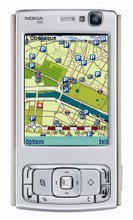
The 2007 << Dream Machine >>
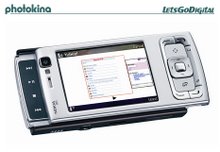
no doubts .. the ultimate smart phone in 2007
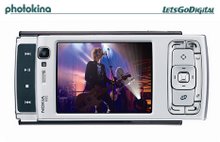
where it's at in 2007


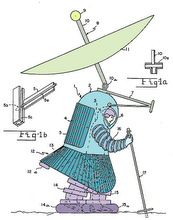
... but it didn't catch on

... if you don't know where you've been - BUT - how did you GET here ?!?!
Our focus is on Location Based Services ( LBS ) which answer "Where am I? Where is it? How do I get there?" ... & Location Aware Devices (LADs) such as 3G smartphones, mobiles, cellfones, PDAs and personal wireless platforms. LADs will soon be everywhere [i.e. ubiquitous = DoCoMo]. This blog will stay on top of all things that will help us .... keep on track ... and show us where it's at


GPS SATNAV LBS "Personal Navigation Device"
A Sextant --- solid brass navigation technology ... from 200 years ago !
NOKIA N95
The 2007 << Dream Machine >>
OUR LOCAL TIME ( +10 hrs on Zulu)
Hobart |
NOKIA 95
no doubts .. the ultimate smart phone in 2007
SUBSCRIBE TO THE RSS FEED HERE


YOU'RE SEARCHING FOR WHAT
NOKIA N95
where it's at in 2007
The UBIKWITUS SWICKI
where do you come from ?
Blog Archive
-
▼
2006
(2445)
-
▼
January
(391)
- Billion Dollar Market for On-Device Portals London...
- Mobiles covet Google success - Newspaper Edition -...
- TeleAtlas to offer 3D Maps of Major Cities | GPS L...
- jeepx: GPS Discoveries: Cold Start and Aided GPSIm...
- jeepx: GPS Discoveries: A Map for your BlogFeedMap...
- WCDMA/EDGE devices number 31Dozens of manufacture...
- InformationWeek | Cell-Phone Services | 'Point And...
- thinkd2c" Verizon Wireless Introduces VZ Navigator...
- Mobile Monday - Location Based Services The Februa...
- jeepx: GPS Discoveries: GeoVector: Point & ShopGeo...
- My Personal Geekzone BlogrollA few months back I'v...
- GlobalSat BC-337 Compact Flash GPS Receiver Review...
- Road Test of the GlobalSat BC-337 and BT-338 SiRFs...
- Verizon Launches the Motorola V325 With Location B...
- European Geo-PortalINSPIRE (Infrastructure for Spa...
- GeoURL (2.0)GeoURL is a location-to-URL reverse di...
- Home - ConfluenceGeotools is an open source Java G...
- The JUMP ProjectThe foundation of The JUMP-Project...
- ArcWeb Explorer: Quick ReviewA few sites report th...
- Portable tourist guides now in serviceYour iPod mi...
- GeoVector and Japan’s Mapion Deliver the First Poi...
- Location Based Marketing - Could it Really Work? P...
- 'We're not a one-trick pony'No longer just a sea...
- Sharing and Sending Web Content and More Via SMSI'...
- Phone start-up takes on GoogleSimon HayesJANUARY 3...
- gps tracklog: Pros and Cons of PDA-based GPS Recei...
- Google Maps Mania: Google Maps Creation Tools and ...
- WorldTracker SMS - Small GPS Tracking | GPS Lodge....
- Google Maps Mania: Google Maps news and blog post ...
- With LBS, It's All About "Getting to Free"Today, I...
- Location-Based Services Offer High Revenue Potenti...
- Going to Market with Location Services | January...
- Going to Market with Location Services | January...
- Chapter 3. Sources of Inaccuracy: The ProblemsIn o...
- WorldChanging: Another World Is Here: What's Next ...
- ArcWeb Services | ArcWeb ExplorerArcWeb Explorer i...
- O'Reilly: "Google Maps is the new open source."At ...
- Serious Web Map Application, or Mere Mashup - Sema...
- Smartphones Know Ups And Downsrosoft and Linux lea...
- Navicore adds dynamic navigation Navicore announce...
- Desire To Personalize Smartphones Expected To Dri...
- Desire To Personalize Smartphones Expected To Driv...
- The Best in Mobile, 2005 at MobHappy Followin...
- ContentSutra :: "Customise The Content To Develop ...
- The secret to rapid realization of applications an...
- Symbian OS mobile smartphone operating system - Ne...
- Worldwide Hot-Spot List Tops 100,000 Mark January...
- U.S.-European GPS Rivalry Heats Up January 24, 20...
- WCDMA Subscribers 3G Finally Gaining Momentum: Re...
- Opera Mini� for MobileOpera Mini™ is a fast and ea...
- gps tracklog: Using GIS Data with GPSThere is a we...
- Opera Software announces worldwide release of Oper...
- Dell To Integrate Vodafone 3G to Laptops: "Dell wi...
- Next-Generation GPS Capabilities to be AnnouncedU....
- InFocus: All about locationImagine that you are dr...
- Intrado, Networks In Motion In Marketing AllianceL...
- Yahoo! gives up quest for search dominanceEnvironm...
- WiMAX Getting Real, but What About 802.20? : "WiMA...
- With RemoMail, Use Your Mobile Phone as a Powerful...
- DDH Software Launches its Acclaimed HanDBase Relat...
- The Web on Virtually any Phone: Opera Software Ann...
- Intrado and Networks in Motion Announce Strategic ...
- Mobile Firm Builds Ad Management Suite for Publish...
- The Brave New World of WirelessThe Brave New World...
- And now, NewsWe're taking Google News out of beta!...
- New year, new imageryWe're always trying to improv...
- ContentSutra :: "Customise The Content To Develop ...
- PostcodeinePostcodeine← start typing any postcode ...
- IMS Insider Blog: Top 10 Predictions for the Telco...
- Psiloc Mobile Solutions Psiloc is the global leadi...
- Screen Capture for Cell PhonesWhen you write news ...
- "Location Based Services and all about Mobile Mark...
- China approves TD-SCDMA standardBy Joni MorseJan 2...
- Competitive Analysis of Sony Ericsson MobileIndia ...
- Plazes is a grassroot approach to location-aware i...
- Do You Think Operators Really Care About Your Priv...
- plazes.betaPlazes is a grassroot approach to locat...
- Email Is For Old PeopleThe changes may sound subtl...
- Graphical Ads Landing On Lonely PlanetThe changes ...
- The Coming Tug of War Over the InternetDo you pref...
- Open Gardens: Learning from Plazes – location base...
- NTT DoCoMo Plans to Sell Windows Mobile Handheld i...
- on the semweb, the geoweb, and the media labI enj...
- Community websites top list of fastest-growing web...
- Who says you can�t buy peace of mind?: "As a pare...
- bluepulse - the write once, play anywhere mobile p...
- AdMobSelling ads on your mobile site• Monetize you...
- China salutes TDSCDMA wireless standardChina Frida...
- Wireless World New roaming standardConsumer intere...
- feedmap .net (BETA) : Where Blogs Meet MapseedMap ...
- MobileCrunch » bluepulse; first look at a mobile 2...
- bluepulse - homeWhat is bluepulse? The ...
- bluepulseYour content and applications, on any pho...
- Warm and Wireless: the Audex Jacket by Motorola an...
- WTOP: Digital Maps Going Beyond the RoadsBy ANICK ...
- SIRFS UP Mainstream Business...
- Mainstream Business Press Needs More Enlightenment...
- Forgot What You Searched For? Google Didn'tBy Lesl...
- u-blox Releases Firmware 5.00 Featuring GPS Perfo...
- World Tracker turns anyone into a cellphone spy - ...
-
▼
January
(391)
EARLY SATNAV ...
... but it didn't catch on
you don't know where you going...
... if you don't know where you've been - BUT - how did you GET here ?!?!

No comments:
Post a Comment