Navigate Like a Local with Your Navigator
location based services
U.S. Cellular® Helps Summer Drivers Head in the Right Direction
New Application Provides Robust GPS Navigation Services in a Wireless Phone
CHICAGO & ALISO VIEJO, Calif.--(BUSINESS WIRE)--Wrestling with maps, stopping for directions and worrying about where to find the next pit stop is a thing of the past for U.S. Cellular® customers hitting the road this summer. The company now offers a simple new tool that turns its cell phones into a convenient navigation system. Your Navigator provides customers audible turn-by-turn directions at a fraction of the cost of traditional in-car GPS navigation systems, whether you’re in a car or on foot.
“Nothing can dampen a weekend getaway or important meeting faster than time lost to missed turns or wandering unfamiliar territory,” said Alan D. Ferber, chief marketing officer for U.S. Cellular. “Our customers can now receive audible turn-by-turn directions and find gas stations, restaurants, hotels and tourist attractions. Finding your way to new and unknown places just got a whole lot easier.”
Your Navigator provides voice-prompted, turn-by-turn directions with auto-rerouting if customers miss a turn, and the ability to locate nearly 14 million points of interest in the U.S. including restaurants, landmarks, gas stations, banks, theaters, ATM machines and hotels. Complementing the friendly voice prompts before each turn, a large turn arrow also fills phone screens to point the way to the intended destination.
Powered by the Networks In Motion (NIM) location-based services (LBS) platform, Your Navigator also aids trip planning by showing detailed color maps that indicate a user’s current location and any address in the U.S. with the ability to pan and zoom. Users also can quickly access locations they have saved or recent location searches they have performed.
The service is available to U.S. Cellular customers for $9.99 per month or $2.99 per day, and works with the Kyocera 312 and the LG 245 U.S. Cellular handsets. U.S. Cellular customers with a Motorola V3M also can use Your Navigator with the completion of a free software upgrade at any company-owned retail store. Beginning Aug. 9, all Motorola V3M handsets sold at U.S. Cellular stores will be able to download the application. People traveling for summer vacation or business can purchase the application as needed on a daily or monthly basis, with no long-term commitment.
“Your Navigator is a very valuable solution for getting directions anytime, anywhere on a mobile phone, a device most people have with them everywhere they go,” said Doug Antone, president and CEO for Networks In Motion. “It’s a fraction of the cost for all the navigation support you need compared to hundreds or thousands of dollars for an in-car navigation system or personal navigation device.”
About U.S. Cellular
Tuesday, July 31, 2007


Windows CE GPS gadgets do more than navigate
location based services
Jul. 18, 2007Netropa has announced a pair of portable navigation devices (PND) said to offer "exclusive safety and convenience features" going beyond basic navigation. The Intellinav 2 and Intellinav 3 run Windows CE 5 and include preloaded maps of the US, Puerto Rico, and the Virgin Islands.(Click here for larger image)The Intellinav devices are powered by a 266 MHz Samsung 2412A processor, and are equipped with 64 MB each of SDRAM and NAND flash memory. The QVGA touchscreen TFT LCD measures 3.5 inches. The Intellinav 2 comes with maps stored on a 1 GB SD card, whereas the Intellinav 3, due out this fall, will feature a 2 GB SD card that adds maps of Canada and has space available for storing music and photos, Netropa said.Other features common to both models include:
Text to speech in six languages
SiRF Star III GPS receiver
Precise routing with detour and avoid-road
Points of interest database:
Intellinav 2 -- 1.2 million POI
Intellinav 3 -- 6 million POI in over 100 sub categories
1-watt built-in speaker
Stereo headphone jack
MP3 player
Photo viewerNetropa claims unique convenience features that include Traffic Pattern, Live Traffic, Parked-car Locator, and Pedestrian Mode. Special safety functions include Fatigue Alarm, Fog Assist, School Zone, and Speed Alert.The Intellinav 2 is currently available from on-line retailers such as buy GPS now, newegg.com, and iGuidance for around $300. Netropa says the Intellinav 3 should be available in September. The company is also working on the Intellinav 4 and 5 that will feature 4.3-inch-wide displays.
location based services
Jul. 18, 2007Netropa has announced a pair of portable navigation devices (PND) said to offer "exclusive safety and convenience features" going beyond basic navigation. The Intellinav 2 and Intellinav 3 run Windows CE 5 and include preloaded maps of the US, Puerto Rico, and the Virgin Islands.(Click here for larger image)The Intellinav devices are powered by a 266 MHz Samsung 2412A processor, and are equipped with 64 MB each of SDRAM and NAND flash memory. The QVGA touchscreen TFT LCD measures 3.5 inches. The Intellinav 2 comes with maps stored on a 1 GB SD card, whereas the Intellinav 3, due out this fall, will feature a 2 GB SD card that adds maps of Canada and has space available for storing music and photos, Netropa said.Other features common to both models include:
Text to speech in six languages
SiRF Star III GPS receiver
Precise routing with detour and avoid-road
Points of interest database:
Intellinav 2 -- 1.2 million POI
Intellinav 3 -- 6 million POI in over 100 sub categories
1-watt built-in speaker
Stereo headphone jack
MP3 player
Photo viewerNetropa claims unique convenience features that include Traffic Pattern, Live Traffic, Parked-car Locator, and Pedestrian Mode. Special safety functions include Fatigue Alarm, Fog Assist, School Zone, and Speed Alert.The Intellinav 2 is currently available from on-line retailers such as buy GPS now, newegg.com, and iGuidance for around $300. Netropa says the Intellinav 3 should be available in September. The company is also working on the Intellinav 4 and 5 that will feature 4.3-inch-wide displays.
Bluetooth, GPS to become ubiquitous
location based services
Jul. 27, 2007In its financial report for the quarter ending June 29, 2007, CSR (formerly Cambridge Silicon Radio) forecast continued growth in the Bluetooth market, particularly in new non-cellular areas such as PMPs, gaming consoles, cars, and cameras. Interestingly, the company said it is readying a Bluetooth chip with built-in software-based GPS.
Spread the word:digg this story
CSR said it expects the proportion of new cars that include Bluetooth -- such as the %20target=" new?>Windows Automotive-enabled Fiat 500 -- to increase from the five to eight percent seen today to 30 percent in the medium term. Aftermarket car-kits such as TomTom products incorporate CSR's Bluetooth technology, the company noted. The company also said it will sample what is claimed to be the industry's first ULP Bluetooth silicon by the end of this year. Previously known as Wibree, ULP Bluetooth can be used to transfer simple data sets between compact devices, and reportedly runs for up to ten years on a single "button cell" battery. It can be incorporated into products such as watches, training shoes, and TV remotes. Also significant is the market opportunity for Ultra-Wide Band (UWB), expected to become the wireless alternative for USB. It is up to 100 times faster than Bluetooth over short ranges, according to CSR, and will be launched in single-chip, low-power format in 2008.Finally, the company said it plans to integrate a software-based, high performance GPS solution onto a Bluetooth chip, bringing GPS into a wide range of new low-cost devices. "Development ... is on schedule ... and product launch still on track for 2008," according to the company.CSR already offers the BlueCore 5-Multimedia, a Bluetooth chip that has on-chip memory and a 64 MIPS DSP (digital signal processor). It includes a stereo amplifier and, optionally, a text-to-speech function for talking caller ID. The BlueCore 5-FM adds an FM receiver to the mix, with interference suppression that reportedly ensures no conflict between FM and Bluetooth.
location based services
Jul. 27, 2007In its financial report for the quarter ending June 29, 2007, CSR (formerly Cambridge Silicon Radio) forecast continued growth in the Bluetooth market, particularly in new non-cellular areas such as PMPs, gaming consoles, cars, and cameras. Interestingly, the company said it is readying a Bluetooth chip with built-in software-based GPS.
Spread the word:digg this story
CSR said it expects the proportion of new cars that include Bluetooth -- such as the %20target=" new?>Windows Automotive-enabled Fiat 500 -- to increase from the five to eight percent seen today to 30 percent in the medium term. Aftermarket car-kits such as TomTom products incorporate CSR's Bluetooth technology, the company noted. The company also said it will sample what is claimed to be the industry's first ULP Bluetooth silicon by the end of this year. Previously known as Wibree, ULP Bluetooth can be used to transfer simple data sets between compact devices, and reportedly runs for up to ten years on a single "button cell" battery. It can be incorporated into products such as watches, training shoes, and TV remotes. Also significant is the market opportunity for Ultra-Wide Band (UWB), expected to become the wireless alternative for USB. It is up to 100 times faster than Bluetooth over short ranges, according to CSR, and will be launched in single-chip, low-power format in 2008.Finally, the company said it plans to integrate a software-based, high performance GPS solution onto a Bluetooth chip, bringing GPS into a wide range of new low-cost devices. "Development ... is on schedule ... and product launch still on track for 2008," according to the company.CSR already offers the BlueCore 5-Multimedia, a Bluetooth chip that has on-chip memory and a 64 MIPS DSP (digital signal processor). It includes a stereo amplifier and, optionally, a text-to-speech function for talking caller ID. The BlueCore 5-FM adds an FM receiver to the mix, with interference suppression that reportedly ensures no conflict between FM and Bluetooth.
Networks In Motion Powers New Navigation Tool
location based services
Chicago-based U.S. Cellular, a cellular service provider, said today that it has rolled out a new navigation system for cell phone users. The new system is powered by Aliso Viejo-based Networks In Motion, and provides turn-by-turn directions for GPS enabled cell phones. Networks In Motion develops location-based services (LBS) used to provide services to cell phone users. Details of the deal were not disclosed. U.S. Cellular said that the navigation service will be available for $9.99 per month or $2.99 per day to its subscribers. Networks In Motion is backed by Mission Ventures, Redpoint Ventures, and Sutter Hill Ventures. posted on Monday, July 30, 2007
location based services
Chicago-based U.S. Cellular, a cellular service provider, said today that it has rolled out a new navigation system for cell phone users. The new system is powered by Aliso Viejo-based Networks In Motion, and provides turn-by-turn directions for GPS enabled cell phones. Networks In Motion develops location-based services (LBS) used to provide services to cell phone users. Details of the deal were not disclosed. U.S. Cellular said that the navigation service will be available for $9.99 per month or $2.99 per day to its subscribers. Networks In Motion is backed by Mission Ventures, Redpoint Ventures, and Sutter Hill Ventures. posted on Monday, July 30, 2007
Monday, July 30, 2007
Mashups made easy
FortiusOne makes it easy for anyone to put a mashup on the map.
location based services
By Tom McNichol, Business 2.0 Magazine senior writer
July 19 2007: 4:10 PM EDT
(Business 2.0 Magazine) -- Since Google made its maps available for customization last year, savvy programmers have created thriving businesses by adding layers of information.
One example: Hotel World Map. (See correction)
More from Business 2.0
Have you driven a Fjord lately?
Motorola's disconnect
4 deluxe airport layovers
Fastest Growing Tech Companies
Current Issue
Subscribe to Business 2.0
But making these so-called map mashups has been beyond the reach of the average user.
So in May, Washington-based startup FortiusOne launched GeoCommons, a cartographic portal where users can easily create their own mashups.
The site has 2 billion pieces of localized data -- from census figures and school district budgets to water-contamination and traffic-congestion hot spots -- and it is rapidly adding more.
100 Best Places to Live
"We've spent a lot of time making the maps and data easy for nontechnical folks to use," says FortiusOne CEO Sean Gorman. "This is really the second generation of map mashups."
Gorman's company is already turning a profit from selling geospatial data to U.S. government agencies.
FortiusOne has done geographic risk analyses for the Department of Homeland Security, which is interested in using GeoCommons to share data in the event of a terrorist attack or natural disaster.
The 14-person company is also selling geodata to real estate companies and environmental groups. It expects to hit $2.5 million in revenue this year.
But Gorman isn't content with simply providing customized maps to the public and private sectors. He wants to grow GeoCommons into a vast social network and make more money selling ads against it.
"It's all about using geographical data to solve problems or tell a story," he says. On the Web, where you are is fast becoming where it's at.
Correction: An earlier version of this story incorrectly stated that real estate site Zillow uses Google technology to create map mashups. Zillow uses its own mapping platform. (Return to story)
America's hottest job markets
FortiusOne makes it easy for anyone to put a mashup on the map.
location based services
By Tom McNichol, Business 2.0 Magazine senior writer
July 19 2007: 4:10 PM EDT
(Business 2.0 Magazine) -- Since Google made its maps available for customization last year, savvy programmers have created thriving businesses by adding layers of information.
One example: Hotel World Map. (See correction)
More from Business 2.0
Have you driven a Fjord lately?
Motorola's disconnect
4 deluxe airport layovers
Fastest Growing Tech Companies
Current Issue
Subscribe to Business 2.0
But making these so-called map mashups has been beyond the reach of the average user.
So in May, Washington-based startup FortiusOne launched GeoCommons, a cartographic portal where users can easily create their own mashups.
The site has 2 billion pieces of localized data -- from census figures and school district budgets to water-contamination and traffic-congestion hot spots -- and it is rapidly adding more.
100 Best Places to Live
"We've spent a lot of time making the maps and data easy for nontechnical folks to use," says FortiusOne CEO Sean Gorman. "This is really the second generation of map mashups."
Gorman's company is already turning a profit from selling geospatial data to U.S. government agencies.
FortiusOne has done geographic risk analyses for the Department of Homeland Security, which is interested in using GeoCommons to share data in the event of a terrorist attack or natural disaster.
The 14-person company is also selling geodata to real estate companies and environmental groups. It expects to hit $2.5 million in revenue this year.
But Gorman isn't content with simply providing customized maps to the public and private sectors. He wants to grow GeoCommons into a vast social network and make more money selling ads against it.
"It's all about using geographical data to solve problems or tell a story," he says. On the Web, where you are is fast becoming where it's at.
Correction: An earlier version of this story incorrectly stated that real estate site Zillow uses Google technology to create map mashups. Zillow uses its own mapping platform. (Return to story)
America's hottest job markets
New York Cabbies May Strike Over GPS Tracking
location based services
Cab drivers complain that they don't want to be tracked by GPS and can't afford the installation expense, which is estimated to range from $3,000 to $5,000 per vehicle.
By K.C. Jones InformationWeek July 25, 2007 12:24 PM
What would New York City be without yellow cabs? New Yorkers and visitors could soon find out.
New York taxi drivers this week announced plans to strike in September in opposition to global positioning devices. The city's Taxi and Limousine Commission (TLC) announced several years ago that it would switch to hybrid vehicles and wireless devices with GPS or similar tracking technology. The New York Taxi Workers Alliance has protested the plan in the past and now is talking about a full-fledged strike.
Drivers complain that they don't want to be tracked and can't afford the installation expense, which is estimated to range from $3,000 to $5,000 per vehicle. They claim the devices could be used to monitor speeding, whereabouts, and other activities in violation their privacy rights.
New Automatic Vehicle Locator technology will log trips automatically, which the TLC said would improve accuracy and help passengers retrieve items they leave behind in cabs. It will not provide passengers with directions, which could cause an annoyance by encouraging "back-seat drivers," according to the commission. The TLC also has said the technology won't be used to track drivers.
A Driver Information Monitor will allow drivers to receive messages when the car is stopped. The messages will contain information about lost property and traffic congestion. Text messaging also will be used to communicate in the event of a citywide emergency and will notify drivers when large public events are scheduled. Some messages will contain a pre-programmed response allowing drivers to respond to queries about lost property claims with the touch of a button.
When the commission announced plans for mapping and automated data collection about three years ago, chairman Matthew Daus said the improvements would enhance the fleet's technological capabilities, improve passenger convenience, and bring "the already high quality of taxicab service to the next level."
Some hybrid, high-tech cabs already are on the streets. Passengers in some cabs can watch video information segments and control volume and other features on small screens mounted on the back of the front seat.
location based services
Cab drivers complain that they don't want to be tracked by GPS and can't afford the installation expense, which is estimated to range from $3,000 to $5,000 per vehicle.
By K.C. Jones InformationWeek July 25, 2007 12:24 PM
What would New York City be without yellow cabs? New Yorkers and visitors could soon find out.
New York taxi drivers this week announced plans to strike in September in opposition to global positioning devices. The city's Taxi and Limousine Commission (TLC) announced several years ago that it would switch to hybrid vehicles and wireless devices with GPS or similar tracking technology. The New York Taxi Workers Alliance has protested the plan in the past and now is talking about a full-fledged strike.
Drivers complain that they don't want to be tracked and can't afford the installation expense, which is estimated to range from $3,000 to $5,000 per vehicle. They claim the devices could be used to monitor speeding, whereabouts, and other activities in violation their privacy rights.
New Automatic Vehicle Locator technology will log trips automatically, which the TLC said would improve accuracy and help passengers retrieve items they leave behind in cabs. It will not provide passengers with directions, which could cause an annoyance by encouraging "back-seat drivers," according to the commission. The TLC also has said the technology won't be used to track drivers.
A Driver Information Monitor will allow drivers to receive messages when the car is stopped. The messages will contain information about lost property and traffic congestion. Text messaging also will be used to communicate in the event of a citywide emergency and will notify drivers when large public events are scheduled. Some messages will contain a pre-programmed response allowing drivers to respond to queries about lost property claims with the touch of a button.
When the commission announced plans for mapping and automated data collection about three years ago, chairman Matthew Daus said the improvements would enhance the fleet's technological capabilities, improve passenger convenience, and bring "the already high quality of taxicab service to the next level."
Some hybrid, high-tech cabs already are on the streets. Passengers in some cabs can watch video information segments and control volume and other features on small screens mounted on the back of the front seat.
Google Earth Enterprise Gains Web Browser Integration
location based services
The updated software will allow IT administrators to embed a 2D view of Google Earth data into any Web application and to make enterprise mashups.
By Thomas Claburn InformationWeek July 26, 2007 12:01 AM
Businesses are about to get a new window to view Google Earth. Google Earth Enterprise users can now see their organization's geospatial data in 2D through a Web browser without having to resort to the 3D Google Earth Enterprise Client application.
Google on Thursday plans to update its back-end corporate geo software, Google Earth Fusion and Google Earth Server, and to make a new version of the Google Maps application programming interface (API) available. The updated software will allow IT administrators to embed a 2D view of Google Earth data into any Web application and to make enterprise mashups using external data sources and hosted geospatial data.
"Not only is it now easier for employees who need to access their organization's geo data - whether it be satellite images, terrain and elevation data or aerial imagery - to do so from almost anywhere, but they can integrate additional layers of information within their existing Web applications without ever having to leave the browser," said Matthew Glotzbach, Google Enterprise product management director, in a statement.
The ability to access geo data through a Web browser will make it easier to share geo data and will thus provide a greater return on investments in geospatial technology, said Glotzbach.
"It really works exactly the way the user experience works on the Web," said Noah Doyle, product manager for geo enterprise tools. "We using the same Maps API JavaScript and just adapting it to direct its requests to the customer's internal Google Earth database."
Google's geographic software supports the ability to subscribe to the public Google Earth server as well, allowing companies to mix and match geographic data from internal and external sources.
The new software boasts speed improvements -- up to 10x faster vector processing and 2x faster server response -- and better support for industry-standard security protocols such as LDAP and SSL.
Google declined to say how many companies are currently using Google Earth Enterprise. Instead, it provided endorsements from several companies using the product.
"By visualizing global website traffic at www.dell.com in Google Earth, we are building a stronger sense of community with our internal and external partners through awareness and better visibility around traffic trends and patterns," said Jamie Wills, VP of sales and marketing systems for Dell, in a statement.
"Dell Computer is using [Google Earth] in a customer service dispatch scenario, where they have a large command center for their top-tier enterprise customers," explained Doyle. "They display the status of their entire enterprise customer base on a huge screen at the front of the room. The dots turn blue, red, or green depending on the status of service incidents. In the sea of cubes where the dispatchers dealing with these incidents directly, the dispatchers are accessing the map view to overlay the specifics of the incident, the location of nearby parts, the location of technicians and so on. They're embedding the map view into their service application but also using Google Earth to create a more global intelligence perspective on the activity."
"With Google Earth's intuitive 3D geo-browsing experience, researchers can visualize data more effectively, allowing us to explore areas of interest more efficiently than ever," said Ole Martinsen, head of exploration research for Norwegian energy company Norsk Hydro, in a statement.
Google Earth comes in three flavors: Google Earth, which is free; Google Earth Plus, which costs $20 annually and includes GPS importing and other useful features; and Google Earth Pro, a $400-per-year version tuned for research, presentation, and other commercial uses. Google Earth Enterprise is pretty much the same as Google Earth Pro except that it starts at $20,000 and allows companies to deploy Google Earth securely on-site.
Google Earth Enterprise is composed of three parts: Google Earth Fusion, Google Earth Server, and Google Earth Enterprise Client. Google Earth Fusion integrates geo data from multiple sources into the Google Earth Enterprise system. Google Earth Server distributes Google Earth data across the network. Google Earth Enterprise Client provides the functionality of Google Earth Pro, as well as support for multiple servers and other additions.
location based services
The updated software will allow IT administrators to embed a 2D view of Google Earth data into any Web application and to make enterprise mashups.
By Thomas Claburn InformationWeek July 26, 2007 12:01 AM
Businesses are about to get a new window to view Google Earth. Google Earth Enterprise users can now see their organization's geospatial data in 2D through a Web browser without having to resort to the 3D Google Earth Enterprise Client application.
Google on Thursday plans to update its back-end corporate geo software, Google Earth Fusion and Google Earth Server, and to make a new version of the Google Maps application programming interface (API) available. The updated software will allow IT administrators to embed a 2D view of Google Earth data into any Web application and to make enterprise mashups using external data sources and hosted geospatial data.
"Not only is it now easier for employees who need to access their organization's geo data - whether it be satellite images, terrain and elevation data or aerial imagery - to do so from almost anywhere, but they can integrate additional layers of information within their existing Web applications without ever having to leave the browser," said Matthew Glotzbach, Google Enterprise product management director, in a statement.
The ability to access geo data through a Web browser will make it easier to share geo data and will thus provide a greater return on investments in geospatial technology, said Glotzbach.
"It really works exactly the way the user experience works on the Web," said Noah Doyle, product manager for geo enterprise tools. "We using the same Maps API JavaScript and just adapting it to direct its requests to the customer's internal Google Earth database."
Google's geographic software supports the ability to subscribe to the public Google Earth server as well, allowing companies to mix and match geographic data from internal and external sources.
The new software boasts speed improvements -- up to 10x faster vector processing and 2x faster server response -- and better support for industry-standard security protocols such as LDAP and SSL.
Google declined to say how many companies are currently using Google Earth Enterprise. Instead, it provided endorsements from several companies using the product.
"By visualizing global website traffic at www.dell.com in Google Earth, we are building a stronger sense of community with our internal and external partners through awareness and better visibility around traffic trends and patterns," said Jamie Wills, VP of sales and marketing systems for Dell, in a statement.
"Dell Computer is using [Google Earth] in a customer service dispatch scenario, where they have a large command center for their top-tier enterprise customers," explained Doyle. "They display the status of their entire enterprise customer base on a huge screen at the front of the room. The dots turn blue, red, or green depending on the status of service incidents. In the sea of cubes where the dispatchers dealing with these incidents directly, the dispatchers are accessing the map view to overlay the specifics of the incident, the location of nearby parts, the location of technicians and so on. They're embedding the map view into their service application but also using Google Earth to create a more global intelligence perspective on the activity."
"With Google Earth's intuitive 3D geo-browsing experience, researchers can visualize data more effectively, allowing us to explore areas of interest more efficiently than ever," said Ole Martinsen, head of exploration research for Norwegian energy company Norsk Hydro, in a statement.
Google Earth comes in three flavors: Google Earth, which is free; Google Earth Plus, which costs $20 annually and includes GPS importing and other useful features; and Google Earth Pro, a $400-per-year version tuned for research, presentation, and other commercial uses. Google Earth Enterprise is pretty much the same as Google Earth Pro except that it starts at $20,000 and allows companies to deploy Google Earth securely on-site.
Google Earth Enterprise is composed of three parts: Google Earth Fusion, Google Earth Server, and Google Earth Enterprise Client. Google Earth Fusion integrates geo data from multiple sources into the Google Earth Enterprise system. Google Earth Server distributes Google Earth data across the network. Google Earth Enterprise Client provides the functionality of Google Earth Pro, as well as support for multiple servers and other additions.
Google phone software 'no threat to Microsoft'By staff and agencies
location based services
Last Updated: 1:50am BST 31/07/2007
Bill Gates, the founder of Microsoft, today rejected the possibility that Google could become a successful competitor in the smartphone software market.
The internet search engine provider has been widely reported to be planning to enter the mobile phone market with its own software and services as the Federal Communications Commission prepares to set the rules governing the auction of $15 billion dollars (£7.5 billion) of public airwaves.
Mr Gates, 51, told the New York Times it was unlikely that Google would be able to make inroads into Microsoft's 10 per cent market share for mobile phone software.
advertisement
"How many products, of all the Google products that have been introduced, how many of them are profit-making products?" he asked.
"They've introduced about 30 different products; they have one profit-making product. So, you're now making a prediction without ever seeing the software that they're going to have the world's best phone and it's going to be free?"
He went on: "The phone is becoming way more software intensive. And to be able to say that there's some challenge for us in the phone market when its becoming software intensive, I don't see that."
Mr Gates, who co-founded Microsoft 32 years ago, said he still plans to step away from the company next year as planned, despite remaining engaged in the firm's technology strategy.
"I am in a lucky situation of having way more things that seem interesting to do and very exciting and important, and working with smart people, and highly impactful, way more than a 24-hour day will fit," he said.
location based services
Last Updated: 1:50am BST 31/07/2007
Bill Gates, the founder of Microsoft, today rejected the possibility that Google could become a successful competitor in the smartphone software market.
The internet search engine provider has been widely reported to be planning to enter the mobile phone market with its own software and services as the Federal Communications Commission prepares to set the rules governing the auction of $15 billion dollars (£7.5 billion) of public airwaves.
Mr Gates, 51, told the New York Times it was unlikely that Google would be able to make inroads into Microsoft's 10 per cent market share for mobile phone software.
advertisement
"How many products, of all the Google products that have been introduced, how many of them are profit-making products?" he asked.
"They've introduced about 30 different products; they have one profit-making product. So, you're now making a prediction without ever seeing the software that they're going to have the world's best phone and it's going to be free?"
He went on: "The phone is becoming way more software intensive. And to be able to say that there's some challenge for us in the phone market when its becoming software intensive, I don't see that."
Mr Gates, who co-founded Microsoft 32 years ago, said he still plans to step away from the company next year as planned, despite remaining engaged in the firm's technology strategy.
"I am in a lucky situation of having way more things that seem interesting to do and very exciting and important, and working with smart people, and highly impactful, way more than a 24-hour day will fit," he said.
Google And Sprint Develop Mobile Portal Using WiMax And LBS
Could this be the tipping point for location based services and advertising?Google and Sprint will now be able to tie in your location to all of their applications, including delivering relevant ads, on the mobile phone.Sprint Nextel said on Thursday it would develop with Google a new mobile Internet portal using WiMax wireless technology to offer Web search and social networking.Sprint's WiMax for high-speed wireless and its services for detecting location will be combined with Google tools including Gmail, Google Talk, Google Photo and other applications.Through the partnership with Google, people using the service "will be able to see where everyone is on your [Gmail] contact list is," said Peter Cannistra, Sprint's director of strategic partnershipsCustomers will be able to pay for the WiMax service and get access to the Internet everywhere in the city with such devices as laptops, MP3 players, digital cameras and cell phones.In April 2008, Sprint expects to roll out the service to the general public in those cities and other cities not yet announced.
Labels: Google, LBS, Sprint
Could this be the tipping point for location based services and advertising?Google and Sprint will now be able to tie in your location to all of their applications, including delivering relevant ads, on the mobile phone.Sprint Nextel said on Thursday it would develop with Google a new mobile Internet portal using WiMax wireless technology to offer Web search and social networking.Sprint's WiMax for high-speed wireless and its services for detecting location will be combined with Google tools including Gmail, Google Talk, Google Photo and other applications.Through the partnership with Google, people using the service "will be able to see where everyone is on your [Gmail] contact list is," said Peter Cannistra, Sprint's director of strategic partnershipsCustomers will be able to pay for the WiMax service and get access to the Internet everywhere in the city with such devices as laptops, MP3 players, digital cameras and cell phones.In April 2008, Sprint expects to roll out the service to the general public in those cities and other cities not yet announced.
Labels: Google, LBS, Sprint
Fallout from the TeleAtlas-TomTom agreement – Where do PND makers go now?Author: Mike Ippoliti, Research Director, Telematics & AutomotivePosted: 28.July.2007 09:38 PM
It will be very interesting to watch what happens over the next weeks and months, to see if predictions of NAVTEQ’s sale come to pass. Will the purchase of TeleAtlas indeed cause a flurry of attempts to own the data at the heart of Location Based Services? Will Magellan, Garmin, Microsoft, Nokia, even Google, get into the game?
Thinking beyond just those companies however, what will it mean for the navigation marketplace?
I was chatting with a journalist yesterday, and told her my own view – that Garmin (in particular) should begin selling their navigation user experience to other companies. I primarily meant Automotive OEMs and Tier 1’s, but other navigation device and service companies could be included.
There are many subtleties to navigation software. Map data is key, but it really isn’t even one of the most important elements – especially if we look at overall customer satisfaction, not just number of miles mapped or number of POIs. The challenge lies in the routing algorithms, the user interface, the rendering of graphics, and any number of smaller decisions that add up to the user experience. Garmin has shown expertise in delivering a good navigation user experience. Why should Ford, for example, be paying Denso to buy identical map data from Navteq and develop a totally new navigation system, when Garmin has it all done, and working far better than anything yet created by any of the automotive suppliers? Because Garmin is a PND maker, a competitor? Not if they’re smart.
Looking into the future, it has been predicted PNDs are in trouble. The impact of pricing pressure is hidden by 30% per year growth. Things are great right now, but perhaps not so great in 5 years. Handset-based navigation will be common, as will basic navigation in your car. Where does that leave the single-purpose PND? In about the same place as the PDA today.
Ah, but the navigation user experience, the software, the ability to take the same map data as the other guy and turn it into a more pleasurable and effective tool – now there’s something worth money. Something that can’t be built for half the price by striking a better deal on NAND memory, or by using a different map data supplier, or even by owning the map data.
The journalist had an excellent analogy, which I’ll link to when she publishes her thoughts. For now we are both wondering: Does Garmin management see what we see?
It will be very interesting to watch what happens over the next weeks and months, to see if predictions of NAVTEQ’s sale come to pass. Will the purchase of TeleAtlas indeed cause a flurry of attempts to own the data at the heart of Location Based Services? Will Magellan, Garmin, Microsoft, Nokia, even Google, get into the game?
Thinking beyond just those companies however, what will it mean for the navigation marketplace?
I was chatting with a journalist yesterday, and told her my own view – that Garmin (in particular) should begin selling their navigation user experience to other companies. I primarily meant Automotive OEMs and Tier 1’s, but other navigation device and service companies could be included.
There are many subtleties to navigation software. Map data is key, but it really isn’t even one of the most important elements – especially if we look at overall customer satisfaction, not just number of miles mapped or number of POIs. The challenge lies in the routing algorithms, the user interface, the rendering of graphics, and any number of smaller decisions that add up to the user experience. Garmin has shown expertise in delivering a good navigation user experience. Why should Ford, for example, be paying Denso to buy identical map data from Navteq and develop a totally new navigation system, when Garmin has it all done, and working far better than anything yet created by any of the automotive suppliers? Because Garmin is a PND maker, a competitor? Not if they’re smart.
Looking into the future, it has been predicted PNDs are in trouble. The impact of pricing pressure is hidden by 30% per year growth. Things are great right now, but perhaps not so great in 5 years. Handset-based navigation will be common, as will basic navigation in your car. Where does that leave the single-purpose PND? In about the same place as the PDA today.
Ah, but the navigation user experience, the software, the ability to take the same map data as the other guy and turn it into a more pleasurable and effective tool – now there’s something worth money. Something that can’t be built for half the price by striking a better deal on NAND memory, or by using a different map data supplier, or even by owning the map data.
The journalist had an excellent analogy, which I’ll link to when she publishes her thoughts. For now we are both wondering: Does Garmin management see what we see?
Wednesday, July 25, 2007
Ericsson: Small chip is big news for LBS
Engineers in Sweden and the US have recently developed the world's smallest GPS chip, which offers all the services and functionality of chips many times its size. This will allow operators to provide more accurate location-based services as well as new services for consumers.The chip is roughly the size of a piece of confetti (3.79x 3.59 x 0.6mm). Because of its small size the chip's developers foresee it finding its way into a multitude of electronic devices, such as mobile phones, PDAs, car navigation systems, digital cameras, MP3 players, radios, WiFi cards, Bluetooth devices and even bracelets and dog tags.Marijana Marincic, positioning team leader at Ericsson Mobile Platforms, says: "A smaller GPS chip means it can be put into more devices, which means more consumers will have GPS-enabled devices. For operators, this is an opportunity to expand their location-based services offerings."The chip's functions include supporting emergency calls, point-to-point navigation, real-time traffic information, an address finder, child location, find-a-friend, finding game partners, and business functions for travelers and taxi services.The reduced size, in conjunction with assisted GPS (A-GPS) technology, will enable improved location based services for consumers. A-GPS gets assistances from the mobile network or an internet based server, which greatly reduces the response time and increases the sensitivity of the GPS module. This means GPS enabled phones and other devices would be able to function where traditional GPS devices could not.While location-based services do not depend solely on GPS, GPS can provide greater location accuracy, reduced response time and more targeted services.Marincic explains: “With A-GPS enabled phones, consumers will be offered a vast number of new location services, such as location stamping of photos and video clips, navigation, and way finding. At the same time, already existing location services will provide much better accuracy."For example, with a GPS-enabled mobile, consumers can receive advertisements that are triggered by their location. As consumers are walking down a street, they can receive an ad offering a free cup of coffee at the cafe right in front of them. Whereas previous versions of this service, which used cell ID, were accurate to within only a block or two of the cafe, GPS will narrow the accuracy to a few metersTorbjörn Lundahl, VP systems management & technology at DU Service Layer Development, agrees: "A small, inexpensive and energy-efficient GPS chip will lead to its inclusion in a lot of devices. The accuracy that GPS gives will open up a lot of new services for consumers that are today only available in expensive dedicated equipment.”
Engineers in Sweden and the US have recently developed the world's smallest GPS chip, which offers all the services and functionality of chips many times its size. This will allow operators to provide more accurate location-based services as well as new services for consumers.The chip is roughly the size of a piece of confetti (3.79x 3.59 x 0.6mm). Because of its small size the chip's developers foresee it finding its way into a multitude of electronic devices, such as mobile phones, PDAs, car navigation systems, digital cameras, MP3 players, radios, WiFi cards, Bluetooth devices and even bracelets and dog tags.Marijana Marincic, positioning team leader at Ericsson Mobile Platforms, says: "A smaller GPS chip means it can be put into more devices, which means more consumers will have GPS-enabled devices. For operators, this is an opportunity to expand their location-based services offerings."The chip's functions include supporting emergency calls, point-to-point navigation, real-time traffic information, an address finder, child location, find-a-friend, finding game partners, and business functions for travelers and taxi services.The reduced size, in conjunction with assisted GPS (A-GPS) technology, will enable improved location based services for consumers. A-GPS gets assistances from the mobile network or an internet based server, which greatly reduces the response time and increases the sensitivity of the GPS module. This means GPS enabled phones and other devices would be able to function where traditional GPS devices could not.While location-based services do not depend solely on GPS, GPS can provide greater location accuracy, reduced response time and more targeted services.Marincic explains: “With A-GPS enabled phones, consumers will be offered a vast number of new location services, such as location stamping of photos and video clips, navigation, and way finding. At the same time, already existing location services will provide much better accuracy."For example, with a GPS-enabled mobile, consumers can receive advertisements that are triggered by their location. As consumers are walking down a street, they can receive an ad offering a free cup of coffee at the cafe right in front of them. Whereas previous versions of this service, which used cell ID, were accurate to within only a block or two of the cafe, GPS will narrow the accuracy to a few metersTorbjörn Lundahl, VP systems management & technology at DU Service Layer Development, agrees: "A small, inexpensive and energy-efficient GPS chip will lead to its inclusion in a lot of devices. The accuracy that GPS gives will open up a lot of new services for consumers that are today only available in expensive dedicated equipment.”
Value-Added Offerings to Spur Growth of Location-Based Services
July 03, 2007
Company: Frost & SullivanIndustry: LBS Software Platforms & ToolsLocation: Singapore, Singapore
Singapore, -- Location-based services (LBS) which have largely remained untapped in Asia-Pacific are expected to show promising growth in tandem with the introduction of mash-up services and increase in mobile advertising.
New analysis from global growth consulting company, Frost & Sullivan (http://www.mobileandwireless.frost.com), Asia Pacific Location-based Services Market, reveals that the market - covering 13 major Asia-Pacific economies - was worth US$291.7 million in 2006, and is expected to grow at a CAGR (compound annual growth rate) of 15.3 percent (2006-2009) to reach an estimated US$447 million by end-2009.
“LBS is emerging as the benchmark for service differentiation among mobile operators. Despite being a fairly small segment, this niche market is gradually shifting from a mere complementary service into a significant source of revenues,” says Frost & Sullivan industry manager Janice Chong.
LBS, which encompass a complex eco-system of application developers, content providers, merchants and advertisers, demonstrate the progressive demand of mobile users for more control over content and services that operators provide.
“The implementation of a full-spectrum LBS which includes mash-up services can significantly expedite the creation of a robust mobile content eco-system in the various Asia-Pacific countries,” she adds.
Japan and South Korea are by far the most developed LBS markets accounting for nearly 92 percent of the total revenues in Asia-Pacific. Much of this is attributed to the advanced data market in both these countries, the existence of a complete mobile eco-system which is conducive for both application developers and content providers, and the availability of reasonable LBS plans with flat rates.
“These markets also exhibit a much higher consumer-to-enterprise LBS ratio. The consumer segment provides a more durable payoff since there is a tight nexus to mobile advertising, allowing more potential for growth,” notes Chong.
The demand for LBS in the rest of Asia-Pacific however has been primarily inhibited by various issues including privacy infringement concerns, inter-operability issues, lack of advanced GPS (global positioning system)-enabled handsets, and to a large extent, a general lack of a conducive eco-system and user interest.
In most of these markets, mobile operators’ foremost priority is limited to expanding subscriber base and driving greater data traffic amongst mobile users - offering basic mobile data services which are simpler, provide quicker return-on-investment (ROI), and appeal to a larger target audience.
“However, with wider availability of GPS-enabled handsets, value-added mash-up services and intense advertising, the adoption of LBS throughout the rest of Asia-Pacific is expected to increase,” says Chong.
The Asia Pacific Location-based Services Market study is part of the Mobile and Wireless subscription, which includes research services in the following markets: mobile communications, mobile enterprise, premium content and applications, and mobile video services. All research services included in subscriptions provide detailed market opportunities and industry trends evaluated following extensive interviews with market participants. Analyst interviews are available to the press.
If you are interested in a virtual brochure, which provides service providers, vendors/manufacturers, end users, and other industry participants with an overview of the Asia Pacific Location-based Services Market, then send an e-mail to Sarah Lourdes, Corporate Communications, at sarah.lourdes@frost.com with your full name, company name, title, telephone number, fax number and e-mail address. Upon receipt of the above information, an overview will be sent to you by e-mail.
Frost & Sullivan, a global growth consulting company, has been partnering with clients to support the development of innovative strategies for more than 40 years. The company's industry expertise integrates growth consulting, growth partnership services, and corporate management training to identify and develop opportunities. Frost & Sullivan serves an extensive clientele that includes Global 1000 companies, emerging companies, and the investment community by providing comprehensive industry coverage that reflects a unique global perspective, and combines ongoing analysis of markets, technologies, econometrics, and demographics. For more information, visit www.frost.com
Contact:Sarah LourdesCorporate Communications - Southeast Asia+603 6207 1030sarah.lourdes@frost.com
Sarah Lourdes (sarah.lourdes@frost.com)Phone: +603 6207 1030
July 03, 2007
Company: Frost & SullivanIndustry: LBS Software Platforms & ToolsLocation: Singapore, Singapore
Singapore, -- Location-based services (LBS) which have largely remained untapped in Asia-Pacific are expected to show promising growth in tandem with the introduction of mash-up services and increase in mobile advertising.
New analysis from global growth consulting company, Frost & Sullivan (http://www.mobileandwireless.frost.com), Asia Pacific Location-based Services Market, reveals that the market - covering 13 major Asia-Pacific economies - was worth US$291.7 million in 2006, and is expected to grow at a CAGR (compound annual growth rate) of 15.3 percent (2006-2009) to reach an estimated US$447 million by end-2009.
“LBS is emerging as the benchmark for service differentiation among mobile operators. Despite being a fairly small segment, this niche market is gradually shifting from a mere complementary service into a significant source of revenues,” says Frost & Sullivan industry manager Janice Chong.
LBS, which encompass a complex eco-system of application developers, content providers, merchants and advertisers, demonstrate the progressive demand of mobile users for more control over content and services that operators provide.
“The implementation of a full-spectrum LBS which includes mash-up services can significantly expedite the creation of a robust mobile content eco-system in the various Asia-Pacific countries,” she adds.
Japan and South Korea are by far the most developed LBS markets accounting for nearly 92 percent of the total revenues in Asia-Pacific. Much of this is attributed to the advanced data market in both these countries, the existence of a complete mobile eco-system which is conducive for both application developers and content providers, and the availability of reasonable LBS plans with flat rates.
“These markets also exhibit a much higher consumer-to-enterprise LBS ratio. The consumer segment provides a more durable payoff since there is a tight nexus to mobile advertising, allowing more potential for growth,” notes Chong.
The demand for LBS in the rest of Asia-Pacific however has been primarily inhibited by various issues including privacy infringement concerns, inter-operability issues, lack of advanced GPS (global positioning system)-enabled handsets, and to a large extent, a general lack of a conducive eco-system and user interest.
In most of these markets, mobile operators’ foremost priority is limited to expanding subscriber base and driving greater data traffic amongst mobile users - offering basic mobile data services which are simpler, provide quicker return-on-investment (ROI), and appeal to a larger target audience.
“However, with wider availability of GPS-enabled handsets, value-added mash-up services and intense advertising, the adoption of LBS throughout the rest of Asia-Pacific is expected to increase,” says Chong.
The Asia Pacific Location-based Services Market study is part of the Mobile and Wireless subscription, which includes research services in the following markets: mobile communications, mobile enterprise, premium content and applications, and mobile video services. All research services included in subscriptions provide detailed market opportunities and industry trends evaluated following extensive interviews with market participants. Analyst interviews are available to the press.
If you are interested in a virtual brochure, which provides service providers, vendors/manufacturers, end users, and other industry participants with an overview of the Asia Pacific Location-based Services Market, then send an e-mail to Sarah Lourdes, Corporate Communications, at sarah.lourdes@frost.com with your full name, company name, title, telephone number, fax number and e-mail address. Upon receipt of the above information, an overview will be sent to you by e-mail.
Frost & Sullivan, a global growth consulting company, has been partnering with clients to support the development of innovative strategies for more than 40 years. The company's industry expertise integrates growth consulting, growth partnership services, and corporate management training to identify and develop opportunities. Frost & Sullivan serves an extensive clientele that includes Global 1000 companies, emerging companies, and the investment community by providing comprehensive industry coverage that reflects a unique global perspective, and combines ongoing analysis of markets, technologies, econometrics, and demographics. For more information, visit www.frost.com
Contact:Sarah LourdesCorporate Communications - Southeast Asia+603 6207 1030sarah.lourdes@frost.com
Sarah Lourdes (sarah.lourdes@frost.com)Phone: +603 6207 1030
NAVTEQ Data Featured in Latest JVC Navigation Devic
e CHICAGO, July 23 -- NAVTEQ , a leading global provider of digital map data for location-based solutions and vehicle navigation, announced today that it has been selected to provide JVC, a premier manufacturer of consumer electronics, with NAVTEQ(R) map data and NAVTEQ Traffic(TM) for JVC's latest after-market navigation product, the EXAD-series KD-NX5000. The KD-NX5000 is a 1-DIN HDD-navigation DVD/CD receiver with a built-in 3.5-inch-wide monitor, providing customers with multiple navigation and entertainment options.The KD-NX5000's high-sensitivity, WAAS-enabled GPS device provides accurate navigation and quick and easy destination searches with voice guidance in three languages -- English, French and Spanish. For enhanced convenience, the system also offers high-speed route calculation and map viewing from both 2D and 3D-perspectives. The KD-NX5000's receiver has a 40GB total capacity, with 16GB for map navigation and 24GB for music. The music server in the device can store approximately 5,000 songs in MP3, WAV or WMA format, and the system is also compatible with Bluetooth(R) Wireless Technology, a rear-view camera and an iPod(R)."We are extremely excited about the addition of the advanced KD-NX5000 to JVC's already top-quality navigation line," said Chad Vogelsong, General Manager, JVC. "The JVC brand has always been synonymous with high-performance products, so it was only natural that we utilized NAVTEQ's expert digital map data and cutting-edge traffic systems for our latest device."Each KD-NX5000 navigation system comes equipped with NAVTEQ's high quality, detailed map coverage of the U.S., Canada and the U.S. Virgin Islands. Users also have access to NAVTEQ's comprehensive Points of Interest (POI) database with more than 12 million POIs, including restaurants, hotels, airports, gas stations, ATMS and other destinations.To further enhance the driving experience, the KD-NX5000 also comes with a built-in RDS-TMC traffic tuner -- powered by NAVTEQ Traffic -- to receive real-time traffic information. NAVTEQ Traffic accident and construction information is available in the top 50 cities across the U.S. and Canada, and speed and flow information is now available in 49 cities. Users who choose to subscribe can receive real-time information on traffic jams, accidents, road narrowings and more, allowing drivers to see traffic delays and avoid potential traffic problems. NAVTEQ Traffic RDS is provided free to users for 90 days, after which time consumers can subscribe to the service directly through NAVTEQ at http://www.navigation.com/jvcactivation."The release of the sophisticated KD-NX5000 reflects JVC's longstanding commitment to high quality and innovative mobile technologies, including vehicle navigation," said Winston Guillory, Senior Vice President, Consumer & Enterprise, NAVTEQ. "NAVTEQ is very pleased to have both its map data and NAVTEQ Traffic products integrated into JVC's latest success in the navigation industry."Customers can learn more about this exciting new product at http://www.mobile.jvc.com.About JVC Mobile EntertainmentJVC Mobile Entertainment is a part of JVC Mobile Company of America, a division of JVC Americas Corp. It is a wholly owned subsidiary of Victor Company of Japan, Limited. JVC is a leading developer and manufacturer of sophisticated mobile, audio and video products that use superior technologies to deliver high quality sound and images.About NAVTEQNAVTEQ is a leading provider of comprehensive digital map information for automotive navigation systems, mobile navigation devices, Internet-based mapping applications, and government and business solutions. NAVTEQ creates the digital maps and map content that power navigation and location-based services solutions around the world. The Chicago-based company was founded in 1985 and has over 3,000 employees located in 168 offices in 30 countries.
e CHICAGO, July 23 -- NAVTEQ , a leading global provider of digital map data for location-based solutions and vehicle navigation, announced today that it has been selected to provide JVC, a premier manufacturer of consumer electronics, with NAVTEQ(R) map data and NAVTEQ Traffic(TM) for JVC's latest after-market navigation product, the EXAD-series KD-NX5000. The KD-NX5000 is a 1-DIN HDD-navigation DVD/CD receiver with a built-in 3.5-inch-wide monitor, providing customers with multiple navigation and entertainment options.The KD-NX5000's high-sensitivity, WAAS-enabled GPS device provides accurate navigation and quick and easy destination searches with voice guidance in three languages -- English, French and Spanish. For enhanced convenience, the system also offers high-speed route calculation and map viewing from both 2D and 3D-perspectives. The KD-NX5000's receiver has a 40GB total capacity, with 16GB for map navigation and 24GB for music. The music server in the device can store approximately 5,000 songs in MP3, WAV or WMA format, and the system is also compatible with Bluetooth(R) Wireless Technology, a rear-view camera and an iPod(R)."We are extremely excited about the addition of the advanced KD-NX5000 to JVC's already top-quality navigation line," said Chad Vogelsong, General Manager, JVC. "The JVC brand has always been synonymous with high-performance products, so it was only natural that we utilized NAVTEQ's expert digital map data and cutting-edge traffic systems for our latest device."Each KD-NX5000 navigation system comes equipped with NAVTEQ's high quality, detailed map coverage of the U.S., Canada and the U.S. Virgin Islands. Users also have access to NAVTEQ's comprehensive Points of Interest (POI) database with more than 12 million POIs, including restaurants, hotels, airports, gas stations, ATMS and other destinations.To further enhance the driving experience, the KD-NX5000 also comes with a built-in RDS-TMC traffic tuner -- powered by NAVTEQ Traffic -- to receive real-time traffic information. NAVTEQ Traffic accident and construction information is available in the top 50 cities across the U.S. and Canada, and speed and flow information is now available in 49 cities. Users who choose to subscribe can receive real-time information on traffic jams, accidents, road narrowings and more, allowing drivers to see traffic delays and avoid potential traffic problems. NAVTEQ Traffic RDS is provided free to users for 90 days, after which time consumers can subscribe to the service directly through NAVTEQ at http://www.navigation.com/jvcactivation."The release of the sophisticated KD-NX5000 reflects JVC's longstanding commitment to high quality and innovative mobile technologies, including vehicle navigation," said Winston Guillory, Senior Vice President, Consumer & Enterprise, NAVTEQ. "NAVTEQ is very pleased to have both its map data and NAVTEQ Traffic products integrated into JVC's latest success in the navigation industry."Customers can learn more about this exciting new product at http://www.mobile.jvc.com.About JVC Mobile EntertainmentJVC Mobile Entertainment is a part of JVC Mobile Company of America, a division of JVC Americas Corp. It is a wholly owned subsidiary of Victor Company of Japan, Limited. JVC is a leading developer and manufacturer of sophisticated mobile, audio and video products that use superior technologies to deliver high quality sound and images.About NAVTEQNAVTEQ is a leading provider of comprehensive digital map information for automotive navigation systems, mobile navigation devices, Internet-based mapping applications, and government and business solutions. NAVTEQ creates the digital maps and map content that power navigation and location-based services solutions around the world. The Chicago-based company was founded in 1985 and has over 3,000 employees located in 168 offices in 30 countries.
Monday, July 23, 2007
GPS-trusting German trucker gets tangled with Swiss tree
location based services
Swiss council workers had to chop down part of a tree to clear a German truck which got stuck in a narrow dead end because of its driver's blind faith in his onboard navigation system, police said.
Sponsored Links (Ads by Google)
Traffic Signs - Find Mfrs of Signs Find Products, Services & Resources www.business.com
Swiss Rail Pass - Includes travel on rail, boat & bus Rail Plus -Australia's rail experts www.railplus.com.au
Axent Global - Experts in Electronic Displays, Signs and Road Traffic Systems axent.com.au
The 37 year-old driver, who was looking for the factory where he was due to drop off his cargo, ignored several no entry signs to turn into the obviously narrow pedestrian lane in broad daylight, police in the Lucerne region said. "He obstinately followed the female voice of the navigation system and drove another 300 metres (yards) until the lane came to an end," they added. Council workers in the central town of Sempach with chainsaws had to intervene after he tried to reverse out, damaging two lamp posts, a hedge and finally getting the truck stuck in the branches of a cherry tree. The trucker was fined 650 Swiss francs (390 euros, 540 dollars).
location based services
Swiss council workers had to chop down part of a tree to clear a German truck which got stuck in a narrow dead end because of its driver's blind faith in his onboard navigation system, police said.
Sponsored Links (Ads by Google)
Traffic Signs - Find Mfrs of Signs Find Products, Services & Resources www.business.com
Swiss Rail Pass - Includes travel on rail, boat & bus Rail Plus -Australia's rail experts www.railplus.com.au
Axent Global - Experts in Electronic Displays, Signs and Road Traffic Systems axent.com.au
The 37 year-old driver, who was looking for the factory where he was due to drop off his cargo, ignored several no entry signs to turn into the obviously narrow pedestrian lane in broad daylight, police in the Lucerne region said. "He obstinately followed the female voice of the navigation system and drove another 300 metres (yards) until the lane came to an end," they added. Council workers in the central town of Sempach with chainsaws had to intervene after he tried to reverse out, damaging two lamp posts, a hedge and finally getting the truck stuck in the branches of a cherry tree. The trucker was fined 650 Swiss francs (390 euros, 540 dollars).
Sunday, July 22, 2007
Handmark and Garmin Work Together to Enhance the Mobile Customer Experience
- Handmark®, a global leader in the development and distribution of mobile media, and Garmin International Inc., a unit of Garmin Ltd., today announced a strategic distribution agreement under which Handmark will distribute Garmin Mobile™ for BlackBerry GPS enabled devices. Garmin Mobile is a subscription-based, feature-rich application that delivers maps, directions and turn-by-turn navigation on mobile phones.Handmark offers unique distribution through U.S. mobile operators, including on-device client and web portals as well as both Handmark and operator branded desktop and on-device stores. Handmark distribution also includes on-device and web-based e-stores in Europe through relationships with major device manufactures. Garmin Mobile will receive prominent placement within Handmark distribution channels.Garmin Mobile includes highly detailed street maps of the United States, Canada and Puerto Rico. The database features nearly six million points of interest, including hotels, restaurants, gas stations, ATMs and attractions. Map data is provided by NAVTEQ™ – a world leader in premium-quality mapping. Garmin Mobile maps are server-based and give consumers the most recent mapping available. ”Being able to reach your destination quickly and efficiently is a priority for mobile professionals,” said Charles Morse, Garmin’s director of mobile and PND marketing. “Garmin Mobile brings an array of features to BlackBerry devices and makes asking for directions a thing of the past.” “Garmin is a trusted brand in global navigation and Garmin Mobile is a great feature for our web and on-device distribution,” said Douglas Edwards, Handmark co-founder and chief marketing officer. “Handmark and Garmin share a common vision of delivering great value and extraordinary consumer experiences. Garmin Mobile will be a huge hit with our customers.”Garmin Mobile is immediately available through Handmark for $9.99/month. Customers have unlimited access to all Garmin Mobile content, which includes fuel prices, weather conditions and forecasts, traffic content and hotel information. Some Garmin Mobile features may vary based on the phone’s capabilities. For more information on Garmin Mobile, visit mobile.garmin.com. About GarminGarmin International Inc. is a member of the Garmin Ltd. group of companies, which designs and manufactures navigation, communication and information devices - most of which are enabled by GPS technology. Garmin is a leader in the general aviation and consumer GPS markets and its products serve aviation, marine, outdoor recreation, automotive, wireless and OEM applications. Garmin Ltd. is incorporated in the Cayman Islands, and its principal subsidiaries are located in the United States, Taiwan and the United Kingdom. For more information, visit Garmin's virtual pressroom at www.garmin.com/pressroom or contact the Media Relations department at 913-397-8200. Garmin is a registered trademark and Garmin Mobile is a trademark of Garmin Ltd. or its subsidiaries. Anticipated product availability dates are based on management's current expectations and are not guaranteed. About HandmarkHandmark® is a global leader in the development and distribution of mobile media, focused on creating and delivering consumer-friendly access to the best news, reference, and information content for mobile phones and other wireless handhelds including BlackBerry®, Palm® Treo™, Symbian and Windows Mobile® devices. Handmark signature products, including the award-winning Pocket Express™, transform ordinary handsets into powerful business and entertainment tools. The company manages distribution partnerships around the world with major device manufactures and operators. These partnerships, along with its technology and distribution relationships with CNN International, The Associated Press, Oxford University Press, Hasbro, MobiTV, TV Guide, JAMDAT Mobile and Zagat Survey as well as all major U.S. mobile operators, play a large part in the company’s growth and success. Handmark has offices in Kansas City (world headquarters); Gothenburg, Sweden; London; San Francisco; and Dallas. For more information, visit www.handmark.com
- Handmark®, a global leader in the development and distribution of mobile media, and Garmin International Inc., a unit of Garmin Ltd., today announced a strategic distribution agreement under which Handmark will distribute Garmin Mobile™ for BlackBerry GPS enabled devices. Garmin Mobile is a subscription-based, feature-rich application that delivers maps, directions and turn-by-turn navigation on mobile phones.Handmark offers unique distribution through U.S. mobile operators, including on-device client and web portals as well as both Handmark and operator branded desktop and on-device stores. Handmark distribution also includes on-device and web-based e-stores in Europe through relationships with major device manufactures. Garmin Mobile will receive prominent placement within Handmark distribution channels.Garmin Mobile includes highly detailed street maps of the United States, Canada and Puerto Rico. The database features nearly six million points of interest, including hotels, restaurants, gas stations, ATMs and attractions. Map data is provided by NAVTEQ™ – a world leader in premium-quality mapping. Garmin Mobile maps are server-based and give consumers the most recent mapping available. ”Being able to reach your destination quickly and efficiently is a priority for mobile professionals,” said Charles Morse, Garmin’s director of mobile and PND marketing. “Garmin Mobile brings an array of features to BlackBerry devices and makes asking for directions a thing of the past.” “Garmin is a trusted brand in global navigation and Garmin Mobile is a great feature for our web and on-device distribution,” said Douglas Edwards, Handmark co-founder and chief marketing officer. “Handmark and Garmin share a common vision of delivering great value and extraordinary consumer experiences. Garmin Mobile will be a huge hit with our customers.”Garmin Mobile is immediately available through Handmark for $9.99/month. Customers have unlimited access to all Garmin Mobile content, which includes fuel prices, weather conditions and forecasts, traffic content and hotel information. Some Garmin Mobile features may vary based on the phone’s capabilities. For more information on Garmin Mobile, visit mobile.garmin.com. About GarminGarmin International Inc. is a member of the Garmin Ltd. group of companies, which designs and manufactures navigation, communication and information devices - most of which are enabled by GPS technology. Garmin is a leader in the general aviation and consumer GPS markets and its products serve aviation, marine, outdoor recreation, automotive, wireless and OEM applications. Garmin Ltd. is incorporated in the Cayman Islands, and its principal subsidiaries are located in the United States, Taiwan and the United Kingdom. For more information, visit Garmin's virtual pressroom at www.garmin.com/pressroom or contact the Media Relations department at 913-397-8200. Garmin is a registered trademark and Garmin Mobile is a trademark of Garmin Ltd. or its subsidiaries. Anticipated product availability dates are based on management's current expectations and are not guaranteed. About HandmarkHandmark® is a global leader in the development and distribution of mobile media, focused on creating and delivering consumer-friendly access to the best news, reference, and information content for mobile phones and other wireless handhelds including BlackBerry®, Palm® Treo™, Symbian and Windows Mobile® devices. Handmark signature products, including the award-winning Pocket Express™, transform ordinary handsets into powerful business and entertainment tools. The company manages distribution partnerships around the world with major device manufactures and operators. These partnerships, along with its technology and distribution relationships with CNN International, The Associated Press, Oxford University Press, Hasbro, MobiTV, TV Guide, JAMDAT Mobile and Zagat Survey as well as all major U.S. mobile operators, play a large part in the company’s growth and success. Handmark has offices in Kansas City (world headquarters); Gothenburg, Sweden; London; San Francisco; and Dallas. For more information, visit www.handmark.com
New A-GPS Service for Nokia N95 3G Phone
location based services
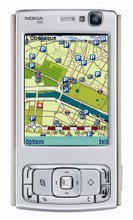
Europe : Europe his Assisted GPS (A-GPS) service helps Nokia Maps users find their current locations faster and get to their desired locations quicker using their Nokia mobile device with built-in GPS.
Nokia intends to equip all of its future devices that have built-in GPS with this service. The first devices to use this service are the Nokia 6110 Navigator, which has begun shipping in select markets, and the most recent software release of the Nokia N95 multimedia computer.
Current owners of the Nokia N95 can take advantage of this free* service by using the Nokia Software Updater. http://www.nokia.com/softwareupdate This will update the firmware on the device to the latest version.
This service has the ability to reduce the time a connected mobile device with built in GPS needs to find its current position, known as time to first fix (TTFF) for most geographical locations worldwide. The reduced fix times can increase and improve the usability for all Nokia location-based experiences.
"By decreasing the time wasted while you wait for a first fix, we are increasing the enjoyment that Nokia Maps provides," says Ralph Eric Kunz, vice-president, multimedia experiences, Nokia. "Consumers now have the comfort of quick fix times which create a better navigation experience when using Nokia Maps."
The service operates in tandem with a technical framework that allows third parties, such as service providers, to provide their own regional A-GPS services, making fix times even faster in certain areas- to the benefit of their subscribers.
The Nokia Software Updater is a free PC application that enables people to update the device software on compatible Nokia devices. The Nokia Software Updater is available in almost 40 different languages. The link to Nokia Software Updater is also available in the most recent versions of Nokia PC Suite software. Nokia Software updater has been used over two million times to update Nokia devices since it was introduced almost one year ago.
* Assisted GPS (A-GPS) service uses the data network, data fees vary, to check the cost of data transfer services, contact your service provider
location based services
Europe : Europe his Assisted GPS (A-GPS) service helps Nokia Maps users find their current locations faster and get to their desired locations quicker using their Nokia mobile device with built-in GPS.
Nokia intends to equip all of its future devices that have built-in GPS with this service. The first devices to use this service are the Nokia 6110 Navigator, which has begun shipping in select markets, and the most recent software release of the Nokia N95 multimedia computer.
Current owners of the Nokia N95 can take advantage of this free* service by using the Nokia Software Updater. http://www.nokia.com/softwareupdate This will update the firmware on the device to the latest version.
This service has the ability to reduce the time a connected mobile device with built in GPS needs to find its current position, known as time to first fix (TTFF) for most geographical locations worldwide. The reduced fix times can increase and improve the usability for all Nokia location-based experiences.
"By decreasing the time wasted while you wait for a first fix, we are increasing the enjoyment that Nokia Maps provides," says Ralph Eric Kunz, vice-president, multimedia experiences, Nokia. "Consumers now have the comfort of quick fix times which create a better navigation experience when using Nokia Maps."
The service operates in tandem with a technical framework that allows third parties, such as service providers, to provide their own regional A-GPS services, making fix times even faster in certain areas- to the benefit of their subscribers.
The Nokia Software Updater is a free PC application that enables people to update the device software on compatible Nokia devices. The Nokia Software Updater is available in almost 40 different languages. The link to Nokia Software Updater is also available in the most recent versions of Nokia PC Suite software. Nokia Software updater has been used over two million times to update Nokia devices since it was introduced almost one year ago.
* Assisted GPS (A-GPS) service uses the data network, data fees vary, to check the cost of data transfer services, contact your service provider
Mobile Location Services Represent Nearly a Third of US Application Revenue
The Wall Street Journal (7/17/07) reported market researcher Telephia Inc.'s findings that 33% of US carriers application revenue comes from location-based services. Such services include friend finder, navigation, and family finder, "..trumping other applications like music, weather and sports".
The Wall Street Journal (7/17/07) reported market researcher Telephia Inc.'s findings that 33% of US carriers application revenue comes from location-based services. Such services include friend finder, navigation, and family finder, "..trumping other applications like music, weather and sports".
Wednesday, July 18, 2007
Never ask for directions again
location based services
Sick of dead ends? We tested free mapping sites and in-car GPS gadgets to pinpoint the ones that won't steer you wrong.
More than 400 years ago, when Jacques Cartier began his famed expedition, maps labelled much of North America as terra incognita--unknown territory for European explorers. For today's traveller, terra incognita can be the next province, the next town, even the next neighbourhood. But, unlike Cartier, we have a wealth of tools not only to help us get where we're going but to find services--fuel, shelter and the all-important latte--along the way.For this review, I looked at four free web-based mapping tools and five portable GPS navigation devices, all of which provide descriptive and graphical guidance in real time. I also tried a PC software package that offers comprehensive mapping and trip-planning features.These services and products may not always reflect the most recent road changes, but hey, it's not like your old paper maps ever update themselves either.GPS for your dashPortable GPS devices are addictive: the ability to quickly find gas stations and other services is a great time-saver.Like the mapping sites, these devices don't always pick the fastest paths. But they almost always get you there--and if you miss a turn, they quickly calculate a new route. Most of the GPS models I tested store maps on external memory cards, so searches may take longer than they would with the usually pricier hard-drive-based devices. All have touch screens for data entry, speakers for voice directions and suction-cup windshield mounts.The Garmin, Lowrance and TomTom products have built-in rechargeable batteries, so they don't shut down when you turn off the car engine, such as when stopping for fuel. (Units without batteries may have to recalculate routing when you get back on the road and restart them.) You can also connect a battery-powered GPS device to your PC to preload addresses, or to use it when away from power--for example, while hiking.For a comparison of these portable GPS devices, see our chart.
Using GPS with what you've gotWith cell phones, personal digital assistants and digital music players already cluttering your pockets or purse, adding a portable GPS may seem like inviting device overload. But you might not need a new gadget.If you own a Windows Mobile- or Palm-based handheld (or a PDA-phone hybrid such as a Treo), you can buy kits such as Delorme's Earthmate GPS Blue Logger, Palm's GPS Navigator, Pharos's Pocket GPS Navigator or TomTom's Navigator 5, which include mapping software and a Bluetooth GPS receiver. A cheaper option for Windows Mobile PDAs with a CompactFlash slot is Pharos's Pocket GPS Receiver.Garmin, Hewlett-Packard and Pharos also have PDAs with built-in. Garmin's iQue line includes Windows Mobile and Palm OS models; HP and Pharos offer only Windows Mobile-based PDAs.Map 'n' phoneGiven how many cell phones have integrated music players and cameras, you'd think that more of them would come with built-in GPS receivers. If you own one of the few that have a GPS, you typically must pay a subscription fee to access mapping data from a server, and frequent map and direction downloads could eat into your airtime minutes.PC software for road-trippersFor a quick dash from point A to point B, a printout from an online mapping site is all you need. But, when wanderlust strikes and you're eager to take a lengthy road trip, desktop mapping software packages can ably assist you with a whole vacation's worth of planning, including drive times for specific routes and interesting sites along the way.Microsoft's Streets and Trips 2006 offers distinct advantages you can't get from web-based mapping services, most notably access to maps, directions and points-of-interest information whether you are connected to the internet or not.For a fraction of what you'd pay for a portable GPS navigation system, you can buy this PC application bundled with a small GPS receiver that connects to your laptop via USB and turns it into a real-time navigation device. And you'll have a nicer display too: a map is certain to look better on a full-size notebook screen than on the comparatively puny 3.5- or 4-inch displays of most portable GPS units. (This application is also available without a bundled GPS receiver, which significantly lowers the cost).That said, fussing with your notebook while driving solo can be downright dangerous--especially if the notebook keeps dropping into sleep mode. As in-car navigation systems, these products are OK for backup, but I would not recommend relying on them.Along with assessing its performance as real-time navigation systems, I evaluated the package on the accuracy and ease of use of its routing features, as well as the range of their trip-planning and annotation tools.
Review comparisons on GPS Devices CanadaLearn more about GPS LocatorRead article on Sony GPSClick Digital Product Reviews for a complete sitemap of PCWorld Canada electronic products reviews.Click Computer Technology News for latest computer product news and software release information.
Send your comments on this article direct to our editor by clicking here.
location based services
Sick of dead ends? We tested free mapping sites and in-car GPS gadgets to pinpoint the ones that won't steer you wrong.
More than 400 years ago, when Jacques Cartier began his famed expedition, maps labelled much of North America as terra incognita--unknown territory for European explorers. For today's traveller, terra incognita can be the next province, the next town, even the next neighbourhood. But, unlike Cartier, we have a wealth of tools not only to help us get where we're going but to find services--fuel, shelter and the all-important latte--along the way.For this review, I looked at four free web-based mapping tools and five portable GPS navigation devices, all of which provide descriptive and graphical guidance in real time. I also tried a PC software package that offers comprehensive mapping and trip-planning features.These services and products may not always reflect the most recent road changes, but hey, it's not like your old paper maps ever update themselves either.GPS for your dashPortable GPS devices are addictive: the ability to quickly find gas stations and other services is a great time-saver.Like the mapping sites, these devices don't always pick the fastest paths. But they almost always get you there--and if you miss a turn, they quickly calculate a new route. Most of the GPS models I tested store maps on external memory cards, so searches may take longer than they would with the usually pricier hard-drive-based devices. All have touch screens for data entry, speakers for voice directions and suction-cup windshield mounts.The Garmin, Lowrance and TomTom products have built-in rechargeable batteries, so they don't shut down when you turn off the car engine, such as when stopping for fuel. (Units without batteries may have to recalculate routing when you get back on the road and restart them.) You can also connect a battery-powered GPS device to your PC to preload addresses, or to use it when away from power--for example, while hiking.For a comparison of these portable GPS devices, see our chart.
Using GPS with what you've gotWith cell phones, personal digital assistants and digital music players already cluttering your pockets or purse, adding a portable GPS may seem like inviting device overload. But you might not need a new gadget.If you own a Windows Mobile- or Palm-based handheld (or a PDA-phone hybrid such as a Treo), you can buy kits such as Delorme's Earthmate GPS Blue Logger, Palm's GPS Navigator, Pharos's Pocket GPS Navigator or TomTom's Navigator 5, which include mapping software and a Bluetooth GPS receiver. A cheaper option for Windows Mobile PDAs with a CompactFlash slot is Pharos's Pocket GPS Receiver.Garmin, Hewlett-Packard and Pharos also have PDAs with built-in. Garmin's iQue line includes Windows Mobile and Palm OS models; HP and Pharos offer only Windows Mobile-based PDAs.Map 'n' phoneGiven how many cell phones have integrated music players and cameras, you'd think that more of them would come with built-in GPS receivers. If you own one of the few that have a GPS, you typically must pay a subscription fee to access mapping data from a server, and frequent map and direction downloads could eat into your airtime minutes.PC software for road-trippersFor a quick dash from point A to point B, a printout from an online mapping site is all you need. But, when wanderlust strikes and you're eager to take a lengthy road trip, desktop mapping software packages can ably assist you with a whole vacation's worth of planning, including drive times for specific routes and interesting sites along the way.Microsoft's Streets and Trips 2006 offers distinct advantages you can't get from web-based mapping services, most notably access to maps, directions and points-of-interest information whether you are connected to the internet or not.For a fraction of what you'd pay for a portable GPS navigation system, you can buy this PC application bundled with a small GPS receiver that connects to your laptop via USB and turns it into a real-time navigation device. And you'll have a nicer display too: a map is certain to look better on a full-size notebook screen than on the comparatively puny 3.5- or 4-inch displays of most portable GPS units. (This application is also available without a bundled GPS receiver, which significantly lowers the cost).That said, fussing with your notebook while driving solo can be downright dangerous--especially if the notebook keeps dropping into sleep mode. As in-car navigation systems, these products are OK for backup, but I would not recommend relying on them.Along with assessing its performance as real-time navigation systems, I evaluated the package on the accuracy and ease of use of its routing features, as well as the range of their trip-planning and annotation tools.
Review comparisons on GPS Devices CanadaLearn more about GPS LocatorRead article on Sony GPSClick Digital Product Reviews for a complete sitemap of PCWorld Canada electronic products reviews.Click Computer Technology News for latest computer product news and software release information.
Send your comments on this article direct to our editor by clicking here.
RBC Selects NAVTEQ Direct Access to Enhance Location Accuracy
July 16 -- NAVTEQ (NYSE: NVT), a leading global provider of digital map data for location-based solutions and vehicle navigation, today announced that RBC, Canada's largest bank by assets, has chosen to participate in NAVTEQ's Direct Access program and provide thousands of its bank branch and ATM locations to mobile consumers using NAVTEQ digital maps in navigation systems and internet-based and wireless mapping applications. The NAVTEQ map is consulted an estimated 90 million times per day by users of installed vehicle navigation systems, portable navigation systems and wireless and internet-based mapping applications making it the most widely used digital map worldwide. Because of their participation in Direct Access, each of RBC's most up-to-date locations will be precisely located on the NAVTEQ map enabling a large community of mobile consumers to see and route to newly opened locations and avoid routing to closed locations. Denise Doyle, VP Business Affairs, NAVTEQ, sees the project as enhancing the driver's experience, "We know that mobile consumers are increasingly relying on their navigation systems to route them to the places of businesses they need including banks and ATMs. Often, the decision of who to do business with is based on who's in the vicinity. RBC will now be able to impact this large and growing user community and ensure their most updated locations are accessible, regardless of the type of device or map application they are using".RBC joins a growing list of merchants becoming a part of NAVTEQ Direct Access. Having up to date locations included in the industry's leading digital map is an emerging point of competitive advantage for companies operating retail locations of particular use to drivers such as banks/ATMs, gas stations, stores and restaurants. About NAVTEQNAVTEQ is a leading provider of comprehensive digital map information for automotive navigation systems, mobile navigation devices, Internet-based mapping applications, and government and business solutions. NAVTEQ creates the digital maps and map content that power navigation and location-based services solutions around the world. The Chicago-based company was founded in 1985 and has approximately 2,800 employees located in 167 offices and in 28 countries.
July 16 -- NAVTEQ (NYSE: NVT), a leading global provider of digital map data for location-based solutions and vehicle navigation, today announced that RBC, Canada's largest bank by assets, has chosen to participate in NAVTEQ's Direct Access program and provide thousands of its bank branch and ATM locations to mobile consumers using NAVTEQ digital maps in navigation systems and internet-based and wireless mapping applications. The NAVTEQ map is consulted an estimated 90 million times per day by users of installed vehicle navigation systems, portable navigation systems and wireless and internet-based mapping applications making it the most widely used digital map worldwide. Because of their participation in Direct Access, each of RBC's most up-to-date locations will be precisely located on the NAVTEQ map enabling a large community of mobile consumers to see and route to newly opened locations and avoid routing to closed locations. Denise Doyle, VP Business Affairs, NAVTEQ, sees the project as enhancing the driver's experience, "We know that mobile consumers are increasingly relying on their navigation systems to route them to the places of businesses they need including banks and ATMs. Often, the decision of who to do business with is based on who's in the vicinity. RBC will now be able to impact this large and growing user community and ensure their most updated locations are accessible, regardless of the type of device or map application they are using".RBC joins a growing list of merchants becoming a part of NAVTEQ Direct Access. Having up to date locations included in the industry's leading digital map is an emerging point of competitive advantage for companies operating retail locations of particular use to drivers such as banks/ATMs, gas stations, stores and restaurants. About NAVTEQNAVTEQ is a leading provider of comprehensive digital map information for automotive navigation systems, mobile navigation devices, Internet-based mapping applications, and government and business solutions. NAVTEQ creates the digital maps and map content that power navigation and location-based services solutions around the world. The Chicago-based company was founded in 1985 and has approximately 2,800 employees located in 167 offices and in 28 countries.
U.S. says to reach GPS-Galileo agreement this week
location based services
BRUSSELS (Reuters) - The United States and the European Union are close to signing an agreement that would allow their satellite navigation systems to work together to provide more accurate images and information.
Under the agreement, which the United States says it expects to be signed this week, both EU and U.S. satellites would send information on the same radio frequency, enabling receivers to get signals from both systems and combine the data.
The EU's Galileo system is yet to be launched, and the benefits of the agreement will depend on makers of receivers wanting to accept both systems, but one senior U.S. official involved in the EU-U.S. talks said that was inevitable.
"The market probably will drive dual-use receivers. We think probably that single (U.S.) GPS-specific, or Galileo-specific receivers -- the market will phase out in time," said Raymond Clore, a GPS-Galileo senior adviser from the U.S. State Department.
"It just doesn't make sense to limit yourself to just one system," he told Reuters.
The United States has 30 satellites orbiting the earth, sending signals that allow holders of receivers to pinpoint their own and others' locations -- as used in car satellite navigation systems.
The EU aims also to have 30 satellites up in space by around 2010 with a fully operational Galileo system by 2012.
The idea is that receivers getting data from potentially twice the number of satellites would be able to create a more accurate picture especially in areas where reception is weak because of the urban or natural landscape.
The United States is in the process of updating its GPS system -- procuring new satellites that would launched into space by 2013.
A European Commission spokesman confirmed an agreement was on the table, but could not say when.
location based services
BRUSSELS (Reuters) - The United States and the European Union are close to signing an agreement that would allow their satellite navigation systems to work together to provide more accurate images and information.
Under the agreement, which the United States says it expects to be signed this week, both EU and U.S. satellites would send information on the same radio frequency, enabling receivers to get signals from both systems and combine the data.
The EU's Galileo system is yet to be launched, and the benefits of the agreement will depend on makers of receivers wanting to accept both systems, but one senior U.S. official involved in the EU-U.S. talks said that was inevitable.
"The market probably will drive dual-use receivers. We think probably that single (U.S.) GPS-specific, or Galileo-specific receivers -- the market will phase out in time," said Raymond Clore, a GPS-Galileo senior adviser from the U.S. State Department.
"It just doesn't make sense to limit yourself to just one system," he told Reuters.
The United States has 30 satellites orbiting the earth, sending signals that allow holders of receivers to pinpoint their own and others' locations -- as used in car satellite navigation systems.
The EU aims also to have 30 satellites up in space by around 2010 with a fully operational Galileo system by 2012.
The idea is that receivers getting data from potentially twice the number of satellites would be able to create a more accurate picture especially in areas where reception is weak because of the urban or natural landscape.
The United States is in the process of updating its GPS system -- procuring new satellites that would launched into space by 2013.
A European Commission spokesman confirmed an agreement was on the table, but could not say when.
Tuesday, July 17, 2007
Sprint-Loopt Launch GPS Social Mapping Service To Find 'Lost' Friends
location based services
The social mapping service automatically updates the location of other subscribers in a user's private network, with the location information displayed on a map on users' cell phones.
By W. David Gardner InformationWeek July 17, 2007 01:04 PM
"Where are you?" It's the most common question asked by mobile phone users. Loopt announced Tuesday that Sprint will launch a service that answers that question by using GPS capability to enable subscribers to see where their friends are located.
The social mapping service automatically updates the location of other subscribers in a user's private network; the location information is displayed on a map on users' phones. The locations of subscribers are updated every 15 minutes.
The service costs $2.99 a month in addition to Sprint's data charges and will be available on 25 Sprint and Nextel phones in the coming weeks, Loopt said.
According to the Loopt announcement, the service "allows users to send messages to groups of friends or send proximity messages to friends when they are nearby."
Social networking systems on mobile devices have been catching on in recent months. A system called iFind at MIT is device-centric and secures information from users outside the application. The MIT system runs off the university's massive Wi-Fi network.
Most mobile phone location services currently use GPS technology and provide navigation information. Sprint already offers a service that enables parents to keep track of their children and another service that helps runners stay on track while training and racing.
The Loopt service can send an alert when another subscriber is nearby; messages also can be broadcast to selected groups of users. The service has been available on Sprint subsidiary Boost Mobile for several months and more than 100,000 subscribers have used the service since then.
Loopt said its service is 100% permission-based, with users agreeing to share their location only with their designated friends; the service can be turned on and off on a friend-by-friend basis or for all friends simultaneously.
location based services
The social mapping service automatically updates the location of other subscribers in a user's private network, with the location information displayed on a map on users' cell phones.
By W. David Gardner InformationWeek July 17, 2007 01:04 PM
"Where are you?" It's the most common question asked by mobile phone users. Loopt announced Tuesday that Sprint will launch a service that answers that question by using GPS capability to enable subscribers to see where their friends are located.
The social mapping service automatically updates the location of other subscribers in a user's private network; the location information is displayed on a map on users' phones. The locations of subscribers are updated every 15 minutes.
The service costs $2.99 a month in addition to Sprint's data charges and will be available on 25 Sprint and Nextel phones in the coming weeks, Loopt said.
According to the Loopt announcement, the service "allows users to send messages to groups of friends or send proximity messages to friends when they are nearby."
Social networking systems on mobile devices have been catching on in recent months. A system called iFind at MIT is device-centric and secures information from users outside the application. The MIT system runs off the university's massive Wi-Fi network.
Most mobile phone location services currently use GPS technology and provide navigation information. Sprint already offers a service that enables parents to keep track of their children and another service that helps runners stay on track while training and racing.
The Loopt service can send an alert when another subscriber is nearby; messages also can be broadcast to selected groups of users. The service has been available on Sprint subsidiary Boost Mobile for several months and more than 100,000 subscribers have used the service since then.
Loopt said its service is 100% permission-based, with users agreeing to share their location only with their designated friends; the service can be turned on and off on a friend-by-friend basis or for all friends simultaneously.
Monday, July 16, 2007
Google Lets Users Overlay Data On Personalized Maps
location based services
Google will introduce Wednesday a new feature that lets users create personalized maps which plot the locations of everything from cheap gas locally to the latest earthquakes worldwide.
By Reuters InformationWeek July 11, 2007 09:00 AM
SAN FRANCISCO - Google will introduce Wednesday a new feature that lets users create personalized maps which plot the locations of everything from cheap gas locally to the latest earthquakes worldwide.
MyMaps, as the new feature is known, allows consumers to select from more than one hundred mini-applications created by independent software developers. These allow users to overlay data on top of Google's popular online map service.
Visitors to http://maps.google.com after Wednesday at 6 a.m. PDT will find a new tab that contains links to dozens of the mini-applications, which Google calls Maplets.
One map application allows users to watch YouTube videos based on the locations where they are uploaded. One could switch from the video confessions of a teenager in Ohio to tourist videos shot in the Andes mountains of South America.
Among the applications created by software developers over the past month are programs that allow users to link famous photos taken in locations around the world to Google Maps.
Alternately, photos that have location information on the Flickr photo sharing service can be found on a Flickr Maps application. Users can map local real estate prices, plot hotels or locate the cheapest gas station nearby.
"We are putting the Web into maps," said John Hanke, a product manager for Google Maps, said of the diversity of information users now will be able to locate geographically.
Furthermore, users can overlay multiple applications on top of Google Maps to find interesting geographical correlations.
Before buying a house, a potential property owner could overlay local crime statistics on their new neighborhood.
Tourists could check out photos posted by other tourists to sites such as Yahoo Inc.(YHOO)'s Flickr to figure out what the hotel or the surrounding region looks like before they book a reservation.
Consumers who have signed up for a Google Gmail account can save personalized maps. Users who choose not to sign into Google services can remain anonymous but use the service, Hanke said.By: Eric Auchard
location based services
Google will introduce Wednesday a new feature that lets users create personalized maps which plot the locations of everything from cheap gas locally to the latest earthquakes worldwide.
By Reuters InformationWeek July 11, 2007 09:00 AM
SAN FRANCISCO - Google will introduce Wednesday a new feature that lets users create personalized maps which plot the locations of everything from cheap gas locally to the latest earthquakes worldwide.
MyMaps, as the new feature is known, allows consumers to select from more than one hundred mini-applications created by independent software developers. These allow users to overlay data on top of Google's popular online map service.
Visitors to http://maps.google.com after Wednesday at 6 a.m. PDT will find a new tab that contains links to dozens of the mini-applications, which Google calls Maplets.
One map application allows users to watch YouTube videos based on the locations where they are uploaded. One could switch from the video confessions of a teenager in Ohio to tourist videos shot in the Andes mountains of South America.
Among the applications created by software developers over the past month are programs that allow users to link famous photos taken in locations around the world to Google Maps.
Alternately, photos that have location information on the Flickr photo sharing service can be found on a Flickr Maps application. Users can map local real estate prices, plot hotels or locate the cheapest gas station nearby.
"We are putting the Web into maps," said John Hanke, a product manager for Google Maps, said of the diversity of information users now will be able to locate geographically.
Furthermore, users can overlay multiple applications on top of Google Maps to find interesting geographical correlations.
Before buying a house, a potential property owner could overlay local crime statistics on their new neighborhood.
Tourists could check out photos posted by other tourists to sites such as Yahoo Inc.(YHOO)'s Flickr to figure out what the hotel or the surrounding region looks like before they book a reservation.
Consumers who have signed up for a Google Gmail account can save personalized maps. Users who choose not to sign into Google services can remain anonymous but use the service, Hanke said.By: Eric Auchard
Sunday, July 15, 2007
GPS Mobile Phone Shipments in China to Increase Tenfold by 2011
location based services
Jul 11, 2007 21:07Yukiko Kanoh, Nikkei Electronics
-->
iSuppli Corp. of the United States has reported that demand for navigation services is rising among Chinese consumers, and mobile phone carriers expect such services to play an important role in slowing down the drop of ARPU (average monthly revenue per unit) in the future.
Chinese GPS mobile phone shipments are likely to reach 1.4 million units in 2007. iSuppli forecast GPS mobile phone shipments in the Chinese market will reach 16.5 million units in 2011, more than ten times the shipments in 2007, reflecting lower average selling price (ASP) of such handsets.
Both China Mobile Ltd. and China Unicom Ltd., mobile phone carriers of China, started their navigation services in 2007. Current monthly rate for the navigation services is $2.5 (USD) at 5 MB bandwidth.
Unlike portable navigation devices (PND), GPS mobile phones receive map data via mobile networks. Therefore, the handsets do not need built-in map data but just navigation software.
Users can also have full map data installed in GPS mobile phones as an optional feature. According to iSuppli, Beijing-based Lingtu Software Technology Co. Ltd., Shenzhen-based Careland information System Co. Ltd. and Beijing-based Guantu Information Technology Co. Ltd. are major map data manufacturers in the Chinese market.
iSuppli's analysis indicated the diffusion of GPS mobile phones had been strongly hindered by their high retail prices. As of the end of 2006, products featuring GPS capability were primarily high-end smart phones that cost over $700.
GPS mobile phones sold in 2006 included MiTAC Inc.'s "Mio A701" from Taiwan and Dopod China Corp's "P800."
Chinese domestic OEM manufacturers have proactively entered the market as well. Amoi Electronics Co. Ltd. of China, for example, released the "E860" featuring GPS capability in February 2007.
This model incorporates a GPS chipset from SiRF Technology Inc. of the United States, an application processor from Intel Corp. and GPS software from Lingtu Software Technology. It supports Microsoft Corp.'s "Windows Mobile 5.0" OS.
Pricing for the E860 is reasonable $450, which helped the product sell most among GPS mobile phones in May.
In addition, Chinese mobile phone manufacturers consider adopting GPS capability to high-end models. Such handsets are embedded with a GPS module and a multimedia processor, yet pricing at $250 is possible if they are not mounted with an application processor and an OS, according to iSuppli.
iSuppli forecast the demand for GPS chipsets, multimedia processors and other IC chips will improve in accordance with increased GPS mobile phone shipments. The company also predicted pricing for GPS chipsets will drop rapidly in the first half of 2008, reflecting intensified competition due to Taiwanese fabless manufacturers' entry to the market.
The cost of a GPS mobile phone will continue to decline throughout 2007 resulting from competition among multimedia processor manufacturers of Taiwan, Korea and China, iSuppli added.
location based services
Jul 11, 2007 21:07Yukiko Kanoh, Nikkei Electronics
-->
iSuppli Corp. of the United States has reported that demand for navigation services is rising among Chinese consumers, and mobile phone carriers expect such services to play an important role in slowing down the drop of ARPU (average monthly revenue per unit) in the future.
Chinese GPS mobile phone shipments are likely to reach 1.4 million units in 2007. iSuppli forecast GPS mobile phone shipments in the Chinese market will reach 16.5 million units in 2011, more than ten times the shipments in 2007, reflecting lower average selling price (ASP) of such handsets.
Both China Mobile Ltd. and China Unicom Ltd., mobile phone carriers of China, started their navigation services in 2007. Current monthly rate for the navigation services is $2.5 (USD) at 5 MB bandwidth.
Unlike portable navigation devices (PND), GPS mobile phones receive map data via mobile networks. Therefore, the handsets do not need built-in map data but just navigation software.
Users can also have full map data installed in GPS mobile phones as an optional feature. According to iSuppli, Beijing-based Lingtu Software Technology Co. Ltd., Shenzhen-based Careland information System Co. Ltd. and Beijing-based Guantu Information Technology Co. Ltd. are major map data manufacturers in the Chinese market.
iSuppli's analysis indicated the diffusion of GPS mobile phones had been strongly hindered by their high retail prices. As of the end of 2006, products featuring GPS capability were primarily high-end smart phones that cost over $700.
GPS mobile phones sold in 2006 included MiTAC Inc.'s "Mio A701" from Taiwan and Dopod China Corp's "P800."
Chinese domestic OEM manufacturers have proactively entered the market as well. Amoi Electronics Co. Ltd. of China, for example, released the "E860" featuring GPS capability in February 2007.
This model incorporates a GPS chipset from SiRF Technology Inc. of the United States, an application processor from Intel Corp. and GPS software from Lingtu Software Technology. It supports Microsoft Corp.'s "Windows Mobile 5.0" OS.
Pricing for the E860 is reasonable $450, which helped the product sell most among GPS mobile phones in May.
In addition, Chinese mobile phone manufacturers consider adopting GPS capability to high-end models. Such handsets are embedded with a GPS module and a multimedia processor, yet pricing at $250 is possible if they are not mounted with an application processor and an OS, according to iSuppli.
iSuppli forecast the demand for GPS chipsets, multimedia processors and other IC chips will improve in accordance with increased GPS mobile phone shipments. The company also predicted pricing for GPS chipsets will drop rapidly in the first half of 2008, reflecting intensified competition due to Taiwanese fabless manufacturers' entry to the market.
The cost of a GPS mobile phone will continue to decline throughout 2007 resulting from competition among multimedia processor manufacturers of Taiwan, Korea and China, iSuppli added.
Sat-nav rival could crash and burn
location based services
European system taking on US military's GPS faces collapse over multi-billion-pound deficit Robin McKie, science editorSunday July 15, 2007The Observer
For the past 18 months, a small box-shaped satellite has been circling Earth, beaming down information from its radiation detectors and atomic clocks. The British-built probe is modest by modern space technology standards. Yet great hopes are riding with Giove-A, for it is intended to be the forerunner of a fleet of 30 satellites that will provide Europe with an alternative to reliance on American technology.
Giove-A is a test satellite for Galileo, a multi-billion-pound European Union project to provide pilots, farmers, trawler fishermen, truck drivers, mobile phone owners, businessmen and private citizens with the means to pinpoint their positions to a few centimetres. Using Galileo, motorists will be charged for each second they spend on roads, while the blind could be provided with guides to help them move around cities in safety
location based services
European system taking on US military's GPS faces collapse over multi-billion-pound deficit Robin McKie, science editorSunday July 15, 2007The Observer
For the past 18 months, a small box-shaped satellite has been circling Earth, beaming down information from its radiation detectors and atomic clocks. The British-built probe is modest by modern space technology standards. Yet great hopes are riding with Giove-A, for it is intended to be the forerunner of a fleet of 30 satellites that will provide Europe with an alternative to reliance on American technology.
Giove-A is a test satellite for Galileo, a multi-billion-pound European Union project to provide pilots, farmers, trawler fishermen, truck drivers, mobile phone owners, businessmen and private citizens with the means to pinpoint their positions to a few centimetres. Using Galileo, motorists will be charged for each second they spend on roads, while the blind could be provided with guides to help them move around cities in safety
Saturday, July 14, 2007
Plotting the digital map
location based services

On the digital map
AdvertisementAdvertisement
Lines are being drawn in the sand as the makers of electronic maps go head to head.
The venerable art of cartography is set to become a digital battleground in Australia with the launch of a global brand determined to unseat the local champion.
Last night, Navteq, the global market leader in digital maps, officially began its assault on the local market currently dominated by Sensis, after spending two years mapping Australia's road network.
The Sydney launch follows a "soft launch" in August last year - the company wanted its official arrival to involve local customers, which now include Nokia phones, some luxury car manufacturers and a portable device branded by Ausway.
Chicago-based Navteq says it plans to use its global muscle to win major navigation customers such as Garmin, TomTom and Navman away from Sensis.
However, Sensis is ready for the fight, saying its local data is more extensive and comprehensive, and it has several digital mapping innovations in the wings such as 3-D models of tourist landmarks.
Both companies agree that maps are the key not just to navigation but to the lucrative area of local search.
Navteq estimates 4 per cent of Australian vehicles have either a portable or embedded navigation system, but by 2010 that figure will be 12 per cent.
"Navigation products are where digital cameras were three to four years ago," Navteq's Asia-Pacific senior vice-president Richard Shuman says. "A device to tell you where you are and how to get you to your next location will become a standard expectation for the majority of Australians in the next few years."
There are already 20 million GPS navigation devices in Europe, and prices are coming down quickly.
"How many phones were GPS-enabled two years ago? Hardly any," Mr Shuman says. "There is a lot of 'where am I and what's around me', but now we're also seeing a lot of 'where can I find something in my vicinity?'
"We are just scratching the surface. In the next few years we are going to see the convergence of products and services based on maps."
Navteq's local business development director, Kirk Mitchell, says he hopes to win the local custom of TomTom, Navman and Garmin, who are all currently using Sensis data.
The selling points would be the quality of the product as well as the ability to leverage global volumes. "Vendors want one source, and we are a global company," he says.
Overseas, the company is already experimenting with licensed content on its maps - Starbucks, for instance, pays for its logos, store locations and contact details to be included in Navteq's data.
Garmin May Have to Deal With Gremlins
location based services
location based services
Word Count: 529 | Companies Featured in This Article: Garmin, Garmin, Navteq, Gentex
Garmin (GRMN: Nasdaq) By Banc of America Securities ($77.66, July 9, 2007)
WE ARE INITIATING COVERAGE of Garmin with a Neutral rating and $84 price target.
We like the global portable navigation device (PND) penetration story and Garmin's market position, but think roughly four times price-volume elasticity in the U.S. is discounted in the stock compared to the 4.5 times we have modeled. The latter equates to 110% PND unit compounded annual growth rate over the next three years and brings U.S. penetration to 35% from 5%.
While there could be upside to our 4.5 times elasticity and related figures, ...
Business world finding more ways to use GPS technology
location based services

Earl Knuth, MachineryLink customer service manager, uses GPS technology to track farm equipment that the West Bottoms-based company leases throughout the country.
The Kansas City rental and transport company uses GPS technology to track the harvesting machinery down to the row of corn.
From desktop computers at MachineryLink’s West Bottoms headquarters, employees can watch harvesting progress throughout the U.S. and Canada and monitor the number of hours remaining on any given rental agreement.
That means the company’s trucks can collect the equipment almost the minute one farmer finishes and deliver it to another customer.
Equipment is used more efficiently and customers get machines on time, said Jim Bramlett, vice president of logistics.
The company is into the second season of having farm machines equipped with the technology.
Before, Bramlett said, “we would bug the heck out of our customers” checking their progress.
Global Positioning System technology, which uses government satellites to pinpoint locations, is becoming increasingly pervasive in the business world.
Sure, the consumer market is sizzling for personal navigation devices and GPS-enabled cell phones. But with falling prices in recent years, the technology — which has been available for commercial use since the 1980s — now can be found at work in virtually every industry tracking equipment, goods and employees.
Experts say GPS is taking the guesswork out of many business transactions and improving efficiency. Within the next decade, some say, even the smallest mom-and-pop companies will be forced to use GPS-enabled equipment.
“The companies that don’t have it are at a competitive disadvantage going forward,” said Marcus Torchia, an industry analyst with Boston-based Yankee Group.
Growing market
Large companies have long used GPS technology to track and route fleets of service vehicles. Similarly, the technology has been a staple in long-haul trucking for some time. But until relatively recently, the cost of the technology kept it out of reach of most smaller companies.
But prices of GPS systems and the applications that drive them have fallen dramatically in recent years and should continue to fall, analysts said.
Just looking at what consumers are paying is illustrative. Today, personal navigation devices are available off the shelf for as little as $200. Only a few years ago, before such portable devices were available, a comparable, custom-installed system would cost $5,000 to $7,000.
Of course, commercial systems aren’t quite so inexpensive. They must, for example, link to a company’s back office, include tracking technology that works inside a building, or have other professional-grade bells and whistles. But they do cost less than they used to, a reflection of the declining price of the hardware and software they’re made from.
A computer chip that a few years ago cost around $50 today can cost as little as $15 to $20, said Thilo Koslowski, a vice president and automotive analyst with research firm Gartner Inc. in Stamford, Conn.
“It is a big, big improvement,” he said, adding that lower-priced chip sets alone wouldn’t bring the technology within reach of many smaller companies.
Other things, like map data and applications used with GPS devices, also have become more widely available and, therefore, less expensive.
Today 30 percent to 40 percent of fleet operators use “telematics” services, data-sharing applications that rely on GPS technology to link an employee in the field to the home office. In the next five years, Koslowski said, 60 percent to 70 percent of fleet operators will have the services.
Saturday, July 07, 2007
Mobile Navigation Company Wayfinder Buys Navicore
By James Quintana Pearce - Tue 03 Jul 2007 02:26 AM PST
Sweden-based Wayfinder has announced that it has bought Finland-based Navicore, although the financial terms of the deal were not announced. The two navigation companies will cover all major mobile platforms and have a combined user base of more than 1 million users, with more than 200,000 paying customers.
Navicore provides navigation products for smart phones and Nokia Internet tablets. Wayfinder offers map, direction and GPS navigation services accessible by mobile phones, and clients include Telenor, 3, Cingular, Vodafone, SFR, Pannon, Telefonica and Mobilkom Austria.
Nokia 6110 Navigator Videos
location based services
 These are pretty old, but I wanted to share them anyways. After the break you'll find several videos showing off different aspects of the Nokia 6110 Navigator, the 2nd Nokia S60 device (since it came out before the E90) to have GPS built-in. However, as I've mentioned before, it's odd to me that this one comes with Route66 pre-installed, instead of Nokia's own Maps software.
It DOES, however, have A-GPS, which the N95 will have soon, and I have to say, that's a tremendous boon for GPS built into these devices. The lock-on is consistently under 1 minute, which is a BIG improvement over previous firmwares for the N95. I'm anxious to see more and more devices have GPS built-in, because I think that location-based services are going to be a hot hot industry in the next year or two, specifically for advertisers. You just can't beat being able to target people who are within a certain area of your service/product, and who are searching for it.
Click through to the videos, if you're interested in the phone, you can get prices over at Fonegrabber.com. After playing with the 6110 Navigator in Chicago, I'd have to say I'm a huge fan of the device.
Email this • Add to del.icio.us • Digg This! • Share on Facebook
Subscribe to:
Posts (Atom)