The Personal Internet Will Subsume Mobile Internet Assumptions, Says Shosteck Group Tekrati Research News
The Mobile Internet is becoming a misnomer -- a thing of the past -- according to a new study by The Shosteck Group. The telecom analysts are predicting the emergence of the Personal Internet, which they say represents a new paradigm, a new opportunity and a new competitive playing field. The Personal Internet will require a fundamental shift in the attitudes of mobile operators and in key technologies.
According to a new Shosteck Group, the traditional concepts of Mobile Internet and mobile broadband are based upon incorrect assumptions. They are based on technology interpretations. They imply limited scope and they do not encompass the true integration of personal services over interconnected networks. Personalization and connectivity are the ultimate goals of end users, regardless of technology.
In its newest study, The Shosteck Group reveals that In an increasingly connected world, we are rapidly moving to a situation where services and content are the same irrespective of access mechanism. It is the standardized nature and the reach of the Internet that has made the Internet so successful. It is the lack of standardization and reach that has inhibited the Mobile Internet. For this reason, The Shosteck Group
“The beauty and simplicity of the term Personal Internet comes from its literal definition, personal: particular to a given individual, of intimate nature, and Internet: interconnected networks, access to infinite content. We believe that says it all,” states Jane Zweig, Chief Executive Officer of The Shosteck Group.
In this new paradigm, users will have greater control over their ability to access, store and interact with content, devices and services. This will be facilitated by the availability of new service capabilities, including the Personal Service Portal. The Personal Service Portal will provide a variety of services which have three key attributes:
On-demand: combination of storage on local device or the network as well as broadcast capability
Relevant: right time, right place, right price
Interactive: a more engaging and immersive experience
“This future vision is one where the user is in control – choosing services and content on-demand that are relevant to them, that meet their needs at any given time, where ever they are, at a price that fits the purpose, using the device they choose,” stated John Darnbrough, Senior Associate of The Shosteck Group.
Before the Personal Internet can be realized, the ongoing war to capture customer revenues will continue to be fought but with new players joining the fight.
“This is in fact a War of the Worlds -- primarily a war between the telecoms and media worlds. It is a war in which alliances with potential competitors are likely. Some alliances will be long lasting; others will not. The prize for mobile operators is no longer just communications revenues,” stated Ms. Zweig. “It is also rapidly growing e-commerce and e-entertainment revenues from the on-line purchase of tangible and digital goods and services in addition to revenues from sales of handheld devices – the physical means through which these services are consumed,” she continued.
Capturing these prized customer revenues is more difficult in a highly connected world. “A portal owner may guide and cajole its users, but typically users are free to go elsewhere, to use other portals or to go exploring themselves. Thus the winners of this war may not fully achieve their objective of ‘controlling’ or ‘owning’ the customer. In the end, it will be the customer who wins,” stated Mr. Darnbrough.
“Mobility will not be at the center, but an important cog in the wheel,” commented Ms. Zweig. “Rather than fear and fight the trends, mobile operators need to embrace them or at least prepare to profit from them by building a ‘smart-pipe’ business.
Shosteck analysts say that operators must accept that the premium for mobility is significantly lower than they believe it is today even though few alternatives will compete on a like for like basis with mobile networks for many years, if at all. The mobility premium is not yet dead, but it will come under increasingly heavy attack. It will come under attack in both the voice and data worlds.
“The development of the Personal Internet or the mobilization and un-tethering of the Internet will require a fundamental shift in attitudes of operators and in the technologies used to deliver services,” commented Mr. Darnbrough. “Significant changes will be required in the mobile network to enable the development of the service and business models that we envisage will be the framework of the Personal Internet. But fundamentally, the successful development of the Personal Internet will be reliant upon the development of an appropriate network architecture that enables mobile operators in particular to considerably reduce the cost of service delivery over their networks. The required changes will not happen overnight. No specific winners are certain other than the end user. That is inevitable.”
About the market research report
The Shosteck Group 140-page study, "The Portal Wars: Where Next for the Mobile Internet? The Emergence of the Personal Internet.", raises and answers two key overriding questions: In this “War of the Worlds,” will players outside of the mobile industry offer such fierce competition that the mobile industry will be reduced to, at best, marginal profitability? Alternatively, is the market so large that these new entrants offer opportunities for partnerships and alliances that will increase profits for all?
The study discusses and analyzes the strategic options for those already competing and those intending to enter the Mobile Internet market and the emerging, but potentially much larger, Personal Internet market. Included in the firm’s analysis are implications for operators, infrastructure and consumer electronics/handset vendors, content providers, software developers, billing and platform providers, systems integrators and others who comprise the expanding value chain.
> Story on Analyst Firm Website
skip to main |
skip to sidebar

A Sextant --- solid brass navigation technology ... from 200 years ago !
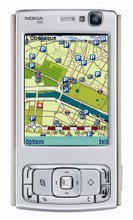
The 2007 << Dream Machine >>
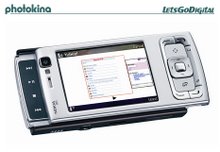
no doubts .. the ultimate smart phone in 2007
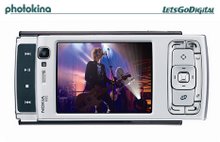
where it's at in 2007


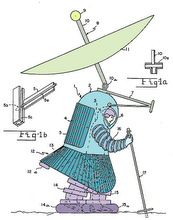
... but it didn't catch on

... if you don't know where you've been - BUT - how did you GET here ?!?!
Our focus is on Location Based Services ( LBS ) which answer "Where am I? Where is it? How do I get there?" ... & Location Aware Devices (LADs) such as 3G smartphones, mobiles, cellfones, PDAs and personal wireless platforms. LADs will soon be everywhere [i.e. ubiquitous = DoCoMo]. This blog will stay on top of all things that will help us .... keep on track ... and show us where it's at


GPS SATNAV LBS "Personal Navigation Device"
A Sextant --- solid brass navigation technology ... from 200 years ago !
NOKIA N95
The 2007 << Dream Machine >>
OUR LOCAL TIME ( +10 hrs on Zulu)
Hobart |
NOKIA 95
no doubts .. the ultimate smart phone in 2007
SUBSCRIBE TO THE RSS FEED HERE


YOU'RE SEARCHING FOR WHAT
NOKIA N95
where it's at in 2007
The UBIKWITUS SWICKI
where do you come from ?
Blog Archive
-
▼
2006
(2445)
-
▼
January
(391)
- Billion Dollar Market for On-Device Portals London...
- Mobiles covet Google success - Newspaper Edition -...
- TeleAtlas to offer 3D Maps of Major Cities | GPS L...
- jeepx: GPS Discoveries: Cold Start and Aided GPSIm...
- jeepx: GPS Discoveries: A Map for your BlogFeedMap...
- WCDMA/EDGE devices number 31Dozens of manufacture...
- InformationWeek | Cell-Phone Services | 'Point And...
- thinkd2c" Verizon Wireless Introduces VZ Navigator...
- Mobile Monday - Location Based Services The Februa...
- jeepx: GPS Discoveries: GeoVector: Point & ShopGeo...
- My Personal Geekzone BlogrollA few months back I'v...
- GlobalSat BC-337 Compact Flash GPS Receiver Review...
- Road Test of the GlobalSat BC-337 and BT-338 SiRFs...
- Verizon Launches the Motorola V325 With Location B...
- European Geo-PortalINSPIRE (Infrastructure for Spa...
- GeoURL (2.0)GeoURL is a location-to-URL reverse di...
- Home - ConfluenceGeotools is an open source Java G...
- The JUMP ProjectThe foundation of The JUMP-Project...
- ArcWeb Explorer: Quick ReviewA few sites report th...
- Portable tourist guides now in serviceYour iPod mi...
- GeoVector and Japan’s Mapion Deliver the First Poi...
- Location Based Marketing - Could it Really Work? P...
- 'We're not a one-trick pony'No longer just a sea...
- Sharing and Sending Web Content and More Via SMSI'...
- Phone start-up takes on GoogleSimon HayesJANUARY 3...
- gps tracklog: Pros and Cons of PDA-based GPS Recei...
- Google Maps Mania: Google Maps Creation Tools and ...
- WorldTracker SMS - Small GPS Tracking | GPS Lodge....
- Google Maps Mania: Google Maps news and blog post ...
- With LBS, It's All About "Getting to Free"Today, I...
- Location-Based Services Offer High Revenue Potenti...
- Going to Market with Location Services | January...
- Going to Market with Location Services | January...
- Chapter 3. Sources of Inaccuracy: The ProblemsIn o...
- WorldChanging: Another World Is Here: What's Next ...
- ArcWeb Services | ArcWeb ExplorerArcWeb Explorer i...
- O'Reilly: "Google Maps is the new open source."At ...
- Serious Web Map Application, or Mere Mashup - Sema...
- Smartphones Know Ups And Downsrosoft and Linux lea...
- Navicore adds dynamic navigation Navicore announce...
- Desire To Personalize Smartphones Expected To Dri...
- Desire To Personalize Smartphones Expected To Driv...
- The Best in Mobile, 2005 at MobHappy Followin...
- ContentSutra :: "Customise The Content To Develop ...
- The secret to rapid realization of applications an...
- Symbian OS mobile smartphone operating system - Ne...
- Worldwide Hot-Spot List Tops 100,000 Mark January...
- U.S.-European GPS Rivalry Heats Up January 24, 20...
- WCDMA Subscribers 3G Finally Gaining Momentum: Re...
- Opera Mini� for MobileOpera Mini™ is a fast and ea...
- gps tracklog: Using GIS Data with GPSThere is a we...
- Opera Software announces worldwide release of Oper...
- Dell To Integrate Vodafone 3G to Laptops: "Dell wi...
- Next-Generation GPS Capabilities to be AnnouncedU....
- InFocus: All about locationImagine that you are dr...
- Intrado, Networks In Motion In Marketing AllianceL...
- Yahoo! gives up quest for search dominanceEnvironm...
- WiMAX Getting Real, but What About 802.20? : "WiMA...
- With RemoMail, Use Your Mobile Phone as a Powerful...
- DDH Software Launches its Acclaimed HanDBase Relat...
- The Web on Virtually any Phone: Opera Software Ann...
- Intrado and Networks in Motion Announce Strategic ...
- Mobile Firm Builds Ad Management Suite for Publish...
- The Brave New World of WirelessThe Brave New World...
- And now, NewsWe're taking Google News out of beta!...
- New year, new imageryWe're always trying to improv...
- ContentSutra :: "Customise The Content To Develop ...
- PostcodeinePostcodeine← start typing any postcode ...
- IMS Insider Blog: Top 10 Predictions for the Telco...
- Psiloc Mobile Solutions Psiloc is the global leadi...
- Screen Capture for Cell PhonesWhen you write news ...
- "Location Based Services and all about Mobile Mark...
- China approves TD-SCDMA standardBy Joni MorseJan 2...
- Competitive Analysis of Sony Ericsson MobileIndia ...
- Plazes is a grassroot approach to location-aware i...
- Do You Think Operators Really Care About Your Priv...
- plazes.betaPlazes is a grassroot approach to locat...
- Email Is For Old PeopleThe changes may sound subtl...
- Graphical Ads Landing On Lonely PlanetThe changes ...
- The Coming Tug of War Over the InternetDo you pref...
- Open Gardens: Learning from Plazes – location base...
- NTT DoCoMo Plans to Sell Windows Mobile Handheld i...
- on the semweb, the geoweb, and the media labI enj...
- Community websites top list of fastest-growing web...
- Who says you can�t buy peace of mind?: "As a pare...
- bluepulse - the write once, play anywhere mobile p...
- AdMobSelling ads on your mobile site• Monetize you...
- China salutes TDSCDMA wireless standardChina Frida...
- Wireless World New roaming standardConsumer intere...
- feedmap .net (BETA) : Where Blogs Meet MapseedMap ...
- MobileCrunch » bluepulse; first look at a mobile 2...
- bluepulse - homeWhat is bluepulse? The ...
- bluepulseYour content and applications, on any pho...
- Warm and Wireless: the Audex Jacket by Motorola an...
- WTOP: Digital Maps Going Beyond the RoadsBy ANICK ...
- SIRFS UP Mainstream Business...
- Mainstream Business Press Needs More Enlightenment...
- Forgot What You Searched For? Google Didn'tBy Lesl...
- u-blox Releases Firmware 5.00 Featuring GPS Perfo...
- World Tracker turns anyone into a cellphone spy - ...
-
▼
January
(391)
EARLY SATNAV ...
... but it didn't catch on
you don't know where you going...
... if you don't know where you've been - BUT - how did you GET here ?!?!

No comments:
Post a Comment